若您需要咨询产品或有任何技术问题,请通过官方电话 400 885 9050 或邮箱 info.cn@stemcell.com 与我们联系。

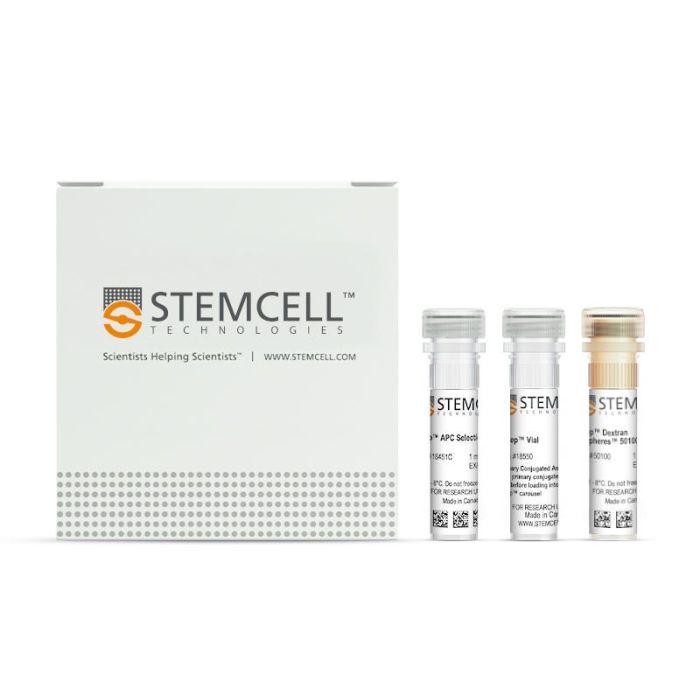
EasySep™ APC正选试剂盒II

对来源于单细胞悬液中标记 APC 耦合抗体的细胞进行免疫磁珠正选分离

只有 %1
¥6,968.00

产品号 #(选择产品)

产品号 #17681_C

免疫磁珠细胞正选试剂盒

产品优势

  • 快速、简单
  • 无需分离柱

产品组分包括

  • EasySep™APC正选试剂盒II(产品号 #17681)
    • EasySep™ APC分选抗体混合物,1 mL
    • EasySep™ Dextran RapidSpheres™磁珠,1 mL
    • RoboSep™试管,用于一抗偶联抗体(手动使用时无需此项),1 vial
  • RoboSep™ 其他物种APC正选试剂盒II(产品号 #17681RF)
    • EasySep™ APC分选抗体混合物,1 mL
    • EasySep™ Dextran RapidSpheres™磁珠,1 mL
    • RoboSep™试管,用于一抗偶联抗体(手动使用时无需此项),1 vial
    • RoboSep™缓冲液(产品号 #20104)
    • RoboSep™过滤吸头(产品号 #20125)
专为您的实验方案打造的产品
要查看实验方案所需的所有配套产品,请参阅《实验方案与技术文档》

总览

使用EasySep™ APC正选试剂盒II,通过免疫磁珠正选法可从任何单细胞悬液中分离经藻蓝蛋白(APC)偶联抗体标记的高纯度细胞。EasySep™技术已在超过20年的公开研究中得到广泛应用,结合单克隆抗体特异性与无柱磁珠系统简便性。在此正选步骤中,目标细胞与能够识别APC的和磁珠的抗体复合物结合。标记细胞经EasySep™磁极分离后,未标记细胞被去除,目标细胞保留在试管中。分离后的细胞可直接用于流式细胞术、细胞培养或细胞检测。

本产品替代旧版EasySep™ APC正选试剂盒(产品号 #18453),实现更快速的细胞分选。

了解更多EasySep™免疫磁珠技术RoboSep™自动化系统。


磁极兼容性
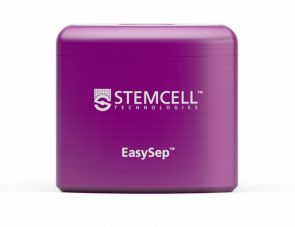
• EasySep™磁极(产品号 #18000)
• “The Big Easy” EasySep™磁极(产品号 #18001)
• EasyEights™ EasySep™磁极(产品号 #18103)
• RoboSep™-S(产品号 #21000)
 
分类
细胞分选试剂盒
 
细胞类型
B 细胞,树突状细胞(DCs),粒细胞及其亚群,造血干/祖细胞,巨噬细胞,骨髓基质细胞,间充质干/祖细胞,单核细胞,单个核细胞,髓系细胞,NK 细胞,其他组织,血浆,T 细胞
 
种属
非人灵长类,其他组织,大鼠
 
样本来源
骨髓,白膜层,脐带血,白细胞单采术样本,其他组织,PBMC,外周血,脾脏
 
分选方法
正选
 
应用
细胞分选
 
品牌
EasySep,RoboSep
 
研究领域
免疫
 

产品说明书及文档

请在《产品说明书》中查找相关支持信息和使用说明,或浏览下方更多实验方案。

Document Type
Product Name
Catalog #
Lot #
Language
Document Type
产品说明书
Catalog #
17681RF
Lot #
All
Language
中文
Document Type
产品说明书
Catalog #
17681
Lot #
All
Language
中文
Catalog #
17681
Lot #
All
Language
English
Catalog #
17681RF
Lot #
All
Language
English
Document Type
Safety Data Sheet 1
Catalog #
17681
Lot #
All
Language
English
Document Type
Safety Data Sheet 2
Catalog #
17681
Lot #
All
Language
English
Document Type
Safety Data Sheet 1
Catalog #
17681RF
Lot #
All
Language
English
Document Type
Safety Data Sheet 2
Catalog #
17681RF
Lot #
All
Language
English
Document Type
Safety Data Sheet 3
Catalog #
17681RF
Lot #
All
Language
English

相关材料与文献

技术资料 (6)

文献 (2)

Functionally diverse thymic medullary epithelial cells interplay to direct central tolerance A. Ushio et al. Cell reports 2024 Apr

Abstract

SUMMARY Medullary thymic epithelial cells (mTECs) are essential for the establishment of self-tolerance in T cells. Promiscuous gene expression by a subpopulation of mTECs regulated by the nuclear protein Aire contributes to the display of self-genomic products to newly generated T cells. Recent reports have highlighted additional self-antigen-displaying mTEC subpopulations,namely Fezf2-expressing mTECs and a mosaic of self-mimetic mTECs including thymic tuft cells. In addition,a functionally different subset of mTECs produces chemokine CCL21,which attracts developing thymocytes to the medullary region. Here,we report that CCL21+ mTECs and Aire+ mTECs non-redundantly cooperate to direct self-tolerance to prevent autoimmune pathology by optimizing the deletion of self-reactive T cells and the generation of regulatory T cells. We also detect cooperation for self-tolerance between Aire and Fezf2,the latter of which unexpectedly regulates thymic tuft cells. Our results indicate an indispensable interplay among functionally diverse mTECs for the establishment of central self-tolerance. Graphical Abstract In brief Ushio et al. show that functionally diverse medullary thymic epithelial cell (mTEC) subpopulations cooperate to prevent autoimmune pathology. The results demonstrate the interplay between diverse mTEC subpopulations,namely between CCL21+ mTECs and Aire+ mTECs and between Aire+ mTECs and Fezf2+ mTECs,for optimizing central tolerance.
Therapeutic potential of T-cell receptor targeting the HLA-A*11:01-restricted KRASG12V neoantigen without cross-recognition of the self-antigen RAB7B in solid tumors M. Shen et al. Journal for Immunotherapy of Cancer 2025 Jul

Abstract

AbstractBackgroundPublic neoantigens,including KRAS,TP53,and PIK3CA mutations,which are shared across various tumor types,have demonstrated significant immunogenicity and offer great promise for cancer immunotherapy. Clinical trials targeting these public neoantigens have yielded encouraging results,including tumor regression and prolonged relapse-free survival. This study evaluates the human leukocyte antigen (HLA) binding properties of T-cell epitopes derived from these public neoantigens to identify optimal T-cell target and further develops T-cell receptor (TCR)-based therapeutics.MethodsThe binding properties of public neoantigens to HLA-I molecules were evaluated using peptide-HLA binding affinity and stability assays. Naive T-cell repertoires were used to expand and detect neoantigen-specific TCRs. TCR clones were characterized for functionality using TCR-Jurkat cells and TCR-T cells. Peptide specificity was assessed using an HLA transgenic cell panel and the X-scan assay. In vivo antitumor efficacy of TCR-T cells was tested in xenograft mouse models of solid tumors.ResultsThe analysis of HLA binding properties for public neoantigens revealed that HLA-A*11:01-presented KRASG12V epitopes exhibited the strongest HLA binding stability. Four TCR clones specific to the 9-mer KRASG12V peptide (KRASG12V[9]) were identified. All KRASG12V[9]-specific TCRs,both newly identified by us and previously reported,exhibited varying degrees of cross-recognition of the exogenous self-antigen RAB7B. Among the four TCR clones,one TCR (KT18) exhibited superior functional avidity,effectively recognizing and eliminating KRASG12V mutant tumor cells without off-target activity against endogenous RAB7B or similar peptides. Significantly,KT18 TCR-T cells efficiently mediated tumor regression in multiple xenograft models of solid tumors.ConclusionsThese findings highlight significant differences in peptide-HLA binding affinity and stability across public neoantigen-HLA pairings. The cross-recognition of RAB7B13-21 represents a critical safety consideration when developing HLA-A*11:01-restricted KRASG12V[9]-specific TCRs. KT18 TCR-T cells are highly cytotoxic,exhibiting no off-target recognition and significant potential for clinical applications against KRASG12V-driven solid tumors.

更多信息

更多信息
物种 其它物种, 大鼠, 非人灵长类
Magnet Compatibility • EasySep™ Magnet (Catalog #18000) • “The Big Easy” EasySep™ Magnet (Catalog #18001) • EasyEights™ EasySep™ Magnet (Catalog #18103) • RoboSep™-S (Catalog #21000)
样本来源 PBMC, 其它细胞系, 外周血, 白细胞单采术样本, 白膜层, 脐带血, 脾脏, 骨髓
Selection Method Positive

法律声明:

Users of this kit should ensure that they are entitled to use the antibody of interest. STEMCELL Technologies Inc. is not responsible for patent infringements or violations that may occur when using this product.

 质量声明:

产品仅供研究使用,不用于针对人或动物的诊断或治疗。 欲获悉更多关于STEMCELL的质控信息,请访问 STEMCELL.CN/COMPLIANCE.

Copyright © 2026 by STEMCELL Technologies. All rights reserved.

在线联系