若您需要咨询产品或有任何技术问题,请通过官方电话 400 885 9050 或邮箱 info.cn@stemcell.com 与我们联系。

EasySep™缓冲液

细胞分选缓冲液
只有 %1
¥1,514.00

产品号 #(选择产品)

产品号 #20144_C

细胞分选缓冲液

总览

EasySep™Buffer建议用于EasySep™细胞分选的操作流程中。

包含
• 杜氏磷酸盐缓冲液 (PBS)
• 胎牛血清 (2%)
• 1 mM EDTA PBS溶液
 
种属
人,小鼠,非人灵长类,其他物种,大鼠
 
品牌
EasySep
 
研究领域
嵌合体,HLA,免疫
 

产品说明书及文档

请在《产品说明书》中查找相关支持信息和使用说明,或浏览下方更多实验方案。

Document Type
Product Name
Catalog #
Lot #
Language
Product Name
EasySep™ Buffer
Catalog #
20144
Lot #
All
Language
English
Document Type
Safety Data Sheet
Product Name
EasySep™ Buffer
Catalog #
20144
Lot #
All
Language
English

应用领域

本产品专为以下研究领域设计,适用于工作流程中的高亮阶段。探索这些工作流程,了解更多我们为各研究领域提供的其他配套产品。

Research Area
Workflow Stages

相关材料与文献

技术资料 (10)

常见问题

Can EasySep™ be used for either positive or negative selection?

Yes. The EasySep™ kits use either a negative selection approach by targeting and removing unwanted cells or a positive selection approach targeting desired cells. Depletion kits are also available for the removal of cells with a specific undesired marker (e.g. GlyA).

How does the separation work?

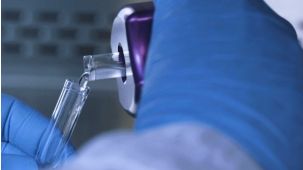
Magnetic particles are crosslinked to cells using Tetrameric Antibody Complexes (TAC). When placed in the EasySep™ Magnet, labeled cells migrate to the wall of the tube. The unlabeled cells are then poured off into a separate fraction.

Which columns do I use?

The EasySep™ procedure is column-free. That's right - no columns!

How can I analyze the purity of my enriched sample?

The Product Information Sheet provided with each EasySep™ kit contains detailed staining information.

Can EasySep™ separations be automated?

Yes. RoboSep™, the fully automated cell separator, automates all EasySep™ labeling and cell separation steps.

Can EasySep™ be used to isolate rare cells?

Yes. We recommend a cell concentration of 2x10⁸ cells/mL and a minimum working volume of 100 µL. Samples containing 2x10⁷ cells or fewer should be suspended in 100 µL of buffer.

Are the EasySep™ magnetic particles FACS-compatible?

Yes, the EasySep™ particles are flow cytometry-compatible, as they are very uniform in size and about 5000X smaller than other commercially available magnetic beads used with column-free systems.

Can the EasySep™ magnetic particles be removed after enrichment?

No, but due to the small size of these particles, they will not interfere with downstream applications.

Can I alter the separation time in the magnet?

Yes; however, this may impact the kit's performance. The provided EasySep™ protocols have already been optimized to balance purity, recovery and time spent on the isolation.

For positive selection, can I perform more than 3 separations to increase purity?

Yes, the purity of targeted cells will increase with additional rounds of separations; however, cell recovery will decrease.

How does the binding of the EasySep™ magnetic particle affect the cells? is the function of positively selected cells altered by the bound particles?

Hundreds of publications have used cells selected with EasySep™ positive selection kits for functional studies. Our in-house experiments also confirm that selected cells are not functionally altered by the EasySep™ magnetic particles.

If particle binding is a key concern, we offer two options for negative selection. The EasySep™ negative selection kits can isolate untouched cells with comparable purities, while RosetteSep™ can isolate untouched cells directly from whole blood without using particles or magnets.

文献 (36)

Impact of mRNA chemistry and manufacturing process on innate immune activation. J. Nelson et al. Science advances 2020 jun

Abstract

Messenger RNA (mRNA) represents an attractive therapeutic modality for potentially a wide range of clinical indications but requires uridine chemistry modification and/or tuning of the production process to prevent activation of cellular innate immune sensors and a concomitant reduction in protein expression. To decipher the relative contributions of these factors on immune activation,here,we compared,in multiple cell and in vivo models,mRNA that encodes human erythropoietin incorporating either canonical uridine or N1-methyl-pseudouridine (1m$\Psi$),synthesized by either a standard process shown to have double-stranded RNA (dsRNA) impurities or a modified process that yields a highly purified mRNA preparation. Our data demonstrate that the lowest stimulation of immune endpoints was with 1m$\Psi$ made by the modified process,while mRNA containing canonical uridine was immunostimulatory regardless of process. These findings confirm that uridine modification and the reduction of dsRNA impurities are both necessary and sufficient at controlling the immune-activating profile of therapeutic mRNA.
Exosomal transfer of activated neutrophil-derived lncRNA CRNDE promotes proliferation and migration of airway smooth muscle cells in asthma. X.-Y. Zhang et al. Human molecular genetics 2022 feb

Abstract

Activated neutrophil-derived exosomes reportedly contribute to the proliferation of airway smooth muscle cells (ASMCs),thereby aggravating the airway wall remodeling during asthma; however,the specific mechanism remains unclear. Lipopolysaccharide (LPS)-EXO and si-CRNDE-EXO were extracted from the media of human neutrophils treated with LPS and LPS??+??si-CRNDE (a siRNA targets long non-coding RNA CRNDE),respectively. Human ASMCs were co-cultured with LPS-EXO or si-CRNDE-EXO,and cell viability,proliferation and migration were measured. The interplay of colorectal neoplasia differentially expressed (CRNDE),inhibitor of nuclear factor kappa B kinase subunit beta (IKK$\beta$) and nuclear receptor subfamily 2 group C member 2 (TAK1) was explored using RNA immunoprecipitation (RIP) and Co-IP assays. A mouse model of asthma was induced using ovalbumin. CRNDE was upregulated in LPS-EXO and successfully transferred from LPS-treated neutrophils to ASMCs through exosome. Mechanically,CRNDE loaded in LPS-EXO reinforced TAK1-mediated IKK$\beta$ phosphorylation,thereby activating the nuclear factor kappa B (NF-$\kappa$B) pathway. Functionally,silencing CRNDE in LPS-EXO,an IKK$\beta$ inhibitor,and an NF-$\kappa$B inhibitor all removed the upregulation of cell viability,proliferation and migration induced by LPS-EXO in ASMCs. In the end,the in vivo experiment demonstrated that CRNDE knockdown in neutrophils effectively reduced the thickness of bronchial smooth muscle in a mouse model for asthma. Activated neutrophils-derived CRNDE was transferred to ASMCs through exosomes and activated the NF-$\kappa$B pathway by enhancing IKK$\beta$ phosphorylation. The latter promoted the proliferation and migration of ASMCs and then contributed to airway remodeling in asthma.
CD70 as an actionable immunotherapeutic target in recurrent glioblastoma and its microenvironment. M. Seyfrid et al. Journal for immunotherapy of cancer 2022 jan

Abstract

PURPOSE Glioblastoma (GBM) patients suffer from a dismal prognosis,with standard of care therapy inevitably leading to therapy-resistant recurrent tumors. The presence of cancer stem cells (CSCs) drives the extensive heterogeneity seen in GBM,prompting the need for novel therapies specifically targeting this subset of tumor-driving cells. Here,we identify CD70 as a potential therapeutic target for recurrent GBM CSCs. EXPERIMENTAL DESIGN In the current study,we identified the relevance and functional influence of CD70 on primary and recurrent GBM cells,and further define its function using established stem cell assays. We use CD70 knockdown studies,subsequent RNAseq pathway analysis,and in vivo xenotransplantation to validate CD70's role in GBM. Next,we developed and tested an anti-CD70 chimeric antigen receptor (CAR)-T therapy,which we validated in vitro and in vivo using our established preclinical model of human GBM. Lastly,we explored the importance of CD70 in the tumor immune microenvironment (TIME) by assessing the presence of its receptor,CD27,in immune infiltrates derived from freshly resected GBM tumor samples. RESULTS CD70 expression is elevated in recurrent GBM and CD70 knockdown reduces tumorigenicity in vitro and in vivo. CD70 CAR-T therapy significantly improves prognosis in vivo. We also found CD27 to be present on the cell surface of multiple relevant GBM TIME cell populations,notably putative M1 macrophages and CD4 T cells. CONCLUSION CD70 plays a key role in recurrent GBM cell aggressiveness and maintenance. Immunotherapeutic targeting of CD70 significantly improves survival in animal models and the CD70/CD27 axis may be a viable polytherapeutic avenue to co-target both GBM and its TIME.

更多信息

更多信息
物种 人, 其它物种, 大鼠, 小鼠, 非人灵长类
Contains • Dulbecco's phosphate-buffered saline (PBS) • Fetal bovine serum (2%) • EDTA 1 mM in PBS
质量保证:

产品仅供研究使用,不用于针对人或动物的诊断或治疗。 欲获悉更多关于STEMCELL的质控信息,请访问 STEMCELL.CN/COMPLIANCE.
Copyright © 2026 by STEMCELL Technologies. All rights reserved.

在线联系