若您需要咨询产品或有任何技术问题,请通过官方电话 400 885 9050 或邮箱 info.cn@stemcell.com 与我们联系。

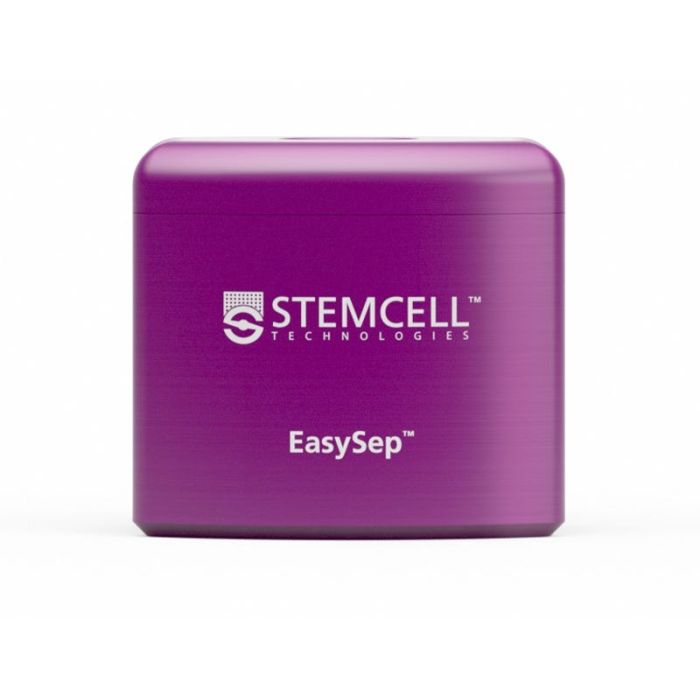
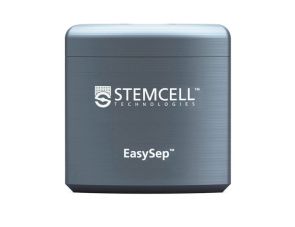
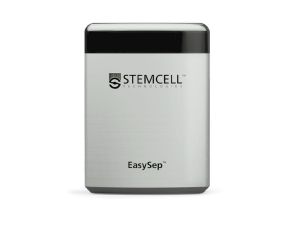
EasySep™磁极

无柱免疫磁珠分选磁极

只有 %1
¥15,228.00

产品号 #(选择产品)

产品号 #18000_C

无柱免疫磁珠分选磁极

What Our Scientist Says

Column-based cell isolation technologies can be complicated, laborious, and time-consuming. We thought there had to be a better way. That's why we developed the column-free EasySep™ cell isolation system.

Jennifer KennettTechnical Scientist
Jennifer Kennett, Technical Scientist

总览

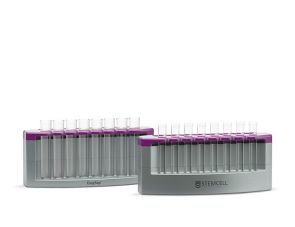
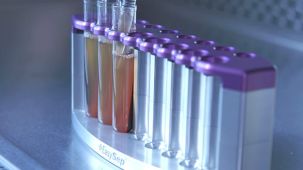
搭配使用EasySep™磁极和EasySep™细胞分选试剂,可以轻松高效地进行免疫磁珠细胞分选。EasySep™磁极内腔中产生高梯度磁场,该磁场强度足够,无需使用分离柱即可分离EasySep™磁珠标记的细胞。该磁极适用于标准的12 x 75 mm(5 mL)聚苯乙烯管。

不确定应该选择哪种磁极?访问我们的EasySep™细胞分选磁极页面比较不同的选项,并为您的研究选择合适的磁极。

了解更多关于EasySep™免疫磁珠细胞分选技术的工作原理。

种属
人,小鼠,非人灵长类,其他物种,大鼠
 
应用
细胞分选
 
品牌
EasySep
 

产品说明书及文档

请在《产品说明书》中查找相关支持信息和使用说明,或浏览下方更多实验方案。

Document Type
Product Name
Catalog #
Lot #
Language
Product Name
EasySep™ Magnet
Catalog #
18000
Lot #
All
Language
English

应用领域

本产品专为以下研究领域设计,可应用于工作流程中的关键步骤(图中高亮)。探索这些工作流程,了解更多我们为各研究领域提供的其他配套产品。

Research Area
Workflow Stages

相关材料与文献

技术资料 (23)

常见问题

Can EasySep™ be used for either positive or negative selection?

Yes. The EasySep™ kits use either a negative selection approach by targeting and removing unwanted cells or a positive selection approach targeting desired cells. Depletion kits are also available for the removal of cells with a specific undesired marker (e.g. GlyA).

How does the separation work?

Magnetic particles are crosslinked to cells using Tetrameric Antibody Complexes (TAC). When placed in the EasySep™ Magnet, labeled cells migrate to the wall of the tube. The unlabeled cells are then poured off into a separate fraction.

Which columns do I use?

The EasySep™ procedure is column-free. That's right - no columns!

How can I analyze the purity of my enriched sample?

The Product Information Sheet provided with each EasySep™ kit contains detailed staining information.

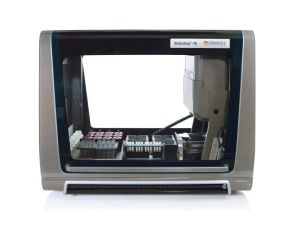
Can EasySep™ separations be automated?

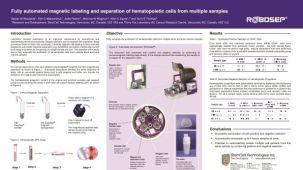
Yes. RoboSep™, the fully automated cell separator, automates all EasySep™ labeling and cell separation steps.

Can EasySep™ be used to isolate rare cells?

Yes. We recommend a cell concentration of 2x10⁸ cells/mL and a minimum working volume of 100 µL. Samples containing 2x10⁷ cells or fewer should be suspended in 100 µL of buffer.

Are the EasySep™ magnetic particles FACS-compatible?

Yes, the EasySep™ particles are flow cytometry-compatible, as they are very uniform in size and about 5000X smaller than other commercially available magnetic beads used with column-free systems.

Can the EasySep™ magnetic particles be removed after enrichment?

No, but due to the small size of these particles, they will not interfere with downstream applications.

Can I alter the separation time in the magnet?

Yes; however, this may impact the kit's performance. The provided EasySep™ protocols have already been optimized to balance purity, recovery and time spent on the isolation.

For positive selection, can I perform more than 3 separations to increase purity?

Yes, the purity of targeted cells will increase with additional rounds of separations; however, cell recovery will decrease.

How does the binding of the EasySep™ magnetic particle affect the cells? is the function of positively selected cells altered by the bound particles?

Hundreds of publications have used cells selected with EasySep™ positive selection kits for functional studies. Our in-house experiments also confirm that selected cells are not functionally altered by the EasySep™ magnetic particles.

If particle binding is a key concern, we offer two options for negative selection. The EasySep™ negative selection kits can isolate untouched cells with comparable purities, while RosetteSep™ can isolate untouched cells directly from whole blood without using particles or magnets.

文献 (96)

Efficient delivery of nuclease proteins for genome editing in human stem cells and primary cells. Liu J et al. Nature Protocols 2015 NOV

Abstract

Targeted nucleases,including zinc-finger nucleases (ZFNs),transcription activator-like (TAL) effector nucleases (TALENs) and clustered regularly interspaced short palindromic repeat (CRISPR)/CRISPR-associated protein 9 (Cas9),have provided researchers with the ability to manipulate nearly any genomic sequence in human cells and model organisms. However,realizing the full potential of these genome-modifying technologies requires their safe and efficient delivery into relevant cell types. Unlike methods that rely on expression from nucleic acids,the direct delivery of nuclease proteins to cells provides rapid action and fast turnover,leading to fewer off-target effects while maintaining high rates of targeted modification. These features make nuclease protein delivery particularly well suited for precision genome engineering. Here we describe procedures for implementing protein-based genome editing in human embryonic stem cells and primary cells. Protocols for the expression,purification and delivery of ZFN proteins,which are intrinsically cell-permeable; TALEN proteins,which can be internalized via conjugation with cell-penetrating peptide moieties; and Cas9 ribonucleoprotein,whose nucleofection into cells facilitates rapid induction of multiplexed modifications,are described,along with procedures for evaluating nuclease protein activity. Once they are constructed,nuclease proteins can be expressed and purified within 6 d,and they can be used to induce genomic modifications in human cells within 2 d.
Selective targeting of multiple myeloma by B cell maturation antigen (BCMA)-specific central memory CD8+ cytotoxic T lymphocytes: immunotherapeutic application in vaccination and adoptive immunotherapy. J. Bae et al. Leukemia 2019 mar

Abstract

To expand the breadth and extent of current multiple myeloma (MM)-specific immunotherapy,we have identified various antigens on CD138+ tumor cells from newly diagnosed MM patients (n = 616) and confirmed B-cell maturation antigen (BCMA) as a key myeloma-associated antigen. The aim of this study is to target the BCMA,which promotes MM cell growth and survival,by generating BCMA-specific memory CD8+ CTL that mediate effective and long-lasting immunity against MM. Here we report the identification of novel engineered peptides specific to BCMA,BCMA72-80 (YLMFLLRKI),and BCMA54-62 (YILWTCLGL),which display improved affinity/stability to HLA-A2 compared to their native peptides and induce highly functional BCMA-specific CTL with increased activation (CD38,CD69) and co-stimulatory (CD40L,OX40,GITR) molecule expression. Importantly,the heteroclitic BCMA72-80 specific CTL demonstrated poly-functional Th1-specific immune activities [IFN-gamma/IL-2/TNF-alpha production,proliferation,cytotoxicity] against MM,which were correlated with expansion of Tetramer+ and memory CD8+ CTL. Additionally,heteroclitic BCMA72-80 specific CTL treated with anti-OX40 (immune agonist) or anti-LAG-3 (checkpoint inhibitor) display increased immune function,mainly by central memory CTL. These results provide the framework for clinical application of heteroclitic BCMA72-80 peptide,alone and in combination with anti-LAG3 and/or anti-OX40 therapy,in vaccination and/or adoptive immunotherapeutic strategies to generate long-lasting anti-tumor immunity in patients with MM or other BCMA expressing tumors.
Cold-inducible RNA-binding Protein Induces Neutrophil Extracellular Traps in the Lungs during Sepsis. Y. Ode et al. Scientific reports 2019 apr

Abstract

Extracellular cold-inducible RNA-binding protein (CIRP) exaggerates inflammation and tissue injury in sepsis. Neutrophil extracellular traps (NETs) are released by activated neutrophils during sepsis. NETs contribute to pathogen clearance,but excessive NET formation (NETosis) causes inflammation and tissue damage. Peptidylarginine deiminase 4 (PAD4) is associated with NETosis by increasing histone citrullination and chromatin decondensation. We hypothesized that CIRP induces NETosis in the lungs during sepsis via upregulating PAD4 expression. Sepsis was induced in C57BL/6 wild-type (WT) and CIRP-/- mice by cecal ligation and puncture (CLP). After 20 h of CLP induction,NETs in the lungs of WT and CIRP-/- mice were quantified by flow cytometry by staining the single cell suspensions with MPO and CitH3 Abs. PAD4 expression in the lungs of WT and CIRP-/- mice after sepsis was assessed by Western blotting. In vitro effects of recombinant mouse (rm) CIRP for NETosis and PAD4 expression in the bone marrow-derived neutrophils (BMDN) were assessed by flow cytometry and Western blotting,respectively. After 20 h of CLP,NETosis in the lungs was significantly decreased in CIRP-/- mice compared to WT mice,which also correlated with the decreased PAD4 expression. Intratracheal administration of rmCIRP into WT mice significantly increased NETosis and PAD4 expression in the lungs compared to vehicle-injected mice. In vitro culture of BMDN with rmCIRP significantly increased NETosis and PAD4 expression compared to PBS-treated control. Fluorescence microscopy revealed typical web-like structures consistent with NETs in rmCIRP-treated BMDN. Thus,CIRP serves as a novel inducer of NETosis via PAD4 during sepsis.

更多信息

更多信息
物种 人, 其它物种, 大鼠, 小鼠, 非人灵长类

质量保证:

本产品仅供科研使用,除非另有说明,不得用于人体或动物的诊断或治疗用途。
有关STEMCELL产品质量的更多信息,请参阅STEMCELL.CN/COMPLIANCE.

Copyright © 2026 by STEMCELL Technologies. All rights reserved.

在线联系