若您需要咨询产品或有任何技术问题,请通过官方电话 400 885 9050 或邮箱 info.cn@stemcell.com 与我们联系。

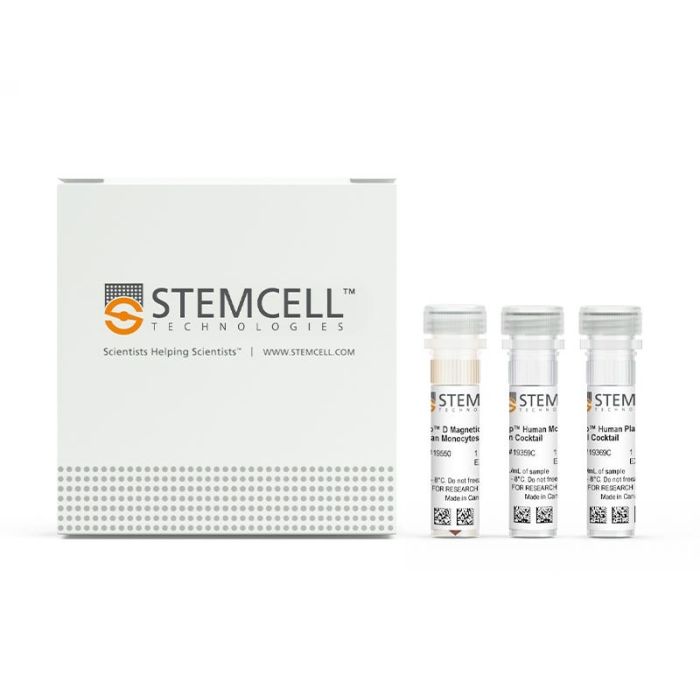
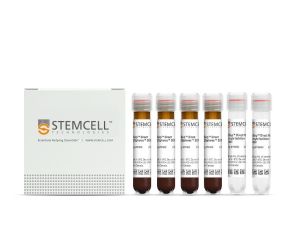
EasySep™人单核细胞分选试剂盒

通过免疫磁珠负选分离无磁珠标记的人CD14+CD16-单核细胞
只有 %1
¥11,822.00

产品号 #(选择产品)

产品号 #19359_C

通过免疫磁珠负选分离无磁珠标记的人CD14+CD16-单核细胞

产品优势

  • 快速,易于使用和无列
  • 纯度达94%,回收率高
  • 未接触的活细胞

产品组分包括

  • EasySep™人单核细胞分选试剂盒(产品号 #19359)
    • EasySep™人单核细胞分选抗体混合物,1 mL
    • EasySep™人血小板去除抗体混合物,1 mL
    • 用于人单核细胞的EasySep™ D Magnetic Particles,1 mL
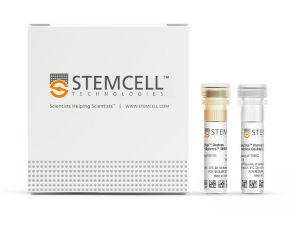
  • EasySep™人单核细胞分选试剂盒(产品号 #100-0697)
    • EasySep™人单核细胞分选抗体混合物,1 x 10 mL
    • EasySep™ D Magnetic Particles磁珠,1 x 10 mL
  • RoboSep™ 人单核细胞分选试剂盒(产品号 #19359RF)
    • EasySep™人单核细胞分选抗体混合物,1 mL
    • EasySep™人血小板去除抗体混合物,1 mL
    • 用于人单核细胞的EasySep™ D Magnetic Particles,1 mL
    • RoboSep™ 缓冲液(产品号 #20104)
    • RoboSep™过滤枪头(产品号 #20125)
New look, same high quality and support! You may notice that your instrument or reagent packaging looks slightly different from images displayed on the website, or from previous orders. We are updating our look but rest assured, the products themselves and how you should use them have not changed. Learn more
专为您的实验方案打造的产品
要查看实验方案所需的所有配套产品,请参阅《实验方案与技术文档》

What Our Scientist Says

Isolating immune cells can be time consuming, but it doesn't have to be. That's why we developed a wide variety of EasySep™ kits, including this 12.5-minute monocyte isolation kit.

Grace PoonScientist
Grace Poon, Scientist

总览

通过免疫磁珠负选从新鲜或冻存的人外周血单个核细胞 (PBMCs) 或裂解的白细胞单采术样本中分离出无磁珠标记和高纯度的CD14+CD16-单核细胞。EasySep™无柱免疫磁珠分选技术结合单克隆抗体的特异性和无需分选柱的简便性,20多年来被广泛引用于已发表的文献中。

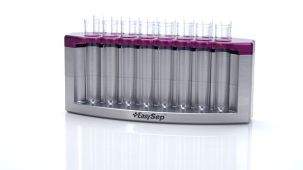
本EasySep™负选方案中,非目标细胞通过抗体复合物与磁珠标记。以下非目标细胞将被去除:粒细胞、T细胞、B细胞、树突状细胞、NK细胞和红系细胞。通过EasySep™磁极将被磁珠标记的细胞与未被标记的目的细胞分离,接着只需将目的细胞倾倒或吸取至一个新的试管中,仅需12.5分钟即可获得高纯度的单核细胞,且可立即用于流式细胞术、培养或DNA/RNA提取等下游应用。

该产品可替代EasySep™人单核细胞富集试剂盒 (产品号 #19059) 以进行更快的细胞分选并减少血小板污染。

如需从白细胞单采术样本中大规模分离CD14+CD16-单核细胞,请选用大规格(1x10^10细胞)试剂盒(产品号 #100-0697)。

了解更多关于EasySep™免疫磁珠分选技术原理,或如何通过RoboSep™实现全自动免疫磁珠细胞分选。您也可以直接选用即用型、符合伦理来源的人外周血单核细胞(使用EasySep™人单核细胞分选试剂盒分离的新鲜细胞)。探索更多为您实验流程优化的产品,包括培养基、添加剂、抗体等。


磁极兼容性
• EasySep™磁极(产品号 #18000)
• “The Big Easy” EasySep™磁极(产品号 #18001)
• EasyPlate™ EasySep™磁极(产品号 #18102)
• Easy 50 EasySep™磁极(产品号 #18002)
• EasyEights™ EasySep™磁极(产品号 #18103)
• RoboSep™-S(产品号 #21000)
• Easy 250 EasySep™磁极(产品号 #100-0821)
 
分类
细胞分选试剂盒
 
细胞类型
单核细胞
 
种属

 
样本来源
PBMC
 
分选方法
负选
 
应用
细胞分选
 
品牌
EasySep,RoboSep
 
研究领域
免疫
 

实验数据

19359_C_DA0066_data_01

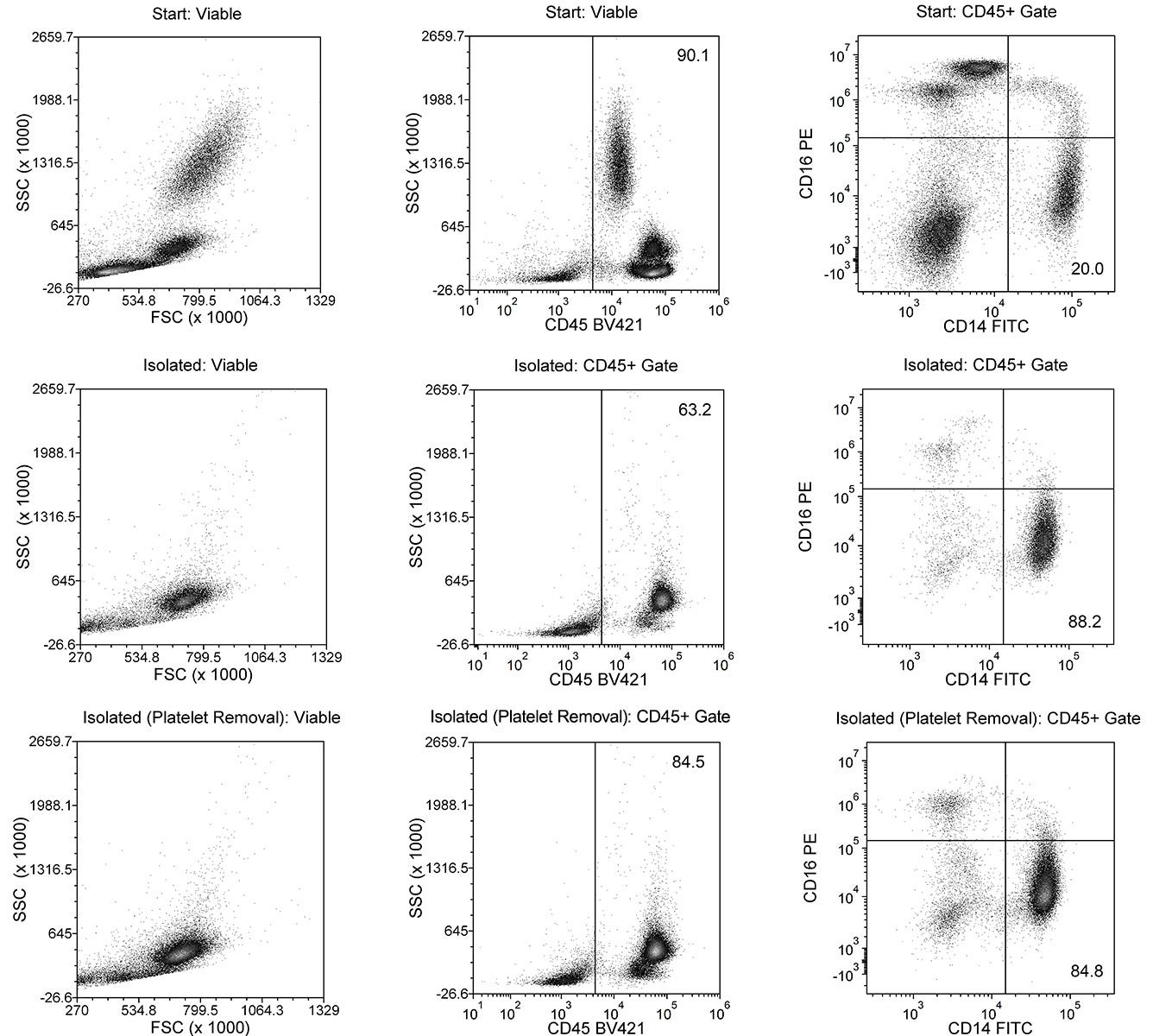
Figure 1. Typical EasySep™ Human Monocyte Isolation Kit (Catalog #19359)

Starting with PBMCs prepared from human peripheral blood, the monocyte cell content (CD14+CD16-) of the isolated fraction obtained without (middle plots) or with (bottom plots) EasySep™ Human Platelet Removal Cocktail is typically 89.7 ± 3.4% and 87.3 ± 4.5%, respectively (gated on CD45; mean ± SD for the purple EasySep™ Magnet). In the above example, the purities of the start and final isolated fractions obtained without (middle plot) or with (bottom plots) the EasySep™ Human Platelet Removal Cocktail are 20.0%, 88.2%, and 84.8%, respectively (gated on CD45) and 18.0%, 55.7%, and 71.7% (not gated on CD45).

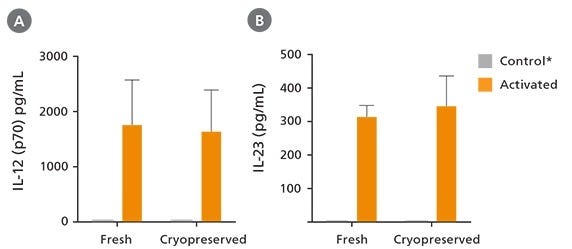
Cryopreserved Monocytes Differentiate into Dendritic Cells and Secrete IL-12 (p70) and IL-23 Upon Activation

Figure 2. Cryopreserved Monocytes Differentiate into Dendritic Cells and Secrete IL-12 (p70) and IL-23 Upon Activation

Monocytes freshly isolated from a leukopak (Catalog #70500) using EasySep™ Human Monocyte Isolation Kit (Catalog #19359) or cryopreserved monocytes (Catalog #70034) were cultured for 6 days in RPMI 1640 Medium (Catalog #36750) with 10% FBS, 0.1 mM MEM Non-Essential Amino Acid Solution (100X, Catalog #07600), 2 mM L-Glutamine (Catalog #07100), 1 mM Sodium Pyruvate (Catalog #07000), and 50 µM β-mercaptoethanol. Human Recombinant IL-4 (Catalog #78045) and Human Recombinant GM-CSF (Catalog #78015) were added on Days 1, 3, and 6 to differentiate monocytes into DCs. Cells were either left unstimulated (control) or stimulated with LPS and Human Recombinant IFN-γ (Catalog #78020) (activated). Activation led to secretion of (A) IL-12 (p70) and (B) IL-23, which were not detectable in unstimulated controls as measured using the Human IL-12 (p70) ELISA Kit (Catalog #02014) and the Human IL-23 ELISA Kit (Catalog #02016),respectively. *Cytokine concentration of control in culture was lower than the limit of detection.

Mature DCs Generated with ImmunoCult™-ACF Dendritic Cell Medium with Supplements Show Desired Phenotype

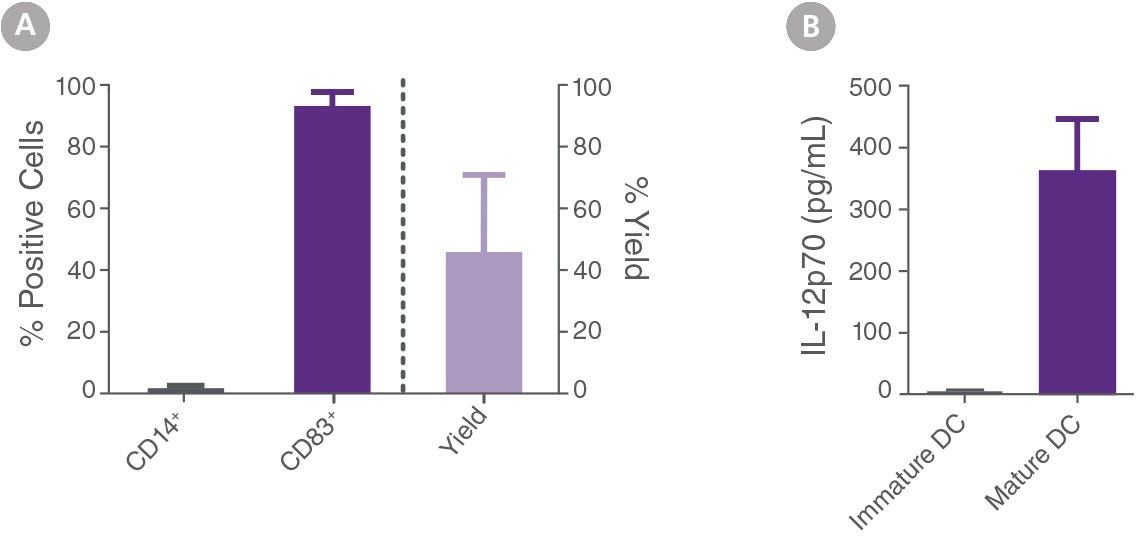
Figure 3. Mature DCs Generated with ImmunoCult™-ACF Dendritic Cell Medium with Supplements Show Desired Phenotype

Monocytes isolated using EasySep™ Human Monocyte Isolation Kit (Catalog #19359) were cultured and differentiated into mature dendritic cells (DCs) as described in the PIS for ImmunoCult™-ACF Dendritic Cell Culture Kit (Catalog #10985). (A) The percentage of CD14 and CD83 expression in cells at Day 7 (mature DCs) was determined by flow cytometry. At Day 7, a total of 93 ± 5% of the cells expressed the mature DC marker CD83 and only 1 ± 1% of cells still expressed the monocyte marker CD14 (mean ± SD, n = 39). The yield of mature DCs was determined by the count of total viable cells at Day 7 relative to the count of viable monocytes used for initial culture at Day 0. At Day 7, the yield of viable mature DCs corresponded to 45 ± 25% (mean ± SD, n=39). (B) Immature DCs were cultured as described in Figure 1. At Day 5, cells were cultured with maturation supplement for 2 days (mature DCs) or without maturation supplement (immature DCs). Supernatant was collected at Day 7 and IL-12p70 levels were determined by ELISA. Concentrations of IL-12p70 in supernatant of mature and immature DCs were 361 ± 81 and 5 ± 2 pg/mL, respectively (mean ± SEM, n = 27).

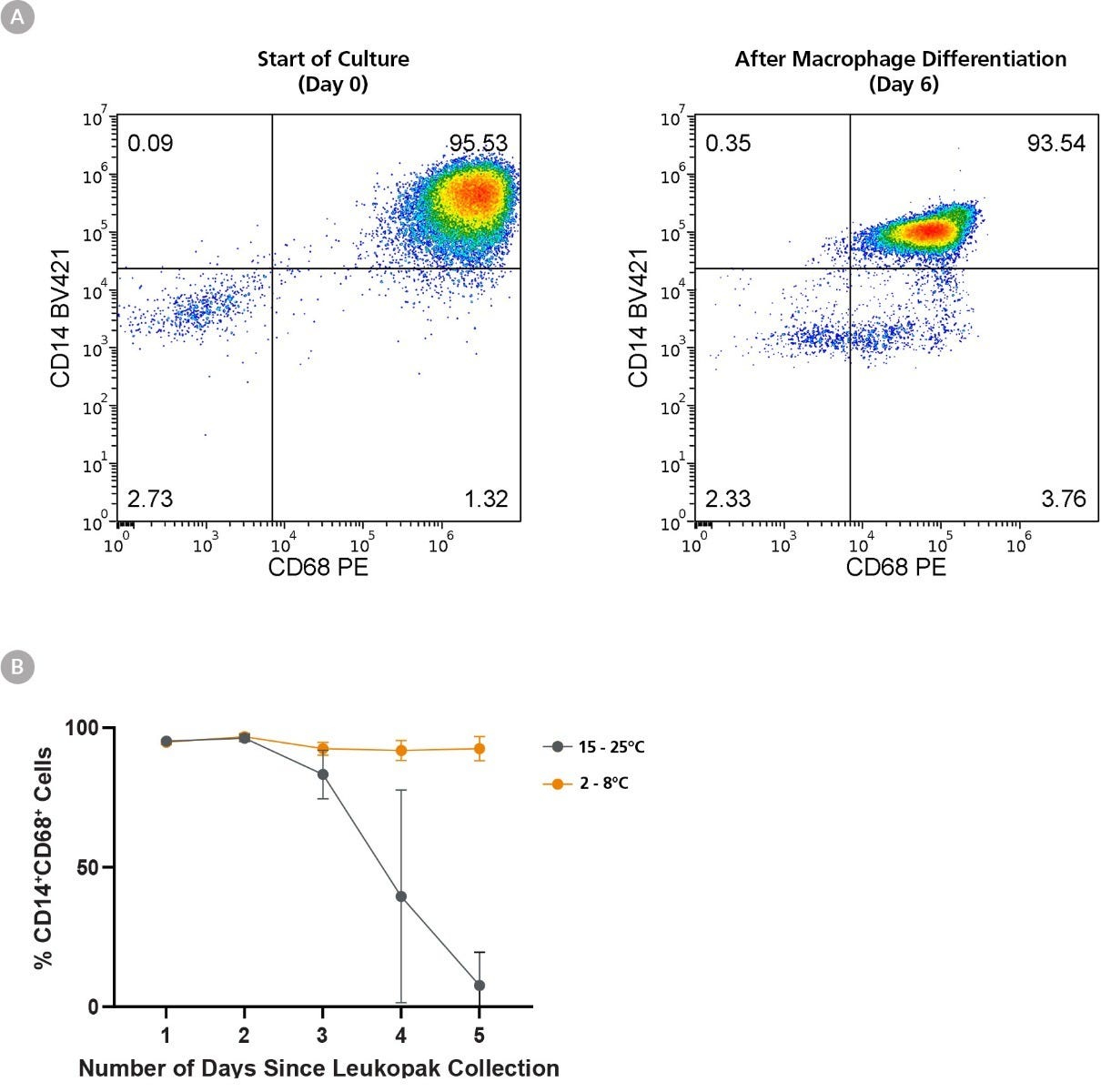
Refrigeration of Leukopaks Preserves Monocyte-to-Macrophage Differentiation Efficiency for Up to 5 Days

Figure 4. Refrigeration of Leukopaks Preserves Monocyte-to-Macrophage Differentiation Efficiency for Up to 5 Days

Using EasySep™ Human Monocyte Isolation Kit (Catalog #19359), monocytes were isolated from 1 leukopak fraction (Catalog #70500) of each storage condition daily for 5 days, and 1 x 10⁶ isolated cells were cultured in ImmunoCult™-SF Macrophage Medium (Catalog #10961) supplemented with 50 ng/mL Human Recombinant M-CSF (Catalog #78057) for a further 6 days. (A) Representative flow cytometry plot from leukopaks stored 1 day at fridge temperature (FT), showing maintenance of CD14 and upregulation of CD68 expression over the 5 day differentiation to M0 macrophages. (B) While monocytes isolated from FT-stored leukopaks efficiently differentiated into M0 macrophages, those stored at room temperature (RT) for over 3 days failed to differentiate, as shown by low percentages of CD14+CD68+ cells. Moreover, monocytes harvested from Day 5 leukopaks stored at RT failed to thrive in the 6-day culture, resulting in very few viable cells recovered (not shown). All data points represent average ± standard deviation values from leukopak fractions of n = 3 unique donors.

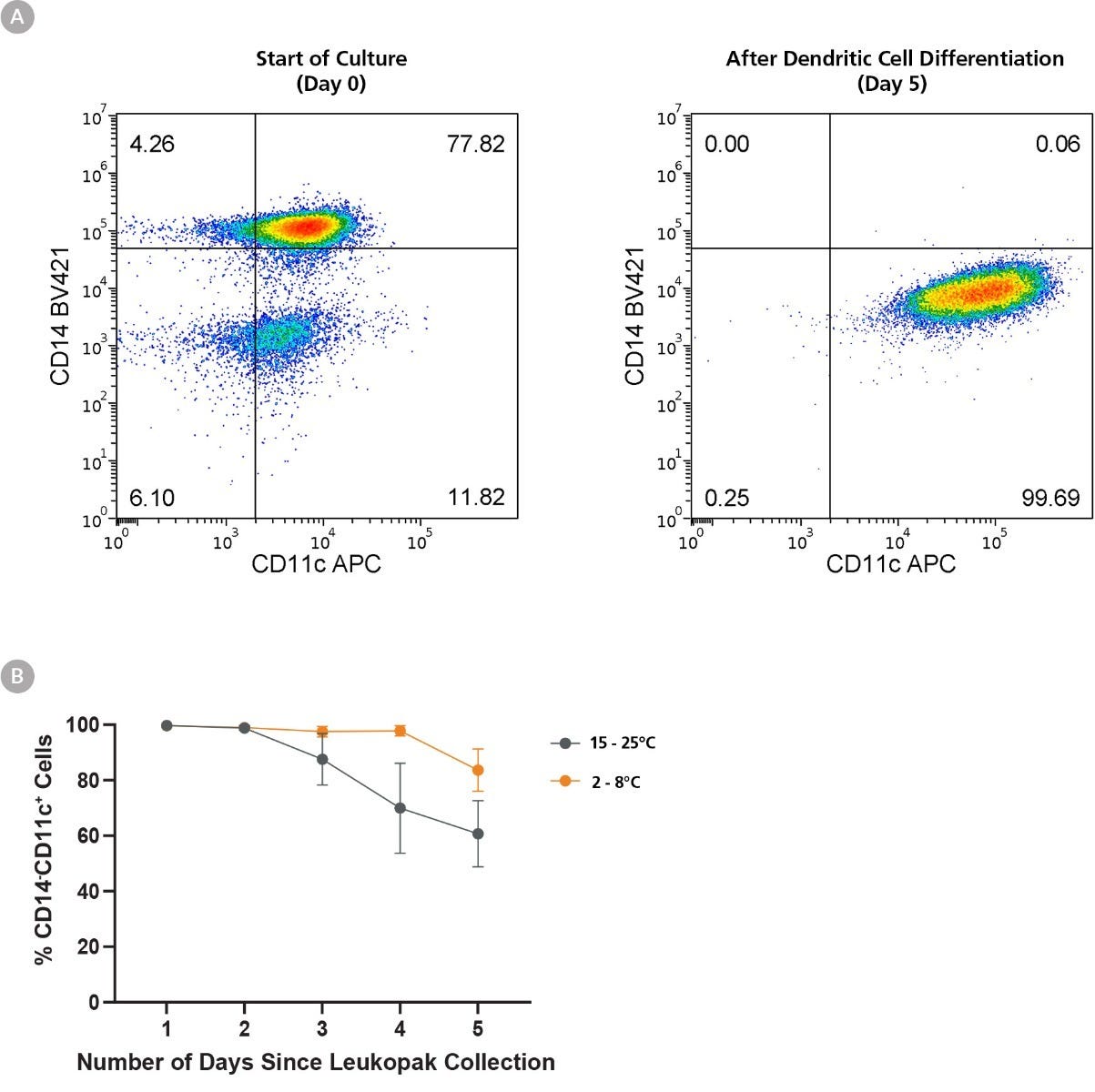
Refrigeration of Leukopaks Preserves Monocyte-to-Dendritic Cell Differentiation Ability for Up to 5 Days

Figure 5. Refrigeration of Leukopaks Preserves Monocyte-to-Dendritic Cell Differentiation Ability for Up to 5 Days

Using EasySep™ Human Monocyte Isolation Kit (Catalog #19359), monocytes were isolated from 1 leukopak fraction (Catalog #70500) of each storage condition daily for 5 days, and 1 x 10⁶ isolated cells were cultured in ImmunoCult™-ACF Dendritic Cell (DC) Medium (Catalog #10986) supplemented with ImmunoCult™-ACF Dendritic Cell Differentiation Supplement (Catalog #10988). (A) Representative flow cytometry plot from leukopaks stored 1 day at fridge temperature (FT), showing efficient downregulation of CD14 and upregulation of CD11c over 6 days of culture. (B) While monocytes isolated from FT-stored leukopaks efficiently differentiated into DCs, those stored at room temperature (RT) for over 3 days show reduced DC differentiation ability and CD14-CD11c+ cell output. Moreover, monocytes harvested from day 5 RT-stored leukopaks failed to thrive in the 5-day culture, resulting in very few viable cells recovered (not shown). All data points represent average ± standard deviation values from leukopak fractions of n = 3 unique donors.

产品说明书及文档

请在《产品说明书》中查找相关支持信息和使用说明,或浏览下方更多实验方案。

Document Type
Product Name
Catalog #
Lot #
Language
Catalog #
100-0697
Lot #
All
Language
English
Catalog #
19359RF
Lot #
All
Language
English
Catalog #
19359
Lot #
All
Language
English
Document Type
Safety Data Sheet
Catalog #
100-0697
Lot #
All
Language
English
Document Type
Safety Data Sheet 1
Catalog #
19359RF
Lot #
All
Language
English
Document Type
Safety Data Sheet 2
Catalog #
19359RF
Lot #
All
Language
English
Document Type
Safety Data Sheet 3
Catalog #
19359RF
Lot #
All
Language
English
Document Type
Safety Data Sheet 4
Catalog #
19359RF
Lot #
All
Language
English
Document Type
Safety Data Sheet 1
Catalog #
19359
Lot #
All
Language
English
Document Type
Safety Data Sheet 2
Catalog #
19359
Lot #
All
Language
English
Document Type
Safety Data Sheet 3
Catalog #
19359
Lot #
All
Language
English

应用领域

本产品专为以下研究领域设计,适用于工作流程中的高亮阶段。探索这些工作流程,了解更多我们为各研究领域提供的其他配套产品。

相关材料与文献

技术资料 (14)

常见问题 (11)

Can EasySep™ be used for either positive or negative selection?

Yes. The EasySep™ kits use either a negative selection approach by targeting and removing unwanted cells or a positive selection approach targeting desired cells. Depletion kits are also available for the removal of cells with a specific undesired marker (e.g. GlyA).

How does the separation work?

Magnetic particles are crosslinked to cells using Tetrameric Antibody Complexes (TAC). When placed in the EasySep™ Magnet, labeled cells migrate to the wall of the tube. The unlabeled cells are then poured off into a separate fraction.

Which columns do I use?

The EasySep™ procedure is column-free. That's right - no columns!

How can I analyze the purity of my enriched sample?

The Product Information Sheet provided with each EasySep™ kit contains detailed staining information.

Can EasySep™ separations be automated?

Yes. RoboSep™, the fully automated cell separator, automates all EasySep™ labeling and cell separation steps.

Can EasySep™ be used to isolate rare cells?

Yes. We recommend a cell concentration of 2x10⁸ cells/mL and a minimum working volume of 100 µL. Samples containing 2x10⁷ cells or fewer should be suspended in 100 µL of buffer.

Are the EasySep™ magnetic particles FACS-compatible?

Yes, the EasySep™ particles are flow cytometry-compatible, as they are very uniform in size and about 5000X smaller than other commercially available magnetic beads used with column-free systems.

Can the EasySep™ magnetic particles be removed after enrichment?

No, but due to the small size of these particles, they will not interfere with downstream applications.

Can I alter the separation time in the magnet?

Yes; however, this may impact the kit's performance. The provided EasySep™ protocols have already been optimized to balance purity, recovery and time spent on the isolation.

For positive selection, can I perform more than 3 separations to increase purity?

Yes, the purity of targeted cells will increase with additional rounds of separations; however, cell recovery will decrease.

How does the binding of the EasySep™ magnetic particle affect the cells? is the function of positively selected cells altered by the bound particles?

Hundreds of publications have used cells selected with EasySep™ positive selection kits for functional studies. Our in-house experiments also confirm that selected cells are not functionally altered by the EasySep™ magnetic particles.

If particle binding is a key concern, we offer two options for negative selection. The EasySep™ negative selection kits can isolate untouched cells with comparable purities, while RosetteSep™ can isolate untouched cells directly from whole blood without using particles or magnets.

文献 (40)

Effects of Vinorelbine on M2 Macrophages in Non-Small Cell Lung Cancer International Journal of Molecular Sciences 2025 Mar

Abstract

Tumor-associated macrophages (TAMs) significantly influence tumor progression and patient responses to conventional chemotherapy. However, the interplay between anti-cancer drugs, immune responses in the tumor microenvironment, and their implications for cancer treatment remains poorly understood. This study investigates the effects of vinorelbine on M2 macrophages in lung cancer and its capacity to modulate TAMs toward an M1 phenotype. Peripheral blood mononuclear cells (PBMCs) were polarized into M2 macrophages, and subsequent phenotype alterations upon vinorelbine treatment were assessed. Additionally, we evaluated vinorelbine’s impact on gene and protein expression associated with cancer progression and cell invasion in non-small-cell lung cancer (NSCLC) cells indirectly co-cultured with M2 macrophages. Notably, vinorelbine, particularly at low concentrations, reprogrammed M2 macrophages to exhibit M1-like characteristics. While M2 macrophages enhanced cancer cell invasion, vinorelbine significantly mitigated this effect. M2 macrophages led to the overexpression of numerous genes linked to tumor growth, angiogenesis, invasion, and immune suppression in NSCLC cells, increasing the BCL2/BAX ratio and promoting cellular resistance to apoptosis. The anti-tumor efficacy of vinorelbine appears to be partly attributed to the reprogramming of M2 macrophages to the M1 phenotype, suggesting that low-dose vinorelbine may optimize therapeutic outcomes while minimizing toxicity in cancer patients.
Targeting prostate cancer by new bispecific monocyte engager directed to prostate-specific membrane antigen PLOS One 2025 Mar

Abstract

Prostate cancer (PCa) ranks as the second leading cause of cancer-related deaths among men in the United States. Prostate-specific membrane antigen (PSMA) represents a well-established biomarker of PCa, and its levels correlate positively with the disease progression, culminating at the stage of metastatic castration-resistant prostate cancer. Due to its tissue-specific expression and cell surface localization, PSMA shows superior potential for precise imaging and therapy of PCa. Antibody-based immunotherapy targeting PSMA offers the promise of selectively engaging the host immune system with minimal off-target effects. Here we report on the design, expression, purification, and characterization of a bispecific engager, termed 5D3-CP33, that efficiently recruits macrophages to the vicinity of PSMA-positive cancer cells mediating PCa death. The engager was engineered by fusing the anti-PSMA 5D3 antibody fragment to a cyclic peptide 33 (CP33), selectively binding the Fc gamma receptor I (FcγRI/CD64) on the surface of phagocytes. Functional parts of the 5D3-CP33 engager revealed a nanomolar affinity for PSMA and FcγRI/CD64 with dissociation constants of KD =  3 nM and KD =  140 nM, respectively. At a concentration as low as 0.3 nM, the engager was found to trigger the production of reactive oxygen species by U937 monocytic cells in the presence of PSMA-positive cells. Moreover, flow cytometry analysis demonstrated antibody-dependent cell-mediated phagocytosis of PSMA-positive cancer cells by U937 monocytes when exposed to 0.15 nM 5D3-CP33. Our findings illustrate that 5D3-CP33 effectively and specifically activates monocytes upon PSMA-positive target engagement, resulting in the elimination of tumor cells. The 5D3-CP33 engager can thus serve as a promising lead for developing new immunotherapy tools for the efficient treatment of PCa.
Apoptotic vesicles of mesenchymal stem cells promote M2 polarization and alleviate early-onset preeclampsia via miR-191-5p Stem Cell Research & Therapy 2025 Jul

Abstract

BackgroundMacrophages play a crucial role in the development of early-onset preeclampsia (EOPE), which may be closely associated with an imbalance in macrophage M1/M2 polarization. Mesenchymal stem cell (MSC)-derived apoptotic vesicles (apoVs) have anti-inflammatory, tissue repair, and immunomodulatory functions. MSC-apoVs may ameliorate EOPE by regulating macrophage polarization, but the underlying mechanisms remain to be clarified.MethodsMacrophage infiltration and M1/M2 polarization were first analyzed in the placentas of PE patients and normal pregancies to identify macrophage alterations in EOPE placentas. MSC-apoVs were extracted and characterized. The effects of MSC-apoVs on macrophage polarization and trophoblasts invasion were validated in vivo and in vitro. miRNA transcriptomic sequencing of MSC-apoVs was conducted to identify key miRNAs involved in macrophage M2 polarization and to investigate upstream and downstream regulation factors, which were further validated in vivo and in vitro.ResultsThe proportion of M2 macrophages was significantly reduced in EOPE placentas. MSC-apoVs carrying high levels of miR-191-5p recruited macrophages, downregulated CDK6 protein expression, stabilized mitochondrial membrane potential (MMP), and promoted M2 polarization of macrophages. This enhanced the invasion of trophoblasts and improved EOPE pregnancy outcomes in mice, including reduced blood pressure, decreased urine protein, and improved embryo quality. Overexpression of miR-191-5p mimics in MSC-apoVs further alleviated EOPE-related symptoms, whereas inhibition of miR-191-5p reduced the therapeutic effect of MSC-apoVs. Further experiments confirmed that M2 macrophages polarized by MSC-apoVs promote trophoblasts invasion by secreting platelet-derived growth factor-AB (PDGF-AB), which binds to platelet-derived growth factor receptor-beta (PDGFR-β) on trophoblasts, directly activating the downstream PI3K-AKT-mTOR signaling pathway, thereby improving EOPE.ConclusionOur findings reveal the crucial role of M2 macrophages in the pathogenesis of EOPE. MSC-apoVs with high miR-191-5p recruit macrophages, downregulate CDK6, stabilize MMP, and promote M2 polarization, increasing PDGF-AB secretion, which enhances trophoblasts invasion and thereby treat EOPE. Therefore, MSC-apoVs therapy may serve as a promising strategy to improve the prognosis of EOPE.Supplementary InformationThe online version contains supplementary material available at 10.1186/s13287-025-04546-5.

更多信息

更多信息
物种 人类
Magnet Compatibility • EasySep™ Magnet (Catalog #18000) • “The Big Easy” EasySep™ Magnet (Catalog #18001) • Easy 50 EasySep™ Magnet (Catalog #18002) • EasyPlate™ EasySep™ Magnet (Catalog #18102) • EasyEights™ EasySep™ Magnet (Catalog #18103) • RoboSep™ (Catalog #21000) • Easy
样本来源 PBMC
Selection Method Negative
标记抗体
质量保证:

产品仅供研究使用,不用于针对人或动物的诊断或治疗。 欲获悉更多关于STEMCELL的质控信息,请访问 STEMCELL.CN/COMPLIANCE.
Copyright © 2025 by STEMCELL Technologies. All rights reserved.

在线联系