若您需要咨询产品或有任何技术问题,请通过官方电话 400 885 9050 或邮箱 info.cn@stemcell.com 与我们联系。

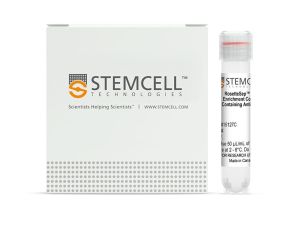
SU11274

HGF通路抑制剂;抑制MET
只有 %1
¥1,014.00

产品号 #(选择产品)

产品号 #73432_C

HGF通路抑制剂;抑制MET

总览

SU11274是一种选择性的ATP竞争性MET受体酪氨酸激酶抑制剂(IC₅₀=20 nM;Sattler et al.)。与其他受体酪氨酸激酶相比,它对MET表现出良好的选择性,对激酶插入域受体(KDR)和成纤维细胞生长因子受体1(FGFR1)的IC₅₀值分别为1.3 μM和9.7 μM(Sattler 等人)。它对某些MET突变体仍保留活性,例如H1112Y和M1268T(Sattler et al.)。

癌症研究
·诱导TPR-MET转化的小鼠前B细胞(Ba/F3)凋亡和细胞周期停滞(Sattler et al.)。
·体外抑制人头颈部鳞状细胞癌细胞系的细胞活力和迁移能力(Seiwert et al.)。
·体外抑制表达c-MET的人类非小细胞肺癌细胞系的细胞活力(Ma et al.)。

细胞类型
癌细胞及细胞系
 
种属
人,小鼠,非人灵长类,其他物种,大鼠
 
研究领域
癌症
 
CAS 编号
658084-23-2
 
化学式
C₂₈H₃₀ClN₅O₄S
 
纯度
≥98%
 
通路
HGF
 
靶点
MET
 

产品说明书及文档

请在《产品说明书》中查找相关支持信息和使用说明,或浏览下方更多实验方案。

Document Type
Product Name
Catalog #
Lot #
Language
Product Name
SU11274
Catalog #
73432
Lot #
BX20648 or higher
Language
English
Document Type
Safety Data Sheet
Product Name
SU11274
Catalog #
73432
Lot #
All
Language
English

相关材料与文献

技术资料 (2)

文献 (4)

A novel small molecule met inhibitor induces apoptosis in cells transformed by the oncogenic TPR-MET tyrosine kinase. Sattler M et al. Cancer research 2003

Abstract

The Met receptor tyrosine kinase has been shown to be overexpressed or mutated in a variety of solid tumors and has,therefore,been identified as a good candidate for molecularly targeted therapy. Activation of the Met tyrosine kinase by the TPR gene was originally described in vitro through carcinogen-induced rearrangement. The TPR-MET fusion protein contains constitutively elevated Met tyrosine kinase activity and constitutes an ideal model to study the transforming activity of the Met kinase. We found,when introduced into an interleukin 3-dependent cell line,TPR-MET induces factor independence and constitutive tyrosine phosphorylation of several cellular proteins. One major tyrosine phosphorylated protein was identified as the TPR-MET oncoprotein itself. Inhibition of the Met kinase activity by the novel small molecule drug SU11274 [(3Z)-N-(3-chlorophenyl)-3-([3,5-dimethyl-4-[(4-methylpiperazin-1-yl)carbonyl]-1H-pyrrol-2-yl]methylene)-N-methyl-2-oxo-2,3-dihydro-1H-indole-5-sulfonamide] led to time- and dose-dependent reduced cell growth. The inhibitor did not affect other tyrosine kinase oncoproteins,including BCR-ABL,TEL-JAK2,TEL-PDGFbetaR,or TEL-ABL. The Met inhibitor induced G(1) cell cycle arrest and apoptosis with increased Annexin V staining and caspase 3 activity. The autophosphorylation of the Met kinase was reduced on sites that have been shown previously to be important for activation of pathways involved in cell growth and survival,especially the phosphatidylinositol-3'-kinase and the Ras pathway. In particular,we found that the inhibitor blocked phosphorylation of AKT,GSK-3beta,and the pro-apoptotic transcription factor FKHR. The characterization of SU11274 as an effective inhibitor of Met tyrosine kinase activity illustrates the potential of targeting for Met therapeutic use in cancers associated with activated forms of this kinase.
The Met kinase inhibitor SU11274 exhibits a selective inhibition pattern toward different receptor mutated variants. Berthou S et al. Oncogene 2004

Abstract

Point mutations constitute a major mode of oncogenic activation of the Met receptor tyrosine kinase. Met is aberrantly activated in many types of human malignancies and its deregulated activity is correlated with aggressive tumor traits such as abnormal proliferation and survival,leading to tumor growth,local invasion and metastasis. Here we report that the Met kinase inhibitor SU11274 differentially affects the kinase activity and subsequent signaling of various mutant forms of Met. Two Met variants tested,M1268T and H1112Y,were potently inhibited by 2 microM SU11274,while two other variants,L1213V and Y1248H,remained resistant under similar experimental conditions. Inhibition of the kinase altered cell proliferation,morphology and motility,while cells containing resistant mutants appeared unaffected by the compound. The basis for the sensitivity or resistance to SU11274 is discussed in terms of the position of the mutations predicted from a homology model.
Functional expression and mutations of c-Met and its therapeutic inhibition with SU11274 and small interfering RNA in non-small cell lung cancer. Ma PC et al. Cancer research 2005 FEB

Abstract

Non-small cell lung cancer (NSCLC) is a difficult disease to treat. The c-Met receptor is an attractive potential target for novel therapeutic inhibition in human cancers. We provide strong evidence that c-Met is overexpressed,activated,and sometimes mutated in NSCLC cell lines and tumor tissues. Expression of c-Met was found in all (100%) of the NSCLC tumor tissues examined (n = 23) and most (89%) of the cell lines (n = 9). Sixty-one percent of tumor tissues strongly expressed total c-Met,especially adenocarcinoma (67%). Specific expression of phospho-Met (p-Met) [Y1003] and [Y1230/1234/1235] was seen by immunohistochemistry. p-Met expression was preferentially observed at the NSCLC tumor invasive fronts. c-Met alterations were identified within the semaphorin domain (E168D,L299F,S323G,and N375S) and the juxtamembrane domain (R988C,R988C + T1010I,S1058P,and alternative splice product skipping entire juxtamembrane domain) of a NSCLC cell line and adenocarcinoma tissues. We validated c-Met as potential therapeutic target using small interfering RNA down-regulation of the receptor expression by 50% to 60% in NSCLC cells. This led to inhibition of p-Met and phospho-AKT and up to 57.1 +/- 7.2% cell viability inhibition at 72 hours. The selective small molecule inhibitor of c-Met SU11274 inhibited cell viability in c-Met-expressing NSCLC cells. SU11274 also abrogated hepatocyte growth factor-induced phosphorylation of c-Met and its downstream signaling. Here,we provide first direct evidence by small interfering RNA targeting and small molecule inhibitor that c-Met is important in NSCLC biology and biochemistry. These results indicate that c-Met inhibition will be an important therapeutic strategy against NSCLC to improve its clinical outcome.

更多信息

更多信息
物种 人, 其它物种, 大鼠, 小鼠, 非人灵长类
Cas Number 658084-23-2
Chemical Formula C₂₈H₃₀ClN₅O₄S
纯度 ≥ 98%
Target MET
Pathway HGF
质量保证:

产品仅供研究使用,不用于针对人或动物的诊断或治疗。 欲获悉更多关于STEMCELL的质控信息,请访问 STEMCELL.CN/COMPLIANCE.
Copyright © 2026 by STEMCELL Technologies. All rights reserved.

在线联系