若您需要咨询产品或有任何技术问题,请通过官方电话 400 885 9050 或邮箱 info.cn@stemcell.com 与我们联系。

PD173074

酪氨酸激酶抑制剂;抑制 FGFR
只有 %1
¥4,486.00

产品号 #(选择产品)

产品号 #72162_C

酪氨酸激酶抑制剂;抑制 FGFR

总览

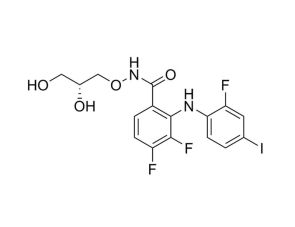
PD173074 是一种选择性、强效的 ATP 竞争性 FGFR 抑制剂。它同时作用于 FGFR3 和 FGFR1(IC50 分别为 5 和 21.5 nM),同时抑制 FGFR2、FGFR4 和 KDR。其效力比另一种常见的 FGFR 抑制剂 SU5402 强约 1000 倍。(Koziczak et al., Mohammadi et al., Trudel et al.)

重编程
·阻止使用 piggyBac 转座子产生的小鼠诱导多能干细胞的切除介导分化(Kaji et al.)。
·与 Oct4、Klf4、Klf2、LIF、CHIR99021 和 PD0325901 联合使用,可促进人胚胎干细胞 (ES) 重编程为 naïve 细胞,或使其维持在 naïve 状态。(Hanna et al.)

维护和自我更新
·抑制小鼠 ES 细胞分化并维持未分化状态(Kunath et al., Ying et al.)。

分化
·阻止小鼠 ES 细胞的神经分化(Stavridis et al.)。
·促进人 ES 细胞分化,但不会在 naïve 或“ground state”时起作用(Hanna et al.)。

别名
不适用
 
细胞类型
多能干细胞
 
种属
人,小鼠,非人灵长类,其他物种,大鼠
 
应用
分化,培养,重编程
 
研究领域
干细胞生物学
 
CAS 编号
219580-11-7
 
化学式
C₂₈H₄₁N₇O₃
 
分子量
523.7 g/mol
 
纯度
≥ 95 %
 
通路
酪氨酸激酶
 
靶点
FGFR
 

产品说明书及文档

请在《产品说明书》中查找相关支持信息和使用说明,或浏览下方更多实验方案。

Document Type
Product Name
Catalog #
Lot #
Language
Product Name
PD173074
Catalog #
72164
Lot #
All
Language
English
Document Type
Safety Data Sheet
Product Name
PD173074
Catalog #
72164
Lot #
All
Language
English

应用领域

本产品专为以下研究领域设计,适用于工作流程中的高亮阶段。探索这些工作流程,了解更多我们为各研究领域提供的其他配套产品。

相关材料与文献

技术资料 (3)

文献 (8)

Inhibition of fibroblast growth factor receptor 3 induces differentiation and apoptosis in t(4;14) myeloma. Trudel S et al. Blood 2004 MAY

Abstract

We have previously shown that dysregulation of fibroblast growth factor receptor 3 (FGFR3) by the t(4;14) translocation is a primary event in multiple myeloma (MM) and that activating mutations of FGFR3 are acquired in some cases. We describe here inhibition of wild-type (WT) and constitutively activated mutant FGFR3 autophosphorylation by the small molecule inhibitor,PD173074. Inhibition of FGFR3 in human myeloma cell lines was associated with decreased viability and tumor cell growth arrest. Further,morphologic,phenotypic,and functional changes typical of plasma cell (PC) differentiation,including increase in light-chain secretion and expression of CD31,were observed and this was followed by apoptosis. Finally,using a mouse model of FGFR3 myeloma,we demonstrate a delay in tumor progression and prolonged survival of mice treated with PD173074. These results indicate that inhibition of FGFR3,even in advanced disease associated with multiple genetic changes,may allow the cell to complete its developmental program and render it sensitive to apoptotic signals. In addition,this represents the validation of a therapeutic target in MM that may benefit patients who have a very poor prognosis with currently available treatments.
Blocking of FGFR signaling inhibits breast cancer cell proliferation through downregulation of D-type cyclins. Koziczak M et al. Oncogene 2004 APR

Abstract

Overexpression of fibroblast growth factor receptor (FGFR) tyrosine kinases has been found in many human breast cancers and has been associated with poor patient prognosis. In order to understand the mechanism by which FGFR mediates breast cancer cell proliferation,we used a low molecular weight compound,PD173074,that selectively inhibits FGFR tyrosine kinase activity and autophosphorylation. This potential anticancer agent caused a G1 growth arrest of MDA-MB-415,MDA-MB-453 and SUM 52 breast cancer cells. Our analyses revealed that FGFR signaling links to the cell cycle machinery via D-type cyclins. PD173074-mediated inhibition of FGFR activity caused downregulation of cyclin D1 and cyclin D2 expression,inhibition of cyclin D/cdk4 activity and,as a consequence,reduction of pRB phosphorylation. Retroviral-mediated ectopic expression of cyclin D1 prevented pRB hypophosphorylation and the cell cycle G1 block in PD173074-treated cells,suggesting a central role for D cyclins in proliferation of FGFR-driven breast cancer cells. The repression of FGFR activity caused downregulation of MAPK in MDA-MB-415 and MDA-MB-453 cells. In SUM 52 cells,both MAPK and PI3K signaling pathways were suppressed. In conclusion,results shown here describe a mechanism by which FGFR promotes proliferation of breast cancer cells.
A discrete period of FGF-induced Erk1/2 signalling is required for vertebrate neural specification. Stavridis MP et al. Development (Cambridge,England) 2007 AUG

Abstract

Neural tissue formation is induced by growth factors that activate networks of signal transduction cascades that ultimately lead to the expression of early neural genes,including transcription factors of the SoxB family. Here,we report that fibroblast growth factor (FGF)-induced Erk1/2 (Mapk3 and Mapk1,respectively) mitogen-activated protein kinase (MAPK),but not phosphatidylinositol 3'-OH kinase (PI3K,Pik3r1),signalling is required for neural specification in mouse embryonic stem (ES) cells and in the chick embryo. Further,blocking Erk1/2 inhibits the onset of key SoxB genes in both mouse ES cells (Sox1) and chick embryos (Sox2 and Sox3) and,in both contexts,Erk1/2 signalling is required during only a narrow time window,as neural specification takes place. In the absence of Erk1/2 signalling,differentiation of ES cells stalls following Fgf5 upregulation. Using differentiating ES cells as a model for neural specification,we demonstrate that sustained Erk1/2 activation controls the transition from an Fgf5-positive,primitive ectoderm-like cell state to a neural progenitor cell state without attenuating bone morphogenetic protein (BMP) signalling and we also define the minimum period of Erk1/2 activity required to mediate this key developmental step. Together,these findings identify a conserved,specific and stage-dependent requirement for Erk1/2 signalling downstream of FGF-induced neural specification in higher vertebrates and provide insight into the signalling dynamics governing this process.

更多信息

更多信息
Molecular Weight 523.7 g/mol
物种 人, 其它物种, 大鼠, 小鼠, 非人灵长类
Alternative Names Not applicable
Cas Number 219580-11-7
Chemical Formula C₂₈H₄₁N₇O₃
纯度 ≥ 95 %
Target FGFR
Pathway Tyrosine Kinase
质量保证:

产品仅供研究使用,不用于针对人或动物的诊断或治疗。 欲获悉更多关于STEMCELL的质控信息,请访问 STEMCELL.CN/COMPLIANCE.
Copyright © 2026 by STEMCELL Technologies. All rights reserved.

在线联系