产品号 # 200-0960
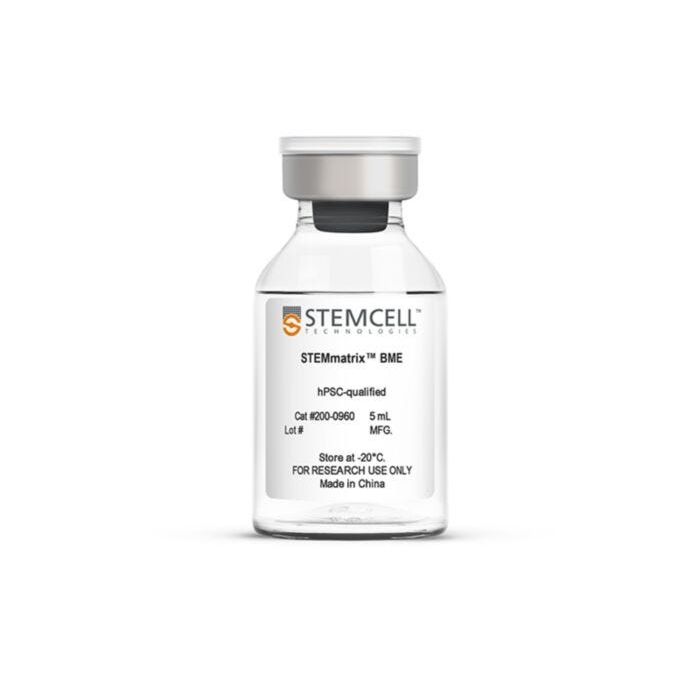
基底膜提取物,在无饲养层的人多能干细胞 (hPSCs) 培养体系中有效支持细胞维持于未分化状态
若您需要咨询产品或有任何技术问题,请通过官方电话 400 885 9050 或邮箱 info.cn@stemcell.com 与我们联系。
基底膜提取物,在无饲养层的人多能干细胞 (hPSCs) 培养体系中有效支持细胞维持于未分化状态。
经hPSC培养性能验证的基底膜提取物,在无饲养层的人多能干细胞 (hPSCs) 培养体系中有效支持细胞维持于未分化状态。
基底膜提取物,在无饲养层的人多能干细胞 (hPSCs) 培养体系中有效支持细胞维持于未分化状态
Figure 1. Robust hPSC Expansion Is Observed in STEMmatrix™ BME Cultures, with Comparable Performance to Corning® Matrigel®
Average fold expansion of clump-passaged hPSCs (± SEM) over 10 passages was similar between cultures grown on STEMmatrix™ BME and Corning® Matrigel® hESC-Qualified Matrix. Cultures were maintained in mTeSR™ Plus (Catalog #100-0276) or mTeSR™1 (Catalog #85850) media at 37°C and passaged every 7 days. Graph shows pooled data from H9 and SCTi003-A (Catalog #200-0511) hPSC cultures.
Figure 2. STEMmatrix™ BME Supports Large hPSC Colony Sizes, with Comparable Performance to Corning® Matrigel®
Colony sizes of H9 and SCTi003-A (Catalog #200-0511) hPSCs grown on STEMmatrix™ BME in mTeSR™ Plus (Catalog #100-0276) or mTeSR™1 (Catalog #85850) media (± SD), averaged over 10 passages, were comparable to those grown on Corning® Matrigel® hESC-Qualified Matrix.
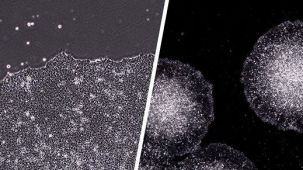
Figure 3. Normal hPSC Morphology Is Observed in Cells Cultured on STEMmatrix™ BME
Microscope images are shown of (A) H9 and (B) SCTi003-A (Catalog #200-0511) PSCs grown on STEMmatrix™ BME or Corning® Matrigel® hESC-Qualified Matrix in either mTeSR™ Plus (Catalog #100-0276) or mTeSR™1 (Catalog #85850) media, all o f which exhibit comparable, normal morphology. Cells were imaged on the day of passage (Day 7) and display a highly multilayered and densely packed appearance.
Figure 4. hiPSC Morphology Is Consistent Across STEMmatrix™ BME Lots and Comparable to Corning® Matrigel® Control
Representative images show WLS-1C hiPSCs cultured in mTeSR™ Plus (Catalog #100-0276) on Corning® Matrigel® hESC-Qualified Matrix or one of three STEMmatrix™ BME lots. Morphology was normal and consistent across all STEMmatrix™ BME lots tested, and comparable to the Matrigel® control.
Figure 5. Undifferentiated Cell Markers Are Highly Expressed in hPSCs Grown on STEMmatrix™ BME, with Comparable Expression Levels to Corning® Matrigel®
H9 and SCTi003-A (Catalog #200-0511) hPSCs were cultured in mTeSR™ Plus (Catalog #100-0276) or mTeSR™1 media (Catalog #85850) with either STEMmatrix™ BME or Corning® Matrigel® hESC-Qualified Matrix, then characterized for undifferentiated cell markers using flow cytometry. Within each cell and media pairing, STEMmatrix™ BME and Corning® Matrigel® conditions exhibited similar expression levels of the undifferentiated cell markers OCT4 (A) and TRA-1-60 (B). Graphs show the average gene expression (± SD) from duplicate wells every 5 passages, up to a total of 10 passages.
Figure 6. hPSCs Grown on STEMmatrix™ BME and Differentiated into Mesoderm, Endoderm, and Ectoderm Cells Show High Expression of Germ Line-Specific Markers, with Results Comparable to Corning® Matrigel®
Fold expression changes of mesoderm-, endoderm-, and ectoderm-specific genes are shown for cells derived from the SCTi003-A hiPSC line (Catalog #200-0511) that were grown on either STEMmatrix™ BME or Corning® Matrigel® in mTeSR™ Plus (Catalog #100-0276). Cells were grown and differentiated using the STEMdiff™ Trilineage Differentiation Kit (Catalog #05230) and STEMdiff™ SMADi Neural Induction Kit (Catalog #08581) on each respective matrix, and harvested once confluent. qPCR analysis was completed using the Human Pluripotent Stem Cell Trilineage Differentiation qPCR Array (Catalog #07515) and STEMCELL’s online qPCR analysis tool. For additional information about the trilineage gene expression markers included in this evaluation, or to explore the qPCR analysis tool, visit www.stemcell.com/qPCRanalysis.
Figure 7. hiPSC-derived Mesoderm, Endoderm, and Ectoderm Cells Grown on STEMmatrix™ BME Demonstrate High Expression of Germ Line-Specific Markers in Flow Cytometry Analysis
WLS-1C hiPSCs were grown on STEMmatrix™ BME or Corning® Matrigel® hESC-Qualified Matrix in either (A) mTeSR™ Plus (Catalog #100-0276) or (B) mTeSR™ 1 (Catalog #85850), then dif ferentiated to mesoderm, endoderm, and ectoderm cells using the STEMdiff™ Trilineage Differentiation Kit (Catalog #07515) on each respective matrix. Once confluent, cells were harvested, and expression of germ line-specific markers was evaluated using flow cytometry. The mesoderm, endoderm, and ectoderm-specific markers were highly expressed in each respective germ line, and expression levels (± SD) were comparable between STEMmatrix™ BME and Corning® Matrigel® conditions.
Figure 8. hPSCs Cultured on STEMmatrix™ BME Are Karyotypically Normal
A genetic analysis of H9 hPSCs grown on STEMmatrix™ BME or Corning® Matrigel® hESC-Qualified Matrix in mTeSR™1 medium (Catalog #85850) was performed using the hPSC Genetic Analysis Kit (Catalog #07550). No karyotypic abnormalities were observed in either STEMmatrix™ BME or Corning® Matrigel® conditions. Data are reported as fold expression change relative to a genomic DNA control (± SD).
Figure 9. hPSCs Grown on STEMmatrix™ BME Exhibit Robust hPSC Expansion, High Expression of Undifferentiated Markers, and Normal Morphology, with Comparable Results to Corning® Matrigel®
H9 hPSCs were expanded in single-cell culture on either STEMmatrix™ BME or Corning® Matrigel® hESC-Qualified Matrix in eTeSR™ maintenance medium (Catalog #100-1215). Cultures were incubated at 37°C and passaged every 4 or 5 days. (A) Average fold expansion per day (±SD), calculated over 10 passages, was similar between the two matrices. (B) Accumulated cell numbers (±SD), shown over 10 passages, were also comparable between the two matrices. (C) Expression levels of OCT4 and TRA-1-60 (±SD), markers of the undifferentiated state, were similar between STEMmatrix™ BME and Corning® Matrigel® conditions. Bars represent the average of duplicate wells every 5 passages, up to a total of 10 passages. (D) hPSCs grown on STEMmatrix™ BME or Corning® Matrigel® demonstrated normal, comparable morphology in microscope images. Cells were imaged on the day of passage (Day 4 or 5) and appeared densely packed.
请在《产品说明书》中查找相关支持信息和使用说明,或浏览下方更多实验方案。
本产品专为以下研究领域设计,适用于工作流程中的高亮阶段。探索这些工作流程,了解更多我们为各研究领域提供的其他配套产品。
Thank you for your interest in IntestiCult™ Organoid Growth Medium (Human). Please provide us with your contact information and your local representative will contact you with a customized quote. Where appropriate, they can also assist you with a(n):
Estimated delivery time for your area
Product sample or exclusive offer
In-lab demonstration
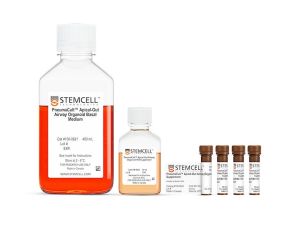
无血清和无BPE培养基,用于将人原代呼吸道上皮细胞分化为成熟的包含基底细胞、纤毛细胞和分泌细胞的顶端外翻呼吸道类器官
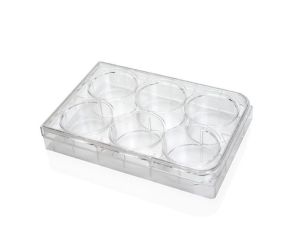
透明聚苯乙烯平底、经组织培养处理的带盖多孔细胞培养板
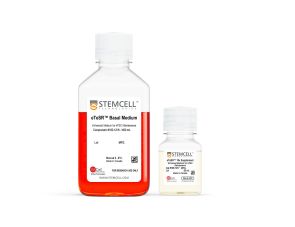
稳定的、无饲养层的培养基,适用于人类多能干细胞的单细胞传代
透明聚苯乙烯平底、经组织培养处理的带盖多孔细胞培养板
人多能干细胞系,冷冻
cGMP,稳定无饲养层维持培养基,适用于人ES和iPS 细胞
cGMP级、无酶的人多能干细胞选择与传代试剂
Quality Statement:
PRODUCTS ARE FOR RESEARCH USE ONLY AND NOT INTENDED FOR HUMAN OR ANIMAL DIAGNOSTIC OR THERAPEUTIC USES UNLESS OTHERWISE STATED.
扫描二维码或搜索微信号STEMCELLTech,即可关注我们的微信平台,第一时间接收丰富的技术资源和最新的活动信息。
如您有任何问题,欢迎发消息给STEMCELLTech微信公众平台,或与我们通过电话/邮件联系:400 885 9050 INFO.CN@STEMCELL.COM。
在线联系