若您需要咨询产品或有任何技术问题,请通过官方电话 400 885 9050 或邮箱 info.cn@stemcell.com 与我们联系。

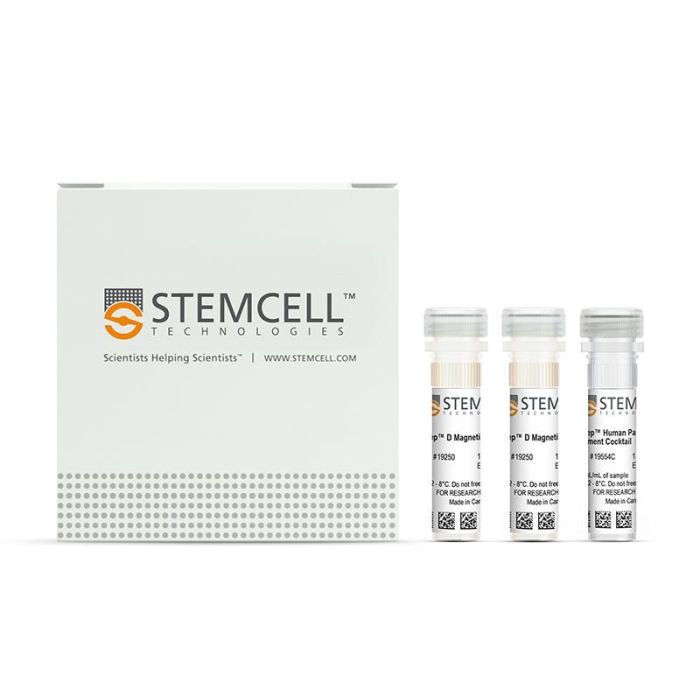
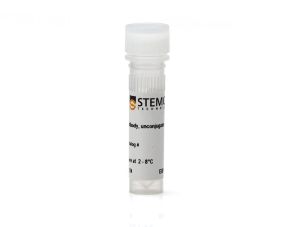
EasySep™人Pan-B细胞富集试剂盒

免疫磁珠负选不带标记的人pan-B细胞
只有 %1
¥10,380.00

产品号 #(选择产品)

产品号 #19554_C

免疫磁珠负选不带标记的人pan-B细胞

产品优势

  • 操作简单、快捷,且无需分离柱
  • 纯度高达99%
  • 分选得到的细胞不带标记

产品组分包括

  • EasySep™人Pan-B细胞富集试剂盒(产品号 #19554)
    • EasySep™人Pan-B细胞富集抗体混合物,1 mL
    • EasySep™ D Magnetic Particles磁珠,2 x 1 mL
  • RoboSep™人Pan-B细胞富集试剂盒(产品号 #19554RF)
    • EasySep™人Pan-B细胞富集抗体混合物,1 mL
    • EasySep™ D Magnetic Particles磁珠,2 x 1 mL
    • RoboSep™ 缓冲液(产品号 #20104)
    • RoboSep™过滤吸头(产品号 #20125)
专为您的实验方案打造的产品
要查看实验方案所需的所有配套产品,请参阅《实验方案与技术文档》

总览

通过免疫磁珠负选,从新鲜或冻存的人外周血单个核细胞 (PBMC)或裂解的白细胞单采术样本中分选出高度纯化的B细胞(包括浆细胞)。EasySep™技术结合单克隆抗体的特异性和无柱磁分选系统的简便性,已在发表的研究中广泛应用超过20年。

在该EasySep™负选流程中,非目的细胞通过抗体复合物与磁珠标记。表达以下标记的非目的细胞将被去除:CD2、CD3、CD14、CD16、CD36、CD42b、CD56、CD66b、CD123及glyA。使用EasySep™磁极吸附后,通过简单地将目的细胞倾倒或吸取至一个新的试管中,即可将被磁珠标记的细胞与不带标记的目的细胞分离开来。经磁珠分选后,目的B细胞可立即用于流式细胞术、细胞培养或DNA/RNA提取等下游应用。

如需从正常样本中仅分离CD43阴性B细胞,推荐使用 EasySep™ 人B细胞富集试剂盒(产品号 #19054)。

如需从B细胞白血病或淋巴瘤患者或B细胞可能表达CD43、CD36和/或CD123的其他疾病患者的外周血或其他组织中富集B细胞,建议使用不去除CD43的EasySep™

人B细胞富集试剂盒 II(产品号 #17963)。

了解更多EasySep™免疫磁珠技术的工作原理,或者如何通过RoboSep™实现全自动化免疫磁珠细胞分选。探索为您的实验流程优化的更多产品,包括培养基、补充剂、抗体等。

磁极兼容性
• EasySep™磁极(产品号 #18000)
• “The Big Easy” EasySep™磁极(产品号 #18001)
• Easy 50 EasySep™磁极(产品号 #18002)
• RoboSep™-S(产品号 #21000)
 
分类
细胞分选试剂盒
 
细胞类型
B 细胞,血浆
 
种属

 
样本来源
白细胞单采术样本、PBMC
 
分选方法
负选
 
应用
细胞分选
 
品牌
EasySep,RoboSep
 
研究领域
免疫
 

实验数据

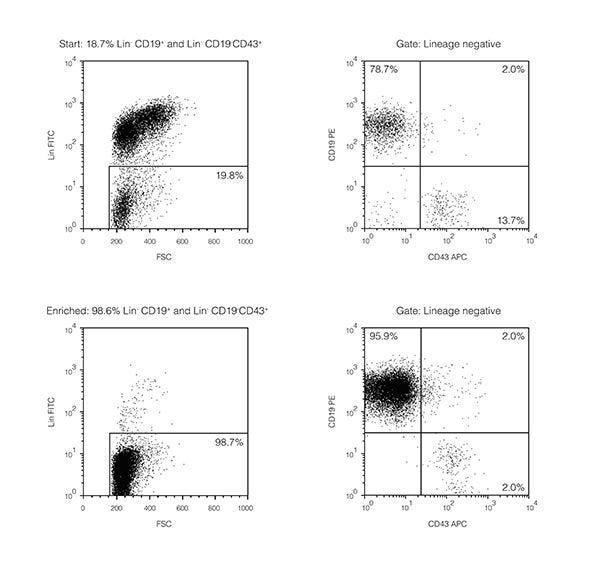
FACS Profile Results With EasySep™ Human Pan-B Cell Enrichment Kit

Figure 1. Typical EasySep™ Human Pan-B Cell Enrichment Profile

Starting with nucleated cells, the pan-B cell [Lineage (CD4, CD8, CD14, CD16, CD56) negative, CD19+ and CD19-CD43+] content of the enriched fraction typically ranges from 90 - 99%.

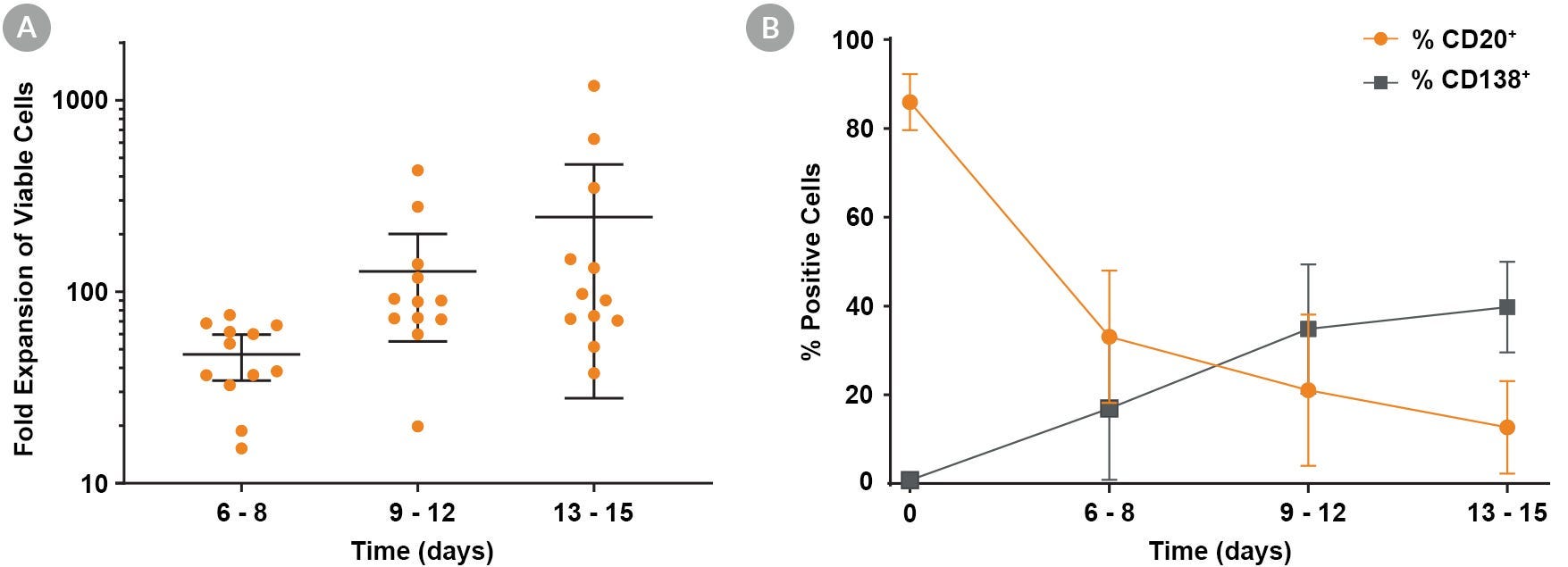
Expansion and Maturation of Human B Cells with ImmunoCult™ Human B Cell Expansion Kit

Figure 2. Expansion and Maturation of Human B Cells with ImmunoCult™ Human B Cell Expansion Kit

B cells isolated from human peripheral blood mononuclear cells (PBMCs) using EasySep™ Human Pan-B Cell Enrichment Kit (Catalog #19554) were seeded at 1 x 10⁵ cells/well in 24-well tissue culture plates with ImmunoCult™-ACF Human B Cell Expansion Supplement and ImmunoCult™-XF B Cell Base Medium, included in the ImmunoCult™ Human B Cell Expansion Kit (Catalog #100-0645). The cells were passaged every 3 - 4 days.

(A) Fold expansion of viable cells is shown for n = 12 donors, with bars representing the mean and 95% confidence level (range 38- to 1190-fold at Day 14 ± 1 day).

(B) Expression of CD138 and CD20 was analyzed by flow cytometry at each timepoint (data represent % positive viable cells; mean ± 1 SD). The observed changes indicate maturation of B cells to plasma cells/blasts.

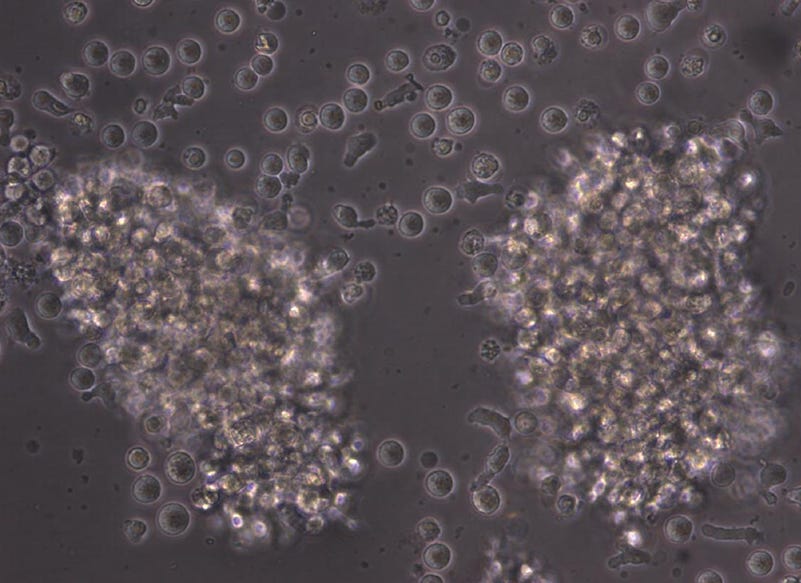
Light Microscopy Image of Cultured Human B Cells

Figure 3. Light Microscopy Image of Cultured Human B Cells

B cells isolated from human PBMCs using EasySep™ Human Pan-B Cell Enrichment Kit (Catalog #19554) were seeded at 1 x 10⁵ cells/well in a 24-well tissue culture plate and cultured with the ImmunoCult™ Human B Cell Expansion Kit (Catalog #100-0646). The cells were passaged on Day 4 after seeding and imaged at 40X magnification on Day 6.

产品说明书及文档

请在《产品说明书》中查找相关支持信息和使用说明,或浏览下方更多实验方案。

Document Type
Product Name
Catalog #
Lot #
Language
Document Type
产品说明书
Catalog #
19554RF
Lot #
All
Language
中文
Document Type
产品说明书
Catalog #
19554
Lot #
All
Language
中文
Catalog #
19554RF
Lot #
All
Language
English
Catalog #
19554
Lot #
All
Language
English
Document Type
Safety Data Sheet 1
Catalog #
19554RF
Lot #
All
Language
English
Document Type
Safety Data Sheet 2
Catalog #
19554RF
Lot #
All
Language
English
Document Type
Safety Data Sheet 3
Catalog #
19554RF
Lot #
All
Language
English
Document Type
Safety Data Sheet 1
Catalog #
19554
Lot #
All
Language
English
Document Type
Safety Data Sheet 2
Catalog #
19554
Lot #
All
Language
English

应用领域

本产品专为以下研究领域设计,适用于工作流程中的高亮阶段。探索这些工作流程,了解更多我们为各研究领域提供的其他配套产品。

相关材料与文献

技术资料 (9)

常见问题 (12)

Can EasySep™ be used for either positive or negative selection?

Yes. The EasySep™ kits use either a negative selection approach by targeting and removing unwanted cells or a positive selection approach targeting desired cells. Depletion kits are also available for the removal of cells with a specific undesired marker (e.g. GlyA).

How does the separation work?

Magnetic particles are crosslinked to cells using Tetrameric Antibody Complexes (TAC). When placed in the EasySep™ Magnet, labeled cells migrate to the wall of the tube. The unlabeled cells are then poured off into a separate fraction.

Which columns do I use?

The EasySep™ procedure is column-free. That's right - no columns!

How can I analyze the purity of my enriched sample?

The Product Information Sheet provided with each EasySep™ kit contains detailed staining information.

Can EasySep™ separations be automated?

Yes. RoboSep™, the fully automated cell separator, automates all EasySep™ labeling and cell separation steps.

Can EasySep™ be used to isolate rare cells?

Yes. We recommend a cell concentration of 2x10⁸ cells/mL and a minimum working volume of 100 µL. Samples containing 2x10⁷ cells or fewer should be suspended in 100 µL of buffer.

Are the EasySep™ magnetic particles FACS-compatible?

Yes, the EasySep™ particles are flow cytometry-compatible, as they are very uniform in size and about 5000X smaller than other commercially available magnetic beads used with column-free systems.

Can the EasySep™ magnetic particles be removed after enrichment?

No, but due to the small size of these particles, they will not interfere with downstream applications.

How does the binding of the EasySep™ magnetic particle affect the cells? is the function of positively selected cells altered by the bound particles?

Hundreds of publications have used cells selected with EasySep™ positive selection kits for functional studies. Our in-house experiments also confirm that selected cells are not functionally altered by the EasySep™ magnetic particles.

If particle binding is a key concern, we offer two options for negative selection. The EasySep™ negative selection kits can isolate untouched cells with comparable purities, while RosetteSep™ can isolate untouched cells directly from whole blood without using particles or magnets.

Can I alter the separation time in the magnet?

Yes; however, this may impact the kit's performance. The provided EasySep™ protocols have already been optimized to balance purity, recovery and time spent on the isolation.

For positive selection, can I perform more than 3 separations to increase purity?

Yes, the purity of targeted cells will increase with additional rounds of separations; however, cell recovery will decrease.

Which cell separation kits are compatible with the "Easy 50" EASYSEP™ magnet?

At present, the "Easy 50" EasySep™ magnet is only compatible with EasySep™ kits for human cell separation.

T Cells: 19051 (T Cells), 19052 (CD4 T cells), 19157 (Memory CD4 T Cells), 19053 (CD8 T Cells), 19159 (Memory CD8 T Cells - please contact Tech Support)

B Cells: 19054 (B Cells), 19254 (Naïve B cells)

Other Cell Types: 19055 (NK Cells), 19058 (Monocytes without CD16 depletion), 19059 (Monocytes), 19062 (Plasmacytoid DCs), 19251 (pan-DCs)

For HLA Analysis: 19951HLA (T Cells from whole blood), 19954HLA (B Cells from whole blood), 19961HLA (Total lymphocytes from whole blood)

文献 (11)

HIF-1α regulates the interaction of chronic lymphocytic leukemia cells with the tumor microenvironment. Valsecchi R et al. Blood 2016 APR

Abstract

Hypoxia-inducible transcription factors (HIFs) regulate a wide array of adaptive responses to hypoxia and are often activated in solid tumors and hematologic malignancies due to intratumoral hypoxia and emerging new layers of regulation. We found that in chronic lymphocytic leukemia (CLL),HIF-1α is a novel regulator of the interaction of CLL cells with protective leukemia microenvironments and,in turn,is regulated by this interaction in a positive feedback loop that promotes leukemia survival and propagation. Through unbiased microarray analysis,we found that in CLL cells,HIF-1α regulates the expression of important chemokine receptors and cell adhesion molecules that control the interaction of leukemic cells with bone marrow and spleen microenvironments. Inactivation of HIF-1α impairs chemotaxis and cell adhesion to stroma,reduces bone marrow and spleen colonization in xenograft and allograft CLL mouse models,and prolongs survival in mice. Of interest,we found that in CLL cells,HIF-1α is transcriptionally regulated after coculture with stromal cells. Furthermore,HIF-1α messenger RNA levels vary significantly within CLL patients and correlate with the expression of HIF-1α target genes,including CXCR4,thus further emphasizing the relevance of HIF-1α expression to CLL pathogenesis.
Germline-encoded neutralization of a Staphylococcus aureus virulence factor by the human antibody repertoire. Yeung YA et al. Nature communications 2016 NOV

Abstract

Staphylococcus aureus is both an important pathogen and a human commensal. To explore this ambivalent relationship between host and microbe,we analysed the memory humoral response against IsdB,a protein involved in iron acquisition,in four healthy donors. Here we show that in all donors a heavily biased use of two immunoglobulin heavy chain germlines generated high affinity (pM) antibodies that neutralize the two IsdB NEAT domains,IGHV4-39 for NEAT1 and IGHV1-69 for NEAT2. In contrast to the typical antibody/antigen interactions,the binding is primarily driven by the germline-encoded hydrophobic CDRH-2 motifs of IGHV1-69 and IGHV4-39,with a binding mechanism nearly identical for each antibody derived from different donors. Our results suggest that IGHV1-69 and IGHV4-39,while part of the adaptive immune system,may have evolved under selection pressure to encode a binding motif innately capable of recognizing and neutralizing a structurally conserved protein domain involved in pathogen iron acquisition.
Germinal centre-driven maturation of B cell response to mRNA vaccination. W. Kim et al. Nature 2022 apr

Abstract

Germinal centres (GC) are lymphoid structures in which B cells acquire affinity-enhancing somatic hypermutations (SHM),with surviving clones differentiating into memory B cells (MBCs) and long-lived bone marrow plasma cells1-5 (BMPCs). SARS-CoV-2 mRNA vaccination induces a persistent GC response that lasts for at least six months in humans6-8. The fate of responding GC B cells as well as the functional consequences of such persistence remain unknown. Here,we detected SARS-CoV-2 spike protein-specific MBCs in 42 individuals who had received two doses of the SARS-CoV-2 mRNA vaccine BNT162b2 six month earlier. Spike-specific IgG-secreting BMPCs were detected in 9 out of 11 participants. Using a combined approach of sequencing the B cell receptors of responding blood plasmablasts and MBCs,lymph node GC B cells and plasma cells and BMPCs from eight individuals and expression of the corresponding monoclonal antibodies,we tracked the evolution of 1,540 spike-specific B cell clones. On average,early blood spike-specific plasmablasts exhibited the lowest SHM frequencies. By contrast,SHM frequencies of spike-specific GC B cells increased by 3.5-fold within six months after vaccination. Spike-specific MBCs and BMPCs accumulated high levels of SHM,which corresponded with enhanced anti-spike antibody avidity in blood and enhanced affinity as well as neutralization capacity of BMPC-derived monoclonal antibodies. We report how the notable persistence of the GC reaction induced by SARS-CoV-2 mRNA vaccination in humans culminates in affinity-matured long-term antibody responses that potently neutralize the virus.

更多信息

更多信息
物种
Magnet Compatibility • EasySep™ Magnet (Catalog #18000) • “The Big Easy” EasySep™ Magnet (Catalog #18001) • Easy 50 EasySep™ Magnet (Catalog #18002) • RoboSep™-S (Catalog #21000)
样本来源 PBMC, 白细胞单采术样本
Selection Method Negative
标记抗体
质量保证:

产品仅供研究使用,不用于针对人或动物的诊断或治疗。 欲获悉更多关于STEMCELL的质控信息,请访问 STEMCELL.CN/COMPLIANCE.
Copyright © 2026 by STEMCELL Technologies. All rights reserved.

在线联系