若您需要咨询产品或有任何技术问题,请通过官方电话 400 885 9050 或邮箱 info.cn@stemcell.com 与我们联系。

EasySep™人B细胞分选试剂盒

免疫磁珠负选人B细胞
只有 %1
¥11,736.00

产品号 #(选择产品)

产品号 #17954_C

免疫磁珠负选人B细胞

产品优势

  • 操作简单、快捷,且无需分离柱
  • 纯度高达96 %,回收率高
  • 分选得到的细胞不带标记

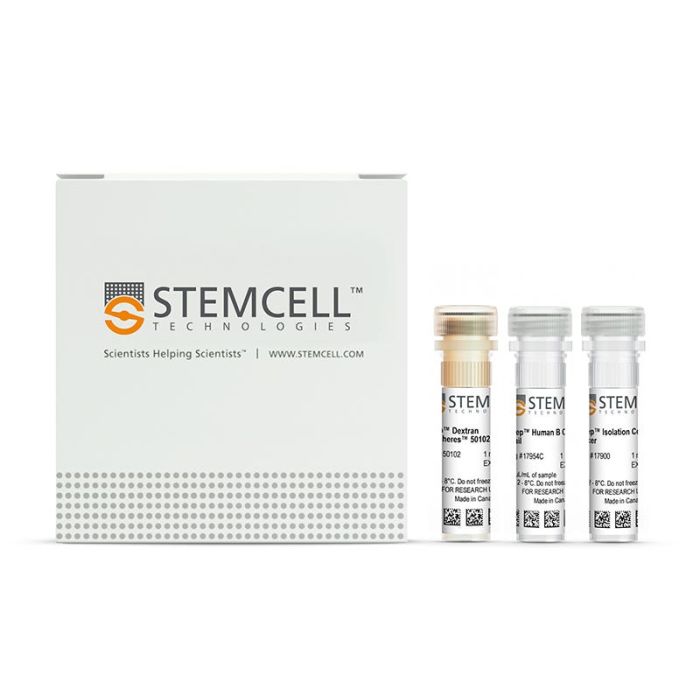
产品组分包括

  • EasySep™人B 细胞分选试剂盒(产品号 #17954)
    • EasySep™ 人B细胞分选抗体混合物, 1 mL
    • EasySep™ Dextran RapidSpheres™磁珠, 1 mL
    • EasySep™分选抗体混合物增强剂, 1 mL    
  • EasySep™人B 细胞分选试剂盒(产品号 #100-0971)
    • EasySep™ 人B细胞抗体混合物 ,1 x 10 mL(产品号 #300-0510)
    • EasySep™ 分选抗体混合物增强剂,1 x 10 mL(产品号 #300-0511)
    • EasySep™Dextran RapidSpheres™,1 x 10 mL(产品号 #300-0380)
  • RoboSep™ 人B细胞分选试剂盒(产品号 #17954RF)
    • EasySep™ 人B细胞分选抗体混合物, 1 mL
    • EasySep™ Dextran RapidSpheres™磁珠, 1 mL
    • EasySep™分选抗体混合物增强剂, 1 mL    
    • RoboSep™ 缓冲液(产品号 #20104)
    • RoboSep™过滤吸头(产品号 #20125)
New look, same high quality and support! You may notice that your instrument or reagent packaging looks slightly different from images displayed on the website, or from previous orders. We are updating our look but rest assured, the products themselves and how you should use them have not changed. Learn more
专为您的实验方案打造的产品
要查看实验方案所需的所有配套产品,请参阅《实验方案与技术文档》

总览

使用 EasySep™ 人B细胞分离试剂盒,可轻松高效地从新鲜或冻存的人外周血单个核细胞(PBMCs)或白细胞单采术样本中通过免疫磁珠负选获得高纯度的人B细胞。EasySep™技术结合单克隆抗体的特异性和免磁柱系统的简便性,已在发表的研究中广泛应用超过20年。

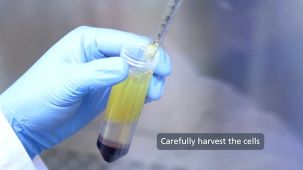
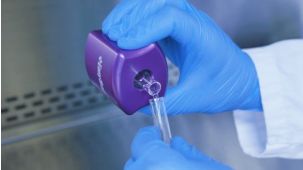
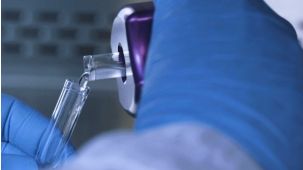
在该  EasySep™负 选流程中,非目的细胞会被抗体复合物与磁珠标记。表达以下标记物的非目的细胞将被靶向去除:CD2、CD3、CD14、CD16、CD36、CD43、CD56、CD66b和 GlyA。通过EasySep™磁极将被磁珠标记的细胞与未被标记的目的细胞分离,只需将目的细胞倾倒或移液至新试管中。磁珠分选最快仅需9分钟,所得目的B细胞即可用于流式细胞术、培养或DNA/RNA提取等下游应用。

该试剂盒可替代EasySep™人B细胞富集试剂盒 (产品号 #19054) 以实现更快速地细胞分选。

如需从白细胞单采术样本中大规模分选人B细胞,请选用大包装(1x10¹⁰ 细胞)试剂盒(产品号  #100-0971)。

了解更多关于免疫磁珠EasySep™技术的工作原理,或如何通过RoboSep™实现免疫磁珠细胞分选全自动化。或直接选用 EasySep™ 人B细胞分选试剂盒提供的即用型、符合伦理道德的原代人外周血B细胞。探索其他针对您的工作流程优化的产品,包括培养基、补充剂、抗体等。     


磁极兼容性
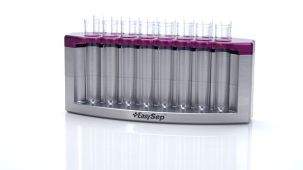
• EasySep™磁极(产品号 #18000)
• “The Big Easy” EasySep™磁极(产品号 #18001)
• Easy 50 EasySep™磁极(产品号 #18002)
• EasyEights™ EasySep™磁极(产品号 #18103)
• RoboSep™-S(产品号 #21000)
• Easy 250 EasySep™磁极(产品号 #100-0821)
 
分类
细胞分选试剂盒
 
细胞类型
B 细胞
 
种属

 
样本来源
白细胞单采术样本、PBMC
 
分选方法
负选
 
应用
细胞分选
 
品牌
EasySep,RoboSep
 
研究领域
嵌合体,HLA,免疫
 

实验数据

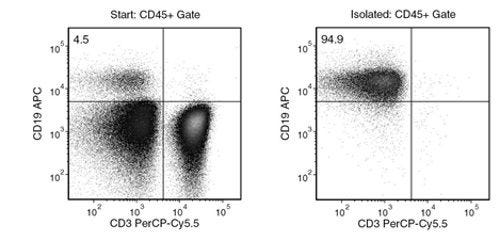
Figure 1. Typical EasySep™ Human B Cell Isolation Profile

Starting with human PBMCs, the B cell (CD3-CD19+) content of the isolated fraction is typically 95.1 ± 1.4% (mean ± SD). In the example above, the final purities of the start and isolated fractions are 4.5% and 94.9%, respectively.

产品说明书及文档

请在《产品说明书》中查找相关支持信息和使用说明,或浏览下方更多实验方案。

Document Type
Product Name
Catalog #
Lot #
Language
Catalog #
100-0971
Lot #
All
Language
English
Catalog #
17954
Lot #
All
Language
English
Catalog #
17954RF
Lot #
All
Language
English
Document Type
Safety Data Sheet 1
Catalog #
100-0971
Lot #
All
Language
English
Document Type
Safety Data Sheet 2
Catalog #
100-0971
Lot #
All
Language
English
Document Type
Safety Data Sheet 1
Catalog #
17954
Lot #
All
Language
English
Document Type
Safety Data Sheet 2
Catalog #
17954
Lot #
All
Language
English
Document Type
Safety Data Sheet 3
Catalog #
17954
Lot #
All
Language
English
Document Type
Safety Data Sheet 1
Catalog #
17954RF
Lot #
All
Language
English
Document Type
Safety Data Sheet 2
Catalog #
17954RF
Lot #
All
Language
English
Document Type
Safety Data Sheet 3
Catalog #
17954RF
Lot #
All
Language
English
Document Type
Safety Data Sheet 4
Catalog #
17954RF
Lot #
All
Language
English

应用领域

本产品专为以下研究领域设计,适用于工作流程中的高亮阶段。探索这些工作流程,了解更多我们为各研究领域提供的其他配套产品。

相关材料与文献

技术资料 (13)

常见问题 (11)

Can EasySep™ be used for either positive or negative selection?

Yes. The EasySep™ kits use either a negative selection approach by targeting and removing unwanted cells or a positive selection approach targeting desired cells. Depletion kits are also available for the removal of cells with a specific undesired marker (e.g. GlyA).

How does the separation work?

Magnetic particles are crosslinked to cells using Tetrameric Antibody Complexes (TAC). When placed in the EasySep™ Magnet, labeled cells migrate to the wall of the tube. The unlabeled cells are then poured off into a separate fraction.

Which columns do I use?

The EasySep™ procedure is column-free. That's right - no columns!

How can I analyze the purity of my enriched sample?

The Product Information Sheet provided with each EasySep™ kit contains detailed staining information.

Can EasySep™ separations be automated?

Yes. RoboSep™, the fully automated cell separator, automates all EasySep™ labeling and cell separation steps.

Can EasySep™ be used to isolate rare cells?

Yes. We recommend a cell concentration of 2x10⁸ cells/mL and a minimum working volume of 100 µL. Samples containing 2x10⁷ cells or fewer should be suspended in 100 µL of buffer.

Are the EasySep™ magnetic particles FACS-compatible?

Yes, the EasySep™ particles are flow cytometry-compatible, as they are very uniform in size and about 5000X smaller than other commercially available magnetic beads used with column-free systems.

Can the EasySep™ magnetic particles be removed after enrichment?

No, but due to the small size of these particles, they will not interfere with downstream applications.

Can I alter the separation time in the magnet?

Yes; however, this may impact the kit's performance. The provided EasySep™ protocols have already been optimized to balance purity, recovery and time spent on the isolation.

For positive selection, can I perform more than 3 separations to increase purity?

Yes, the purity of targeted cells will increase with additional rounds of separations; however, cell recovery will decrease.

How does the binding of the EasySep™ magnetic particle affect the cells? is the function of positively selected cells altered by the bound particles?

Hundreds of publications have used cells selected with EasySep™ positive selection kits for functional studies. Our in-house experiments also confirm that selected cells are not functionally altered by the EasySep™ magnetic particles.

If particle binding is a key concern, we offer two options for negative selection. The EasySep™ negative selection kits can isolate untouched cells with comparable purities, while RosetteSep™ can isolate untouched cells directly from whole blood without using particles or magnets.

文献 (22)

Construction and characterization of chimeric FcγR T cells for universal T cell therapy Experimental Hematology & Oncology 2025 Jan

Abstract

BackgroundSeveral approaches are being explored for engineering off-the-shelf chimeric antigen receptor (CAR) T cells. In this study, we engineered chimeric Fcγ receptor (FcγR) T cells and tested their potential as a versatile platform for universal T cell therapy.MethodsChimeric FcγR (CFR) constructs were generated using three distinct forms of FcγR, namely CD16A, CD32A, and CD64. The functionality of CFR T cells was evaluated through degranulation assays, specific target lysis experiments, in vitro cytokine production analysis, and assessment of tumor xenograft destruction specificity in mouse models using different monoclonal antibodies (MoAbs).ResultsThree types of CFR T cells were engineered, 16s3, 32-8a, 64-8a CFR T cells. In the presence of rituximab (RTX), cytotoxicity of all three types of CFR T cells against CD20+ Raji-wt, K562-CD20+, and primary tumor cells was significantly higher than that of the mock T cells (P < 0.001). When herceptin was used, all three types of CFR T cells exhibited significant cytotoxicity against HER2+ cell lines of SK-BR-3, SK-OV-3, and HCC1954 (P < 0.001). The cytotoxicity of 64-8a CFR T cells was significantly inhibited by free human IgG at a physiological dose (P < 0.001), which was not observed in 16s3, 32-8a CFR T cells. Compared to 32-8a CFR T cells, 16s3 CFR T cells exhibited more prolonged cytotoxicity than 32-8a CFR T cells (P < 0.01). In in vivo assays using xenograft models, 16s3 CFR T cells significantly prolonged the survival of mice xenografted with Raji-wt cells in the presence of RTX (P < 0.001), and effectively reduced tumor burden in mice xenografted with SK-OV-3 cells in the presence of herceptin (P < 0.05). No significant non-specific cytotoxicity of CFR T cells was found in vivo.ConclusionThe anti-tumor effects of the CFR T cells in vitro and in xenograft mouse models are mediated by specific MoAbs such as RTX and herceptin. The CFR T cells therefore have the features of universal T cells with specificity directed by MoAbs. 16s3 CFR T cells are chosen for clinical trials.Supplementary InformationThe online version contains supplementary material available at 10.1186/s40164-025-00595-x.
Telomemore enables single-cell analysis of cell cycle and chromatin condensation Nucleic Acids Research 2025 Jan

Abstract

Single-cell RNA-seq methods can be used to delineate cell types and states at unprecedented resolution but do little to explain why certain genes are expressed. Single-cell ATAC-seq and multiome (ATAC + RNA) have emerged to give a complementary view of the cell state. It is however unclear what additional information can be extracted from ATAC-seq data besides transcription factor binding sites. Here, we show that ATAC-seq telomere-like reads counter-inituively cannot be used to infer telomere length, as they mostly originate from the subtelomere, but can be used as a biomarker for chromatin condensation. Using long-read sequencing, we further show that modern hyperactive Tn5 does not duplicate 9 bp of its target sequence, contrary to common belief. We provide a new tool, Telomemore, which can quantify nonaligning subtelomeric reads. By analyzing several public datasets and generating new multiome fibroblast and B-cell atlases, we show how this new readout can aid single-cell data interpretation. We show how drivers of condensation processes can be inferred, and how it complements common RNA-seq-based cell cycle inference, which fails for monocytes. Telomemore-based analysis of the condensation state is thus a valuable complement to the single-cell analysis toolbox.
Immune counter-evolution: immortalized B cell clones can undergo ex vivo directed evolution to counteract viral escape C. Marsman et al. Frontiers in Immunology 2025 Aug

Abstract

IntroductionAmid the persistent threat of future pandemics, the continuous evolution of SARS-CoV-2 exposed critical challenges for vaccine efficacy and therapeutic interventions, highlighting the need for rapid and adaptable approaches to respond to immune escape variants.MethodsHere, we report the use of immortalized B cell libraries from human peripheral blood mononuclear cells (PBMCs) and tonsil tissues to uncover B cell clones exhibiting cross-reactive neutralization against various SARS-CoV-2 variants and perform directed evolution of immortalized B cell clones to produce antibodies with improved binding and neutralization against emerging SARS-CoV-2 variants.ResultsImmortalization of PBMC and tonsil-derived human B cells was achieved through transduction with retroviral vectors encoding apoptosis inhibitors, yielding transduction efficiencies of 67.5% for PBMCs and 50.2% for tonsil-derived cells. Analysis revealed that immortalized B cell libraries produced with this method retain diverse immunoglobulin isotype representations. Through high-throughput functional screening of approximately 40,000 B cells per library, we identified 12 unique clones with neutralization activity for SARS-CoV-2, leading to selection of monoclonal antibodies with robust neutralization activity against Delta and BA.5 variants. We applied our directed evolution approach to libraries generated by ex vivo AID-induced somatic hypermutation (SHM) of immortalized B cell clones to enhance the affinity and cross-reactivity, resulting in improved binding and neutralization potency to escape variants such as EG.5.1 and JN.1. Furthermore, we engineered a bi-paratopic antibody combining KBA2401, a broadly neutralizing antibody binding to highly conserved epitope on Spike-RBD, and KBA2402, a broadly binding non-neutralizing antibody, resulting in enhanced potency against SARS-CoV-2 variant JN.1 and KP.3.DiscussionOur findings illustrate the use of immortalized B cell libraries for development of therapeutics that adapt to viral evolution and highlight the application of ex vivo directed evolution in refining antibody responses against emerging immune escape SARS-CoV-2 variants. The approach here described offers a promising pathway for rapid therapeutic development in the face of evolving viral threats.

更多信息

更多信息
物种 人类
Magnet Compatibility • EasySep™ Magnet (Catalog #18000) • “The Big Easy” EasySep™ Magnet (Catalog #18001) • Easy 50 EasySep™ Magnet (Catalog #18002) • EasyEights™ EasySep™ Magnet (Catalog #18103) • RoboSep™-S (Catalog #21000) • Easy 250 EasySep™ Magnet (Catalog #100-0821)
样本来源 PBMC, 白细胞单采术样本
Selection Method Negative
标记抗体
质量保证:

产品仅供研究使用,不用于针对人或动物的诊断或治疗。 欲获悉更多关于STEMCELL的质控信息,请访问 STEMCELL.CN/COMPLIANCE.
Copyright © 2025 by STEMCELL Technologies. All rights reserved.

在线联系