若您需要咨询产品或有任何技术问题,请通过官方电话 400 885 9050 或邮箱 info.cn@stemcell.com 与我们联系。

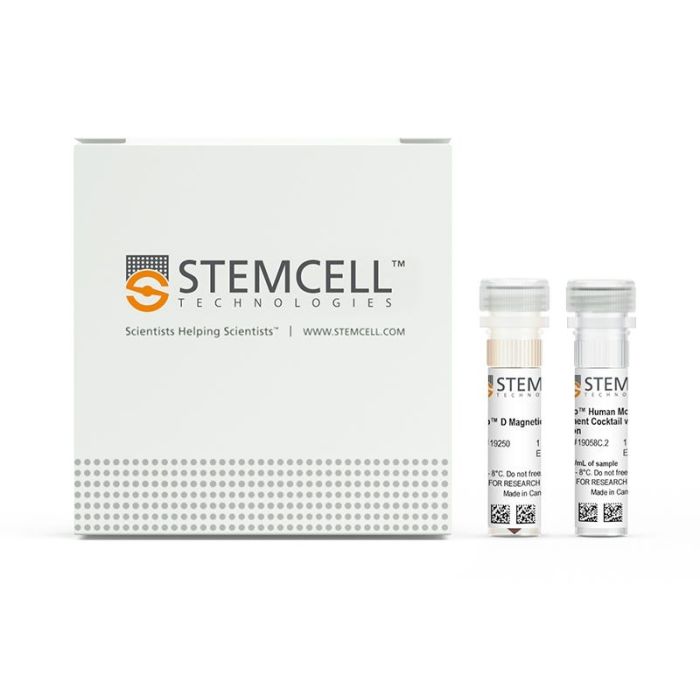
EasySep™人单核细胞富集试剂盒(不去除CD16)

免疫磁珠负选未标记的人CD14+CD16+单核细胞

产品号 #(选择产品)

产品号 #19058_C

免疫磁珠负选未标记的人CD14+CD16+单核细胞

产品优势

  • 操作简单、快捷,且无需分离柱
  • 纯度高达90%
  • 获得的活细胞无标记

产品组分包括

  • EasySep™人单核细胞富集试剂盒(不去除CD16),(产品号 #19058)
    • EasySep™人单核细胞富集抗体混合物(不去除CD16), 1 mL
    • EasySep™ 磁珠,1 mL
  • EasySep™人单核细胞富集试剂盒(不去除CD16),(产品号 #100-1525)
    • EasySep™人单核细胞富集抗体混合物(不去除CD16), 1 x 10 mL
    • EasySep™ 磁珠,1 x 10 mL
  • RoboSep™ 人单核细胞富集试剂盒(不去除CD16,含过滤吸头),(产品号19058RF)
    • EasySep™人单核细胞富集抗体混合物(不去除CD16), 1 mL
    • EasySep™ 磁珠,1 mL
    • RoboSep™ 缓冲液(产品号 #20104)
    • RoboSep™ 过滤吸头(产品号 #20125)
专为您的实验方案打造的产品
要查看实验方案所需的所有配套产品,请参阅《实验方案与技术文档》

总览

使用 EasySep™ 人单核细胞富集试剂盒(不去除 CD16 ),可通过免疫磁珠负选法从新鲜或冻存的人外周血单个核细胞(PBMCs)或裂解的白细胞单采样本中高效分离高纯度的人 CD14⁺CD16⁺/- 和 CD14⁻CD16⁺CD56⁻ 单核细胞。EasySep™ 技术在发表研究中已被广泛使用超过 20 年,结合了单克隆抗体的特异性与无柱磁系统的简便性。

在此 EasySep™ 负选步骤中,不非目的细胞通过抗体复合物和磁性颗粒进行标记。以下细胞将被去除:粒细胞、T 细胞、B 细胞、树突状细胞亚群、NK 细胞及红系细胞。试剂盒中还包含抗人 Fc 受体抗体,以防止非特异性结合。经 EasySep™ 磁极分离后,未标记的目的单核细胞被倒入或用移液管转入新管中。磁性分离完成后,目的单核细胞及 CD14⁺CD16⁺ 亚群可直接用于流式细胞术、细胞培养或 DNA/RNA 提取等下游应用。

CD14⁺CD16⁺ 单核细胞(在健康个体血液中约占 10%)具有组织巨噬细胞的特征,并在急慢性炎症性疾病中显著扩增。如需去除所有 CD16⁺ 细胞,可使用 EasySep™ 人单核细胞富集试剂盒(产品号 #19359)。如需从裂解的白细胞单采样本中进行大规模分离(1×10¹⁰ 细胞),可参考大体积版试剂盒(产品号 #100-1525)。

了解更多关于 EasySep™ 免疫磁性细胞分选技术的工作原理,或了解如何使用 RoboSep™ 实现免疫磁性细胞分离的全自动化。探索更多的产品,包括培养基、补充物、抗体等,以优化您的实验流程。


磁极兼容性
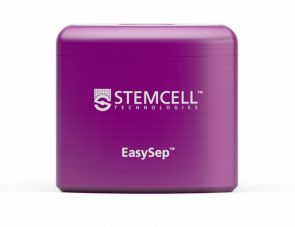
• EasySep™磁极(产品号 #18000)
• “The Big Easy” EasySep™磁极(产品号 #18001)
• EasyPlate™ EasySep™磁极(产品号 #18102)
• Easy 50 EasySep™磁极(产品号 #18002)
• RoboSep™-S(产品号 #21000)
• Easy 250 EasySep™磁极(产品号 #100-0821)
 
分类
细胞分选试剂盒
 
细胞类型
单核细胞
 
种属

 
样本来源
PBMC
 
分选方法
负选
 
应用
细胞分选
 
品牌
EasySep,RoboSep
 
研究领域
免疫
 

实验数据

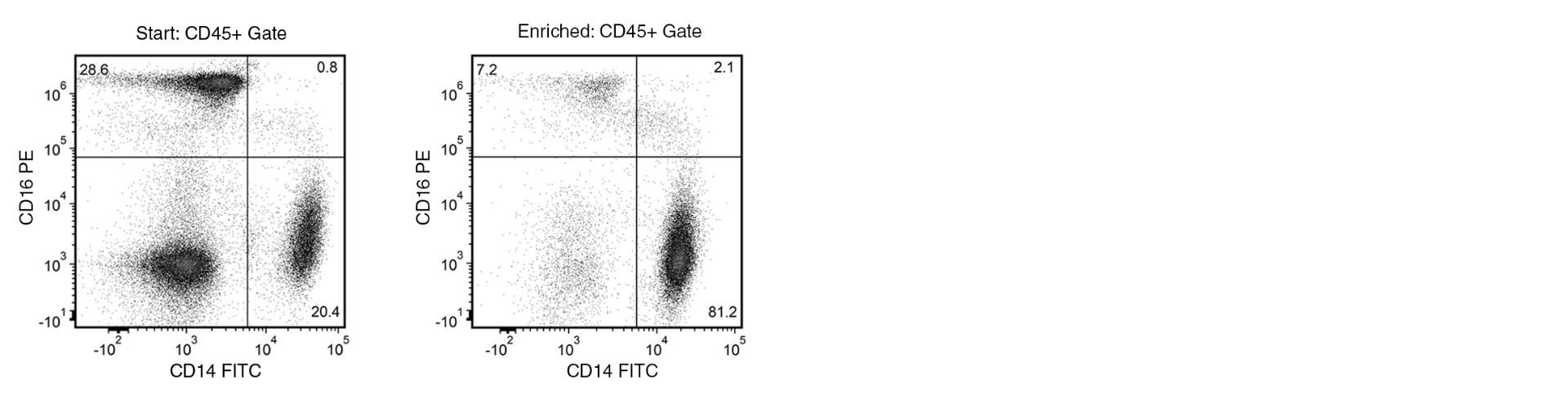
FACS Histogram Results Using EasySep™ Human Monocyte Enrichment Kit Without CD16 Depletion

Figure 1. FACS Histogram Results Using EasySep™ Human Monocyte Enrichment Kit Without CD16 Depletion

Starting with freshly prepared PBMCs, the CD14+ cell content of the enriched fraction is 82.7 ± 6.7% (mean ± SD using the purple EasySep™ magnet). Slightly lower CD14+ cell purities may be obtained from samples that contain a large number of CD16+ cells. In the above example, the start and final enriched fractions are 21.2% and 83.3%, respectively.

产品说明书及文档

请在《产品说明书》中查找相关支持信息和使用说明,或浏览下方更多实验方案。

Document Type
Product Name
Catalog #
Lot #
Language
Catalog #
100-1525
Lot #
All
Language
English
Catalog #
19058
Lot #
All
Language
English
Document Type
Safety Data Sheet 1
Catalog #
19058RF
Lot #
All
Language
English
Document Type
Safety Data Sheet 2
Catalog #
19058RF
Lot #
All
Language
English
Document Type
Safety Data Sheet 3
Catalog #
19058RF
Lot #
All
Language
English
Document Type
Safety Data Sheet 1
Catalog #
19058
Lot #
All
Language
English
Document Type
Safety Data Sheet 2
Catalog #
19058
Lot #
All
Language
English

应用领域

本产品专为以下研究领域设计,适用于工作流程中的高亮阶段。探索这些工作流程,了解更多我们为各研究领域提供的其他配套产品。

相关材料与文献

技术资料 (9)

常见问题 (11)

Can EasySep™ be used for either positive or negative selection?

Yes. The EasySep™ kits use either a negative selection approach by targeting and removing unwanted cells or a positive selection approach targeting desired cells. Depletion kits are also available for the removal of cells with a specific undesired marker (e.g. GlyA).

How does the separation work?

Magnetic particles are crosslinked to cells using Tetrameric Antibody Complexes (TAC). When placed in the EasySep™ Magnet, labeled cells migrate to the wall of the tube. The unlabeled cells are then poured off into a separate fraction.

Which columns do I use?

The EasySep™ procedure is column-free. That's right - no columns!

How can I analyze the purity of my enriched sample?

The Product Information Sheet provided with each EasySep™ kit contains detailed staining information.

Can EasySep™ separations be automated?

Yes. RoboSep™, the fully automated cell separator, automates all EasySep™ labeling and cell separation steps.

Can EasySep™ be used to isolate rare cells?

Yes. We recommend a cell concentration of 2x10⁸ cells/mL and a minimum working volume of 100 µL. Samples containing 2x10⁷ cells or fewer should be suspended in 100 µL of buffer.

Are the EasySep™ magnetic particles FACS-compatible?

Yes, the EasySep™ particles are flow cytometry-compatible, as they are very uniform in size and about 5000X smaller than other commercially available magnetic beads used with column-free systems.

Can the EasySep™ magnetic particles be removed after enrichment?

No, but due to the small size of these particles, they will not interfere with downstream applications.

Can I alter the separation time in the magnet?

Yes; however, this may impact the kit's performance. The provided EasySep™ protocols have already been optimized to balance purity, recovery and time spent on the isolation.

For positive selection, can I perform more than 3 separations to increase purity?

Yes, the purity of targeted cells will increase with additional rounds of separations; however, cell recovery will decrease.

How does the binding of the EasySep™ magnetic particle affect the cells? is the function of positively selected cells altered by the bound particles?

Hundreds of publications have used cells selected with EasySep™ positive selection kits for functional studies. Our in-house experiments also confirm that selected cells are not functionally altered by the EasySep™ magnetic particles.

If particle binding is a key concern, we offer two options for negative selection. The EasySep™ negative selection kits can isolate untouched cells with comparable purities, while RosetteSep™ can isolate untouched cells directly from whole blood without using particles or magnets.

文献 (30)

Type I interferons increase expression of endogenous retrovirus K102 and envelope protein in myeloid cells from patients with autoimmune disease E. Le et al. Mobile DNA 2025 Sep

Abstract

BackgroundAutoantibodies against envelope (Env) protein encoded by human endogenous retrovirus group K (HERV-K) are prevalent in rheumatoid arthritis (RA) and systemic lupus erythematosus (SLE), but it remains unclear which proviruses are responsible for this autoantigen. It also remains poorly understood how the transcription of HERV-K loci is regulated in cells that can produce Env.ResultsWe aligned our neutrophil RNA sequencing data to the new telomere-to-telomere reference genome and found uniquely mapping transcripts from HERV-K101, K102, K104, K108, K109, K117 and ERVK5, of which only K102, K108, and K109 encode an intact Env. Expression of K102 and K108 were higher in SLE than in healthy donors or RA (padj < 0.05). Transcripts from these proviruses increased in response to interferon-α in monocytes and neutrophils from RA patients and healthy donors, but not in SLE, presumably because they have chronically elevated type I interferons in vivo. Indeed, HERV-K expression was significantly higher in SLE patients with high type I interferon gene signature. Tumor necrosis factor-α and other cytokines and TLR ligands also induced HERV-K102 and K108 transcripts. Interferon-α also increased detectable Env protein in monocytes, macrophages, and neutrophils from RA patients. Among the genes for epigenetic silencers of HERV-K, only TRIM28 was significantly decreased in SLE patients with high interferons (padj = 0.00024).ConclusionsOur data establish a role for interferons in maintaining increased HERV-K expression in SLE and suggest that interferons or other cytokines can upregulate HERV-K to similar levels in RA. A transient increase may also accompany normal immune responses, suggesting that endogenous retroviruses may have been co-opted for efficient immune responses.Supplementary InformationThe online version contains supplementary material available at 10.1186/s13100-025-00371-y. Key points Expression of HERV-K provirus is elevated in neutrophils from IFN-positive SLETNFα, IFN, and other cytokines induce similar HERV-K expression also in RAHealthy donor myeloid cells respond only transiently with HERV-K transcription Supplementary InformationThe online version contains supplementary material available at 10.1186/s13100-025-00371-y.
Lifting the curse from high-dimensional data: automated projection pursuit clustering for a variety of biological data modalities GigaScience 2025 May

Abstract

AbstractUnsupervised clustering is a powerful machine-learning technique widely used to analyze high-dimensional biological data. It plays a crucial role in uncovering patterns, structures, and inherent relationships within complex datasets without relying on predefined labels. In the context of biology, high-dimensional data may include transcriptomics, proteomics, and a variety of single-cell omics data. Most existing clustering algorithms operate directly in the high-dimensional space, and their performance may be negatively affected by the phenomenon known as the curse of dimensionality. Here, we show an alternative clustering approach that alleviates the curse by sequentially projecting high-dimensional data into a low-dimensional representation. We validated the effectiveness of our approach, named automated projection pursuit (APP), across various biological data modalities, including flow and mass cytometry data, scRNA-seq, multiplex imaging data, and T-cell receptor repertoire data. APP efficiently recapitulated experimentally validated cell-type definitions and revealed new biologically meaningful patterns.
Monocyte subsets in breast cancer patients under treatment with aromatase inhibitor and mucin-1 cancer vaccine Journal of Translational Medicine 2024 Oct

Abstract

BackgroundMonocytes comprise subsets of classical, intermediate and non-classical monocytes with distinct anti- or pro-tumor effects in breast cancer (BC). They are modulated by estrogen, and can contribute to BC control by endocrine therapy in preclinical models.MethodsTo elucidate whether changes in monocyte subsets are associated with treatment and response, we investigated peripheral blood samples of 73 postmenopausal women with estrogen receptor (ER) positive BC, who received aromatase inhibitor therapy with or without the mucin-1 vaccine tecemotide in the ABCSG34 trial. Blood was retrieved at baseline, midterm and end of therapy, and was analyzed for the distribution and ER expression of monocyte subsets by flow cytometry.ResultsWhen 40 healthy, age-matched women were compared with BC patients before treatment start, ER levels of monocytes did not differ, yet patients presented with a higher frequency of classical and fewer non-classical monocytes. Endocrine therapy triggered a significant increase in ER levels in all monocyte subsets, without affecting subset distribution. Vaccination had no overall impact on subset frequency and ER expression. Yet, a shift from intermediate to classical monocytes during therapy correlated with changes in plasma cytokines and chemokines and was significantly associated with low residual cancer burden in vaccinated patients. Without tecemotide, baseline ER levels in classical monocytes were significantly higher in women with good response to endocrine therapy.ConclusionsThis study identified classical monocytes to be associated with ER positive BC and with patient response to neoadjuvant endocrine treatment and cancer vaccination.Supplementary InformationThe online version contains supplementary material available at 10.1186/s12967-024-05659-w.

更多信息

更多信息
物种 人类
Magnet Compatibility • EasySep™ Magnet (Catalog #18000) • “The Big Easy” EasySep™ Magnet (Catalog #18001) • Easy 50 EasySep™ Magnet (Catalog #18002) • EasyPlate™ EasySep™ Magnet (Catalog 18102) • RoboSep™-S (Catalog #21000) • Easy 250 EasySep™ Magnet (Catalog #100-0821)
样本来源 PBMC
Selection Method Negative
标记抗体

质量保证:

本产品仅供科研使用,除非另有说明,不得用于人体或动物的诊断或治疗用途。如需了解 STEMCELL 的质量体系,请访问 www.stemcell.cn/compliance

Copyright © 2025 by STEMCELL Technologies. All rights reserved.

在线联系