若您需要咨询产品或有任何技术问题,请通过官方电话 400 885 9050 或邮箱 info.cn@stemcell.com 与我们联系。

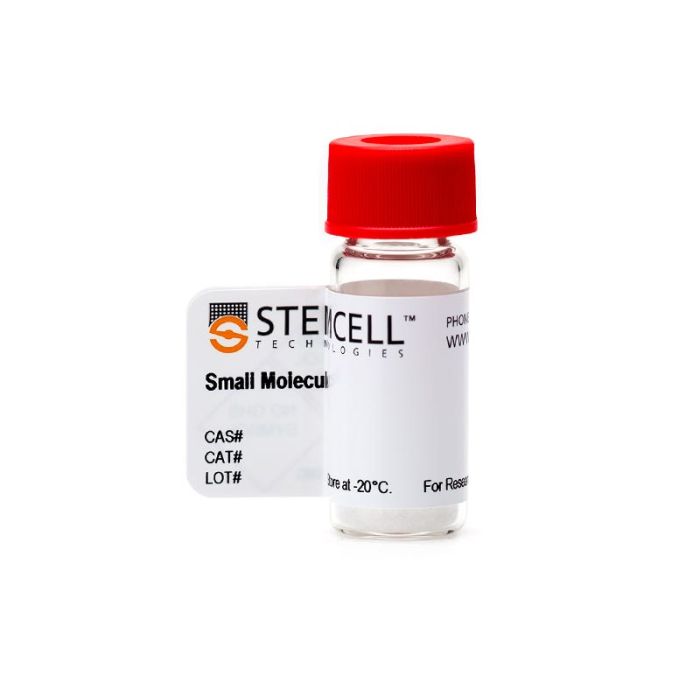
CHIR99021

WNT 通路激活剂;抑制 GSK3
只有 %1
¥898.00

产品号 #(选择产品)

产品号 #72052_C

WNT 通路激活剂;抑制 GSK3

总览

CHIR99021 是一种氨基嘧啶衍生物,是一种非常有效的糖原合酶激酶 (GSK) 3 抑制剂,可同时抑制 GSK3β (IC₅₀ = 6.7 nM) 和 GSK3α (IC₅₀ = 10 nM) (Ring et al.)。GSK3 是一种丝氨酸/苏氨酸激酶,是 WNT 通路的关键抑制剂;因此,CHIR99021 可作为 WNT 激活剂发挥作用。它对包括 CDK2 和其他丝氨酸/苏氨酸激酶(例如 MAPK 和 PKB)在内的多种激酶均表现出较低的活性(Bain et al.)。

维持和自我更新
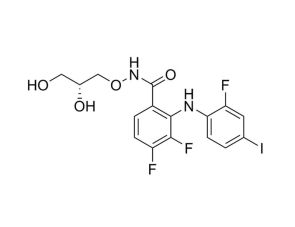
·在没有 LIF 的情况下,与 PD0325901 联合使用可维持小鼠 ES 细胞的未分化状态 (Ying et al.)。
∙与 IWR-1 结合可促进人 ES 细胞和小鼠外胚层干细胞的自我更新(Kim et al.)。
∙与其他小分子结合可从难治性小鼠品系(Kiyonari et al., Ying et al.)和大鼠品系(Li P et al.)中衍生出 ES 细胞。
·与雷帕霉素结合可在无细胞因子条件下维持人和小鼠造血干细胞(Huang et al.)。
·促进小鼠和人肠道干细胞的生长(Wang et al.)。

重编程
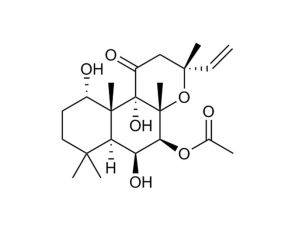
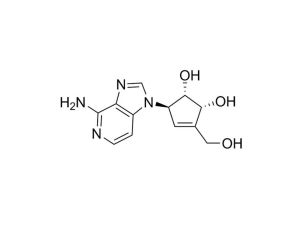
·与Forskolin、Tranylcypromine、Valproic Acid、3-Deazaneplanocin A 和 E-616452 结合,可将小鼠胚胎成纤维细胞化学重编程(无遗传因素)为 iPS 细胞(Hou et al.)。
∙使用 OCT4 结合其他小分子促进人体细胞重编程为 iPS 细胞(Zhu et al.)。
∙使用 OCT4 将人 CD34+ 造血细胞转分化为间充质干细胞(Meng et al.)。
·与丙戊酸、RepSox、Forskolin、SP600125、Gö6983 和 Y-27632 结合,将成纤维细胞直接谱系重编程为成熟神经元(Hu et al.)。
·与 Forskolin、ISX-9、SB431542 和 I-BET151 结合,将成纤维细胞直接谱系重编程为成熟神经元(Li et al.)。
·与 PD0325901 和 A 83-01 结合,从人和大鼠体细胞产生 mouse-like 或“ground state” iPS 细胞(Li W et al. 2009)。

分化
·促进人 iPS 细胞向胰岛素分泌细胞分化(Kunisada et al.)。
∙促进人 ES 细胞和 iPS 细胞向心肌细胞分化(Lian et al.)。
∙与 SB431542 和人重组 LIF 结合,从人 ES 细胞生成并维持原始神经干细胞(Li W et al. 2011)。

别名
CT 99021
 
细胞类型
心肌细胞,PSC衍生,内胚层,PSC衍生,造血干/祖细胞,中胚层,PSC衍生,神经细胞,PSC衍生,神经元,胰腺细胞,多能干细胞
 
种属
人,小鼠,非人灵长类,其他物种,大鼠
 
应用
分化,扩增,培养,重编程
 
研究领域
神经科学,干细胞生物学
 
CAS 编号
252917-06-9
 
化学式
C₂₂H₁₈Cl₂N₈
 
分子量
465.3 g/mol
 
纯度
≥ 95 %
 
通路
WNT
 
靶点
GSK3
 

产品说明书及文档

请在《产品说明书》中查找相关支持信息和使用说明,或浏览下方更多实验方案。

Document Type
Product Name
Catalog #
Lot #
Language
Product Name
CHIR99021
Catalog #
100-1042, 72054, 72052
Lot #
All
Language
English
Document Type
Safety Data Sheet
Product Name
CHIR99021
Catalog #
100-1042
Lot #
All
Language
English
Document Type
Safety Data Sheet
Product Name
CHIR99021
Catalog #
72054, 72052
Lot #
All
Language
English

相关材料与文献

技术资料 (5)

文献 (15)

Selective glycogen synthase kinase 3 inhibitors potentiate insulin activation of glucose transport and utilization in vitro and in vivo. Ring DB et al. Diabetes 2003

Abstract

Insulin resistance plays a central role in the development of type 2 diabetes,but the precise defects in insulin action remain to be elucidated. Glycogen synthase kinase 3 (GSK-3) can negatively regulate several aspects of insulin signaling,and elevated levels of GSK-3 have been reported in skeletal muscle from diabetic rodents and humans. A limited amount of information is available regarding the utility of highly selective inhibitors of GSK-3 for the modification of insulin action under conditions of insulin resistance. In the present investigation,we describe novel substituted aminopyrimidine derivatives that inhibit human GSK-3 potently (K(i) textless 10 nmol/l) with at least 500-fold selectivity against 20 other protein kinases. These low molecular weight compounds activated glycogen synthase at approximately 100 nmol/l in cultured CHO cells transfected with the insulin receptor and in primary hepatocytes isolated from Sprague-Dawley rats,and at 500 nmol/l in isolated type 1 skeletal muscle of both lean Zucker and ZDF rats. It is interesting that these GSK-3 inhibitors enhanced insulin-stimulated glucose transport in type 1 skeletal muscle from the insulin-resistant ZDF rats but not from insulin-sensitive lean Zucker rats. Single oral or subcutaneous doses of the inhibitors (30-48 mg/kg) rapidly lowered blood glucose levels and improved glucose disposal after oral or intravenous glucose challenges in ZDF rats and db/db mice,without causing hypoglycemia or markedly elevating insulin. Collectively,our results suggest that these selective GSK-3 inhibitors may be useful as acute-acting therapeutics for the treatment of the insulin resistance of type 2 diabetes.
The selectivity of protein kinase inhibitors: a further update. Bain J et al. The Biochemical journal 2007 DEC

Abstract

The specificities of 65 compounds reported to be relatively specific inhibitors of protein kinases have been profiled against a panel of 70-80 protein kinases. On the basis of this information,the effects of compounds that we have studied in cells and other data in the literature,we recommend the use of the following small-molecule inhibitors: SB 203580/SB202190 and BIRB 0796 to be used in parallel to assess the physiological roles of p38 MAPK (mitogen-activated protein kinase) isoforms,PI-103 and wortmannin to be used in parallel to inhibit phosphatidylinositol (phosphoinositide) 3-kinases,PP1 or PP2 to be used in parallel with Src-I1 (Src inhibitor-1) to inhibit Src family members; PD 184352 or PD 0325901 to inhibit MKK1 (MAPK kinase-1) or MKK1 plus MKK5,Akt-I-1/2 to inhibit the activation of PKB (protein kinase B/Akt),rapamycin to inhibit TORC1 [mTOR (mammalian target of rapamycin)-raptor (regulatory associated protein of mTOR) complex],CT 99021 to inhibit GSK3 (glycogen synthase kinase 3),BI-D1870 and SL0101 or FMK (fluoromethylketone) to be used in parallel to inhibit RSK (ribosomal S6 kinase),D4476 to inhibit CK1 (casein kinase 1),VX680 to inhibit Aurora kinases,and roscovitine as a pan-CDK (cyclin-dependent kinase) inhibitor. We have also identified harmine as a potent and specific inhibitor of DYRK1A (dual-specificity tyrosine-phosphorylated and -regulated kinase 1A) in vitro. The results have further emphasized the need for considerable caution in using small-molecule inhibitors of protein kinases to assess the physiological roles of these enzymes. Despite being used widely,many of the compounds that we analysed were too non-specific for useful conclusions to be made,other than to exclude the involvement of particular protein kinases in cellular processes.
The ground state of embryonic stem cell self-renewal. Ying Q-L et al. Nature 2008 MAY

Abstract

In the three decades since pluripotent mouse embryonic stem (ES) cells were first described they have been derived and maintained by using various empirical combinations of feeder cells,conditioned media,cytokines,growth factors,hormones,fetal calf serum,and serum extracts. Consequently ES-cell self-renewal is generally considered to be dependent on multifactorial stimulation of dedicated transcriptional circuitries,pre-eminent among which is the activation of STAT3 by cytokines (ref. 8). Here we show,however,that extrinsic stimuli are dispensable for the derivation,propagation and pluripotency of ES cells. Self-renewal is enabled by the elimination of differentiation-inducing signalling from mitogen-activated protein kinase. Additional inhibition of glycogen synthase kinase 3 consolidates biosynthetic capacity and suppresses residual differentiation. Complete bypass of cytokine signalling is confirmed by isolating ES cells genetically devoid of STAT3. These findings reveal that ES cells have an innate programme for self-replication that does not require extrinsic instruction. This property may account for their latent tumorigenicity. The delineation of minimal requirements for self-renewal now provides a defined platform for the precise description and dissection of the pluripotent state.

更多信息

更多信息
Molecular Weight 465.3 g/mol
物种 人, 其它物种, 大鼠, 小鼠, 非人灵长类
Alternative Names CT 99021
Cas Number 252917-06-9
Chemical Formula C₂₂H₁₈Cl₂N₈
纯度 ≥ 95 %
Target GSK3
Pathway WNT
质量保证:

产品仅供研究使用,不用于针对人或动物的诊断或治疗。 欲获悉更多关于STEMCELL的质控信息,请访问 STEMCELL.CN/COMPLIANCE.
Copyright © 2026 by STEMCELL Technologies. All rights reserved.

在线联系