若您需要咨询产品或有任何技术问题,请通过官方电话 400 885 9050 或邮箱 info.cn@stemcell.com 与我们联系。

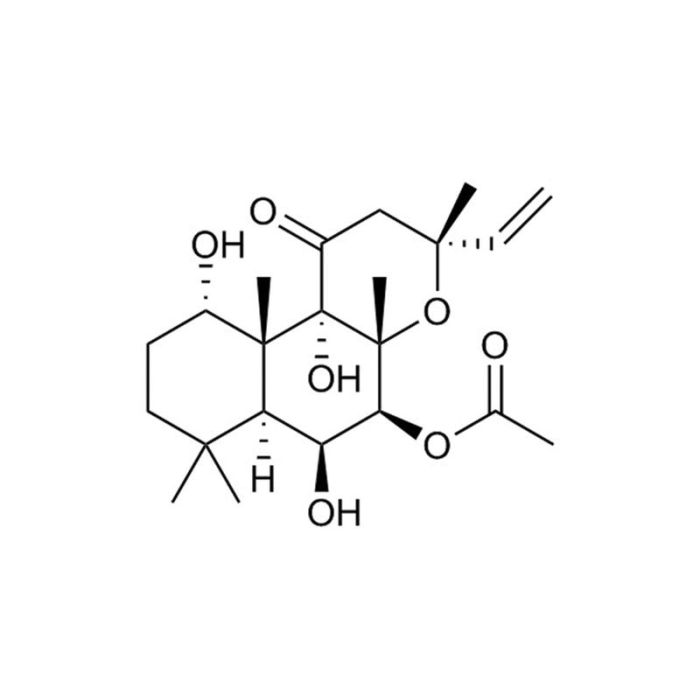
Forskolin

cAMP 通路激活剂;激活腺苷酸环化酶
只有 %1
¥638.00

产品号 #(选择产品)

产品号 #72112_C

cAMP 通路激活剂;激活腺苷酸环化酶

总览

Forskolin是一种可穿透细胞的二萜,可直接激活腺苷酸环化酶 (IC₅₀ = 41 nM),该酶可产生环磷酸腺苷 (cAMP),从而提高细胞内的 cAMP 水平。cAMP 是参与许多信号转导途径的重要第二信使,包括激活蛋白激酶 A (PKA; Awad et al.; Robbins et al.)。

重编程
·与 CHIR99021、Tranylcypromine、 Valproic Acid、3-Deazaneplanocin A 和 RepSox 结合,使小鼠胚胎成纤维细胞能够化学重编程(无遗传因素)为诱导多能干 (iPS) 细胞。(Hou et al.)。
·使 NGN2 介导的人成纤维细胞向胆碱能神经元的转分化(Liu et al.)。
·与 RepSox、CHIR99021、SP600125、丙戊酸、Gö6983 和 Y-27632 联合使用,可将成纤维细胞直接谱系重编程为成熟神经元(Hu et al)。
·与 CHIR99021、ISX-9、SB431542 和 I-BET151 联合使用,可将成纤维细胞直接谱系重编程为成熟神经元(Li et al.)。
·与 LIF、FGF2、TGFβ 和小分子 PD0325901、CHIR99021、SP600125 和 SB203580 联合使用,可将处于“naïve”状态或  ground state 的人胚胎干细胞 (ES) 转化为类似于小鼠 ES 细胞的细胞(Hanna et al.)。

分化
·增强大鼠海马神经祖细胞的神经元分化(Hsieh et al., Palmer et al.)。

细胞类型
神经干/祖细胞,神经元,多能干细胞
 
种属
人,小鼠,非人灵长类,其他物种,大鼠
 
应用
培养,重编程
 
研究领域
神经科学,干细胞生物学
 
CAS 编号
66575-29-9
 
化学式
C₂₂H₃₄O₇
 
纯度
≥98%
 
通路
cAMP
 
靶点
腺苷酸环化酶
 

产品说明书及文档

请在《产品说明书》中查找相关支持信息和使用说明,或浏览下方更多实验方案。

Document Type
Product Name
Catalog #
Lot #
Language
Product Name
Forskolin
Catalog #
72114, 100-0249, 72112
Lot #
Lot# 1000028154 or higher for 72112 | Lot# 1000028155 or higher for 72114 | Lot# 1000027275 or higher for 100-0249
Language
English
Document Type
Safety Data Sheet
Product Name
Forskolin
Catalog #
72114, 72112
Lot #
All
Language
English
Document Type
Safety Data Sheet
Product Name
Forskolin
Catalog #
100-0249
Lot #
All
Language
English

应用领域

本产品专为以下研究领域设计,适用于工作流程中的高亮阶段。探索这些工作流程,了解更多我们为各研究领域提供的其他配套产品。

相关材料与文献

技术资料 (4)

文献 (9)

Histone deacetylase inhibition-mediated neuronal differentiation of multipotent adult neural progenitor cells. Hsieh J et al. Proceedings of the National Academy of Sciences of the United States of America 2004 NOV

Abstract

It has become apparent that chromatin modification plays a critical role in the regulation of cell-type-specific gene expression. Here,we show that an inhibitor of histone deacetylase,valproic acid (VPA),induced neuronal differentiation of adult hippocampal neural progenitors. In addition,VPA inhibited astrocyte and oligodendrocyte differentiation,even in conditions that favored lineage-specific differentiation. Among the VPA-up-regulated,neuron-specific genes,a neurogenic basic helix-loop-helix transcription factor,NeuroD,was identified. Overexpression of NeuroD resulted in the induction and suppression of neuronal and glial differentiation,respectively. These results suggest that VPA promotes neuronal fate and inhibits glial fate simultaneously through the induction of neurogenic transcription factors including NeuroD.
Human embryonic stem cells with biological and epigenetic characteristics similar to those of mouse ESCs. Hanna J et al. Proceedings of the National Academy of Sciences of the United States of America 2010 MAY

Abstract

Human and mouse embryonic stem cells (ESCs) are derived from blastocyst-stage embryos but have very different biological properties,and molecular analyses suggest that the pluripotent state of human ESCs isolated so far corresponds to that of mouse-derived epiblast stem cells (EpiSCs). Here we rewire the identity of conventional human ESCs into a more immature state that extensively shares defining features with pluripotent mouse ESCs. This was achieved by ectopic induction of Oct4,Klf4,and Klf2 factors combined with LIF and inhibitors of glycogen synthase kinase 3beta (GSK3beta) and mitogen-activated protein kinase (ERK1/2) pathway. Forskolin,a protein kinase A pathway agonist which can induce Klf4 and Klf2 expression,transiently substitutes for the requirement for ectopic transgene expression. In contrast to conventional human ESCs,these epigenetically converted cells have growth properties,an X-chromosome activation state (XaXa),a gene expression profile,and a signaling pathway dependence that are highly similar to those of mouse ESCs. Finally,the same growth conditions allow the derivation of human induced pluripotent stem (iPS) cells with similar properties as mouse iPS cells. The generation of validated naïve" human ESCs will allow the molecular dissection of a previously undefined pluripotent state in humans and may open up new opportunities for patient-specific�
Pluripotent stem cells induced from mouse somatic cells by small-molecule compounds. Hou P et al. Science (New York,N.Y.) 2013 AUG

Abstract

Pluripotent stem cells can be induced from somatic cells,providing an unlimited cell resource,with potential for studying disease and use in regenerative medicine. However,genetic manipulation and technically challenging strategies such as nuclear transfer used in reprogramming limit their clinical applications. Here,we show that pluripotent stem cells can be generated from mouse somatic cells at a frequency up to 0.2% using a combination of seven small-molecule compounds. The chemically induced pluripotent stem cells resemble embryonic stem cells in terms of their gene expression profiles,epigenetic status,and potential for differentiation and germline transmission. By using small molecules,exogenous master genes" are dispensable for cell fate reprogramming. This chemical reprogramming strategy has potential use in generating functional desirable cell types for clinical applications."

更多信息

更多信息
物种 人, 其它物种, 大鼠, 小鼠, 非人灵长类
Cas Number 66575-29-9
Chemical Formula C₂₂H₃₄O₇
纯度 ≥ 98%
Target Adenylyl Cyclase
Pathway cAMP
质量保证:

产品仅供研究使用,不用于针对人或动物的诊断或治疗。 欲获悉更多关于STEMCELL的质控信息,请访问 STEMCELL.CN/COMPLIANCE.
Copyright © 2026 by STEMCELL Technologies. All rights reserved.

在线联系