若您需要咨询产品或有任何技术问题,请通过官方电话 400 885 9050 或邮箱 info.cn@stemcell.com 与我们联系。

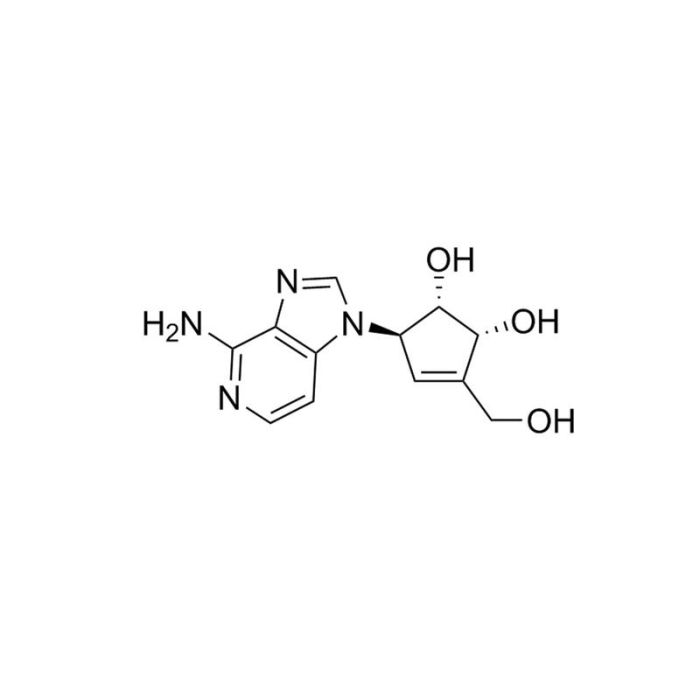
3-Deazaneplanocin A

表观遗传修饰剂;抑制组蛋白 EZH2 赖氨酸甲基转移酶
只有 %1
¥1,886.00

产品号 #(选择产品)

产品号 #72322_C

表观遗传修饰剂;抑制组蛋白 EZH2 赖氨酸甲基转移酶

总览

Deazaneplanocin A (DZNep) 是一种赖氨酸甲基转移酶抑制剂,尤其针对 EZH2。因此,DZNep 可作为表观遗传修饰剂,通过降低 EZH2 水平,特异性抑制组蛋白 3(赖氨酸 27)的三甲基化。(Miranda et al., Tan et al., Tseng et al.)

重编程
·通过与CHIR99021、Forskolin、Valproic Acid、tranyylcypromine和E-616452联合使用,在重编程后期增加OCT4的表达,使小鼠胚胎成纤维细胞能够进行化学重编程(无需遗传因素),从而分化为诱导多能干细胞 (iPS)(Hou et al.)。
·重新激活人胚胎干细胞中 XIST 依赖的失活 X 染色体(Diaz Perez et al.)。

癌症研究
·抑制多形性胶质母细胞瘤癌症干细胞的自我更新(Suva et al.)。
·与组蛋白去乙酰化酶抑制剂联合使用,抑制急性髓系白血病母细胞的存活(Fiskus et al.)。

细胞类型
癌细胞及细胞系,白血病/淋巴瘤细胞,多能干细胞
 
种属
人,小鼠,非人灵长类,其他物种,大鼠
 
应用
重编程
 
研究领域
癌症,干细胞生物学
 
CAS 编号
102052-95-9
 
化学式
C₁₂H₁₄N₄O₃
 
纯度
≥ 97 %
 
通路
表观遗传学
 
靶点
组蛋白甲基转移酶
 

产品说明书及文档

请在《产品说明书》中查找相关支持信息和使用说明,或浏览下方更多实验方案。

Document Type
Product Name
Catalog #
Lot #
Language
Catalog #
72324, 72322
Lot #
All
Language
English
Document Type
Safety Data Sheet
Catalog #
72324, 72322
Lot #
All
Language
English

应用领域

本产品专为以下研究领域设计,适用于工作流程中的高亮阶段。探索这些工作流程,了解更多我们为各研究领域提供的其他配套产品。

相关材料与文献

技术资料 (3)

文献 (7)

Pharmacologic disruption of Polycomb-repressive complex 2-mediated gene repression selectively induces apoptosis in cancer cells. Tan J et al. Genes & development 2007 MAY

Abstract

Polycomb-repressive complex 2 (PRC2)-mediated histone methylation plays an important role in aberrant cancer gene silencing and is a potential target for cancer therapy. Here we show that S-adenosylhomocysteine hydrolase inhibitor 3-Deazaneplanocin A (DZNep) induces efficient apoptotic cell death in cancer cells but not in normal cells. We found that DZNep effectively depleted cellular levels of PRC2 components EZH2,SUZ12,and EED and inhibited associated histone H3 Lys 27 methylation (but not H3 Lys 9 methylation). By integrating RNA interference (RNAi),genome-wide expression analysis,and chromatin immunoprecipitation (ChIP) studies,we have identified a prominent set of genes selectively repressed by PRC2 in breast cancer that can be reactivated by DZNep. We further demonstrate that the preferential reactivation of a set of these genes by DZNep,including a novel apoptosis affector,FBXO32,contributes to DZNep-induced apoptosis in breast cancer cells. Our results demonstrate the unique feature of DZNep as a novel chromatin remodeling compound and suggest that pharmacologic reversal of PRC2-mediated gene repression by DZNep may constitute a novel approach for cancer therapy.
DZNep is a global histone methylation inhibitor that reactivates developmental genes not silenced by DNA methylation. Miranda TB et al. Molecular cancer therapeutics 2009 JUN

Abstract

DNA methylation,histone modifications,and nucleosomal occupancy collaborate to cause silencing of tumor-related genes in cancer. The development of drugs that target these processes is therefore important for cancer therapy. Inhibitors of DNA methylation and histone deacetylation have been approved by the Food and Drug Administration for treatment of hematologic malignancies. However,drugs that target other mechanisms still need to be developed. Recently,3-deazaneplanocin A (DZNep) was reported to selectively inhibit trimethylation of lysine 27 on histone H3 (H3K27me3) and lysine 20 on histone H4 (H4K20me3) as well as reactivate silenced genes in cancer cells. This finding opens the door to the pharmacologic inhibition of histone methylation. We therefore wanted to further study the mechanism of action of DZNep in cancer cells. Western blot analysis shows that DZNep globally inhibits histone methylation and is not selective. Two other drugs,sinefungin and adenosine dialdehyde,have similar effects as DZNep on H3K27me3. Intriguingly,chromatin immunoprecipitation of various histone modifications and microarray analysis show that DZNep acts through a different pathway than 5-aza-2'-deoxycytidine,a DNA methyltransferase inhibitor. These observations give us interesting insight into how chromatin structure affects gene expression. We also determined the kinetics of gene activation to understand if the induced changes were somatically heritable. We found that upon removal of DZNep,gene expression is reduced to its original state. This suggests that there is a homeostatic mechanism that returns the histone modifications to their ground state" after DZNep treatment. Our data show the strong need for further development of histone methylation inhibitors."
Combined epigenetic therapy with the histone methyltransferase EZH2 inhibitor 3-deazaneplanocin A and the histone deacetylase inhibitor panobinostat against human AML cells. Fiskus W et al. Blood 2009 SEP

Abstract

The polycomb repressive complex (PRC) 2 contains 3 core proteins,EZH2,SUZ12,and EED,in which the SET (suppressor of variegation-enhancer of zeste-trithorax) domain of EZH2 mediates the histone methyltransferase activity. This induces trimethylation of lysine 27 on histone H3,regulates the expression of HOX genes,and promotes proliferation and aggressiveness of neoplastic cells. In this study,we demonstrate that treatment with the S-adenosylhomocysteine hydrolase inhibitor 3-deazaneplanocin A (DZNep) depletes EZH2 levels,and inhibits trimethylation of lysine 27 on histone H3 in the cultured human acute myeloid leukemia (AML) HL-60 and OCI-AML3 cells and in primary AML cells. DZNep treatment induced p16,p21,p27,and FBXO32 while depleting cyclin E and HOXA9 levels. Similar findings were observed after treatment with small interfering RNA to EZH2. In addition,DZNep treatment induced apoptosis in cultured and primary AML cells. Furthermore,compared with treatment with each agent alone,cotreatment with DZNep and the pan-histone deacetylase inhibitor panobinostat caused more depletion of EZH2,induced more apoptosis of AML,but not normal CD34(+) bone marrow progenitor cells,and significantly improved survival of nonobese diabetic/severe combined immunodeficiency mice with HL-60 leukemia. These findings indicate that the combination of DZNep and panobinostat is effective and relatively selective epigenetic therapy against AML cells.

更多信息

更多信息
物种 人, 其它物种, 大鼠, 小鼠, 非人灵长类
Cas Number 102052-95-9
Chemical Formula C₁₂H₁₄N₄O₃
纯度 ≥ 97 %
Target Histone Methyltransferase
Pathway Epigenetic
质量保证:

产品仅供研究使用,不用于针对人或动物的诊断或治疗。 欲获悉更多关于STEMCELL的质控信息,请访问 STEMCELL.CN/COMPLIANCE.
Copyright © 2026 by STEMCELL Technologies. All rights reserved.

在线联系