若您需要咨询产品或有任何技术问题,请通过官方电话 400 885 9050 或邮箱 info.cn@stemcell.com 与我们联系。

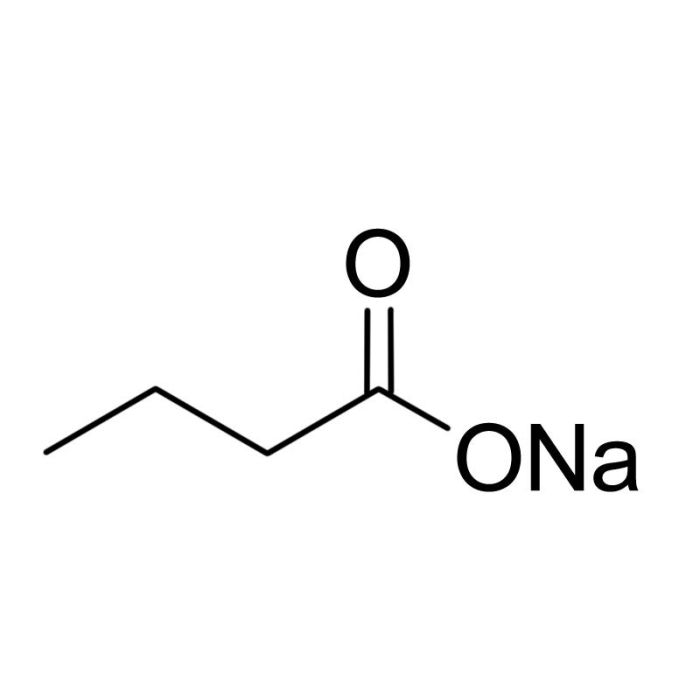
丁酸钠(Sodium Butyrate)

表观遗传修饰剂;抑制组蛋白去乙酰化酶
只有 %1
¥650.00

产品号 #(选择产品)

产品号 #72242_C

表观遗传修饰剂;抑制组蛋白去乙酰化酶

总览

丁酸钠是丁酸的钠盐。丁酸是一种短链脂肪酸,可抑制组蛋白去乙酰化酶 (HDAC),导致组蛋白过度乙酰化。这会导致染色质结构和基因表达发生变化,从而产生多种生物学效应。(Boffa et al.; Kruh)

重编程
·仅使用单一因子 OCT4 即可促进人体细胞重编程为诱导多能干细胞 (iPS)(Zhu et al.)。

维持和自我更新
·在没有外源添加生长因子的情况下,支持小鼠和人胚胎干细胞 (ES) 的自我更新(Ware et al)。

分化
·促进小鼠和人 ES 细胞分化为肝细胞 (Hay et al.; Zhou et al.)。
·促进人 ES 细胞分化为定形内胚层和胰岛样细胞(Jiang et al.)。
·增强成骨作用并抑制人间充质细胞的脂肪形成分化(Chen et al.; Lee et al.)。

细胞类型
内胚层,PSC衍生,肝细胞,间充质干/祖细胞,成骨细胞,多能干细胞
 
种属
人,小鼠,非人灵长类,其他物种,大鼠
 
应用
分化,扩增,培养,重编程
 
研究领域
上皮细胞研究,干细胞生物学
 
CAS 编号
156-54-7
 
化学式
C₄H₇O₂ · Na
 
纯度
≥ 95 %
 
通路
表观遗传学
 
靶点
HDAC
 

产品说明书及文档

请在《产品说明书》中查找相关支持信息和使用说明,或浏览下方更多实验方案。

Document Type
Product Name
Catalog #
Lot #
Language
Product Name
Sodium Butyrate
Catalog #
72242
Lot #
All
Language
English
Document Type
Safety Data Sheet
Product Name
Sodium Butyrate
Catalog #
72242
Lot #
All
Language
English

相关材料与文献

技术资料 (3)

文献 (9)

Sodium butyrate activates ERK to regulate differentiation of mesenchymal stem cells. Chen T-H et al. Biochemical and biophysical research communications 2007 APR

Abstract

Histone deacetylase inhibitors such as sodium butyrate are known to regulate the differentiation of a variety of cells. Mesenchymal stem cells (MSCs) differentiate into osteoblasts and adipocytes under transcriptional control of Runx2 and PPARgamma2,respectively. How these two transcription factors are regulated by sodium butyrate in order to specify the alternate cell fates remains a pivotal question. Sodium butyrate stimulated osteogenic differentiation and increased expression of Runx2 and genes regulated by Runx2 when cells were induced to undergo osteogenic differentiation. Sodium butyrate suppressed the adipogenic differentiation and decreased the expression of PPARgamma2 and LPL when MSCs were treated under conditions that promote adipogenic differentiation. Sodium butyrate also decreased the ratio of RANKL/OPG gene expression by MSCs. Analysis of MSCs induced in the presence of sodium butyrate revealed an immediate increase in ERK phosphorylation by sodium butyrate. The MEK-specific inhibitor,PD98059 but not p38- or JNK-specific inhibitor and the transfection with dominant negative ERK expressing plasmids blocked the sodium butyrate-induced regulation of MSC differentiation and increase in the RANKL/OPG ratio. Our results suggest that sodium butyrate modulates MSC differentiation and the RANKL/OPG ratio via activating ERK,and could be applied for in vivo bone growth using MSCs.
Generation of insulin-producing islet-like clusters from human embryonic stem cells. Jiang J et al. Stem cells (Dayton,Ohio) 2007 AUG

Abstract

Recent success in pancreatic islet transplantation has energized the field to discover an alternative source of stem cells with differentiation potential to beta cells. Generation of glucose-responsive,insulin-producing beta cells from self-renewing,pluripotent human ESCs (hESCs) has immense potential for diabetes treatment. We report here the development of a novel serum-free protocol to generate insulin-producing islet-like clusters (ILCs) from hESCs grown under feeder-free conditions. In this 36-day protocol,hESCs were treated with sodium butyrate and activin A to generate definitive endoderm coexpressing CXCR4 and Sox17,and CXCR4 and Foxa2. The endoderm population was then converted into cellular aggregates and further differentiated to Pdx1-expressing pancreatic endoderm in the presence of epidermal growth factor,basic fibroblast growth factor,and noggin. Soon thereafter,expression of Ptf1a and Ngn3 was detected,indicative of further pancreatic differentiation. The aggregates were finally matured in the presence of insulin-like growth factor II and nicotinamide. The temporal pattern of pancreas-specific gene expression in the hESC-derived ILCs showed considerable similarity to in vivo pancreas development,and the final population contained representatives of the ductal,exocrine,and endocrine pancreas. The hESC-derived ILCs contained 2%-8% human C-peptide-positive cells,as well as glucagon- and somatostatin-positive cells. Insulin content as high as 70 ng of insulin/mug of DNA was measured in the ILCs,representing levels higher than that of human fetal islets. In addition,the hESC-derived ILCs contained numerous secretory granules,as determined by electron microscopy,and secreted human C-peptide in a glucose-dependent manner. Disclosure of potential conflicts of interest is found at the end of this article.
Efficient differentiation of hepatocytes from human embryonic stem cells exhibiting markers recapitulating liver development in vivo. Hay DC et al. Stem cells (Dayton,Ohio) 2008 APR

Abstract

The potential to differentiate human embryonic stem cells (hESCs) in vitro to provide an unlimited source of human hepatocytes for use in biomedical research,drug discovery,and the treatment of liver diseases holds great promise. Here we describe a three-stage process for the efficient and reproducible differentiation of hESCs to hepatocytes by priming hESCs towards definitive endoderm with activin A and sodium butyrate prior to further differentiation to hepatocytes with dimethyl sulfoxide,followed by maturation with hepatocyte growth factor and oncostatin M. We have demonstrated that differentiation of hESCs in this process recapitulates liver development in vivo: following initial differentiation,hESCs transiently express characteristic markers of the primitive streak mesendoderm before turning to the markers of the definitive endoderm; with further differentiation,expression of hepatocyte progenitor cell markers and mature hepatocyte markers emerged sequentially. Furthermore,we have provided evidence that the hESC-derived hepatocytes are able to carry out a range of hepatocyte functions: storage of glycogen,and generation and secretion of plasma proteins. More importantly,the hESC-derived hepatocytes express several members of cytochrome P450 isozymes,and these P450 isozymes are capable of converting the substrates to metabolites and respond to the chemical stimulation. Our results have provided evidence that hESCs can be differentiated efficiently in vitro to functional hepatocytes,which may be useful as an in vitro system for toxicity screening in drug discovery.

更多信息

更多信息
物种 人, 其它物种, 大鼠, 小鼠, 非人灵长类
Cas Number 156-54-7
Chemical Formula C₄H₇O₂ · Na
纯度 ≥ 95 %
Target HDAC
Pathway Epigenetic
质量保证:

产品仅供研究使用,不用于针对人或动物的诊断或治疗。 欲获悉更多关于STEMCELL的质控信息,请访问 STEMCELL.CN/COMPLIANCE.
Copyright © 2026 by STEMCELL Technologies. All rights reserved.

在线联系