若您需要咨询产品或有任何技术问题,请通过官方电话 400 885 9050 或邮箱 info.cn@stemcell.com 与我们联系。

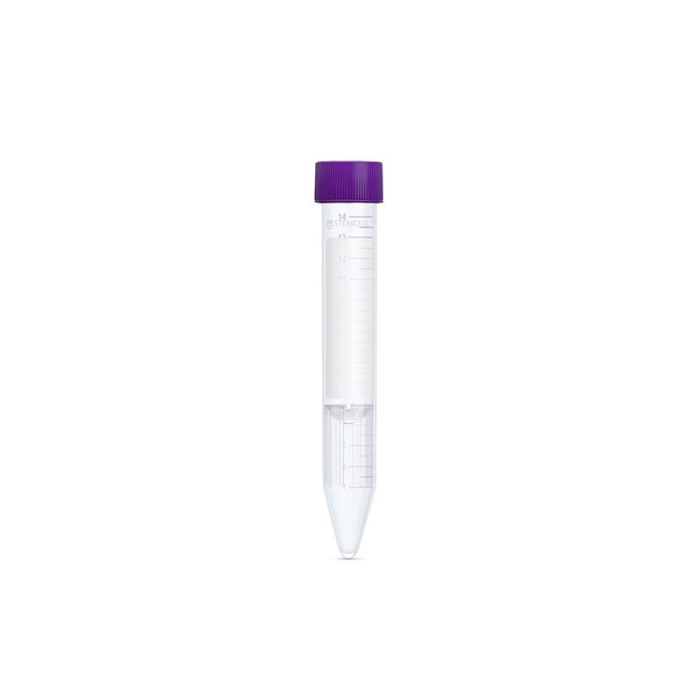
SepMate™-15 (IVD)

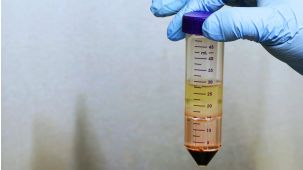
用于体外诊断(IVD)应用的密度梯度离心管
只有 %1
¥3,912.00

产品号 #(选择产品)

产品号 #85415_C

用于体外诊断(IVD)应用的密度梯度离心管

产品优势

  • 无需小心地将血液分层加在密度梯度介质上(如Lymphoprep™等)
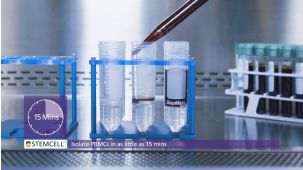
  • 对新鲜样本可打开离心刹车,总离心时间可缩短至10分钟
  • 只需简单地倾倒上清液即可快速轻松地收集分离的单个核细胞
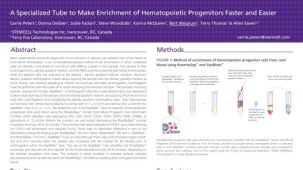
  • 可与RosetteSep™富集抗体混合物搭配使用,仅需30分钟即可分离特定细胞类型

产品组分包括

  • SepMate™-15 (体外诊断用),100 支装 (产品号 #85415)
    • 包装盒内含4袋,每袋 25 支    
  • SepMate™-15 (体外诊断用),500 支装 (产品号 #85420)
    • 包装 盒内含 4 袋,每袋 25 支 (产品号 #85415) x 5
Try SepMate™-15 (IVD) tubes for density gradient centrifugation in your IVD applications. Request a Sample
专为您的实验方案打造的产品
要查看实验方案所需的所有配套产品,请参阅《实验方案与技术文档》

What Our Scientist Says

Traditional isolation of PBMCs requires careful layering of blood onto density gradient media prior to centrifugation. We developed SepMate™ to simplify this process, so anyone can isolate PBMCs with a simple pour while maintaining consistency across samples.

Peter MorinTechnical Scientist
Peter Morin, Technical Scientist

总览

通过在密度梯度离心步骤中使用SepMate™,可简化外周血单个核细胞(PBMCs)的分离过程。

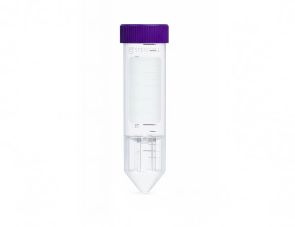
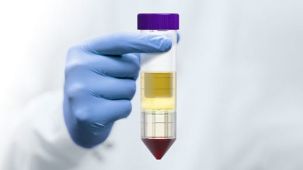
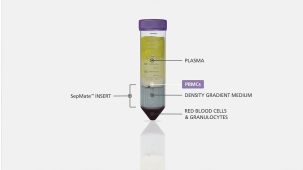
SepMate™离心管内含有一个隔离插件,用于在密度梯度离心液与血液之间形成屏障,从而无需小心地分层加入血液样本,用户通过简单的倾倒即可轻松收集单个核细胞。本产品可与RosetteSep™配合使用,以分离特定的免疫细胞亚群。

SepMate™-15设计用于处理0.5至5 mL的样本。

SepMate™按照cGMP标准生产,并在澳大利亚、加拿大、欧盟、韩国、瑞士、土耳其、英国和美国以体外诊断(IVD)设备提供。在中国,SepMate™被国家药品监督管理局(NMPA)认定为通用实验室设备。最终用户有责任确定该产品是否适用于其特定应用。

浏览SepMate™常见问题(FAQs)了解更多信息。


包含
含有插件的聚丙烯管
 
分类
离心管
 
细胞类型
B 细胞,树突状细胞(DCs),单核细胞,单个核细胞,NK细胞,T细胞,CD4+ T细胞,CD8+ T细胞,其他T细胞亚群,调节性T细胞
 
种属

 
样本来源
骨髓、全血
 
分选方法
负选
 
应用
细胞分选,体外诊断
 
品牌
SepMate
 
研究领域
嵌合体,HLA,免疫
 

实验数据

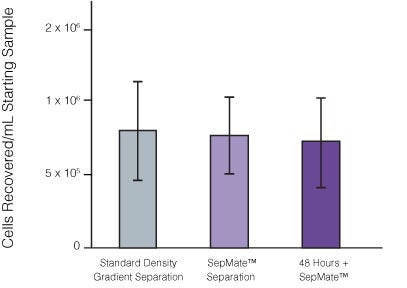
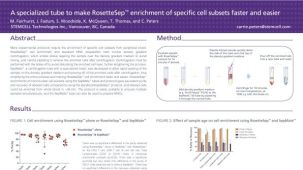
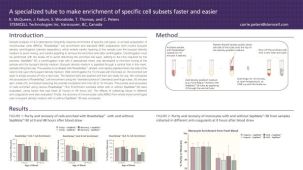
PBMC recovery from fresh whole blood using SepMate™-50 versus standard density gradient centrifugation. Graph also shows PBMC recovery from a 48 hour-old sample using SepMate™. n in each group = 7

Figure 1. Recovery of mononuclear cells (MNCs) from peripheral blood using SepMate™-50 versus standard density gradient centrifiguation.

Recovery of MNCs from fresh and 48-hour post blood draw enriched by density gradient centrifugation with SepMate™ (purple) or without (grey). There was no significant difference in the recovery of MNCS with and without SepMate™.

PBMC recovery from fresh whole blood using SepMate™-50 versus standard density gradient centrifugation. Graph also shows PBMC recovery from a 48 hour-old sample using SepMate™. n in each group = 7

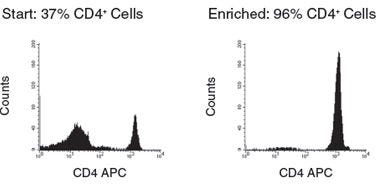
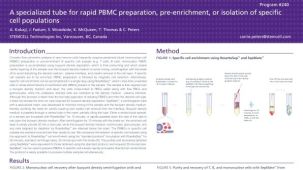
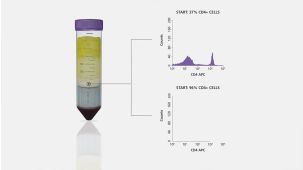
Figure 2. Human CD4+ T Cell Isolation using SepMate™-50 and RosetteSep™ Human CD4+ T Cell Enrichment Cocktail

产品说明书及文档

请在《产品说明书》中查找相关支持信息和使用说明,或浏览下方更多实验方案。

Document Type
Product Name
Catalog #
Lot #
Language
Catalog #
85415, 85420
Lot #
All
Language
MULTI

相关材料与文献

技术资料 (13)

文献 (30)

Establishing the pig as a large animal model for vaccine development against human cancer. N. H. Overgaard et al. Frontiers in genetics 2015

Abstract

Immunotherapy has increased overall survival of metastatic cancer patients,and cancer antigens are promising vaccine targets. To fulfill the promise,appropriate tailoring of the vaccine formulations to mount in vivo cytotoxic T cell (CTL) responses toward co-delivered cancer antigens is essential. Previous development of therapeutic cancer vaccines has largely been based on studies in mice,and the majority of these candidate vaccines failed to induce therapeutic responses in the subsequent human clinical trials. Given that antigen dose and vaccine volume in pigs are translatable to humans and the porcine immunome is closer related to the human counterpart,we here introduce pigs as a supplementary large animal model for human cancer vaccine development. IDO and RhoC,both important in human cancer development and progression,were used as vaccine targets and 12 pigs were immunized with overlapping 20mer peptides spanning the entire porcine IDO and RhoC sequences formulated in CTL-inducing adjuvants: CAF09,CASAC,Montanide ISA 51 VG,or PBS. Taking advantage of recombinant swine MHC class I molecules (SLAs),the peptide-SLA complex stability was measured for 198 IDO- or RhoC-derived 9-11mer peptides predicted to bind to SLA-1(*)04:01,-1(*)07:02,-2(*)04:01,-2(*)05:02,and/or -3(*)04:01. This identified 89 stable (t½ ≥ 0.5 h) peptide-SLA complexes. By IFN-$\gamma$ release in PBMC cultures we monitored the vaccine-induced peptide-specific CTL responses,and found responses to both IDO- and RhoC-derived peptides across all groups with no adjuvant being superior. These findings support the further use of pigs as a large animal model for vaccine development against human cancer.
Hepatitis C Virus-Induced Myeloid-Derived Suppressor Cells Suppress NK Cell IFN-$\gamma$ Production by Altering Cellular Metabolism via Arginase-1. C. C. Goh et al. Journal of Immunology 2016 MAR

Abstract

The hepatitis C virus (HCV) infects ∼200 million people worldwide. The majority of infected individuals develop persistent infection,resulting in chronic inflammation and liver disease,including cirrhosis and hepatocellular carcinoma. The ability of HCV to establish persistent infection is partly due to its ability to evade the immune response through multiple mechanisms,including suppression of NK cells. NK cells control HCV replication during the early phase of infection and regulate the progression to chronic disease. In particular,IFN-$\gamma$ produced by NK cells limits viral replication in hepatocytes and is important for the initiation of adaptive immune responses. However,NK cell function is significantly impaired in chronic HCV patients. The cellular and molecular mechanisms responsible for impaired NK cell function in HCV infection are not well defined. In this study,we analyzed the interaction of human NK cells with CD33(+) PBMCs that were exposed to HCV. We found that NK cells cocultured with HCV-conditioned CD33(+) PBMCs produced lower amounts of IFN-$\gamma$,with no effect on granzyme B production or cell viability. Importantly,this suppression of NK cell-derived IFN-$\gamma$ production was mediated by CD33(+)CD11b(lo)HLA-DR(lo) myeloid-derived suppressor cells (MDSCs) via an arginase-1-dependent inhibition of mammalian target of rapamycin activation. Suppression of IFN-$\gamma$ production was reversed by l-arginine supplementation,consistent with increased MDSC arginase-1 activity. These novel results identify the induction of MDSCs in HCV infection as a potent immune evasion strategy that suppresses antiviral NK cell responses,further indicating that blockade of MDSCs may be a potential therapeutic approach to ameliorate chronic viral infections in the liver.
An optimized protocol for adenosine triphosphate quantification in T lymphocytes of lymphopenic patients. Girardot T et al. Journal of immunological methods 2016 OCT

Abstract

In several clinical contexts,the measurement of ATP concentration in T lymphocytes has been proposed as a biomarker of immune status,predictive of secondary infections. However,the use of such biomarker in lymphopenic patients requires some adaptations in the ATP dosage protocol. We used blood from healthy volunteers to determine the optimal experimental settings. We investigated technical aspects such as the type of anticoagulant for blood sampling,the effect of freeze and thaw cycles,the reagent and sample mixing sequence,and the optimal dilution buffer. We also shortened the incubation time to 8h,and even showed that a 30min incubation may be sufficient. To evaluate the ATP rise upon lymphocyte activation,the optimal dose of stimulant was defined to be 4μg/mL of phytohaemagglutinin. Lastly,we determined that the number of T cells needed for this measurement was as low as 50,000,which is compatible with the existing lymphopenia in clinical settings. This optimized protocol appears ready to be assessed in lymphopenic patients to further investigate the interconnection between T lymphocyte metabolism and impaired phenotype and functions.

更多信息

更多信息
物种
Contains Polypropylene tube containing an insert
样本来源 全血, 骨髓
Selection Method Negative

法律声明:

SepMate™ (IVD) is only available in regions where it is registered as an In Vitro Diagnostic (IVD) device for the isolation of MNCs from whole blood or bone marrow by density gradient centrifugation. SepMate™ is manufactured under a cGMP quality managment system compliant to 21 CFR 820.

质量保证:

产品仅供研究使用,不用于针对人或动物的诊断或治疗。 欲获悉更多关于STEMCELL的质控信息,请访问 STEMCELL.CN/COMPLIANCE.

Copyright © 2026 by STEMCELL Technologies. All rights reserved.

在线联系