D. M. Previte et al. (apr 2019)
Cell reports 27 1 129--141.e4
Lymphocyte Activation Gene-3 Maintains Mitochondrial and Metabolic Quiescence in Naive CD4+ T Cells.
Lymphocyte activation gene-3 (LAG-3) is an inhibitory receptor expressed by CD4+ T cells and tempers their homeostatic expansion. Because CD4+ T cell proliferation is tightly coupled to bioenergetics,we investigate the role of LAG-3 in modulating naive CD4+ T cell metabolism. LAG-3 deficiency enhances the metabolic profile of naive CD4+ T cells by elevating levels of mitochondrial biogenesis. In vivo,LAG-3 blockade partially restores expansion and the metabolic phenotype of wild-type CD4+ T cells to levels of Lag3-/- CD4+ T cells,solidifying that LAG-3 controls these processes. Lag3-/- CD4+ T cells also demonstrate greater signal transducer and activator of transcription 5 (STAT5) activation,enabling resistance to interleukin-7 (IL-7) deprivation. These results implicate this pathway as a target of LAG-3-mediated inhibition. Additionally,enhancement of STAT5 activation,as a result of LAG-3 deficiency,contributes to greater activation potential in these cells. These results identify an additional mode of regulation elicited by LAG-3 in controlling CD4+ T cell responses.
View Publication
产品号#:
19852
19852RF
产品名:
EasySep™小鼠CD4+ T细胞分选试剂盒
RoboSep™ 小鼠CD4+ T细胞分选试剂盒
Billard E et al. (OCT 2007)
Infection and immunity 75 10 4980--9
Brucella suis prevents human dendritic cell maturation and antigen presentation through regulation of tumor necrosis factor alpha secretion.
Brucella is a facultative intracellular pathogen and the etiological agent of brucellosis. In some cases,human brucellosis results in a persistent infection that may reactivate years after the initial exposure. The mechanisms by which the parasite evades clearance by the immune response to chronically infect its host are unknown. We recently demonstrated that dendritic cells (DCs),which are critical components of adaptive immunity,are highly susceptible to Brucella infection and are a preferential niche for the development of the bacteria. Here,we report that in contrast to several intracellular bacteria,Brucella prevented the infected DCs from engaging in their maturation process and impaired their capacities to present antigen to naïve T cells and to secrete interleukin-12. Moreover,Brucella-infected DCs failed to release tumor necrosis factor alpha (TNF-alpha),a defect involving the bacterial protein Omp25. Exogenous TNF-alpha addition to Brucella-infected DCs restored cell maturation and allowed them to present antigens. Two avirulent mutants of B. suis,B. suis bvrR and B. suis omp25 mutants,which do not express the Omp25 protein,triggered TNF-alpha production upon DC invasion. Cells infected with these mutants subsequently matured and acquired the ability to present antigens,two properties which were dramatically impaired by addition of anti-TNF-alpha antibodies. In light of these data,we propose a model in which virulent Brucella alters the maturation and functions of DCs through Omp25-dependent control of TNF-alpha production. This model defines a specific evasion strategy of the bacteria by which they can escape the immune response to chronically infect their host.
View Publication


 EasySep™小鼠TIL(CD45)正选试剂盒




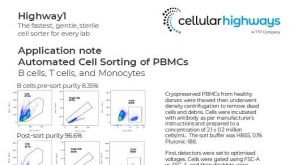



 技术公告Simplify Your PBMC Isolations with the EasySep™ Direct Human PBMC Isolation Kit




 沪公网安备31010102008431号