若您需要咨询产品或有任何技术问题,请通过官方电话 400 885 9050 或邮箱 info.cn@stemcell.com 与我们联系。

IWP-2

WNT 通路抑制剂;抑制 Porcupine
只有 %1
¥622.00

产品号 #(选择产品)

产品号 #72122_C

WNT 通路抑制剂;抑制 Porcupine

总览

IWP-2 在通路激活剂 Porcupine 水平上抑制 WNT 通路 (IC₅₀ = 27 nM)。Porcupine 是一种膜结合酰基转移酶,可对 WNT 蛋白进行棕榈酰化修饰,从而促进 WNT 分泌和信号传导。(Chen et al., Willert et al.)

分化
·抑制小鼠胚胎干细胞 (ES) 的自我更新,并支持其转化为外胚层样干细胞(ten Berge et al.)。
·抑制小鼠 Lgr5+ 肠道和耳蜗上皮干细胞的维持和增殖,表明 WNT 信号在这些过程中的重要性(Chai et al., Farin et al.)。
·促进人多能干细胞向心肌细胞分化(Lian et al., Minami et al.)。

细胞类型
心肌细胞,PSC衍生,肠道细胞,多能干细胞
 
种属
人,小鼠,非人灵长类,其他物种,大鼠
 
应用
分化
 
研究领域
上皮细胞研究,干细胞生物学
 
CAS 编号
686770-61-6
 
化学式
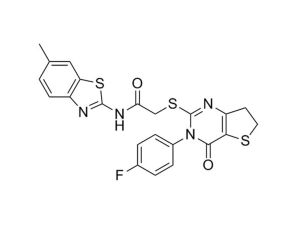
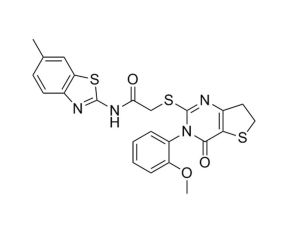
C₂₂H₁₈N₄O₂S₃
 
纯度
≥ 95 %
 
通路
WNT
 
靶点
Porcupine
 

产品说明书及文档

请在《产品说明书》中查找相关支持信息和使用说明,或浏览下方更多实验方案。

Document Type
Product Name
Catalog #
Lot #
Language
Product Name
IWP-2
Catalog #
72122, 72124
Lot #
Lot# 1000035788 or higher for 72122 | Lot# 1000027797 or higher for 72124
Language
English
Document Type
Safety Data Sheet
Product Name
IWP-2
Catalog #
72122, 72124
Lot #
All
Language
English

应用领域

本产品专为以下研究领域设计,适用于工作流程中的高亮阶段。探索这些工作流程,了解更多我们为各研究领域提供的其他配套产品。

相关材料与文献

技术资料 (3)

文献 (7)

Wnt proteins are lipid-modified and can act as stem cell growth factors. Willert K et al. Nature 2003 MAY

Abstract

Wnt signalling is involved in numerous events in animal development,including the proliferation of stem cells and the specification of the neural crest. Wnt proteins are potentially important reagents in expanding specific cell types,but in contrast to other developmental signalling molecules such as hedgehog proteins and the bone morphogenetic proteins,Wnt proteins have never been isolated in an active form. Although Wnt proteins are secreted from cells,secretion is usually inefficient and previous attempts to characterize Wnt proteins have been hampered by their high degree of insolubility. Here we have isolated active Wnt molecules,including the product of the mouse Wnt3a gene. By mass spectrometry,we found the proteins to be palmitoylated on a conserved cysteine. Enzymatic removal of the palmitate or site-directed and natural mutations of the modified cysteine result in loss of activity,and indicate that the lipid is important for signalling. The purified Wnt3a protein induces self-renewal of haematopoietic stem cells,signifying its potential use in tissue engineering.
Small molecule-mediated disruption of Wnt-dependent signaling in tissue regeneration and cancer. Chen B et al. Nature chemical biology 2009 FEB

Abstract

The pervasive influence of secreted Wnt signaling proteins in tissue homeostasis and tumorigenesis has galvanized efforts to identify small molecules that target Wnt-mediated cellular responses. By screening a diverse synthetic chemical library,we have discovered two new classes of small molecules that disrupt Wnt pathway responses; whereas one class inhibits the activity of Porcupine,a membrane-bound acyltransferase that is essential to the production of Wnt proteins,the other abrogates destruction of Axin proteins,which are suppressors of Wnt/beta-catenin pathway activity. With these small molecules,we establish a chemical genetic approach for studying Wnt pathway responses and stem cell function in adult tissue. We achieve transient,reversible suppression of Wnt/beta-catenin pathway response in vivo,and we establish a mechanism-based approach to target cancerous cell growth. The signal transduction mechanisms shown here to be chemically tractable additionally contribute to Wnt-independent signal transduction pathways and thus could be broadly exploited for chemical genetics and therapeutic goals.
Embryonic stem cells require Wnt proteins to prevent differentiation to epiblast stem cells. ten Berge D et al. Nature cell biology 2011 SEP

Abstract

Pluripotent stem cells exist in naive and primed states,epitomized by mouse embryonic stem cells (ESCs) and the developmentally more advanced epiblast stem cells (EpiSCs; ref. 1). In the naive state of ESCs,the genome has an unusual open conformation and possesses a minimum of repressive epigenetic marks. In contrast,EpiSCs have activated the epigenetic machinery that supports differentiation towards the embryonic cell types. The transition from naive to primed pluripotency therefore represents a pivotal event in cellular differentiation. But the signals that control this fundamental differentiation step remain unclear. We show here that paracrine and autocrine Wnt signals are essential self-renewal factors for ESCs,and are required to inhibit their differentiation into EpiSCs. Moreover,we find that Wnt proteins in combination with the cytokine LIF are sufficient to support ESC self-renewal in the absence of any undefined factors,and support the derivation of new ESC lines,including ones from non-permissive mouse strains. Our results not only demonstrate that Wnt signals regulate the naive-to-primed pluripotency transition,but also identify Wnt as an essential and limiting ESC self-renewal factor.

更多信息

更多信息
物种 人, 其它物种, 大鼠, 小鼠, 非人灵长类
Cas Number 686770-61-6
Chemical Formula C₂₂H₁₈N₄O₂S₃
纯度 ≥ 95 %
Target Porcupine
Pathway WNT
质量保证:

产品仅供研究使用,不用于针对人或动物的诊断或治疗。 欲获悉更多关于STEMCELL的质控信息,请访问 STEMCELL.CN/COMPLIANCE.
Copyright © 2026 by STEMCELL Technologies. All rights reserved.

在线联系