若您需要咨询产品或有任何技术问题,请通过官方电话 400 885 9050 或邮箱 info.cn@stemcell.com 与我们联系。

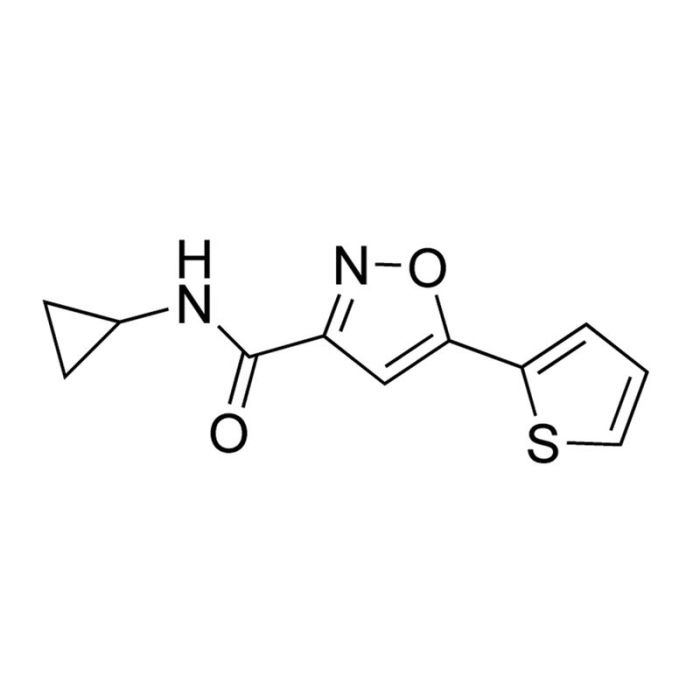
ISX-9

神经分化诱导剂
只有 %1
¥2,064.00

产品号 #(选择产品)

产品号 #73202_C

神经分化诱导剂

总览

ISX-9是小分子诱导剂,可在体外和体内诱导成体神经干细胞分化(Schneider等人)。已证明其作用机制通过钙离子激活的信号通路,依赖肌细胞增强因子2(MEF2)介导的基因表达发挥作用(Schneider 等人;Petrik 等人)。

重编程
·结合CHIR99021、Forskolin、SB431542和I-BET151,将成纤维细胞直接重编程为成熟神经元(Li等人)。

分化
·诱导成年大鼠HCN海马神经干/祖细胞系、成年小鼠全脑或脑室下区神经祖细胞和P19胚胎癌细胞的神经元分化(Schneider等人)。
·改善小鼠的海马神经发生和功能(Petrik等人)。
·刺激成年小鼠心肌的心肌基因表达和细胞周期活性(Russell等人)。
·恶性星形胶质细胞中,阻断肿瘤细胞增殖,诱导神经元基因表达(Zhang等人)。
·人原代胰岛培养物中,改善β细胞功能,增强促进 β 细胞分化的转录因子表达,增加细胞内胰岛素含量(Dioum等人)。

细胞类型
癌细胞及细胞系,心肌细胞,PSC衍生,神经干/祖细胞,神经元,胰腺细胞
 
种属
人,小鼠,非人灵长类,其他物种,大鼠
 
应用
分化,重编程
 
研究领域
癌症,上皮细胞研究,神经科学,干细胞生物学
 
CAS 编号
832115-62-5
 
化学式
C₁₁H₁₀N₂O₂S
 
纯度
≥ 95 %
 

产品说明书及文档

请在《产品说明书》中查找相关支持信息和使用说明,或浏览下方更多实验方案。

Document Type
Product Name
Catalog #
Lot #
Language
Product Name
ISX-9
Catalog #
73202
Lot #
All
Language
English
Document Type
Safety Data Sheet
Product Name
ISX-9
Catalog #
73202
Lot #
All
Language
English

应用领域

本产品专为以下研究领域设计,适用于工作流程中的高亮阶段。探索这些工作流程,了解更多我们为各研究领域提供的其他配套产品。

相关材料与文献

技术资料 (1)

研究综述

文献 (6)

Small-molecule activation of neuronal cell fate. Schneider JW et al. Nature chemical biology 2008

Abstract

We probed an epigenetic regulatory path from small molecule to neuronal gene activation. Isoxazole small molecules triggered robust neuronal differentiation in adult neural stem cells,rapidly signaling to the neuronal genome via Ca(2+) influx. Ca(2+)-activated CaMK phosphorylated and mediated nuclear export of the MEF2 regulator HDAC5,thereby de-repressing neuronal genes. These results provide new tools to explore the epigenetic signaling circuitry specifying neuronal cell fate and new leads for neuro-regenerative drugs.
Small-molecule blocks malignant astrocyte proliferation and induces neuronal gene expression. Zhang L et al. Differentiation; research in biological diversity 2011

Abstract

In the central nervous system (CNS),neural stem cells (NSCs) differentiate into neurons,astrocytes,and oligodendrocytes--these cell lineages are considered unidirectional and irreversible under normal conditions. The introduction of a defined set of transcription factors has been shown to directly convert terminally differentiated cells into pluripotent stem cells,reinforcing the notion that preserving cellular identity is an active process. Indeed,recent studies highlight that tumor suppressor genes (TSGs) such as Ink4a/Arf and p53,control the barrier to efficient reprogramming,leaving open the question whether the same TSGs function to maintain the differentiated state. During malignancy or following brain injury,mature astrocytes have been reported to re-express neuronal genes and re-gain neurogenic potential to a certain degree,yet few studies have addressed the underlying mechanisms due to a limited number of cellular models or tools to probe this process. Here,we use a synthetic small-molecule (isoxazole) to demonstrate that highly malignant EGFRvIII-expressing Ink4a/Arf(-/-); Pten(-/-) astrocytes downregulated their astrocyte character,re-entered the cell cycle,and upregulated neuronal gene expression. As a collateral discovery,isoxazole small-molecules blocked tumor cell proliferation in vitro,a phenotype likely coupled to activation of neuronal gene expression. Similarly,histone deacetylase inhibitors induced neuronal gene expression and morphologic changes associated with the neuronal phenotype,suggesting the involvement of epigenetic-mediated gene activation. Our study assesses the contribution of specific genetic pathways underlying the de-differentiation potential of astrocytes and uncovers a novel pharmacological tool to explore astrocyte plasticity,which may bring insight to reprogramming and anti-tumor strategies.
A small molecule differentiation inducer increases insulin production by pancreatic β cells. Dioum EM et al. Proceedings of the National Academy of Sciences of the United States of America 2011

Abstract

New drugs for preserving and restoring pancreatic β-cell function are critically needed for the worldwide epidemic of type 2 diabetes and the cure for type 1 diabetes. We previously identified a family of neurogenic 3,5-disubstituted isoxazoles (Isx) that increased expression of neurogenic differentiation 1 (NeuroD1,also known as BETA2); this transcription factor functions in neuronal and pancreatic β-cell differentiation and is essential for insulin gene transcription. Here,we probed effects of Isx on human cadaveric islets and MIN6 pancreatic β cells. Isx increased the expression and secretion of insulin in islets that made little insulin after prolonged ex vivo culture and increased expression of neurogenic differentiation 1 and other regulators of islet differentiation and insulin gene transcription. Within the first few hours of exposure,Isx caused biphasic activation of ERK1/2 and increased bulk histone acetylation. Although there was little effect on histone deacetylase activity,Isx increased histone acetyl transferase activity in nuclear extracts. Reconstitution assays indicated that Isx increased the activity of the histone acetyl transferase p300 through an ERK1/2-dependent mechanism. In summary,we have identified a small molecule with antidiabetic activity,providing a tool for exploring islet function and a possible lead for therapeutic intervention in diabetes.

更多信息

更多信息
物种 人, 其它物种, 大鼠, 小鼠, 非人灵长类
Cas Number 832115-62-5
Chemical Formula C₁₁H₁₀N₂O₂S
纯度 ≥ 95 %
质量保证:

产品仅供研究使用,不用于针对人或动物的诊断或治疗。 欲获悉更多关于STEMCELL的质控信息,请访问 STEMCELL.CN/COMPLIANCE.
Copyright © 2026 by STEMCELL Technologies. All rights reserved.

在线联系