若您需要咨询产品或有任何技术问题,请通过官方电话 400 885 9050 或邮箱 info.cn@stemcell.com 与我们联系。

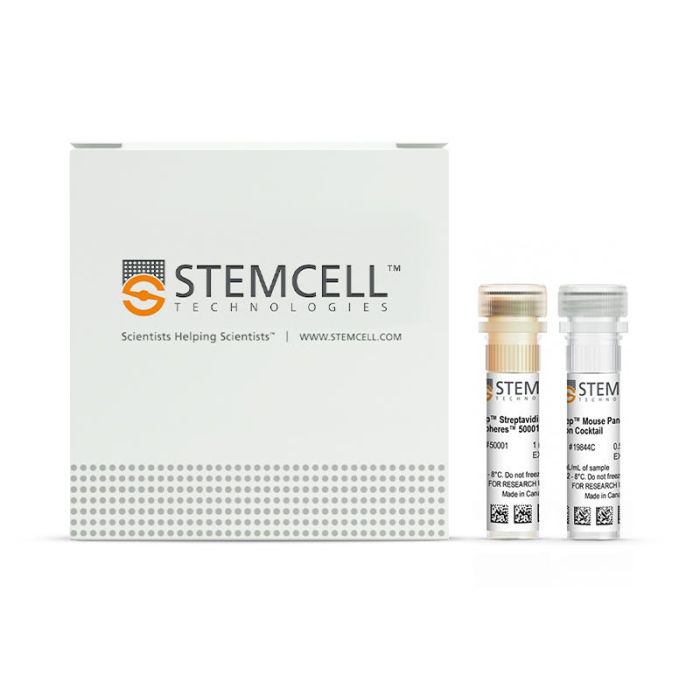
EasySep™小鼠Pan-B细胞分选试剂盒

免疫磁珠负选未标记的小鼠Pan-B(CD19+、CD19+CD138+、CD138+)细胞
只有 %1
¥9,414.00

产品号 #(选择产品)

产品号 #19844_C

免疫磁珠负选未标记的小鼠Pan-B(CD19+、CD19+CD138+、CD138+)细胞

产品优势

  • 操作简单、快速
  • 纯度高达98%
  • 无需分离柱
  • 获得的活细胞无标记

产品组分包括

  • EasySep™小鼠Pan-B细胞分选试剂盒(产品号 #19844)
    • EasySep™小鼠Pan-B细胞分选抗体混合物,0.5 mL
    • EasySep™ Streptavidin RapidSpheres™ 50001磁珠,1 mL
  • RoboSep™小鼠Pan-B细胞分选试剂盒(产品号 #19844RF)
    • EasySep™小鼠Pan-B细胞分选抗体混合物,0.5 mL
    • EasySep™ Streptavidin RapidSpheres™ 50001磁珠,1 mL
    • RoboSep™ 缓冲液(产品号 #20104)
    • RoboSep™ 过滤吸头(产品号 #20125)
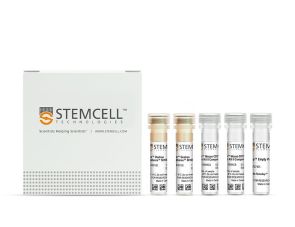
New format, same high quality! You may notice that your kit contents and packaging look slightly different from previous orders. We are currently updating the format of select EasySep™ Mouse kits to remove Normal Rat Serum, as this has been found to improve cell isolation performance. With this change, all components will now be shipped in a single package.
专为您的实验方案打造的产品
要查看实验方案所需的所有配套产品,请参阅《实验方案与技术文档》

总览

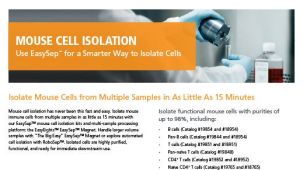
EasySep™小鼠Pan-B细胞分选试剂盒,通过免疫磁珠负选,可轻松高效地从脾细胞或其他组织样本的单细胞悬液中分离高纯度的小鼠pan-B细胞(CD19+、CD19+CD138+和CD138+),包括常规B-2 B细胞、B-1 B细胞和浆细胞。EasySep™技术结合单克隆抗体的特异性和无柱磁分选系统的简便性,已在发表的研究中广泛应用超过20年。

在该EasySep™负选流程中,非目的细胞被抗体复合物与磁珠标记。表达以下标志物的非目标细胞将被去除:CD4、CD8、CD11c、CD49b、CD90.2、Ly-6C/G(Gr-1)和TER119。通过EasySep™磁极将被磁珠标记的细胞与未被标记的目的细胞分离,接着简单地将目的细胞倾倒或吸取至一个新的试管中。仅需10分钟完成磁珠分选后,目的Pan-B细胞即可用于流式细胞术、培养或基于细胞的分析等下游应用。

该试剂盒也适用于分选表达CD43或CD11b的来自疾病模型的恶性细胞(B-CLL)。若仅需分离常规B细胞,我们推荐使用EasySep™小鼠B细胞分选试剂盒(产品号 #19854)。

了解更多关于免疫磁珠EasySep™技术的工作原理,或如何通过RoboSep™实现免疫磁珠细胞分选全自动化。探索为您的实验流程优化的更多产品,包括培养基、补充剂、抗体等。

磁极兼容性
• EasySep™磁极(产品号 #18000)
• “The Big Easy” EasySep™磁极(产品号 #18001)
• RoboSep™-S(产品号 #21000)
 
分类
细胞分选试剂盒
 
细胞类型
B 细胞
 
种属
小鼠
 
样本来源
其他物种,脾脏
 
分选方法
负选
 
应用
细胞分选
 
品牌
EasySep,RoboSep
 
研究领域
免疫
 

实验数据

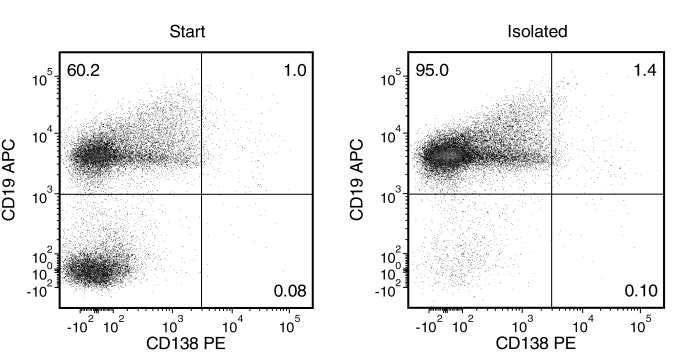
Typical EasySep™ Mouse Pan-B Cell Isolation Profile of a Non-Immunized C57BL/6 Mouse

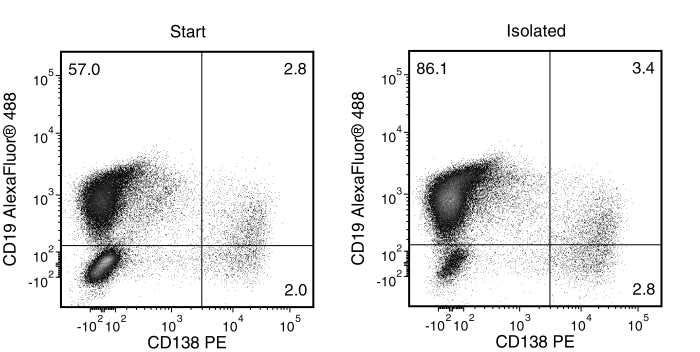
Figure 1. Typical EasySep™ Mouse Pan-B Cell Isolation Profile of a Non-Immunized C57BL/6 Mouse

Starting with mouse splenocytes, the pan-B cell content (CD19+, CD19+CD138+, and CD138+) of the isolated fraction typically ranges from 91 - 98%.

Typical EasySep™ Mouse Pan-B Cell Isolation Profile of an Immunized C57BL/6 Mouse

Figure 2. Typical EasySep™ Mouse Pan-B Cell Isolation Profile of an Immunized C57BL/6 Mouse

Starting with mouse splenocytes, the pan-B cell content (CD19+, CD19+CD138+ and CD138+) of the isolated fraction typically ranges from 91 - 98%.

Protocol Diagram for Culturing Mouse B Cells with ImmunoCult™ Mouse B Cell Expansion Kit

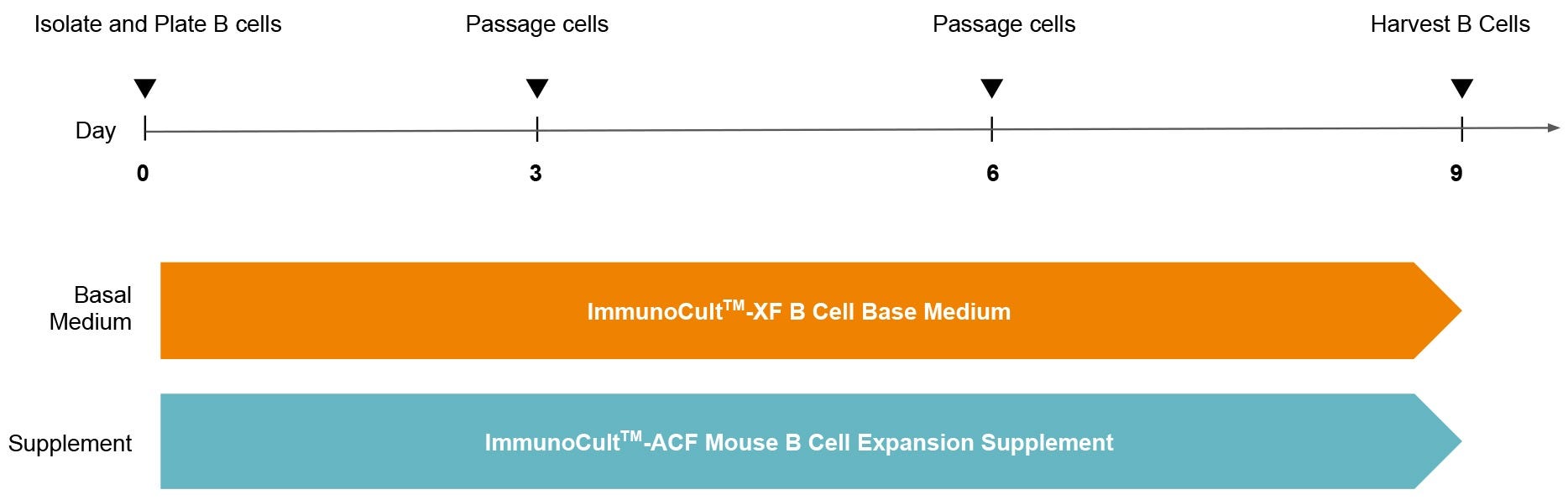
Figure 3. Protocol Diagram for Culturing Mouse B Cells with ImmunoCult™ Mouse B Cell Expansion Kit

B cells isolated from mouse spleen using EasySep™ Mouse Pan-B Cell Isolation Kit (Catalog #19844) were cultured in complete Mouse B Cell Expansion Medium (Catalog #100-1004) as described in the Directions for Use (steps 1 - 7) of the PIS for ImmunoCult™ Mouse B Cell Expansion Kit (Catalog # 100-1003). B Cells were harvested on Day 9 for analysis. Cells can also be harvested at earlier time points depending on different applications.

Expansion of Mouse B Cells with ImmunoCult™ Mouse B Cell Expansion Kit

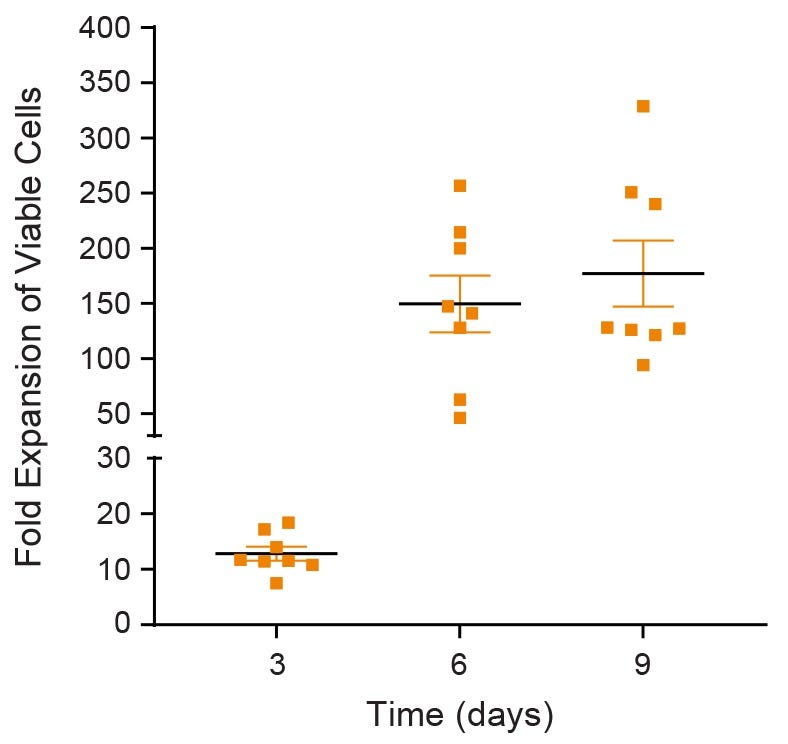
Figure 4. Expansion of Mouse B Cells with ImmunoCult™ Mouse B Cell Expansion Kit

B cells isolated from mouse spleen using EasySep™ Mouse Pan-B Cell Isolation Kit (Catalog #19844) were cultured in complete Mouse B Cell Expansion Medium (Catalog #100-1004) as described in PIS for ImmunoCult™ Mouse B Cell Expansion Kit (Catalog # 100-1003). Fold expansion of viable cells is shown with bar graphs representing the mean ± SEM (n = 8). B cells expanded 176.9 ± 29.8-fold after 9 days of culture.

Maturation of Mouse B Cells with ImmunoCult™ Mouse B Cell Expansion Kit

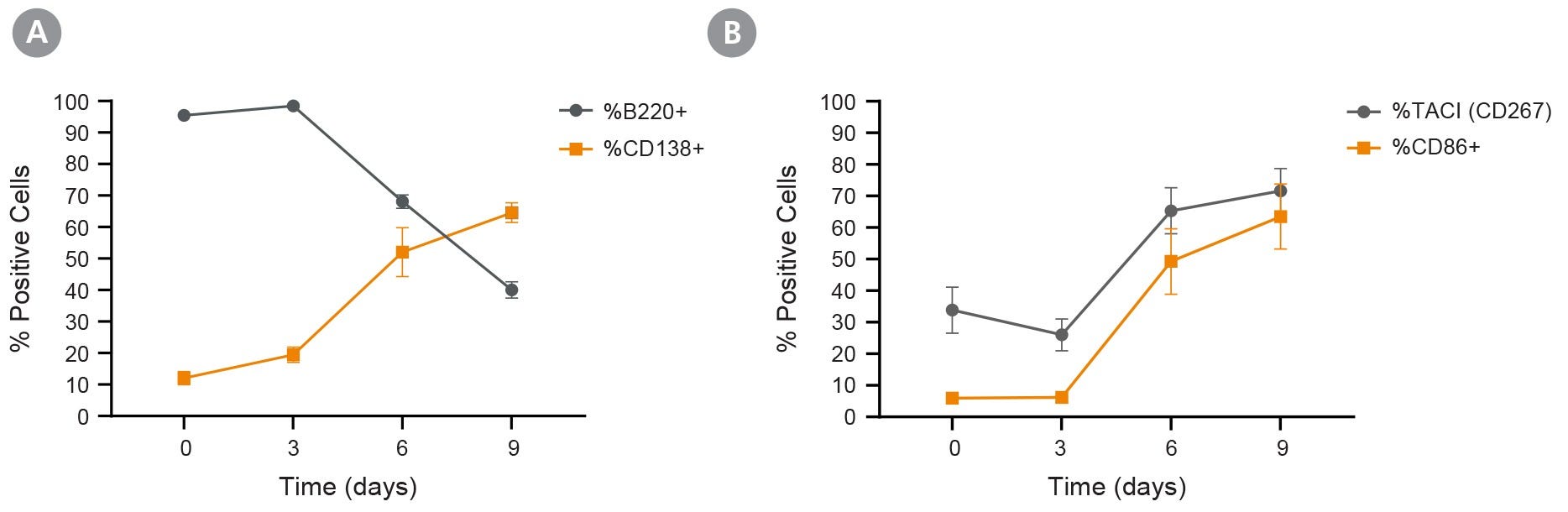
Figure 5. Maturation of Mouse B Cells with ImmunoCult™ Mouse B Cell Expansion Kit

B cells isolated from mouse spleen using EasySep™ Mouse Pan-B Cell Isolation Kit (Catalog #19844) were cultured in complete Mouse B Cell Expansion Medium (Catalog #100-1004) as described in the PIS for ImmunoCult™ Mouse B Cell Expansion Kit (Catalog # 100-1003). Following staining using the protocol by Pracht et al. (Eur J Immunol, 2017), the expression of A) B220 and CD138 and B) TACI (CD267) and CD86 were analyzed by flow cytometry at several time points (data represents mean ± SEM, n = 8). An increase in CD86 cell surface expression indicates B cell activation; a decrease in B220 and an increase in CD138 and TACI cell surface expression indicate maturation of B cells to plasmablasts or plasma cells.

产品说明书及文档

请在《产品说明书》中查找相关支持信息和使用说明,或浏览下方更多实验方案。

Document Type
Product Name
Catalog #
Lot #
Language
Catalog #
19844
Lot #
1000147363 or higher
Language
English
Catalog #
19844
Lot #
1000147362 or lower
Language
English
Catalog #
19844RF
Lot #
1000147363 or higher
Language
English
Catalog #
19844RF
Lot #
1000147362 or lower
Language
English
Document Type
Safety Data Sheet 1
Catalog #
19844
Lot #
All
Language
English
Document Type
Safety Data Sheet 2
Catalog #
19844
Lot #
All
Language
English
Document Type
Safety Data Sheet 3
Catalog #
19844
Lot #
All
Language
English
Document Type
Safety Data Sheet 1
Catalog #
19844RF
Lot #
All
Language
English
Document Type
Safety Data Sheet 2
Catalog #
19844RF
Lot #
All
Language
English
Document Type
Safety Data Sheet 3
Catalog #
19844RF
Lot #
All
Language
English
Document Type
Safety Data Sheet 4
Catalog #
19844RF
Lot #
All
Language
English

应用领域

本产品专为以下研究领域设计,适用于工作流程中的高亮阶段。探索这些工作流程,了解更多我们为各研究领域提供的其他配套产品。

相关材料与文献

技术资料 (8)

常见问题 (7)

Can EasySep™ Streptavidin RapidSpheres™ be used for either positive or negative selection?

Currently, EasySep™ Streptavidin RapidSphere™ kits are only available for negative selection and work by targeting and removing unwanted cells.

How does the separation work?

Streptavidin RapidSphere™ magnetic particles are crosslinked to unwanted cells using biotinylated antibodies. When placed in the EasySep™ Magnet, labeled cells migrate to the wall of the tube. The unlabeled cells are then poured off into a new tube.

Which columns do I use?

The EasySep™ procedure is column-free. That's right - no columns!

How can I analyze the purity of my enriched sample?

The Product Information Sheet provided with each EasySep™ kit contains detailed staining information.

Can EasySep™ Streptavidin RapidSphere™ separations be automated?

Yes. RoboSep™, the fully automated cell separator, automates all EasySep™ labeling and cell separation steps.

Are cells isolated using EasySep™ RapidSphere™ products FACS-compatible?

Yes. Desired cells are unlabeled and ready to use in downstream applications, such as FACS analysis.

Can I alter the separation time in the magnet?

Yes; however, this may impact the kit's performance. The provided EasySep™ protocols have already been optimized to balance purity, recovery and time spent on the isolation.

文献 (10)

Differential metabolic pathways underlie THC- and CBD-mediated inhibition of B-cell activation in both young and aged mice Frontiers in Immunology 2025 Jun

Abstract

ObjectiveB lymphocytes play a crucial role in immunity but also contribute to the pathogenesis of various diseases. Cannabis plants produce numerous biologically active compounds, including cannabinoids. The two most studied phytocannabinoids are Δ9-tetrahydrocannabinol (THC) and cannabidiol (CBD). These cannabinoids exert diverse and potent biological effects primarily through the endocannabinoid system (ECS), which also plays a key role in mature B-cell function. Both the immune system and the ECS undergo age-related changes that lead to a clinically significant decline in function.MethodsThis study compares the effects of THC and CBD on B-cell activity in young and aged mice. Murine B lymphocytes were activated using lipopolysaccharide (LPS) and interleukin-4 (IL-4), and the impact of cannabinoid treatments was assessed in terms of cell phenotype, proliferation, antibody secretion, tumor necrosis factor-alpha (TNFα) secretion, extracellular signal-regulated kinase (ERK) phosphorylation, and the cellular metabolome.ResultsBoth THC and CBD exhibited dose-dependent inhibitory effects on B-cell activation in young and aged mice. However, we show here, for the first time, that the treatments induce distinct metabolic profiles. Although some metabolites, such as glucose-6-phosphate, pentose phosphate pathway (PPP) and nucleotide metabolites, were reduced by both cannabinoids, THC selectively reduced the levels of a distinct set of amino acids, while only CBD increased the levels of Citrulline and Allantoin. Additionally, the effects of THC and CBD differed between young and aged B cells, suggesting that age-related changes in the ECS may influence cannabinoid sensitivity.ConclusionsThese findings provide insights into the distinct mechanisms by which THC and CBD regulate immune activation and may open the door for investigating the mechanisms behind cannabinoids effects on the immune system. They also highlight the need for further research into phytocannabinoid-based therapies, particularly in age-specific contexts. Given the immunoregulatory properties of cannabinoids, especially CBD, tailored therapeutic strategies may enhance their clinical applications
Longitudinal omics data and preclinical treatment suggest the proteasome inhibitor carfilzomib as therapy for ibrutinib-resistant CLL Nature Communications 2025 Jan

Abstract

Chronic lymphocytic leukemia is a malignant lymphoproliferative disorder for which primary or acquired drug resistance represents a major challenge. To investigate the underlying molecular mechanisms, we generate a mouse model of ibrutinib resistance, in which, after initial treatment response, relapse under therapy occurrs with an aggressive outgrowth of malignant cells, resembling observations in patients. A comparative analysis of exome, transcriptome and proteome of sorted leukemic murine cells during treatment and after relapse suggests alterations in the proteasome activity as a driver of ibrutinib resistance. Preclinical treatment with the irreversible proteasome inhibitor carfilzomib administered upon ibrutinib resistance prolongs survival of mice. Longitudinal proteomic analysis of ibrutinib-resistant patients identifies deregulation in protein post-translational modifications. Additionally, cells from ibrutinib-resistant patients effectively respond to several proteasome inhibitors in co-culture assays. Altogether, our results from orthogonal omics approaches identify proteasome inhibition as potentially attractive treatment for chronic lymphocytic leukemia patients resistant or refractory to ibrutinib. The molecular mechanisms underlying resistance to therapy in Chronic lymphocytic leukemia (CLL) remain to be explored. Here, the authors perform multi-omics analysis in a mouse model of ibrutinib resistance and suggest proteasome inhibition for overcoming it.
Integrative multi-omics reveals a regulatory and exhausted T-cell landscape in CLL and identifies galectin-9 as an immunotherapy target Nature Communications 2025 Aug

Abstract

T-cell exhaustion contributes to immunotherapy failure in chronic lymphocytic leukemia (CLL). Here, we analyze T cells from CLL patients’ blood, bone marrow, and lymph nodes, as well as from a CLL mouse model, using single-cell RNA sequencing, mass cytometry, and tissue imaging. T cells in CLL lymph nodes show the most distinct profiles, with accumulation of regulatory T cells and CD8+ T cells in various exhaustion states, including precursor (TPEX) and terminally exhausted (TEX) cells. Integration of T-cell receptor sequencing data and use of the predicTCR classifier suggest an enrichment of CLL-reactive T cells in lymph nodes. Interactome studies reveal potential immunotherapy targets, notably galectin-9, a TIM3 ligand. Inhibiting galectin-9 in mice reduces disease progression and TIM3+ T cells. Galectin-9 expression also correlates with worse survival in CLL and other cancers, suggesting its role in immune evasion and potential as a therapeutic target. Multi-omics can be used to characterise tumour and immune cell populations. Here the authors use multi-omics to characterise CLL blood and tissue samples and use prediction models for CLL TCR specificity and implicate interactions between galectin-9 and TIM3 as involved in CLL immune escape and propose galectin-9 as a possible immunotherapy target.

更多信息

更多信息
物种 小鼠
Magnet Compatibility • EasySep™ Magnet (Catalog #18000) • “The Big Easy” EasySep™ Magnet (Catalog #18001) • RoboSep™-S (Catalog #21000)
样本来源 其它细胞系, 脾脏
Selection Method Negative
标记抗体
质量保证:

产品仅供研究使用,不用于针对人或动物的诊断或治疗。 欲获悉更多关于STEMCELL的质控信息,请访问 STEMCELL.CN/COMPLIANCE.
Copyright © 2025 by STEMCELL Technologies. All rights reserved.

在线联系