若您需要咨询产品或有任何技术问题,请通过官方电话 400 885 9050 或邮箱 info.cn@stemcell.com 与我们联系。

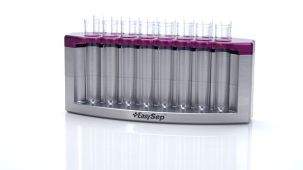
EasySep™小鼠CD19正选试剂盒II

免疫磁珠正选小鼠CD19+细胞分选试剂盒
只有 %1
¥10,086.00

产品号 #(选择产品)

产品号 #18954_C

免疫磁珠正选小鼠CD19+细胞分选试剂盒

产品优势

  • 快速、易于操作
  • 纯度高达99%
  • 无需分离柱
  • 分选得到的细胞无荧光标记

产品组分包括

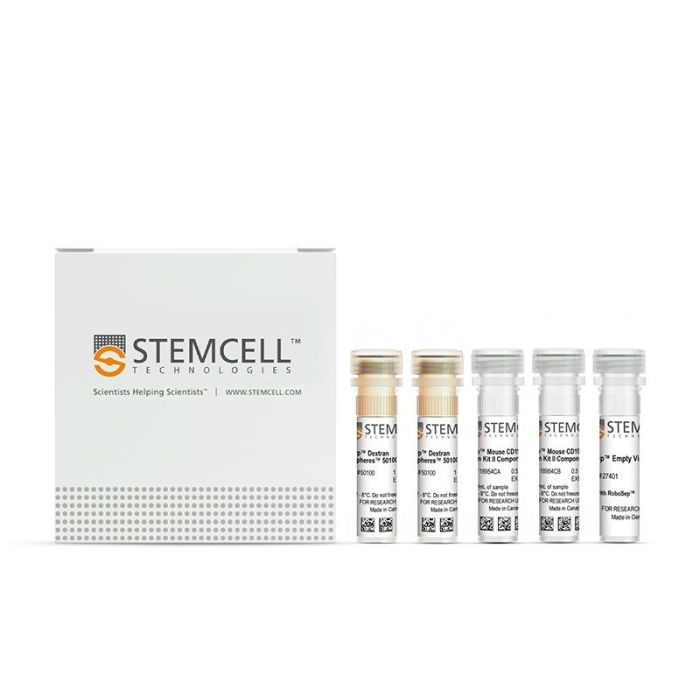
  • EasySep™小鼠CD19正选试剂盒II(产品号 #18954)
    • EasySep™小鼠CD19正选II组分A,0.5mL
    • EasySep™小鼠CD19正选II组分B,0.5mL
    • EasySep™ Dextran RapidSpheres™ 50100 磁珠,2 X 1mL
    • RoboSep™空管
  • RoboSep™小鼠CD19正选试剂盒II(产品号 #18954RF)
    • EasySep™小鼠CD19正选II组分A,0.5mL
    • EasySep™小鼠CD19正选II组分B,0.5mL
    • EasySep™ Dextran RapidSpheres™ 50100 磁珠,2 X 1mL
    • RoboSep™空管
    • RoboSep™ 缓冲液(产品号 #20104)
    • RoboSep™过滤吸头(产品号#20125)x 2
New look, same high quality and support! You may notice that your instrument or reagent packaging looks slightly different from images displayed on the website, or from previous orders. We are updating our look but rest assured, the products themselves and how you should use them have not changed. Learn more
专为您的实验方案打造的产品
要查看实验方案所需的所有配套产品,请参阅《实验方案与技术文档》

总览

EasySep™小鼠CD19正选试剂盒II 通过免疫磁珠正选技术,可轻松从小鼠脾细胞或其他组织样本的单细胞悬液中分离高纯度的小鼠CD19+细胞。EasySep™技术结合单克隆抗体的特异性和无需分离柱的简便磁分选系统,已在发表的研究中广泛应用超过20年。

在该EasySep™阳性分选流程中,目的细胞通过与识别CD19的抗体复合物及磁珠进行标记。使用EasySep™磁分选系统标记细胞,只需倾倒或移液吸取非目的细胞。目的细胞保留在分离管中。分选后的目的细胞 CD19细胞即可用于流式细胞术、培养及细胞实验等下游应用。

了解更多关于免疫磁珠EasySep™技术的工作原理,或如何通过RoboSep™实现免疫磁珠细胞分选全自动化。探索为您的实验流程优化的更多产品,包括培养基、添加剂、抗体等。

磁极兼容性
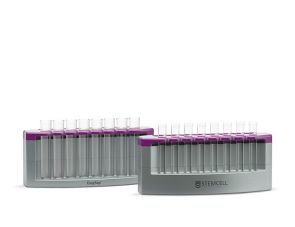
• EasySep™磁极(产品号 #18000)
• “The Big Easy” EasySep™磁极(产品号 #18001)
• EasyEights™ EasySep™磁极(产品号 #18103)
• RoboSep™-S(产品号 #21000)
 
分类
细胞分选试剂盒
 
细胞类型
B 细胞
 
种属
小鼠
 
样本来源
其他物种,脾脏
 
分选方法
正选
 
应用
细胞分选
 
品牌
EasySep,RoboSep
 
研究领域
免疫
 

实验数据

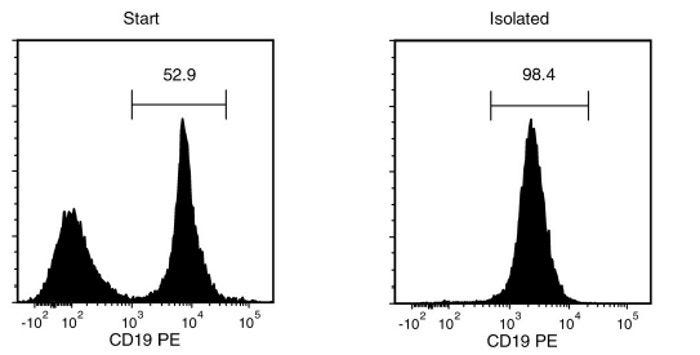
Typical EasySep™ CD19 Positive Cell Isolation Profile

Figure 1. Typical EasySep™ CD19 Positive Cell Isolation Profile

Starting with mouse splenocytes, the CD19+ cell content of the isolated fraction is typically 98.1 ± 0.6% (mean ± SD) using the purple EasySep™ Magnet.

产品说明书及文档

请在《产品说明书》中查找相关支持信息和使用说明,或浏览下方更多实验方案。

Document Type
Product Name
Catalog #
Lot #
Language
Catalog #
18954
Lot #
All
Language
English
Catalog #
18954RF
Lot #
All
Language
English
Document Type
Safety Data Sheet 1
Catalog #
18954
Lot #
All
Language
English
Document Type
Safety Data Sheet 2
Catalog #
18954
Lot #
All
Language
English
Document Type
Safety Data Sheet 3
Catalog #
18954
Lot #
All
Language
English
Document Type
Safety Data Sheet 1
Catalog #
18954RF
Lot #
All
Language
English
Document Type
Safety Data Sheet 2
Catalog #
18954RF
Lot #
All
Language
English
Document Type
Safety Data Sheet 3
Catalog #
18954RF
Lot #
All
Language
English
Document Type
Safety Data Sheet 4
Catalog #
18954RF
Lot #
All
Language
English

应用领域

本产品专为以下研究领域设计,适用于工作流程中的高亮阶段。探索这些工作流程,了解更多我们为各研究领域提供的其他配套产品。

相关材料与文献

技术资料 (9)

常见问题 (11)

Can EasySep™ be used for either positive or negative selection?

Yes. The EasySep™ kits use either a negative selection approach by targeting and removing unwanted cells or a positive selection approach targeting desired cells. Depletion kits are also available for the removal of cells with a specific undesired marker (e.g. GlyA).

How does the separation work?

Magnetic particles are crosslinked to cells using Tetrameric Antibody Complexes (TAC). When placed in the EasySep™ Magnet, labeled cells migrate to the wall of the tube. The unlabeled cells are then poured off into a separate fraction.

Which columns do I use?

The EasySep™ procedure is column-free. That's right - no columns!

How can I analyze the purity of my enriched sample?

The Product Information Sheet provided with each EasySep™ kit contains detailed staining information.

Can EasySep™ separations be automated?

Yes. RoboSep™, the fully automated cell separator, automates all EasySep™ labeling and cell separation steps.

Can EasySep™ be used to isolate rare cells?

Yes. We recommend a cell concentration of 2x10⁸ cells/mL and a minimum working volume of 100 µL. Samples containing 2x10⁷ cells or fewer should be suspended in 100 µL of buffer.

Are the EasySep™ magnetic particles FACS-compatible?

Yes, the EasySep™ particles are flow cytometry-compatible, as they are very uniform in size and about 5000X smaller than other commercially available magnetic beads used with column-free systems.

Can the EasySep™ magnetic particles be removed after enrichment?

No, but due to the small size of these particles, they will not interfere with downstream applications.

Can I alter the separation time in the magnet?

Yes; however, this may impact the kit's performance. The provided EasySep™ protocols have already been optimized to balance purity, recovery and time spent on the isolation.

For positive selection, can I perform more than 3 separations to increase purity?

Yes, the purity of targeted cells will increase with additional rounds of separations; however, cell recovery will decrease.

How does the binding of the EasySep™ magnetic particle affect the cells? is the function of positively selected cells altered by the bound particles?

Hundreds of publications have used cells selected with EasySep™ positive selection kits for functional studies. Our in-house experiments also confirm that selected cells are not functionally altered by the EasySep™ magnetic particles.

If particle binding is a key concern, we offer two options for negative selection. The EasySep™ negative selection kits can isolate untouched cells with comparable purities, while RosetteSep™ can isolate untouched cells directly from whole blood without using particles or magnets.

文献 (8)

G-protein coupled receptor kinase-2 regulates the migration of chronic lymphocytic leukaemia cells to sphingosine-1 phosphate in vitro and their trafficking in vivo Scientific Reports 2025 Feb

Abstract

Disease progression and drug resistance in patients with chronic lymphocytic leukaemia (CLL) depend on signals from the tumour microenvironment in lymphoid sites. GRK2 inhibits the egress of normal B cells from lymphoid tissues by inducing the downregulation of the S1P-receptor 1 (S1PR1). In this study we investigated the role of GRK2 in the context of CLL using in vitro and in vivo murine models, and also primary samples from CLL patients. We found that pharmacological inhibition of GRK2 enhanced the migration of leukemic cells from CLL patients towards S1P and impaired the S1P-induced downregulation of S1PR1. Likewise, CRISPR/Cas9-mediated GRK2 deletion in a murine leukemic cell line derived from the Eµ-TCL1 mouse model of CLL also increased migratory capacity toward S1P in vitro. Furthermore, when injected into mice, GRK2-deficient murine leukemic cells exhibited an altered in vivo localization, with a higher presence in the blood and spleen compared to the bone marrow. Within the spleen, these cells displayed reduced localization to the follicles compared to control murine leukemic cells. Deletion of GRK2 on murine leukemic cells did not affect their in vitro proliferation, but notably, conferred a growth disadvantage in vivo. These findings underscore GRK2 as a critical regulator of the localization of CLL cells in vivo and suggest its potential as a therapeutic target to disrupt survival niches in CLL.Supplementary InformationThe online version contains supplementary material available at 10.1038/s41598-025-91536-5.
B-cell intrinsic regulation of antibody mediated immunity by histone H2A deubiquitinase BAP1 Frontiers in Immunology 2024 Mar

Abstract

IntroductionBAP1 is a deubiquitinase (DUB) of the Ubiquitin C-terminal Hydrolase (UCH) family that regulates gene expression and other cellular processes, through its direct catalytic activity on the repressive epigenetic mark histone H2AK119ub, as well as on several other substrates. BAP1 is also a highly important tumor suppressor, expressed and functional across many cell types and tissues. In recent work, we demonstrated a cell intrinsic role of BAP1 in the B cell lineage development in murine bone marrow, however the role of BAP1 in the regulation of B cell mediated humoral immune response has not been previously explored. Methods and resultsIn the current study, we demonstrate that a B-cell intrinsic loss of BAP1 in activated B cells in the Bap1 fl/fl Cγ1-cre murine model results in a severe defect in antibody production, with altered dynamics of germinal centre B cell, memory B cell, and plasma cell numbers. At the cellular and molecular level, BAP1 was dispensable for B cell immunoglobulin class switching but resulted in an impaired proliferation of activated B cells, with genome-wide dysregulation in histone H2AK119ub levels and gene expression. Conclusion and discussionIn summary, our study establishes the B-cell intrinsic role of BAP1 in antibody mediated immune response and indicates its central role in the regulation of the genome-wide landscapes of histone H2AK119ub and downstream transcriptional programs of B cell activation and humoral immunity.
Immune correlates of protection following Rift Valley fever virus vaccination. J. D. Doyle et al. NPJ vaccines 2022 oct

Abstract

Rift Valley fever virus (RVFV) is a hemorrhagic fever virus with the potential for significant economic and public health impact. Vaccination with an attenuated strain, DelNSsRVFV, provides protection from an otherwise lethal RVFV challenge, but mechanistic determinants of protection are undefined. In this study, a murine model was used to assess the contributions of humoral and cellular immunity to DelNSsRVFV-mediated protection. Vaccinated mice depleted of T cells were protected against subsequent challenge, and passive transfer of immune serum from vaccinated animals to na{\{i}}ve animals was also protective demonstrating that T cells were dispensable in the presence of humoral immunity and that humoral immunity alone was sufficient. Animals depleted of B cells and then vaccinated were protected against challenge. Total splenocytes but not T cells alone B cells alone or B??+??T cells harvested from vaccinated animals and then transferred to na{\"{i}}ve animals were sufficient to confer protection suggesting that multiple cellular interactions were required for effective cellular immunity. Together these data indicate that humoral immunity is sufficient to confer vaccine-mediated protection and suggests that cellular immunity plays a role in protection that requires the interaction of various cellular components."
G-protein coupled receptor kinase-2 regulates the migration of chronic lymphocytic leukaemia cells to sphingosine-1 phosphate in vitro and their trafficking in vivo Scientific Reports 2025 Feb

Abstract

Disease progression and drug resistance in patients with chronic lymphocytic leukaemia (CLL) depend on signals from the tumour microenvironment in lymphoid sites. GRK2 inhibits the egress of normal B cells from lymphoid tissues by inducing the downregulation of the S1P-receptor 1 (S1PR1). In this study we investigated the role of GRK2 in the context of CLL using in vitro and in vivo murine models, and also primary samples from CLL patients. We found that pharmacological inhibition of GRK2 enhanced the migration of leukemic cells from CLL patients towards S1P and impaired the S1P-induced downregulation of S1PR1. Likewise, CRISPR/Cas9-mediated GRK2 deletion in a murine leukemic cell line derived from the Eµ-TCL1 mouse model of CLL also increased migratory capacity toward S1P in vitro. Furthermore, when injected into mice, GRK2-deficient murine leukemic cells exhibited an altered in vivo localization, with a higher presence in the blood and spleen compared to the bone marrow. Within the spleen, these cells displayed reduced localization to the follicles compared to control murine leukemic cells. Deletion of GRK2 on murine leukemic cells did not affect their in vitro proliferation, but notably, conferred a growth disadvantage in vivo. These findings underscore GRK2 as a critical regulator of the localization of CLL cells in vivo and suggest its potential as a therapeutic target to disrupt survival niches in CLL.Supplementary InformationThe online version contains supplementary material available at 10.1038/s41598-025-91536-5.
B-cell intrinsic regulation of antibody mediated immunity by histone H2A deubiquitinase BAP1 Frontiers in Immunology 2024 Mar

Abstract

IntroductionBAP1 is a deubiquitinase (DUB) of the Ubiquitin C-terminal Hydrolase (UCH) family that regulates gene expression and other cellular processes, through its direct catalytic activity on the repressive epigenetic mark histone H2AK119ub, as well as on several other substrates. BAP1 is also a highly important tumor suppressor, expressed and functional across many cell types and tissues. In recent work, we demonstrated a cell intrinsic role of BAP1 in the B cell lineage development in murine bone marrow, however the role of BAP1 in the regulation of B cell mediated humoral immune response has not been previously explored. Methods and resultsIn the current study, we demonstrate that a B-cell intrinsic loss of BAP1 in activated B cells in the Bap1 fl/fl Cγ1-cre murine model results in a severe defect in antibody production, with altered dynamics of germinal centre B cell, memory B cell, and plasma cell numbers. At the cellular and molecular level, BAP1 was dispensable for B cell immunoglobulin class switching but resulted in an impaired proliferation of activated B cells, with genome-wide dysregulation in histone H2AK119ub levels and gene expression. Conclusion and discussionIn summary, our study establishes the B-cell intrinsic role of BAP1 in antibody mediated immune response and indicates its central role in the regulation of the genome-wide landscapes of histone H2AK119ub and downstream transcriptional programs of B cell activation and humoral immunity.
Immune correlates of protection following Rift Valley fever virus vaccination. J. D. Doyle et al. NPJ vaccines 2022 oct

Abstract

Rift Valley fever virus (RVFV) is a hemorrhagic fever virus with the potential for significant economic and public health impact. Vaccination with an attenuated strain, DelNSsRVFV, provides protection from an otherwise lethal RVFV challenge, but mechanistic determinants of protection are undefined. In this study, a murine model was used to assess the contributions of humoral and cellular immunity to DelNSsRVFV-mediated protection. Vaccinated mice depleted of T cells were protected against subsequent challenge, and passive transfer of immune serum from vaccinated animals to na{\{i}}ve animals was also protective demonstrating that T cells were dispensable in the presence of humoral immunity and that humoral immunity alone was sufficient. Animals depleted of B cells and then vaccinated were protected against challenge. Total splenocytes but not T cells alone B cells alone or B??+??T cells harvested from vaccinated animals and then transferred to na{\"{i}}ve animals were sufficient to confer protection suggesting that multiple cellular interactions were required for effective cellular immunity. Together these data indicate that humoral immunity is sufficient to confer vaccine-mediated protection and suggests that cellular immunity plays a role in protection that requires the interaction of various cellular components."

更多信息

更多信息
物种 小鼠
Magnet Compatibility • EasySep™ Magnet (Catalog #18000) • “The Big Easy” EasySep™ Magnet (Catalog #18001) • EasyEights™ EasySep™ Magnet (Catalog #18103) • RoboSep™-S (Catalog #21000)
样本来源 其它细胞系, 脾脏
Selection Method Positive
标记抗体
质量保证:

产品仅供研究使用,不用于针对人或动物的诊断或治疗。 欲获悉更多关于STEMCELL的质控信息,请访问 STEMCELL.CN/COMPLIANCE.
Copyright © 2025 by STEMCELL Technologies. All rights reserved.

在线联系