若您需要咨询产品或有任何技术问题,请通过官方电话 400 885 9050 或邮箱 info.cn@stemcell.com 与我们联系。

EasySep™人CD8正选试剂盒 II

人CD8+ T细胞的免疫磁珠正选
只有 %1
¥8,026.00

产品号 #(选择产品)

产品号 #17853_C

人CD8+ T细胞的免疫磁珠正选

产品优势

  • 快捷、操作简单
  • 纯度高达99%
  • 无需分离柱     

产品组分包括

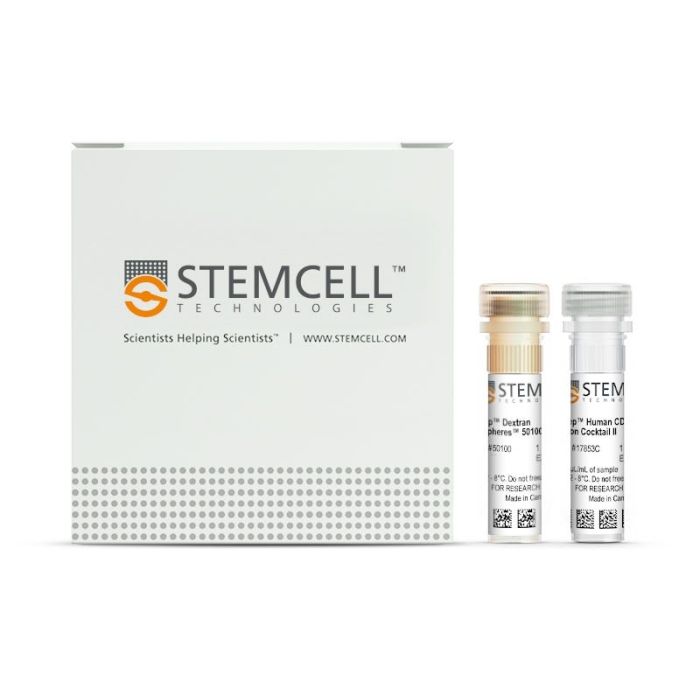
  • EasySep™人CD8 正选试剂盒 II(产品号 #17853)
    • EasySep™人CD8正选抗体混合物 II,1 mL
    • EasySep™ Dextran RapidSpheres™ 50100 磁珠,1 mL
    • EasySep™人CD8正选试剂盒 II(产品号 #100-0699)
    • EasySep™人CD8正选抗体混合物 II,1 x 10 mL
    • EasySep™ Dextran RapidSpheres™ 50103 磁珠,1 x 1 mL
  • RoboSep™人CD8 正选试剂盒 II(产品号 #17853RF)
    • EasySep™人CD8正选抗体混合物 II,1 mL
    • EasySep™ Dextran RapidSpheres™ 50100 磁珠,1 mL
    • RoboSep™ 缓冲液(产品号 #20104)
    • RoboSep™过滤吸头(产品号 #20125)
New look, same high quality and support! You may notice that your instrument or reagent packaging looks slightly different from images displayed on the website, or from previous orders. We are updating our look but rest assured, the products themselves and how you should use them have not changed. Learn more
专为您的实验方案打造的产品
要查看实验方案所需的所有配套产品,请参阅《实验方案与技术文档》

总览

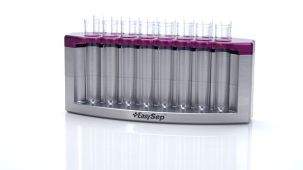
使用EasySep™人CD8正选试剂盒II,通过免疫磁性正选法可从新鲜、冻存的人外周血单个核细胞(PBMCs)或白细胞单采样品中分离高纯度CD8+ T细胞。

该步骤中,CD8+细胞通过识别CD8的抗体复合物和磁珠标记,并使用抗人Fc受体抗体防止非特异结合。标记细胞经EasySep™磁体分离后,未标记细胞被倒出,CD8+细胞保留在管中。整个过程最短仅需15分钟。CD8抗原强表达于细胞毒性T细胞,弱表达于部分NK细胞。

本产品替代旧版EasySep™ CD8试剂盒(产品号#18053),并可扩展至大规模分离(产品号#100-0699)。

了解更多EasySep™免疫磁性技术RoboSep™系统。


磁极兼容性
• EasySep™磁极(产品号 #18000)
• “The Big Easy” EasySep™磁极(产品号 #18001)
• EasyPlate™ EasySep™磁极(产品号 #18102)
• Easy 50 EasySep™磁极(产品号 #18002)
• EasyEights™ EasySep™磁极(产品号 #18103)
• RoboSep™-S(产品号 #21000)
• Easy 250 EasySep™磁极(产品号 #100-0821)
 
分类
细胞分选试剂盒
 
细胞类型
T 细胞,T 细胞,CD8+
 
种属

 
样本来源
PBMC
 
分选方法
正选
 
应用
细胞分选
 
品牌
EasySep,RoboSep
 
研究领域
免疫
 

实验数据

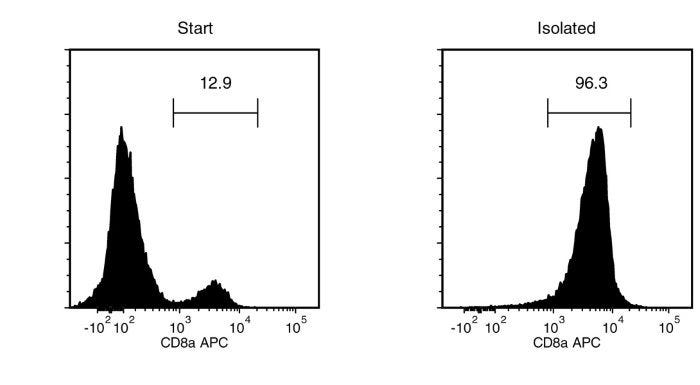
Typical EasySep™ Human CD8 Positive Selection Profile

Figure 1. Typical EasySep™ Human CD8 Positive Selection Profile

Starting with a single cell suspension of human PBMCs, the CD8+ cell content of the isolated fraction is typically 96.5 ± 2.4% (mean ± SD) using "The Big Easy" EasySep™ Magnet.

FACS Data for Anti-Human CD8a Antibody, Clone RPA-T8, PerCP-Cy55-Conjugated

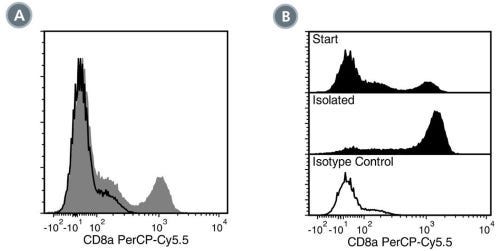
Figure 2. FACS Data for Anti-Human CD8a Antibody, Clone RPA-T8, PerCP-Cy55-Conjugated

(A) Flow cytometry analysis of human peripheral blood mononuclear cells (PBMCs) labeled with Anti-Human CD8a Antibody, Clone RPA-T8, PerCP-Cy5.5 (Catalog #60022PS; filled histogram) or a mouse IgG1, kappa isotype control antibody, PerCP-Cy5.5 (solid line histogram).

(B) Flow cytometry analysis of human PBMCs processed with the EasySep™ Human CD8 Positive Selection Kit (Catalog #17853) and labeled with Anti-Human CD8a Antibody, Clone RPA-T8, PerCP-Cy5.5. Histograms show labeling of PBMCs (Start) and isolated cells (Isolated). Labeling of start cells with a mouse IgG1, kappa PerCP-Cy5.5 isotype control antibody is shown (solid line histogram).

产品说明书及文档

请在《产品说明书》中查找相关支持信息和使用说明,或浏览下方更多实验方案。

Document Type
Product Name
Catalog #
Lot #
Language
Catalog #
17853RF
Lot #
All
Language
Multi
Catalog #
17853RF
Lot #
All
Language
English
Catalog #
17853
Lot #
All
Language
English
Catalog #
17853
Lot #
All
Language
English
Catalog #
17853
Lot #
All
Language
Multi
Document Type
Safety Data Sheet 1
Catalog #
17853RF
Lot #
All
Language
English
Document Type
Safety Data Sheet 2
Catalog #
17853RF
Lot #
All
Language
English
Document Type
Safety Data Sheet 3
Catalog #
17853RF
Lot #
All
Language
English
Document Type
Safety Data Sheet 1
Catalog #
17853
Lot #
All
Language
English
Document Type
Safety Data Sheet 2
Catalog #
17853
Lot #
All
Language
English
Document Type
Safety Data Sheet
Catalog #
100-0699
Lot #
All
Language
English

应用领域

本产品专为以下研究领域设计,适用于工作流程中的高亮阶段。探索这些工作流程,了解更多我们为各研究领域提供的其他配套产品。

相关材料与文献

技术资料 (9)

常见问题 (11)

Can EasySep™ be used for either positive or negative selection?

Yes. The EasySep™ kits use either a negative selection approach by targeting and removing unwanted cells or a positive selection approach targeting desired cells. Depletion kits are also available for the removal of cells with a specific undesired marker (e.g. GlyA).

How does the separation work?

Magnetic particles are crosslinked to cells using Tetrameric Antibody Complexes (TAC). When placed in the EasySep™ Magnet, labeled cells migrate to the wall of the tube. The unlabeled cells are then poured off into a separate fraction.

Which columns do I use?

The EasySep™ procedure is column-free. That's right - no columns!

How can I analyze the purity of my enriched sample?

The Product Information Sheet provided with each EasySep™ kit contains detailed staining information.

Can EasySep™ separations be automated?

Yes. RoboSep™, the fully automated cell separator, automates all EasySep™ labeling and cell separation steps.

Can EasySep™ be used to isolate rare cells?

Yes. We recommend a cell concentration of 2x10⁸ cells/mL and a minimum working volume of 100 µL. Samples containing 2x10⁷ cells or fewer should be suspended in 100 µL of buffer.

Are the EasySep™ magnetic particles FACS-compatible?

Yes, the EasySep™ particles are flow cytometry-compatible, as they are very uniform in size and about 5000X smaller than other commercially available magnetic beads used with column-free systems.

Can the EasySep™ magnetic particles be removed after enrichment?

No, but due to the small size of these particles, they will not interfere with downstream applications.

Can I alter the separation time in the magnet?

Yes; however, this may impact the kit's performance. The provided EasySep™ protocols have already been optimized to balance purity, recovery and time spent on the isolation.

For positive selection, can I perform more than 3 separations to increase purity?

Yes, the purity of targeted cells will increase with additional rounds of separations; however, cell recovery will decrease.

How does the binding of the EasySep™ magnetic particle affect the cells? is the function of positively selected cells altered by the bound particles?

Hundreds of publications have used cells selected with EasySep™ positive selection kits for functional studies. Our in-house experiments also confirm that selected cells are not functionally altered by the EasySep™ magnetic particles.

If particle binding is a key concern, we offer two options for negative selection. The EasySep™ negative selection kits can isolate untouched cells with comparable purities, while RosetteSep™ can isolate untouched cells directly from whole blood without using particles or magnets.

文献 (14)

Cancer ATF4-mediated CD58 endocytosis impairs anti-tumor immunity and immunotherapy Journal of Translational Medicine 2025 Feb

Abstract

Co-stimulatory molecules are imperative for CD8+ T cells to eliminate target cell and maintain sustained cytotoxicity. Despite an advanced understanding of the co-stimulatory molecules deficiency that results in tumor escape, the tumor cell-intrinsic mechanisms that regulate co-stimulatory molecules remain enigmatic, and an in-depth dissection could facilitate the improvement of treatment options. To this end, in this study, we report that the deficiency of the critical costimulatory molecule CD58, mediated by the expression of ATF4 in tumor cells, impairs the formation of immunological synapses (IS) and leads to the deterioration of antitumor immune function of CD8+ T cells. Mechanistically, ATF4 transcriptionally upregulated dynamin 1 (DNM1) expression leading to DNM1-dependent endocytosis (DDE)-mediated degradation of CD58. Furthermore, administration of DDE inhibitor prochlorperazine or ATF4 knockdown effectively restored CD58 expression, boosting CD8+ T cell cytotoxicity and immunotherapy efficiency. Thus, our study reveals that ATF4 in tumor cells weakens CD58 expression to interfere with complete IS formation, and indicates potential approaches to improve the cytolytic function of CD8+ T cell in tumor immunotherapy.Supplementary InformationThe online version contains supplementary material available at 10.1186/s12967-025-06245-4.
FANCA promotes lung adenocarcinoma progression and is a potential target for epitope vaccine immunotherapy Journal of Translational Medicine 2024 Oct

Abstract

BackgroundFANCA mutations have been detected in a variety of cancers and found to be pro-carcinogenic. However, no functional studies have been identified regarding the involvement of FANCA in the occurrence and the immune response of LUAD.MethodsThe mRNA expression and overall survival rates of FANCA were evaluated by the TIMER, PrognoScan and TCGA database in LUAD tissues, and FANCA expression was further validated by clinical serum samples using ELISA. The correlation between FANCA and immune infiltration level was investigated via TISIDB database and CIBERSORT algorithm. The Kaplan–Meier plotter was used to further evaluate the prognostic value based on the expression levels of FANCA in related immune cells. Then, the influence of FANCA knockout on the proliferation, migration, and invasion of A549 and H1299 cells was validated using CCK8, cloning formation, and Transwell assays. Subsequently, HLA-A2-restricted FANCA antigenic peptides were predicted and synthesized by NetMHC4.0 and SYFPEITHI, and DCs were induced and cultured in vitro. Finally, DCs loaded with HLA-A2-restricted FANCA antigenic peptides were co-cultured with autologous peripheral blood lymphocyte to generate specific CTLs. The killing effects of different CTLs on LUAD cells were studied.ResultsThe results showed that high levels of FANCA in patients with LUAD were significantly correlated with worse OS survival, which was correlated with age, clinical stage, pathological T stage, M stage, and N stage in LUAD. Knockdown of FANCA in A549 and H1299 cells significantly inhibited proliferation, metastasis, and invasion in vitro. In addition, FANCA was significantly related to immune infiltrate, genomic alterations and TMB. FANCA expression infuenced the prognosis of LUAD patients by directly affecting immune cell infltration. Finally, HLA-A2-restricted FANCA antigenic peptides were synthesized. And FANCA 146–154 (SLLEFAQYL) antigenic peptide exhibit a stronger affinity for DCs, and induce CTLs to produce stronger targeted killing ability for LUAD cells at an effector-to-target ratio of 40:1.ConclusionThese results demonstrated that the elevation of FANCA promotes malignant phenotype of LUAD, and the potential peptide P2 (SLLEFAQYL) derived from FANCA may be used as an epitope vaccine for the treatment of LUAD.
Serum amyloid A promotes glycolysis of neutrophils during PD-1 blockade resistance in hepatocellular carcinoma Nature Communications 2024 Feb

Abstract

The response to programmed death-1 (PD-1) blockade varies in hepatocellular carcinoma (HCC). We utilize a panel of 16 serum factors to show that a circulating level of serum amyloid A (SAA) > 20.0 mg/L has the highest accuracy in predicting anti-PD-1 resistance in HCC. Further experiments show a correlation between peritumoral SAA expression and circulating SAA levels in patients with progressive disease after PD-1 inhibition. In vitro experiments demonstrate that SAA induces neutrophils to express PD-L1 through glycolytic activation via an LDHA/STAT3 pathway and to release oncostatin M, thereby attenuating cytotoxic T cell function. In vivo, genetic or pharmacological inhibition of STAT3 or SAA eliminates neutrophil-mediated immunosuppression and enhances antitumor efficacy of anti-PD-1 treatment. This study indicates that SAA may be a critical inflammatory cytokine implicated in anti-PD-1 resistance in HCC. Targeting SAA-induced PD-L1+ neutrophils through STAT3 or SAA inhibition may present a potential approach for overcoming anti-PD1 resistance. The reasons for why hepatocellular carcinoma (HCC) is unresponsive to anti-PD-1 inhibition in some patients is not fully understood. Here the authors use human samples and mice tumour models to implicate serum amyloid A and STAT3 signalling involvement in the resistance to anti-PD1 immunotherapy in HCC.

更多信息

更多信息
物种 人类
Magnet Compatibility • EasySep™ Magnet (Catalog #18000) • “The Big Easy” EasySep™ Magnet (Catalog #18001) • EasyPlate™ EasySep™ Magnet (Catalog #18102) • EasyEights™ EasySep™ Magnet (Catalog #18103) • Easy 50 EasySep™ Magnet (Catalog #18002) • RoboSep™-S (Catalog #21000) • Ea
样本来源 PBMC
Selection Method Positive
标记抗体

质量保证:

本产品仅供科研使用,除非另有说明,不得用于人体或动物的诊断或治疗用途。如需了解 STEMCELL 的质量体系,请访问 www.stemcell.cn/compliance

Copyright © 2025 by STEMCELL Technologies. All rights reserved.

在线联系