若您需要咨询产品或有任何技术问题,请通过官方电话 400 885 9050 或邮箱 info.cn@stemcell.com 与我们联系。

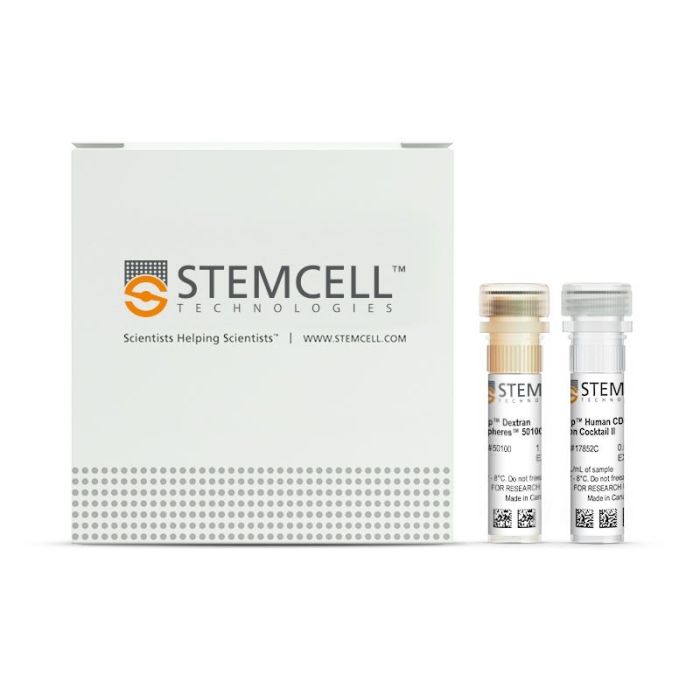
EasySep™人CD4正选试剂盒II

人CD4+细胞的免疫磁珠正选
只有 %1
¥8,152.00

产品号 #(选择产品)

产品号 #17852_C

人CD4+细胞的免疫磁珠正选

产品优势

  • 快捷、操作简单
  • 纯度高达96%
  • 无需分离柱

产品组分包括

  • EasySep™人CD4正选试剂盒II(产品号 #17852)
    • EasySep™人CD4正选抗体混合物II,0.5mL
    • EasySep™ Dextran RapidSpheres™ 50100 磁珠,1mL
  • EasySep™人CD4正选试剂盒II(产品号 #100-0693)
    • EasySep™人CD4正选抗体混合物II,1x5mL
    • EasySep™ Dextran RapidSpheres™ 50100 磁珠,2x1mL
  • RoboSep™人CD4正选试剂盒II(产品号 #17852RF)
    • EasySep™人CD4正选抗体混合物II,0.5mL
    • EasySep™ Dextran RapidSpheres™ 50100 磁珠,1mL
    • RoboSep™ 缓冲液(产品号 #20104)
    • RoboSep™过滤吸头(产品号 #20125)
专为您的实验方案打造的产品
要查看实验方案所需的所有配套产品,请参阅《实验方案与技术文档》

总览

通过免疫磁珠正选,EasySep™人CD4正选试剂盒II可以从新鲜或冻存的人外周血单个核细胞 (PBMCs) 或洗涤的白细胞单采术样本中分离出高度纯化的 CD4+ 细胞。EasySep™技术结合单克隆抗体的特异性和免磁柱系统的简便性,已在发表的研究中被广泛应用超过20年。

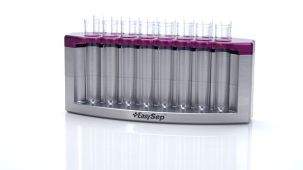
在本款EasySep™阳性分选流程中,目标细胞通过与识别CD4的抗体复合物及磁珠进行标记。使用EasySep™磁力架分离标记细胞,只需倾倒或枪头吸取非目标细胞。目标细胞保留在管中。仅需短至15分钟磁珠分选后,目标CD4+细胞即可直接用于流式细胞术、培养或DNA/RNA提取等下游应用。

该产品可替代EasySep™人CD4正选试剂盒 (产品号 #18052) 以进行更快的细胞分选。

如需从大量白细胞分离样本中分选CD4+细胞,请选用大容量规格(1x10^10细胞)试剂盒(产品号 #100-0693)。

了解更多关于免疫磁珠EasySep™技术的工作原理,或如何通过RoboSep™实现免疫磁珠细胞分选全自动化。探索为您的实验流程优化的更多产品,包括培养基、添加剂、抗体等。

磁极兼容性
• EasySep™磁极(产品号 #18000)
• “The Big Easy” EasySep™磁极(产品号 #18001)
• Easy 50 EasySep™磁极(产品号 #18002)
• EasyEights™ EasySep™磁极(产品号 #18103)
• RoboSep™-S(产品号 #21000)
• Easy 250 EasySep™磁极(产品号 #100-0821)
 
分类
细胞分选试剂盒
 
细胞类型
T 细胞,T 细胞,CD4+
 
种属

 
样本来源
白细胞单采术样本、PBMC
 
分选方法
正选
 
应用
细胞分选
 
品牌
EasySep,RoboSep
 
研究领域
免疫
 

实验数据

Typical EasySep™ Human CD4 Positive Selection Profile

Figure 1. Typical EasySep™ Human CD4 Positive Selection Profile

Starting with a single cell suspension of fresh human PBMCs, the CD4+ T cell content (CD3+CD4+) of the isolated fraction is typically 96.3 ± 3.0% (mean ± SD using the purple EasySep™ magnet).

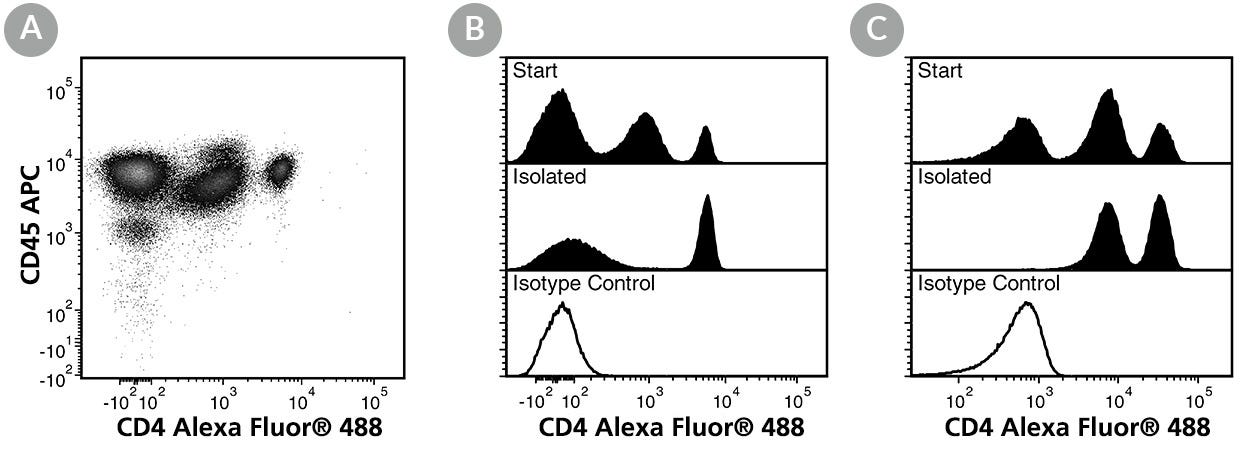
FACS Data for Anti-Human CD4 Antibody, Clone OKT4, Alexa Fluor® 488-Conjugated

Figure 2. FACS Data for Anti-Human CD4 Antibody, Clone OKT4, Alexa Fluor® 488-Conjugated

(A) Flow cytometry analysis of human peripheral blood mononuclear cells (PBMCs) labeled with Anti-Human CD4 Antibody, Clone OKT4, Alexa Fluor® 488 (Catalog #60016AD) and Anti-Human CD45 Antibody, Clone HI30, APC (Catalog #60018AZ).

(B) Flow cytometry analysis of human PBMCs isolated with the EasySep™ Human CD3 Positive Selection Kit (Catalog #17851) and labeled with Anti-Human CD4 Antibody, Clone OKT4, Alexa Fluor® 488. Histograms show labeling of total PBMCs (Start) and isolated cells (Isolated). Labeling with Mouse IgG2b, kappa Isotype Control Antibody, Clone MPC-11, Alexa Fluor® 488 (Catalog #60072AD) is shown in the bottom panel (solid line histogram).

(C) Flow cytometry analysis of human PBMCs isolated with the EasySep™ Human CD4 Positive Selection Kit (Catalog #17852) and labeled with Anti-Human CD4 Antibody, Clone OKT4, Alexa Fluor® 488. Histograms show labeling of total PBMCs (Start) and isolated cells (Isolated). Labeling with Mouse IgG2b, kappa Isotype Control Antibody, Clone MPC-11, Alexa Fluor® 488 is shown in the bottom panel (solid line histogram).

Gene Expression Profiles of EasySep™-Isolated CD4+ T Cells Are Similar to PBMC Control

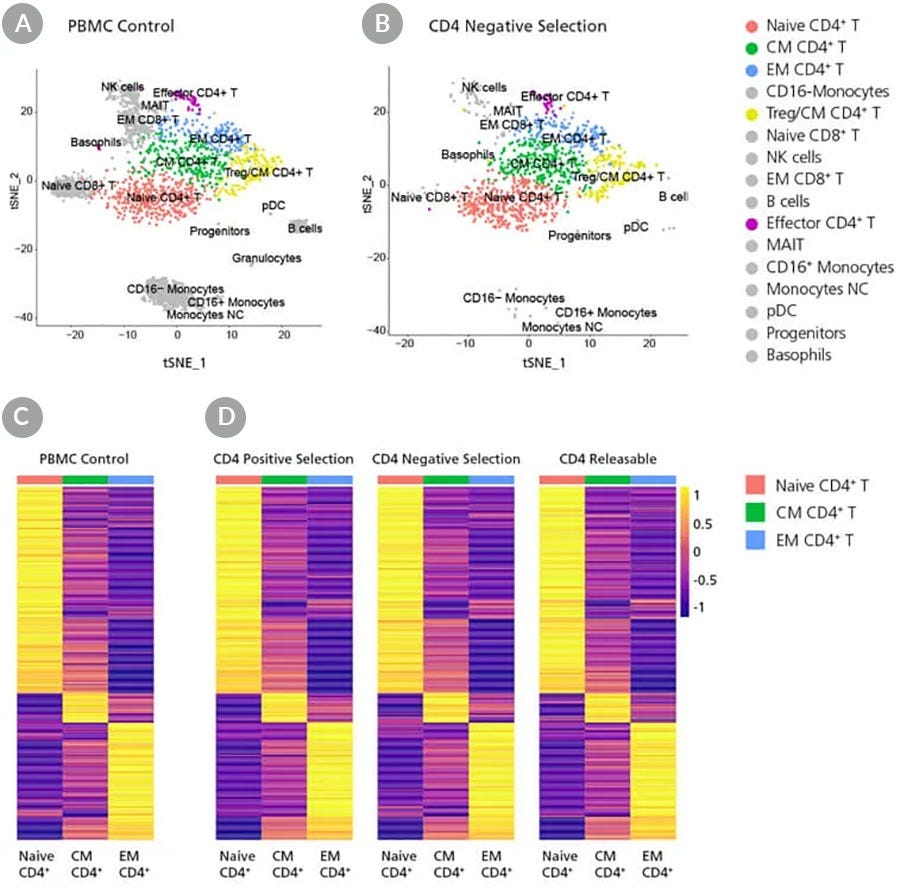
Figure 3. Gene Expression Profiles of EasySep™-Isolated CD4+ T Cells Are Similar to PBMC Control

(A,B) tSNE plots were generated using data from (A) PBMC control or (B) cells isolated using the EasySep™ Human CD4+ T Cell Enrichment Kit (Catalog #19052). CD4+ T cell clusters are colored as indicated in the legend.

(C,D) 500 genes were selected from a previously published list of CD4+ T cell signature markers (Zhang et al., 2018). Expression heatmaps were generated for CD4+ cells from (C) PBMC control and (D) cells isolated using the EasySep™ Human CD4 Positive Selection Kit II (Catalog #17852), EasySep™ Human CD4+ T Cell Enrichment Kit (Catalog #19052), or the EasySep™ Release Human CD4 Positive Selection Kit (Catalog #17752). The average expression was calculated within each sample for three CD4+ T cell clusters identified by Seurat (naïve, central memory, and effector memory CD4 T+ cells).

产品说明书及文档

请在《产品说明书》中查找相关支持信息和使用说明,或浏览下方更多实验方案。

Document Type
Product Name
Catalog #
Lot #
Language
Document Type
产品说明书
Catalog #
17852RF
Lot #
All
Language
中文
Document Type
产品说明书
Catalog #
17852
Lot #
All
Language
中文
Catalog #
17852
Lot #
All
Language
English
Catalog #
17852RF
Lot #
All
Language
English
Document Type
Safety Data Sheet 1
Catalog #
17852
Lot #
All
Language
English
Document Type
Safety Data Sheet 2
Catalog #
17852
Lot #
All
Language
English
Document Type
Safety Data Sheet 1
Catalog #
17852RF
Lot #
All
Language
English
Document Type
Safety Data Sheet 2
Catalog #
17852RF
Lot #
All
Language
English
Document Type
Safety Data Sheet 3
Catalog #
17852RF
Lot #
All
Language
English
Document Type
Safety Data Sheet 1
Catalog #
100-0693
Lot #
All
Language
English
Document Type
Safety Data Sheet 2
Catalog #
100-0693
Lot #
All
Language
English

应用领域

本产品专为以下研究领域设计,适用于工作流程中的高亮阶段。探索这些工作流程,了解更多我们为各研究领域提供的其他配套产品。

相关材料与文献

技术资料 (10)

常见问题 (11)

Can EasySep™ be used for either positive or negative selection?

Yes. The EasySep™ kits use either a negative selection approach by targeting and removing unwanted cells or a positive selection approach targeting desired cells. Depletion kits are also available for the removal of cells with a specific undesired marker (e.g. GlyA).

How does the separation work?

Magnetic particles are crosslinked to cells using Tetrameric Antibody Complexes (TAC). When placed in the EasySep™ Magnet, labeled cells migrate to the wall of the tube. The unlabeled cells are then poured off into a separate fraction.

Which columns do I use?

The EasySep™ procedure is column-free. That's right - no columns!

How can I analyze the purity of my enriched sample?

The Product Information Sheet provided with each EasySep™ kit contains detailed staining information.

Can EasySep™ separations be automated?

Yes. RoboSep™, the fully automated cell separator, automates all EasySep™ labeling and cell separation steps.

Can EasySep™ be used to isolate rare cells?

Yes. We recommend a cell concentration of 2x10⁸ cells/mL and a minimum working volume of 100 µL. Samples containing 2x10⁷ cells or fewer should be suspended in 100 µL of buffer.

Are the EasySep™ magnetic particles FACS-compatible?

Yes, the EasySep™ particles are flow cytometry-compatible, as they are very uniform in size and about 5000X smaller than other commercially available magnetic beads used with column-free systems.

Can the EasySep™ magnetic particles be removed after enrichment?

No, but due to the small size of these particles, they will not interfere with downstream applications.

Can I alter the separation time in the magnet?

Yes; however, this may impact the kit's performance. The provided EasySep™ protocols have already been optimized to balance purity, recovery and time spent on the isolation.

For positive selection, can I perform more than 3 separations to increase purity?

Yes, the purity of targeted cells will increase with additional rounds of separations; however, cell recovery will decrease.

How does the binding of the EasySep™ magnetic particle affect the cells? is the function of positively selected cells altered by the bound particles?

Hundreds of publications have used cells selected with EasySep™ positive selection kits for functional studies. Our in-house experiments also confirm that selected cells are not functionally altered by the EasySep™ magnetic particles.

If particle binding is a key concern, we offer two options for negative selection. The EasySep™ negative selection kits can isolate untouched cells with comparable purities, while RosetteSep™ can isolate untouched cells directly from whole blood without using particles or magnets.

文献 (7)

Race between retroviral spread and CD4+ T-cell response determines the outcome of acute Friend virus infection. Pike R et al. Journal of virology 2009 NOV

Abstract

Retroviruses can establish persistent infection despite induction of a multipartite antiviral immune response. Whether collective failure of all parts of the immune response or selective deficiency in one crucial part underlies the inability of the host to clear retroviral infections is currently uncertain. We examine here the contribution of virus-specific CD4(+) T cells in resistance against Friend virus (FV) infection in the murine host. We show that the magnitude and duration of the FV-specific CD4(+) T-cell response is directly proportional to resistance against acute FV infection and subsequent disease. Notably,significant protection against FV-induced disease is afforded by FV-specific CD4(+) T cells in the absence of a virus-specific CD8(+) T-cell or B-cell response. Enhanced spread of FV infection in hosts with increased genetic susceptibility or coinfection with Lactate dehydrogenase-elevating virus (LDV) causes a proportional increase in the number of FV-specific CD4(+) T cells required to control FV-induced disease. Furthermore,ultimate failure of FV/LDV coinfected hosts to control FV-induced disease is accompanied by accelerated contraction of the FV-specific CD4(+) T-cell response. Conversely,an increased frequency or continuous supply of FV-specific CD4(+) T cells is both necessary and sufficient to effectively contain acute infection and prevent disease,even in the presence of coinfection. Thus,these results suggest that FV-specific CD4(+) T cells provide significant direct protection against acute FV infection,the extent of which critically depends on the ratio of FV-infected cells to FV-specific CD4(+) T cells.
PD-L1+ Regulatory B Cells Are Significantly Decreased in Rheumatoid Arthritis Patients and Increase After Successful Treatment. E. R. Zacca et al. Frontiers in immunology 2018

Abstract

Background: B cells play an important role in the development and maintenance of rheumatoid arthritis (RA). Although IL-10-producing B cells represent a major subset of regulatory B cells (Bregs) able to suppress autoimmune and inflammatory responses,recent reports showed that B cell-mediated immune suppression may also occur independent of IL-10. For instance,B cells can modulate T cell immune responses through the expression of regulatory molecules such as PD-L1. So far,PD-L1-expressing B cells have not been analyzed in RA patients. Objective: To analyze the frequency of PD-L1-expressing B cells in the peripheral blood of RA patients compared to healthy controls (HC) matched for sex and age,their function on T cell response and their changes in response to therapy. Methods: Fresh peripheral blood B cells from RA patients and HC were characterized by flow cytometry and their functionality assessed in a co-culture system with autologous T cells. Results: The frequencies of CD19+PD-L1+ B cells,CD24hiCD38-PD-L1+ and CD24hiCD38hiPD-L1+ B cells were significantly lower in untreated RA patients than in HC. In a follow-up study,the frequencies of PD-L1+ B cells (CD19+PD-L1+ B cells,CD24hiCD38-PD-L1+ and CD24hiCD38hiPD-L1+ B cells) increased significantly after treatment in good responder patients,although the frequency of total CD24hiCD38hi B cells decreased. CD19+ B cells from untreated RA patients and HC upregulated PD-L1 expression similarly upon stimulation with CpG plus IL-2 and were able to suppress,in vitro,CD8+ T cell proliferation and cytokine production in a PD-L1-dependent manner. Conclusions: Our results show that PD-L1+ B cells exhibiting T cell suppressive capacity are significantly decreased in untreated RA patients but increase in response to successful treatment. PD-L1 expression on B cells from RA patients can be modulated in vitro and PD-L1+ B cells could thus provide new perspectives for future treatment strategies.
Competition between PAF1 and MLL1/COMPASS confers the opposing function of LEDGF/p75 in HIV latency and proviral reactivation. R. Gao et al. Science advances 2020 may

Abstract

Transcriptional status determines the HIV replicative state in infected patients. However,the transcriptional mechanisms for proviral replication control remain unclear. In this study,we show that,apart from its function in HIV integration,LEDGF/p75 differentially regulates HIV transcription in latency and proviral reactivation. During latency,LEDGF/p75 suppresses proviral transcription via promoter-proximal pausing of RNA polymerase II (Pol II) by recruiting PAF1 complex to the provirus. Following latency reversal,MLL1 complex competitively displaces PAF1 from the provirus through casein kinase II (CKII)-dependent association with LEDGF/p75. Depleting or pharmacologically inhibiting CKII prevents PAF1 dissociation and abrogates the recruitment of both MLL1 and Super Elongation Complex (SEC) to the provirus,thereby impairing transcriptional reactivation for latency reversal. These findings,therefore,provide a mechanistic understanding of how LEDGF/p75 coordinates its distinct regulatory functions at different stages of the post-integrated HIV life cycles. Targeting these mechanisms may have a therapeutic potential to eradicate HIV infection.

更多信息

更多信息
物种
Magnet Compatibility • EasySep™ Magnet (Catalog #18000) • “The Big Easy” EasySep™ Magnet (Catalog #18001) • Easy 50 EasySep™ Magnet (Catalog #18002) • EasyEights™ EasySep™ Magnet (Catalog #18103) • RoboSep™-S (Catalog #21000) • Easy 250 EasySep™ Magnet (Catalog #100-0821)
样本来源 PBMC, 白细胞单采术样本
Selection Method Positive
标记抗体
质量保证:

产品仅供研究使用,不用于针对人或动物的诊断或治疗。 欲获悉更多关于STEMCELL的质控信息,请访问 STEMCELL.CN/COMPLIANCE.
Copyright © 2026 by STEMCELL Technologies. All rights reserved.

在线联系