若您需要咨询产品或有任何技术问题,请通过官方电话 400 885 9050 或邮箱 info.cn@stemcell.com 与我们联系。

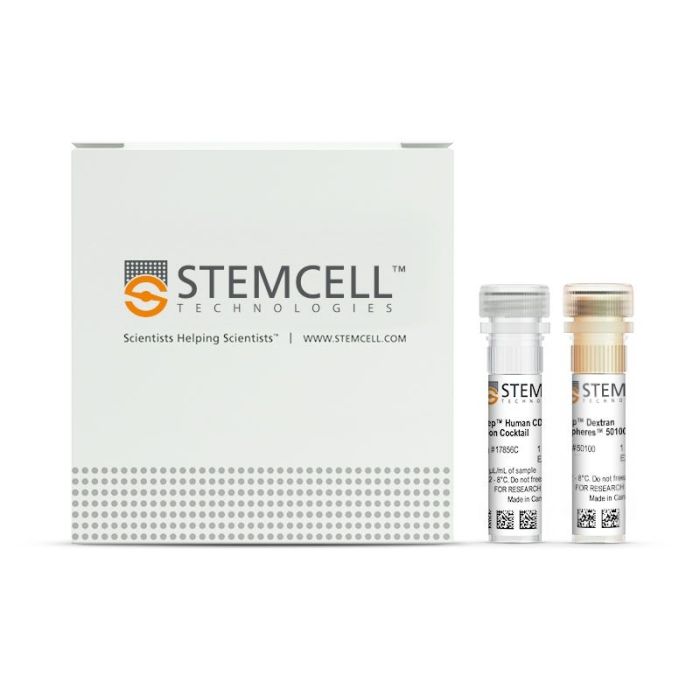
EasySep™人CD34正选试剂盒 II

人CD34+细胞的免疫磁珠正选
只有 %1
¥11,930.00

产品号 #(选择产品)

产品号 #17856_C

人CD34+细胞的免疫磁珠正选

产品优势

  • 快捷、操作简单    
  • 纯度高达99%
  • 无需分离柱     

产品组分包括

  • EasySep™人CD34正选试剂盒 II(产品号 #17856)
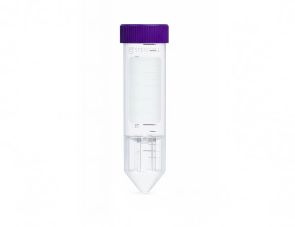
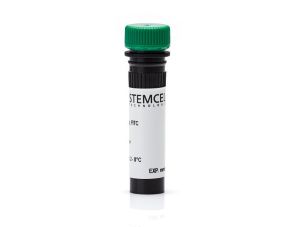
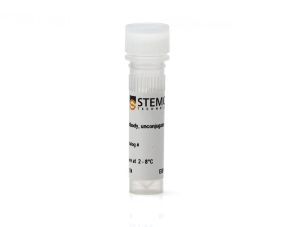
    • EasySep™人CD34正选抗体混合物,1 x 1 mL
    • EasySep™ Dextran RapidSpheres™ 50100 磁珠,1 x 1 mL
    • EasySep™人CD34正选试剂盒 II(产品号 #100-1569)
    • EasySep™人CD34正选抗体混合物,1 x 10 mL
    • EasySep™ Dextran RapidSpheres™ 50103磁珠,1 x 1 mL
  • RoboSep™人CD34正选试剂盒 II(含过滤吸头,产品号 #17856RF)
    • EasySep™人CD34正选抗体混合物,1 x 1 mL
    • EasySep™ Dextran RapidSpheres™ 50100 磁珠,1 x 1 mL
    • RoboSep™ 缓冲液(产品号 #20104)
    • RoboSep™过滤吸头(产品号 #20125)
专为您的实验方案打造的产品
要查看实验方案所需的所有配套产品,请参阅《实验方案与技术文档》

总览

使用EasySep™人CD34正选试剂盒 II,通过免疫磁珠正选可从新鲜或冻存的动员人外周血、骨髓单个核细胞 (MNCs)、冻存的脐带血MNCs、人胚胎干 (ES) 或诱导多能干 (iPS) 细胞中分离高纯度的CD34+细胞。EasySep™结合了单克隆抗体的特异性和无柱磁性系统的简便性,迄今已广泛应用于发表的研究中超过20年。    

在此EasySep™正选过程中,目的细胞被识别CD34的抗体复合物和 磁珠结合标记,抗体复合物中还含有人Fc受体阻断剂 ,可最大程度减少非特异性结合。使用EasySep™磁极分离标记的目的细胞,通过简单倾倒即可去除非目标细胞,而目标细胞则保留在管中。磁珠分选后获得的人CD34+细胞可直接用于流式细胞术、细胞培养或DNA/RNA提取等下游应用。CD34抗原表达于造血干细胞和祖细胞表面。

该产品可替代EasySep™人CD34正选试剂盒 (产品号 #18056) 以进行更快的细胞分选。

如需从动员白细胞单采术样本中大规模分离人CD34+细胞,请选用大容量(1 x 10^10细胞)试剂盒(产品号 #100-1569)。

了解更多关于免疫磁珠EasySep™技术的工作原理,或如何通过RoboSep™实现全自动化免疫磁珠细胞分选 。探索更多优化您实验流程的产品 ,包括培养基、添加剂、抗体等。

磁极兼容性
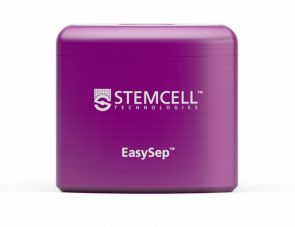
• EasySep™磁极(产品号 #18000)
• “The Big Easy” EasySep™磁极(产品号 #18001)
• RoboSep™-S(产品号 #21000)
• Easy 250 EasySep™磁极(产品号 #100-0821)
 
分类
细胞分选试剂盒
 
细胞类型
造血干/祖细胞,多能干细胞
 
种属

 
样本来源
骨髓,脐带血,其他组织,PBMC,多能干细胞,全血,动员外周血白细胞浓缩物
 
分选方法
正选
 
应用
细胞分选
 
品牌
EasySep,RoboSep
 
研究领域
嵌合体,免疫,干细胞生物学
 

实验数据

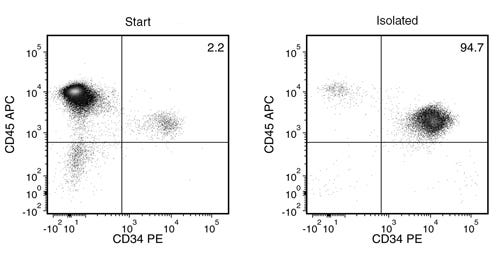
Typical EasySep™ Human CD34 Positive Selection Kit II Isolation Profile

Figure 1. Typical EasySep™ Human CD34 Positive Selection Kit II Isolation Profile

Starting with cord blood, mobilized peripheral blood or bone marrow MNCs, or ES and iPS cell cultures, the CD34+ cell content of the isolated fraction is typically 93.5 ± 1.1% (mean ± SD), using the purple EasySep™ Magnet. In the above example using frozen cord blood, the purities of the start and final isolated fractions are 2.2% and 94.7%, respectively.

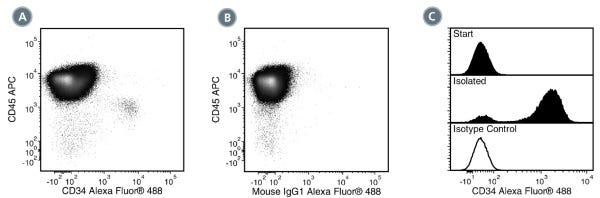
FACS Data for Anti-Human CD34 Antibody, Clone 581, Alexa Fluor® 488-Conjugated

Figure 2. FACS Data for Anti-Human CD34 Antibody, Clone 581, Alexa Fluor® 488-Conjugated

(A) Flow cytometry analysis of human peripheral blood mononuclear cells (PBMCs) labeled with Anti-Human CD34 Antibody, Clone 581, Alexa Fluor® 488 (Catalog #60013AD) and Anti-Human CD45 Antibody, Clone HI30, APC (Catalog #60018AZ). (B) Flow cytometry analysis of PBMCs labeled with Mouse IgG1, kappa Isotype Control Antibody, Clone MOPC-21, Alexa Fluor® 488 (Catalog #60070AD), and Anti-Human CD45 Antibody, Clone HI30, APC. (C) Flow cytometry analysis of human PBMCs processed with the EasySep™ Human CD34 Positive Selection Kit (Catalog #17856) and labeled with Anti-Human CD34 Antibody, Clone 581, APC. Histograms show labeling of PBMCs (Start) and isolated cells (Isolated). Labeling of start cells with Mouse IgG1, kappa Isotype Control Antibody, Clone MOPC-21, Alexa Fluor® 488 is shown (solid line histogram).

产品说明书及文档

请在《产品说明书》中查找相关支持信息和使用说明,或浏览下方更多实验方案。

Document Type
Product Name
Catalog #
Lot #
Language
Document Type
产品说明书
Catalog #
17856RF
Lot #
All
Language
中文
Document Type
产品说明书
Catalog #
17856
Lot #
All
Language
中文
Catalog #
17856RF, 17856
Lot #
All
Language
English
Document Type
Safety Data Sheet 1
Catalog #
17856RF
Lot #
All
Language
English
Document Type
Safety Data Sheet 2
Catalog #
17856RF, 17856
Lot #
All
Language
English
Document Type
Safety Data Sheet 3
Catalog #
17856RF, 17856
Lot #
All
Language
English

应用领域

本产品专为以下研究领域设计,适用于工作流程中的高亮阶段。探索这些工作流程,了解更多我们为各研究领域提供的其他配套产品。

相关材料与文献

技术资料 (13)

文献 (28)

CRISPR/Cas9-Correctable mutation-related molecular and physiological phenotypes in iPSC-derived Alzheimer's PSEN2 N141I neurons. M. Ortiz-Virumbrales et al. Acta neuropathologica communications 2017 dec

Abstract

Basal forebrain cholinergic neurons (BFCNs) are believed to be one of the first cell types to be affected in all forms of AD,and their dysfunction is clinically correlated with impaired short-term memory formation and retrieval. We present an optimized in vitro protocol to generate human BFCNs from iPSCs,using cell lines from presenilin 2 (PSEN2) mutation carriers and controls. As expected,cell lines harboring the PSEN2 N141I mutation displayed an increase in the A$\beta$42/40 in iPSC-derived BFCNs. Neurons derived from PSEN2 N141I lines generated fewer maximum number of spikes in response to a square depolarizing current injection. The height of the first action potential at rheobase current injection was also significantly decreased in PSEN2 N141I BFCNs. CRISPR/Cas9 correction of the PSEN2 point mutation abolished the electrophysiological deficit,restoring both the maximal number of spikes and spike height to the levels recorded in controls. Increased A$\beta$42/40 was also normalized following CRISPR/Cas-mediated correction of the PSEN2 N141I mutation. The genome editing data confirms the robust consistency of mutation-related changes in A$\beta$42/40 ratio while also showing a PSEN2-mutation-related alteration in electrophysiology.
Induction and Therapeutic Targeting of Human NPM1c+ Myeloid Leukemia in the Presence of Autologous Immune System in Mice. M. Kaur et al. Journal of immunology (Baltimore,Md. : 1950) 2019 feb

Abstract

Development of targeted cancer therapy requires a thorough understanding of mechanisms of tumorigenesis as well as mechanisms of action of therapeutics. This is challenging because by the time patients are diagnosed with cancer,early events of tumorigenesis have already taken place. Similarly,development of cancer immunotherapies is hampered by a lack of appropriate small animal models with autologous human tumor and immune system. In this article,we report the development of a mouse model of human acute myeloid leukemia (AML) with autologous immune system for studying early events of human leukemogenesis and testing the efficacy of immunotherapeutics. To develop such a model,human hematopoietic stem/progenitor cells (HSPC) are transduced with lentiviruses expressing a mutated form of nucleophosmin (NPM1),referred to as NPM1c. Following engraftment into immunodeficient mice,transduced HSPCs give rise to human myeloid leukemia,whereas untransduced HSPCs give rise to human immune cells in the same mice. The de novo AML,with CD123+ leukemic stem or initiating cells (LSC),resembles NPM1c+ AML from patients. Transcriptional analysis of LSC and leukemic cells confirms similarity of the de novo leukemia generated in mice with patient leukemia and suggests Myc as a co-operating factor in NPM1c-driven leukemogenesis. We show that a bispecific conjugate that binds both CD3 and CD123 eliminates CD123+ LSCs in a T cell-dependent manner both in vivo and in vitro. These results demonstrate the utility of the NPM1c+ AML model with an autologous immune system for studying early events of human leukemogenesis and for evaluating efficacy and mechanism of immunotherapeutics.
Combined CD28 and 4-1BB Costimulation Potentiates Affinity-tuned Chimeric Antigen Receptor-engineered T Cells. E. Drent et al. Clinical cancer research : an official journal of the American Association for Cancer Research 2019 jul

Abstract

PURPOSE Targeting nonspecific,tumor-associated antigens (TAA) with chimeric antigen receptors (CAR) requires specific attention to restrict possible detrimental on-target/off-tumor effects. A reduced affinity may direct CAR-engineered T (CAR-T) cells to tumor cells expressing high TAA levels while sparing low expressing normal tissues. However,decreasing the affinity of the CAR-target binding may compromise the overall antitumor effects. Here,we demonstrate the prime importance of the type of intracellular signaling on the function of low-affinity CAR-T cells. EXPERIMENTAL DESIGN We used a series of single-chain variable fragments (scFv) with five different affinities targeting the same epitope of the multiple myeloma-associated CD38 antigen. The scFvs were incorporated in three different CAR costimulation designs and we evaluated the antitumor functionality and off-tumor toxicity of the generated CAR-T cells in vitro and in vivo. RESULTS We show that the inferior cytotoxicity and cytokine secretion mediated by CD38 CARs of very low-affinity (Kd {\textless} 1.9 × 10⁻⁶ mol/L) bearing a 4-1BB intracellular domain can be significantly improved when a CD28 costimulatory domain is used. Additional 4-1BB signaling mediated by the coexpression of 4-1BBL provided the CD28-based CD38 CAR-T cells with superior proliferative capacity,preservation of a central memory phenotype,and significantly improved in vivo antitumor function,while preserving their ability to discriminate target antigen density. CONCLUSIONS A combinatorial costimulatory design allows the use of very low-affinity binding domains (Kd {\textless} 1 mumol/L) for the construction of safe but also optimally effective CAR-T cells. Thus,very-low-affinity scFvs empowered by selected costimulatory elements can enhance the clinical potential of TAA-targeting CARs.

更多信息

更多信息
物种
Magnet Compatibility • EasySep™ Magnet (Catalog #18000) • “The Big Easy” EasySep™ Magnet (Catalog #18001) • RoboSep™-S (Catalog #21000) • Easy 250 EasySep™ Magnet (Catalog #100-0821)
样本来源 PBMC, 全血, 其它细胞系, 动员外周血白细胞浓缩物, 多能干细胞, 脐带血, 骨髓
Selection Method Positive
标记抗体
质量保证:

产品仅供研究使用,不用于针对人或动物的诊断或治疗。 欲获悉更多关于STEMCELL的质控信息,请访问 STEMCELL.CN/COMPLIANCE.
Copyright © 2026 by STEMCELL Technologies. All rights reserved.

在线联系