若您需要咨询产品或有任何技术问题,请通过官方电话 400 885 9050 或邮箱 info.cn@stemcell.com 与我们联系。

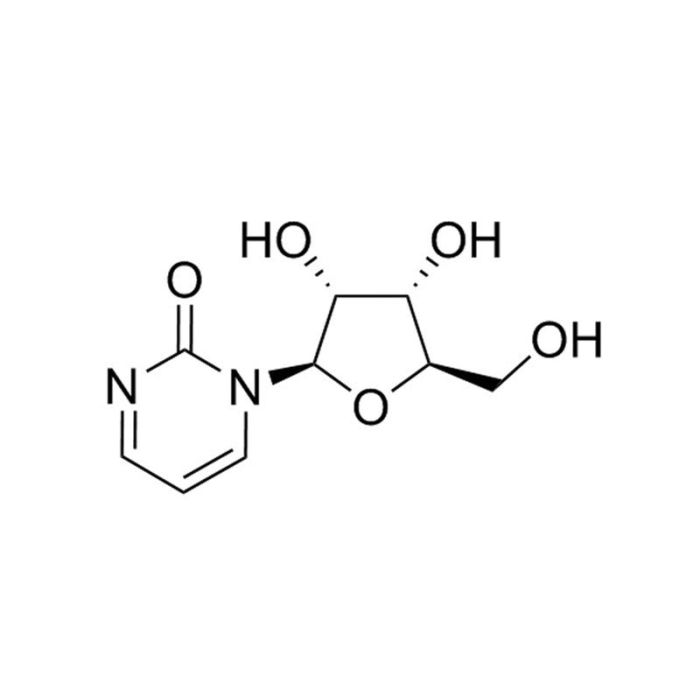
Zebularine

表观遗传修饰剂;抑制DNA甲基转移酶(DNMT)
只有 %1
¥1,514.00

产品号 #(选择产品)

产品号 #72902_C

表观遗传修饰剂;抑制DNA甲基转移酶(DNMT)

总览

Zebularine是胞苷类似物,一种DNA甲基化抑制剂,通过与DNA甲基转移酶(DNMT)形成共价复合物发挥作用(Zhou et al.)。

分化
·可诱导大鼠骨髓间充质干细胞(MSCs)向心肌细胞分化(Naeem et al.)。

癌症研究
·可减少癌细胞系TK6、Jurkat、KG-1和HCT116的增殖(Stresemann et al.)。
·抑制T24膀胱癌细胞增殖(Ben-Kasus et al.)。
·与组蛋白去乙酰化酶抑制剂SAHA一起使用,可减少胰腺癌细胞系中的细胞增殖,增加细胞凋亡(Neureiter et al.)。
·体外抑制人急性髓系白血病细胞增殖并诱导细胞凋亡(Scott et al.)。
·增加人癌细胞和肝癌细胞系亚群中具有癌症干细胞特性的细胞比例(Marquardt et al.)。

细胞类型
癌细胞及细胞系,心肌细胞,PSC衍生,白血病/淋巴瘤细胞,间充质干/祖细胞
 
种属
人,小鼠,非人灵长类,其他物种,大鼠
 
应用
分化
 
研究领域
癌症,干细胞生物学
 
CAS 编号
3690-10-6
 
化学式
C₉H₁₂N₂O₅
 
纯度
≥98%
 
通路
表观遗传学
 
靶点
DNMT
 

产品说明书及文档

请在《产品说明书》中查找相关支持信息和使用说明,或浏览下方更多实验方案。

Document Type
Product Name
Catalog #
Lot #
Language
Product Name
Zebularine
Catalog #
72902
Lot #
All
Language
English
Document Type
Safety Data Sheet
Product Name
Zebularine
Catalog #
72902
Lot #
All
Language
English

应用领域

本产品专为以下研究领域设计,适用于工作流程中的高亮阶段。探索这些工作流程,了解更多我们为各研究领域提供的其他配套产品。

相关材料与文献

技术资料 (3)

文献 (9)

Zebularine: a novel DNA methylation inhibitor that forms a covalent complex with DNA methyltransferases. Zhou L et al. Journal of molecular biology 2002 AUG

Abstract

Mechanism-based inhibitors of enzymes,which mimic reactive intermediates in the reaction pathway,have been deployed extensively in the analysis of metabolic pathways and as candidate drugs. The inhibition of cytosine-[C5]-specific DNA methyltransferases (C5 MTases) by oligodeoxynucleotides containing 5-azadeoxycytidine (AzadC) and 5-fluorodeoxycytidine (FdC) provides a well-documented example of mechanism-based inhibition of enzymes central to nucleic acid metabolism. Here,we describe the interaction between the C5 MTase from Haemophilus haemolyticus (M.HhaI) and an oligodeoxynucleotide duplex containing 2-H pyrimidinone,an analogue often referred to as zebularine and known to give rise to high-affinity complexes with MTases. X-ray crystallography has demonstrated the formation of a covalent bond between M.HhaI and the 2-H pyrimidinone-containing oligodeoxynucleotide. This observation enables a comparison between the mechanisms of action of 2-H pyrimidinone with other mechanism-based inhibitors such as FdC. This novel complex provides a molecular explanation for the mechanism of action of the anti-cancer drug zebularine.
Potent inhibitors for the deamination of cytosine arabinoside and 5-aza-2'-deoxycytidine by human cytidine deaminase. Laliberté et al. Cancer chemotherapy and pharmacology 1992 JAN

Abstract

Deamination of the nucleoside analogues ARA-C and 5-AZA-CdR by CR deaminase results in a loss of antileukemic activity. To prevent the inactivation of these analogues,inhibitors of CR deaminase may prove to be useful agents. In the present study we investigated the effects of the deaminase inhibitors Zebularine,5-F-Zebularine,and diazepinone riboside on the deamination of CR,ARA-C,and 5-AZA-CdR using highly purified human CR deaminase (EC 3.5.4.5). These inhibitors produced a competitive type of inhibition with each substrate,the potency of which followed the patterns diazepinone riboside greater than 5-F-Zebularine and THU greater than Zebularine. 5-AZA-CdR was more sensitive than ARA-C to the inhibition produced by these deaminase inhibitors. The inhibition constants for diazepinone riboside lay in the range of 5-15 nM,suggesting that this inhibitor could be an excellent candidate for use in combination chemotherapy with either ARA-C or 5-AZA-CdR in patients with leukemia.
Metabolic activation of zebularine, a novel DNA methylation inhibitor, in human bladder carcinoma cells. Ben-Kasus T et al. Biochemical pharmacology 2005 JUL

Abstract

Zebularine (2(1H)-pyrimidinone riboside,Zeb),a synthetic analogue of cytidine that is a potent inhibitor of cytidine deaminase,has been recently identified as a general inhibitor of DNA methylation. This inhibition of DNA methyltransferase (DNMT) is hypothesized to be mechanism-based and result from formation of a covalent complex between the enzyme and zebularine-substituted DNA. Metabolic activation of Zeb thus requires that it be phosphorylated and incorporated into DNA. We have quantitatively assessed the phosphorylation and DNA incorporation of Zeb in T24 cells using 2-[(14)C]-Zeb in conjunction with gradient anion-exchange HPLC and selected enzymatic and spectroscopic analyses. The corresponding 5'-mono-,di- and triphosphates of Zeb were readily formed in a dose- and time-dependent manner. Two additional Zeb-containing metabolites were tentatively identified as diphosphocholine (Zeb-DP-Chol) and diphosphoethanolamine adducts. Intracellular concentrations of Zeb-TP and Zeb-DP-Chol were similar and greatly exceeded those of other metabolites. DNA incorporation occurred but was surpassed by that of RNA by at least seven-fold. Equivalent levels and similar intracellular metabolic patterns were also observed in the Molt-4 (human T-lymphoblasts) and MC38 (murine colon carcinoma) cell lines. For male BALB/c nu/nu mice implanted s.c. with the EJ6 variant of T24 bladder carcinoma and treated i.p. with 500mg/kg 2-[(14)C]-Zeb,the in vivo phosphorylation pattern of Zeb in tumor tissue examined 24h after drug administration was similar to that observed in vitro. The complex metabolism of Zeb and its limited DNA incorporation suggest that these are the reasons why it is less potent than either 5-azacytidine or 5-aza-2'-deoxycytidine and requires higher doses for equivalent inhibition of DNMT.

更多信息

更多信息
物种 人, 其它物种, 大鼠, 小鼠, 非人灵长类
Cas Number 3690-10-6
Chemical Formula C₉H₁₂N₂O₅
纯度 ≥ 98%
Target DNMT
Pathway Epigenetic
质量保证:

产品仅供研究使用,不用于针对人或动物的诊断或治疗。 欲获悉更多关于STEMCELL的质控信息,请访问 STEMCELL.CN/COMPLIANCE.
Copyright © 2026 by STEMCELL Technologies. All rights reserved.

在线联系