若您需要咨询产品或有任何技术问题,请通过官方电话 400 885 9050 或邮箱 info.cn@stemcell.com 与我们联系。

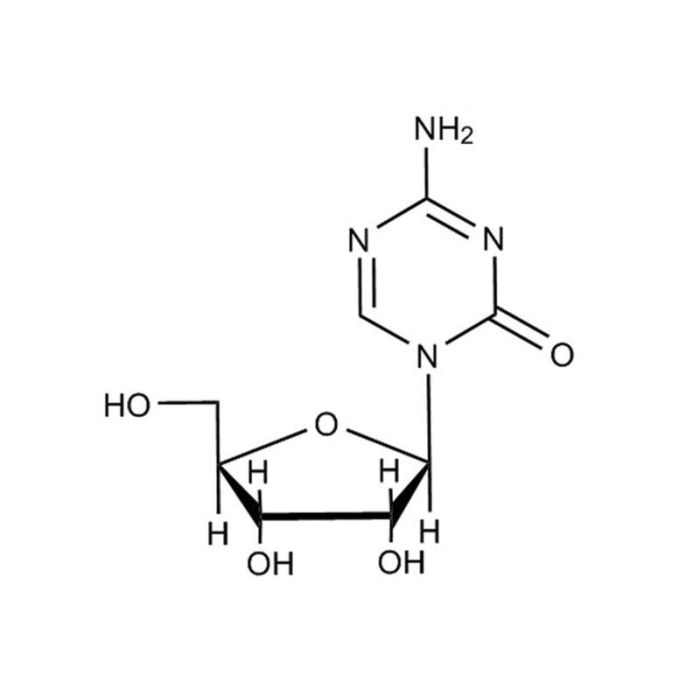
5-氮杂胞苷(5-Azacytidine)

表观遗传修饰剂;抑制 DNA 甲基转移酶 (DNMT)
只有 %1
¥650.00

产品号 #(选择产品)

产品号 #72012_C

表观遗传修饰剂;抑制 DNA 甲基转移酶 (DNMT)

总览

5-氮杂胞苷(5-Azacytidine)是核苷胞苷的类似物,可掺入DNA和RNA。5-氮杂胞苷作为一种表观遗传修饰剂,可掺入DNA并与DNA甲基转移酶不可逆结合,从而抑制其活性。

重编程
·通过诱导部分重编程细胞的完全重编程,提高小鼠成纤维细胞向诱导多能干细胞 (iPS) 的重编程效率(Mikkelsen et al.)。
·与曲古抑菌素 A (Trichostatin A)结合,可重置小鼠 iPS 细胞的表观遗传记忆(Kim et al.)。

分化
·促进人类胚胎干细胞向心肌细胞的分化(Yoon et al.)。

癌症研究
·经培养癌细胞测试,显示其具有广泛的抗代谢活性,并且是急性髓性白血病的有效化疗药物。

细胞类型
癌细胞及细胞系,心肌细胞,PSC衍生,白血病/淋巴瘤细胞,多能干细胞
 
种属
人,小鼠,非人灵长类,其他物种,大鼠
 
应用
分化,重编程
 
研究领域
癌症,干细胞生物学
 
CAS 编号
320-67-2
 
化学式
C₈H₁₂N₄O₅
 
纯度
≥ 95 %
 
通路
表观遗传学
 
靶点
DNMT
 

Protocols and Documentation

Find supporting information and directions for use in the Product Information Sheet or explore additional protocols below.

Document Type
Product Name
Catalog #
Lot #
Language
Product Name
5-Azacytidine
Catalog #
72012, 72014
Lot #
All
Language
English
Document Type
Safety Data Sheet
Product Name
5-Azacytidine
Catalog #
72012, 72014
Lot #
All
Language
English

Applications

This product is designed for use in the following research area(s) as part of the highlighted workflow stage(s). Explore these workflows to learn more about the other products we offer to support each research area.

相关材料与文献

技术资料 (3)

文献 (6)

5-Azacytidine and 5-aza-2'-deoxycytidine as inhibitors of DNA methylation: mechanistic studies and their implications for cancer therapy. Christman JK Oncogene 2002 AUG

Abstract

5-Azacytidine was first synthesized almost 40 years ago. It was demonstrated to have a wide range of anti-metabolic activities when tested against cultured cancer cells and to be an effective chemotherapeutic agent for acute myelogenous leukemia. However,because of 5-azacytidine's general toxicity,other nucleoside analogs were favored as therapeutics. The finding that 5-azacytidine was incorporated into DNA and that,when present in DNA,it inhibited DNA methylation,led to widespread use of 5-azacytidine and 5-aza-2'-deoxycytidine (Decitabine) to demonstrate the correlation between loss of methylation in specific gene regions and activation of the associated genes. There is now a revived interest in the use of Decitabine as a therapeutic agent for cancers in which epigenetic silencing of critical regulatory genes has occurred. Here,the current status of our understanding of the mechanism(s) by which 5-azacytosine residues in DNA inhibit DNA methylation is reviewed with an emphasis on the interactions of these residues with bacterial and mammalian DNA (cytosine-C5) methyltransferases. The implications of these mechanistic studies for development of less toxic inhibitors of DNA methylation are discussed.
Epigenetic reactivation of tumor suppressor genes by a novel small-molecule inhibitor of human DNA methyltransferases. Brueckner B et al. Cancer research 2005 JUL

Abstract

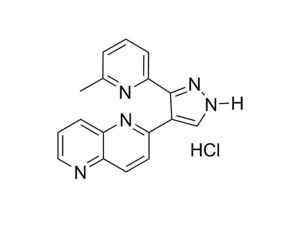
DNA methylation regulates gene expression in normal and malignant cells. The possibility to reactivate epigenetically silenced genes has generated considerable interest in the development of DNA methyltransferase inhibitors. Here,we provide a detailed characterization of RG108,a novel small molecule that effectively blocked DNA methyltransferases in vitro and did not cause covalent enzyme trapping in human cell lines. Incubation of cells with low micromolar concentrations of the compound resulted in significant demethylation of genomic DNA without any detectable toxicity. Intriguingly,RG108 caused demethylation and reactivation of tumor suppressor genes,but it did not affect the methylation of centromeric satellite sequences. These results establish RG108 as a DNA methyltransferase inhibitor with fundamentally novel characteristics that will be particularly useful for the experimental modulation of epigenetic gene regulation.
Enhanced differentiation of human embryonic stem cells into cardiomyocytes by combining hanging drop culture and 5-azacytidine treatment. Yoon BS et al. Differentiation; research in biological diversity 2006 APR

Abstract

Cell replacement therapy is a promising approach for the treatment of cardiac diseases. It is,however,challenged by a limited supply of appropriate cells. Therefore,we have investigated whether functional cardiomyocytes can be efficiently generated from human embryonic stem cells (hESCs). In this study,we developed an efficient protocol for the generation of functional cardiomyocytes from hESCs by combining hanging drop culture and 5-azacytidine,a well-known demethylating agent,and then evaluated the expression of cardiac-specific markers. hESCs were cultured both in the medium without or with 0.1,1,or 10 microM of 5-azacytidine under a hanging drop culture. The expression of several cardiac-specific markers was determined by real-time PCR,RT-PCR,immunofluorescence,and confocal microscopy. To verify the structural and functional properties of hESC-derived cardiomyocytes,we performed electron microscopy and electrophysiological recording. The efficiency of beating cell generation was significantly improved in the hanging drop culture compared with that in suspension culture. Treatment of hESCs with 0.1 microM of 5-azacytidine for 1-3 days significantly increased the number of beating cells and simultaneously enhanced the expression of cardiac-specific markers. Transmission electron microscopy and electrophysiological recording showed that hESC-derived cardiomyocytes acquired structural and functional properties of cardiomyocytes. In conclusion,these results suggest that differentiation of hESCs into cardiomyocytes can be enhanced by the combination of hanging drop culture and 5-azacytidine treatment. Also the methylation status of genes related to cardiomyocyte development may play an important role in the differentiation of hESCs into cardiomyocytes.

更多信息

更多信息
物种 人, 其它物种, 大鼠, 小鼠, 非人灵长类
Cas Number 320-67-2
Chemical Formula C₈H₁₂N₄O₅
纯度 ≥ 95 %
Target DNMT
Pathway Epigenetic
PRODUCTS ARE FOR RESEARCH USE ONLY AND NOT INTENDED FOR HUMAN OR ANIMAL DIAGNOSTIC OR THERAPEUTIC USES UNLESS OTHERWISE STATED. FOR ADDITIONAL INFORMATION ON QUALITY AT STEMCELL, REFER TO WWW.STEMCELL.COM/COMPLIANCE. Safety Statement: CA WARNING: This product can expose you to Azacitidine which is known to the State of California to cause cancer. For more information go to www.P65Warnings.ca.gov
Copyright © 2026 by STEMCELL Technologies. All rights reserved.

在线联系