Huus KE et al. (APR 2016)
Journal of Immunology 196 7 3097--108
Clinical Isolates of Pseudomonas aeruginosa from Chronically Infected Cystic Fibrosis Patients Fail To Activate the Inflammasome during Both Stable Infection and Pulmonary Exacerbation.
Immune recognition of pathogen-associated ligands leads to assembly and activation of inflammasomes,resulting in the secretion of inflammatory cytokines IL-1β and IL-18 and an inflammatory cell death called pyroptosis. Inflammasomes are important for protection against many pathogens,but their role during chronic infectious disease is poorly understood. Pseudomonas aeruginosa is an opportunistic pathogen that persists in the lungs of cystic fibrosis (CF) patients and may be responsible for the repeated episodes of pulmonary exacerbation characteristic of CF. P. aeruginosa is capable of inducing potent inflammasome activation during acute infection. We hypothesized that to persist within the host during chronic infection,P. aeruginosa must evade inflammasome activation,and pulmonary exacerbations may be the result of restoration of inflammasome activation. We therefore isolated P. aeruginosa from chronically infected CF patients during stable infection and exacerbation and evaluated the impact of these isolates on inflammasome activation in macrophages and neutrophils. P. aeruginosa isolates from CF patients failed to induce inflammasome activation,as measured by the secretion of IL-1β and IL-18 and by pyroptotic cell death,during both stable infection and exacerbation. Inflammasome evasion likely was due to reduced expression of inflammasome ligands and reduced motility and was not observed in environmental isolates or isolates from acute,non-CF infection. These results reveal a novel mechanism of pathogen adaptation by P. aeruginosa to avoid detection by inflammasomes in CF patients and indicate that P. aeruginosa-activated inflammasomes are not involved in CF pulmonary exacerbations.
View Publication
产品号#:
19762
19762RF
产品名:
EasySep™小鼠中性粒细胞富集试剂盒
RoboSep™ 小鼠中性粒细胞富集试剂盒含滤芯吸头
Kubala SA et al. ( 2014)
Prostaglandins and Other Lipid Mediators 108 1--8
Pathogen induced chemo-attractant hepoxilin A3 drives neutrophils, but not eosinophils across epithelial barriers
Pathogen induced migration of neutrophils across mucosal epithelial barriers requires epithelial production of the chemotactic lipid mediator,hepoxilin A3 (HXA3). HXA3 is an eicosanoid derived from arachidonic acid. Although eosinophils are also capable of penetrating mucosal surfaces,eosinophilic infiltration occurs mainly during allergic processes whereas neutrophils dominate mucosal infection. Both neutrophils and eosinophils can respond to chemotactic gradients of certain eicosanoids,however,it is not known whether eosinophils respond to pathogen induced lipid mediators such as HXA3. In this study,neutrophils and eosinophils were isolated from human blood and placed on the basolateral side of polarized epithelial monolayers grown on permeable Transwell filters and challenged by various chemotactic gradients of distinct lipid mediators. We observed that both cell populations migrated across epithelial monolayers in response to a leukotriene B4 (LTB4) gradient,whereas only eosinophils migrated toward a prostaglandin D2 (PGD2) gradient. Interestingly,while pathogen induced neutrophil trans-epithelial migration was substantial,pathogen induced eosinophil trans-epithelial migration was not observed. Further,gradients of chemotactic lipids derived from pathogen infected epithelial cells known to be enriched for HXA3 as well as purified HXA3 drove significant numbers of neutrophils across epithelial barriers,whereas eosinophils failed to respond to these gradients. These data suggest that although the eicosanoid HXA3 serves as an important neutrophil chemo-attractant at mucosal surfaces during pathogenic infection,HXA3 does not appear to exhibit chemotactic activity toward eosinophils. ?? 2013 Elsevier Ltd. All rights reserved.
View Publication
产品号#:
19256
19256RF
产品名:
Stadtmann A et al. (OCT 2013)
The Journal of Experimental Medicine 210 11 2171--80
The PSGL-1-L-selectin signaling complex regulates neutrophil adhesion under flow
Neutrophils are recruited from the blood to sites of inflammation,where they contribute to immune defense but may also cause tissue damage. During inflammation,neutrophils roll along the microvascular endothelium before arresting and transmigrating. Arrest requires conformational activation of the integrin lymphocyte function-associated antigen 1 (LFA-1),which can be induced by selectin engagement. Here,we demonstrate that a subset of P-selectin glycoprotein ligand-1 (PSGL-1) molecules is constitutively associated with L-selectin. Although this association does not require the known lectin-like interaction between L-selectin and PSGL-1,the signaling output is dependent on this interaction and the cytoplasmic tail of L-selectin. The PSGL-1-L-selectin complex signals through Src family kinases,ITAM domain-containing adaptor proteins,and other kinases to ultimately result in LFA-1 activation. The PSGL-1-L-selectin complex-induced signaling effects on neutrophil slow rolling and recruitment in vivo demonstrate the functional importance of this pathway. We conclude that this is a signaling complex specialized for sensing adhesion under flow.
View Publication
产品号#:
19257
19257RF
19762
19762RF
产品名:
EasySep™小鼠中性粒细胞富集试剂盒
RoboSep™ 小鼠中性粒细胞富集试剂盒含滤芯吸头
Meenhuis A et al. (JUL 2011)
Blood 118 4 916--25
MiR-17/20/93/106 promote hematopoietic cell expansion by targeting sequestosome 1-regulated pathways in mice.
MicroRNAs (miRNAs) are pivotal for regulation of hematopoiesis but their critical targets remain largely unknown. Here,we show that ectopic expression of miR-17,-20,-93 and -106,all AAAGUGC seed-containing miRNAs,increases proliferation,colony outgrowth and replating capacity of myeloid progenitors and results in enhanced P-ERK levels. We found that these miRNAs are endogenously and abundantly expressed in myeloid progenitors and down-regulated in mature neutrophils. Quantitative proteomics identified sequestosome 1 (SQSTM1),an ubiquitin-binding protein and regulator of autophagy-mediated protein degradation,as a major target for these miRNAs in myeloid progenitors. In addition,we found increased expression of Sqstm1 transcripts during CSF3-induced neutrophil differentiation of 32D-CSF3R cells and an inverse correlation of SQSTM1 protein levels and miR-106 expression in AML samples. ShRNA-mediated silencing of Sqstm1 phenocopied the effects of ectopic miR-17/20/93/106 expression in hematopoietic progenitors in vitro and in mice. Further,SQSTM1 binds to the ligand-activated colony-stimulating factor 3 receptor (CSF3R) mainly in the late endosomal compartment,but not in LC3 positive autophagosomes. SQSTM1 regulates CSF3R stability and ligand-induced mitogen-activated protein kinase signaling. We demonstrate that AAAGUGC seed-containing miRNAs promote cell expansion,replating capacity and signaling in hematopoietic cells by interference with SQSTM1-regulated pathways.
View Publication
产品号#:
03231
产品名:
MethoCult™ M3231
Yang Q et al. (MAR 2011)
Blood 117 13 3529--38
E47 regulates hematopoietic stem cell proliferation and energetics but not myeloid lineage restriction.
The immune system is replenished by self-renewing hematopoietic stem cells (HSCs) that produce multipotent progenitors (MPPs) with little renewal capacity. E-proteins,the widely expressed basic helix-loop-helix transcription factors,contribute to HSC and MPP activity,but their specific functions remain undefined. Using quantitative in vivo and in vitro approaches,we show that E47 is dispensable for the short-term myeloid differentiation of HSCs but regulates their long-term capabilities. E47-deficient progenitors show competent myeloid production in short-term assays in vitro and in vivo. However,long-term myeloid and lymphoid differentiation is compromised because of a progressive loss of HSC self-renewal that is associated with diminished p21 expression and hyperproliferation. The activity of E47 is shown to be cell-intrinsic. Moreover,E47-deficient HSCs and MPPs have altered expression of genes associated with cellular energy metabolism,and the size of the MPP pool but not downstream lymphoid precursors in bone marrow or thymus is rescued in vivo by antioxidant. Together,these observations suggest a role for E47 in the tight control of HSC proliferation and energy metabolism,and demonstrate that E47 is not required for short-term myeloid differentiation.
View Publication
产品号#:
03434
03444
产品名:
MethoCult™ GF M3434
MethoCult™ GF M3434
A. S. H. Chan et al. ( 2016)
PloS one 11 11 e0165909
Imprime PGG (Imprime),an intravenously-administered,soluble $\beta$-glucan,has shown compelling efficacy in multiple phase 2 clinical trials with tumor targeting or anti-angiogenic antibodies. Mechanistically,Imprime acts as pathogen-associated molecular pattern (PAMP) directly activating innate immune effector cells,triggering a coordinated anti-cancer immune response. Herein,using whole blood from healthy human subjects,we show that Imprime-induced anti-cancer functionality is dependent on immune complex formation with naturally-occurring,anti-$\beta$ glucan antibodies (ABA). The formation of Imprime-ABA complexes activates complement,primarily via the classical complement pathway,and is opsonized by iC3b. Immune complex binding depends upon Complement Receptor 3 and Fcg Receptor IIa,eliciting phenotypic activation of,and enhanced chemokine production by,neutrophils and monocytes,enabling these effector cells to kill antibody-opsonized tumor cells via the generation of reactive oxygen species and antibody-dependent cellular phagocytosis. Importantly,these innate immune cell changes were not evident in subjects with low ABA levels but could be rescued with exogenous ABA supplementation. Together,these data indicate that pre-existing ABA are essential for Imprime-mediated anti-cancer immune activation and suggest that pre-treatment ABA levels may provide a plausible patient selection biomarker to delineate patients most likely to benefit from Imprime-based therapy.
View Publication
产品号#:
19666
100-0404
产品名:
EasySep™ Direct人中性粒细胞分选试剂盒
RoboSep™ 人中性粒细胞分选试剂盒
Uhl B et al. (SEP 2016)
Blood
Aged neutrophils contribute to the first line of defense in the acute inflammatory response.
Under steady-state conditions,aged neutrophils are removed from the circulation in bone marrow,liver,and spleen thereby maintaining myeloid cell homeostasis. The fate of these aged immune cells under inflammatory conditions,however,remains largely obscure. Here,we demonstrate that in the acute inflammatory response during endotoxemia aged neutrophils cease returning to the bone marrow and instead rapidly migrate to the site of inflammation. Having arrived in inflamed tissue,aged neutrophils were found to exhibit a higher phagocytic activity as compared to the subsequently recruited non-aged neutrophils. This distinct behavior of aged neutrophils under inflammatory conditions is dependent on specific age-related changes in their molecular repertoire that enable these 'experienced' immune cells to instantly translate inflammatory signals into immune responses. In particular,aged neutrophils engage toll-like receptor-4- and p38 mitogen-activated protein kinases-dependent pathways to induce conformational changes in β2 integrins which allow these phagocytes to effectively accomplish their mission in the front line of the inflammatory response. Hence,ageing in the circulation might represent a critical process for neutrophils that enables these immune cells to properly unfold their functional properties for host defense.
View Publication


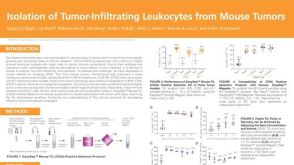
 EasySep™小鼠TIL(CD45)正选试剂盒






 沪公网安备31010102008431号