Ohoka Y et al. (JAN 2011)
Journal of immunology (Baltimore,Md. : 1950) 186 2 733--44
Retinoic acid-induced CCR9 expression requires transient TCR stimulation and cooperativity between NFATc2 and the retinoic acid receptor/retinoid X receptor complex.
Retinoic acid (RA) imprints gut-homing specificity on T cells upon activation by inducing the expression of chemokine receptor CCR9 and integrin α4β7. CCR9 expression seemed to be more highly dependent on RA than was the α4β7 expression,but its molecular mechanism remained unclear. In this article,we show that NFAT isoforms NFATc1 and NFATc2 directly interact with RA receptor (RAR) and retinoid X receptor (RXR) but play differential roles in RA-induced CCR9 expression on murine naive CD4(+) T cells. TCR stimulation for 6-24 h was required for the acquisition of responsiveness to RA and induced activation of NFATc1 and NFATc2. However,RA failed to induce CCR9 expression as long as TCR stimulation continued. After terminating TCR stimulation or adding cyclosporin A to the culture,Ccr9 gene transcription was induced,accompanied by inactivation of NFATc1 and sustained activation of NFATc2. Reporter and DNA-affinity precipitation assays demonstrated that the binding of NFATc2 to two NFAT-binding sites and that of the RAR/RXR complex to an RA response element half-site in the 5'-flanking region of the mouse Ccr9 gene were critical for RA-induced promoter activity. NFATc2 directly bound to RARα and RXRα,and it enhanced the binding of RARα to the RA response element half-site. NFATc1 also bound to the NFAT-binding sites and directly to RARα and RXRα,but it inhibited the NFATc2-dependent promoter activity. These results suggest that the cooperativity between NFATc2 and the RAR/RXR complex is essential for CCR9 expression on T cells and that NFATc1 interferes with the action of NFATc2.
View Publication
S. Jaleco et al. (Jul 2003)
The Journal of Immunology 171 61-68
Homeostasis of Naive and Memory CD4 + T Cells: IL-2 and IL-7 Differentially Regulate the Balance Between Proliferation and Fas-Mediated Apoptosis
Cytokines play a crucial role in the maintenance of polyclonal naive and memory T cell populations. It has previously been shown that ex vivo,the IL-7 cytokine induces the proliferation of naive recent thymic emigrants (RTE) isolated from umbilical cord blood but not mature adult-derived naive and memory human CD4(+) T cells. We find that the combination of IL-2 and IL-7 strongly promotes the proliferation of RTE,whereas adult CD4(+) T cells remain relatively unresponsive. Immunological activity is controlled by a balance between proliferation and apoptotic cell death. However,the relative contributions of IL-2 and IL-7 in regulating these processes in the absence of MHC/peptide signals are not known. Following exposure to either IL-2 or IL-7 alone,RTE,as well as mature naive and memory CD4(+) T cells,are rendered only minimally sensitive to Fas-mediated cell death. However,in the presence of the two cytokines,Fas engagement results in a high level of caspase-dependent apoptosis in both RTE as well as naive adult CD4(+) T cells. In contrast,equivalently treated memory CD4(+) T cells are significantly less sensitive to Fas-induced cell death. The increased susceptibility of RTE and naive CD4(+) T cells to Fas-induced apoptosis correlates with a significantly higher IL-2/IL-7-induced Fas expression on these T cell subsets than on memory CD4(+) T cells. Thus,IL-2 and IL-7 regulate homeostasis by modulating the equilibrium between proliferation and apoptotic cell death in RTE and mature naive and memory T cell subsets.
View Publication


 EasySep™小鼠TIL(CD45)正选试剂盒




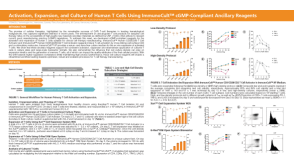 科学海报Activation, Expansion, and Culture of Human T Cells Using ImmunoCult™ cGMP-Compliant Ancillary Reagents

 实验方案Optimizing Delivery Efficiency with Fluorescent Dextran Using the CellPore™ Transfection System

 沪公网安备31010102008431号