Ohoka Y et al. (JAN 2011)
Journal of immunology (Baltimore,Md. : 1950) 186 2 733--44
Retinoic acid-induced CCR9 expression requires transient TCR stimulation and cooperativity between NFATc2 and the retinoic acid receptor/retinoid X receptor complex.
Retinoic acid (RA) imprints gut-homing specificity on T cells upon activation by inducing the expression of chemokine receptor CCR9 and integrin α4β7. CCR9 expression seemed to be more highly dependent on RA than was the α4β7 expression,but its molecular mechanism remained unclear. In this article,we show that NFAT isoforms NFATc1 and NFATc2 directly interact with RA receptor (RAR) and retinoid X receptor (RXR) but play differential roles in RA-induced CCR9 expression on murine naive CD4(+) T cells. TCR stimulation for 6-24 h was required for the acquisition of responsiveness to RA and induced activation of NFATc1 and NFATc2. However,RA failed to induce CCR9 expression as long as TCR stimulation continued. After terminating TCR stimulation or adding cyclosporin A to the culture,Ccr9 gene transcription was induced,accompanied by inactivation of NFATc1 and sustained activation of NFATc2. Reporter and DNA-affinity precipitation assays demonstrated that the binding of NFATc2 to two NFAT-binding sites and that of the RAR/RXR complex to an RA response element half-site in the 5'-flanking region of the mouse Ccr9 gene were critical for RA-induced promoter activity. NFATc2 directly bound to RARα and RXRα,and it enhanced the binding of RARα to the RA response element half-site. NFATc1 also bound to the NFAT-binding sites and directly to RARα and RXRα,but it inhibited the NFATc2-dependent promoter activity. These results suggest that the cooperativity between NFATc2 and the RAR/RXR complex is essential for CCR9 expression on T cells and that NFATc1 interferes with the action of NFATc2.
View Publication
产品号#:
19752
19752RF
产品名:
Ichikawa S et al. (MAY 2011)
Journal of immunology (Baltimore,Md. : 1950) 186 10 5549--55
Hepatic stellate cells function as regulatory bystanders.
Regulatory T cells (Tregs) contribute significantly to the tolerogenic nature of the liver. The mechanisms,however,underlying liver-associated Treg induction are still elusive. We recently identified the vitamin A metabolite,retinoic acid (RA),as a key controller that promotes TGF-β-dependent Foxp3(+) Treg induction but inhibits TGF-β-driven Th17 differentiation. To investigate whether the RA producing hepatic stellate cells (HSC) are part of the liver tolerance mechanism,we investigated the ability of HSC to function as regulatory APC. Different from previous reports,we found that highly purified HSC did not express costimulatory molecules and only upregulated MHC class II after in vitro culture in the presence of exogenous IFN-γ. Consistent with an insufficient APC function,HSC failed to stimulate naive OT-II TCR transgenic CD4(+) T cells and only moderately stimulated α-galactosylceramide-primed invariant NKT cells. In contrast,HSC functioned as regulatory bystanders and promoted enhanced Foxp3 induction by OT-II TCR transgenic T cells primed by spleen dendritic cells,whereas they greatly inhibited the Th17 differentiation. Furthermore,the regulatory bystander capacity of the HSC was completely dependent on their ability to produce RA. Our data thus suggest that HSC can function as regulatory bystanders,and therefore,by promoting Tregs and suppressing Th17 differentiation,they might represent key players in the mechanism that drives liver-induced tolerance.
View Publication


 EasySep™小鼠TIL(CD45)正选试剂盒




 实验方案Optimizing Delivery Efficiency with Fluorescent Dextran Using the CellPore™ Transfection System

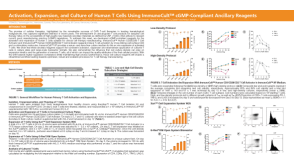 科学海报Activation, Expansion, and Culture of Human T Cells Using ImmunoCult™ cGMP-Compliant Ancillary Reagents
 技术公告Simplify Your PBMC Isolations with the EasySep™ Direct Human PBMC Isolation Kit

 技术公告Dendritic Cell/CD8+ T Cell Co-Culture to Assess Antigen-Specific T Cell Functionality

 沪公网安备31010102008431号