Allan LL et al. (MAY 2011)
Journal of immunology (Baltimore,Md. : 1950) 186 9 5261--72
CD1d and CD1c expression in human B cells is regulated by activation and retinoic acid receptor signaling.
B cell activation and Ab production in response to protein Ags requires presentation of peptides for recruitment of T cell help. We and others have recently demonstrated that B cells can also acquire innate help by presenting lipid Ags via CD1d to NKT cells. Given the newfound contribution of NKT cells to humoral immunity,we sought to identify the pathways that regulate CD1 molecule expression in human B cells. We show that ex vivo,activated and memory B cells expressed lower levels of CD1d compared with resting,naive,and marginal zone-like B cells. In vitro,CD1d was downregulated by all forms of B cell activation,leaving a narrow temporal window in which B cells could activate NKT cells. CD1c expression and function also decreased following activation by CD40L alone,whereas activation via the BCR significantly upregulated CD1c,particularly on marginal zone-like B cells. We found that the CD40L-induced downregulation of CD1d and CD1c correlated with diminished expression of retinoic acid receptor α (RARα) response genes,an effect that was reversed by RARα agonists. However,BCR-induced upregulation of CD1c was independent of the RAR pathway. Our findings that both CD1d and CD1c are upregulated by RARα signaling in human B cells is distinct from effects reported in dendritic cells,in which CD1c is inversely downregulated. One functional consequence of CD1d upregulation by retinoic acid was NKT cell cytotoxicity toward B cells. These results are central to our understanding of how CD1-restricted T cells may control humoral immunity.
View Publication
产品号#:
01700
01705
18054
18054RF
01702
产品名:
ALDEFLUOR™ 试剂盒
ALDEFLUOR™ DEAB试剂, 1.5 mM, 1 mL
ALDEFLUOR™检测缓冲液
G. B. Cross et al. ( 2019)
PloS one 14 5 e0216616
Impact of selective immune-cell depletion on growth of Mycobacterium tuberculosis (Mtb) in a whole-blood bactericidal activity (WBA) assay.
We investigated the contribution of host immune cells to bacterial killing in a whole-blood bactericidal activity (WBA) assay,an ex vivo model used to test efficacy of drugs against mycobacterium tuberculosis (Mtb). We performed WBA assays with immuno-magnetic depletion of specific cell types,in the presence or absence of rifampicin. Innate immune cells decreased Mtb growth in absence of drug,but appeared to diminish the cidal activity of rifampicin,possibly attributable to intracellular bacterial sequestration. Adaptive immune cells had no effect with or without drug. The WBA assay may have potential for testing adjunctive host-directed therapies acting on phagocytic cells.
View Publication
Yamin R et al. (MAY 2016)
Cell Reports 15 7 1542--53
HCMV vCXCL1 Binds Several Chemokine Receptors and Preferentially Attracts Neutrophils over NK Cells by Interacting with CXCR2.
HCMV is a highly sophisticated virus that has developed various mechanisms for immune evasion and viral dissemination throughout the body (partially mediated by neutrophils). NK cells play an important role in elimination of HCMV-infected cells. Both neutrophils and NK cells utilize similar sets of chemokine receptors to traffic,to and from,various organs. However,the mechanisms by which HCMV attracts neutrophils and not NK cells are largely unknown. Here,we show a unique viral protein,vCXCL1,which targets three chemokine receptors: CXCR1 and CXCR2 expressed on neutrophils and CXCR1 and CX3CR1 expressed on NK cells. Although vCXCL1 attracted both cell types,neutrophils migrated faster and more efficiently than NK cells through the binding of CXCR2. Therefore,we propose that HCMV has developed vCXCL1 to orchestrate its rapid systemic dissemination through preferential attraction of neutrophils and uses alternative mechanisms to counteract the later attraction of NK cells.
View Publication


 EasySep™小鼠TIL(CD45)正选试剂盒




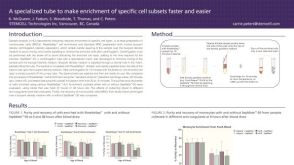 科学海报A Specialized Tube to Make Enrichment of Specific Cell Subsets Faster and Easier
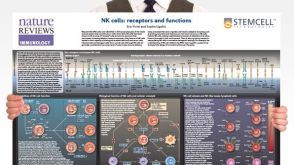 挂图Natural Killer Cells Overview of NK cell receptors, subsets, activation and function
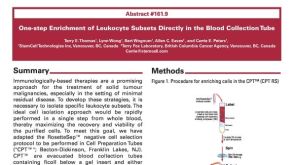 科学海报One-Step Enrichment of Leukocyte Subsets Directly in the Blood Collection Tube



 沪公网安备31010102008431号