Ramos TV et al. (SEP 2014)
Current protocols in cell biology 64 A.3I.1--8
Standardized cryopreservation of human primary cells.
Cryopreservation is the use of low temperatures to preserve structurally intact living cells. The cells that survive the thermodynamic journey from the 37 °C incubator to the -196 °C liquid nitrogen storage tank are free from the influences of time. Thus,cryopreservation is a critical component of cell culture and cell manufacturing protocols. Successful cryopreservation of human cells requires that the cells be derived from patient samples that are collected in a standardized manner,and carefully handled from blood draw through cell isolation. Furthermore,proper equipment must be in place to ensure consistency,reproducibility,and sterility. In addition,the correct choice and amount of cryoprotectant agent must be added at the correct temperature,and a controlled rate of freezing (most commonly 1 °C/min) must be applied prior to a standardized method of cryogenic storage. This appendix describes how human primary cells can be frozen for long-term storage and thawed for growth in a tissue culture vessel.
View Publication
Krentz NAJ et al. (APR 2017)
Developmental cell 41 2 129--142.e6
Phosphorylation of NEUROG3 Links Endocrine Differentiation to the Cell Cycle in Pancreatic Progenitors.
During pancreatic development,proliferating pancreatic progenitors activate the proendocrine transcription factor neurogenin 3 (NEUROG3),exit the cell cycle,and differentiate into islet cells. The mechanisms that direct robust NEUROG3 expression within a subset of progenitor cells control the size of the endocrine population. Here we demonstrate that NEUROG3 is phosphorylated within the nucleus on serine 183,which catalyzes its hyperphosphorylation and proteosomal degradation. During progression through the progenitor cell cycle,NEUROG3 phosphorylation is driven by the actions of cyclin-dependent kinases 2 and 4/6 at G1/S cell-cycle checkpoint. Using models of mouse and human pancreas development,we show that lengthening of the G1 phase of the pancreatic progenitor cell cycle is essential for proper induction of NEUROG3 and initiation of endocrine cell differentiation. In sum,these studies demonstrate that progenitor cell-cycle G1 lengthening,through its actions on stabilization of NEUROG3,is an essential variable in normal endocrine cell genesis.
View Publication
产品号#:
05940
70025
70025.1
70025.2
70025.3
产品名:
冻存的人外周血单个核细胞
冻存的人外周血单个核细胞
冻存的人外周血单个核细胞
冻存的人外周血单个核细胞
North JR et al. (MAY 2016)
Journal of biotechnology 226 24--34
A novel approach for emerging and antibiotic resistant infections: Innate defense regulators as an agnostic therapy.
Innate Defense Regulators (IDRs) are short synthetic peptides that target the host innate immune system via an intracellular adaptor protein which functions at key signaling nodes. In this work,further details of the mechanism of action of IDRs have been discovered. The studies reported here show that the lead clinical IDR,SGX94,has broad-spectrum activity against Gram-negative and Gram-positive bacterial infections caused by intracellular or extracellular bacteria and also complements the actions of standard of care antibiotics. Based on in vivo and primary cell culture studies,this activity is shown to result from the primary action of SGX94 on tissue-resident cells and subsequent secondary signaling to activate myeloid-derived cells,resulting in enhanced bacterial clearance and increased survival. Data from non-clinical and clinical studies also show that SGX94 treatment modulates pro-inflammatory and anti-inflammatory cytokine levels,thereby mitigating the deleterious inflammatory consequences of innate immune activation. Since they act through host pathways to provide both broad-spectrum anti-infective capability as well as control of inflammation,IDRs are unlikely to be impacted by resistance mechanisms and offer potential clinical advantages in the fight against emerging and antibiotic resistant bacterial infections.
View Publication


 EasySep™小鼠TIL(CD45)正选试剂盒




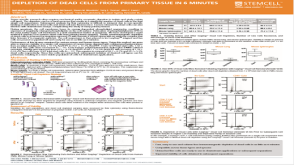
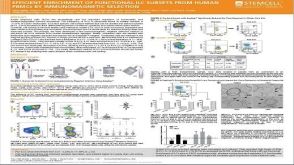 科学海报Efficient Enrichment of Functional ILC Subsets from Human PBMCs by Immunomagnetic Selection



 沪公网安备31010102008431号