ETV6-RUNX1 promotes survival of early B lineage progenitor cells via a dysregulated erythropoietin receptor.
ETV6-RUNX1 gene fusion is usually an early,prenatal event in childhood acute lymphoblastic leukemia (ALL). Transformation results in the generation of a persistent (> 14 years) preleukemic clone,which postnatally converts to ALL after the acquisition of necessary secondary genetic alterations. Many cancer cells show some expression of the erythropoietin receptor (EPOR) gene,although the functionality" of any EPOR complexes and their relevant signaling pathways in nonerythroid cells has not been validated. EPOR mRNA is selectively and ectopically expressed in ETV6-RUNX1(+) ALL but the presence of a functional EPOR on the cell surface and its role in leukemogenesis driven by ETV6-RUNX1 remains to be identified. Here we show that ETV6-RUNX1 directly binds the EPOR promoter and that expression of ETV6-RUNX1 alone in normal pre-B cells is sufficient to activate EPOR transcription. We further reveal that murine and human ETV6-RUNX1(+) cells expressing EPOR mRNA have EPO ligand binding activity that correlates with an increased cell survival through activation of the JAK2-STAT5 pathway and up-regulation of antiapoptotic BCL-XL. These data support the contention that ETV6-RUNX1 directly activates ectopic expression of a functional EPOR and provides cell survival signals that may contribute critically to persistence of covert premalignant clones in children.
View Publication
Madaan A et al. (MAR 2013)
International immunopharmacology 15 3 606--13
Anti-inflammatory activity of a naphthyridine derivative (7-chloro-6-fluoro-N-(2-hydroxy-3-oxo-1-phenyl-3-(phenylamino)propyl)-4-oxo-1-(prop-2-yn-1-yl)-1,4-dihydro-1,8-naphthyridine-3-carboxamide) possessing in vitro anticancer potential.
We have previously synthesized a series of 1,8-naphthyridine-3-carboxamide derivatives to identify potential anti-cancer/anti-inflammatory compounds. Three derivatives,7-chloro-N-(3-(cyclopentylamino)-3-oxo-1-phenylpropyl)-6-fluoro-4-oxo-1-(prop-2-yn-1-yl)-1,4-dihydro-1,8-naphthyridine-3-carboxamide (C-22),7-chloro-N-(2-hydroxy-3-oxo-1-phenyl-3-(phenylamino)propyl)-4-oxo-1-(prop-2-yn-1-yl)-1,4-dihydro-1,8-naphthyridine-3-carboxamide (C-31) and 7-chloro-6-fluoro-N-(2-hydroxy-3-oxo-1-phenyl-3-(phenylamino)propyl)-4-oxo-1-(prop-2-yn-1-yl)-1,4-dihydro-1,8-naphthyridine-3-carboxamide (C-34) demonstrated high cytotoxicity against a number of cancer cell lines and inhibited secretion of IL-1-β and IL-6. In the present study,C-22,C-31 and C-34 were assessed for modulation of pro-inflammatory cytokines,TNF-α and IL-8,chemokine RANTES and NO produced by lipopolysaccharide (LPS)-treated mouse Dendritic cells (DCs). Among the 3 compounds,C-34 showed the most potent inhibition of inflammatory markers in DC model at 0.2 and 2 μM. C-34 also significantly downregulated the secretion of TNF-α,IL-1-β and IL-6 by murine splenocytes and THP-1 cells against LPS induced levels. In vitro effects of C-34 on bone marrow toxicity were assessed in CFU-GM assay. Human CFU-GM population was comparatively more sensitive to C-34 (0.1-10 μM) than murine CFU-GM. IC50 values for murine and human CFU-GM were not attained. C-34 was further examined for in vivo suppression of LPS induced cytokines in a mice model. At doses ranging from 1.25 to 5 mg/kg,C-34 led to significant inhibition of TNF-α,IL-1-β,IL-6 and MIP-1-α. At the highest dose of 5 mg/kg,C-34 also protected LPS-treated mice against endotoxin-induced lethality. In conclusion,C-34 demonstrates anti-inflammatory activity in vitro and in vivo in addition to cytotoxic properties. This finding suggests its potential for further development as a synthetic naphthyridine derivative with dual anti-cancer and anti-inflammatory (cytokine inhibition) properties.
View Publication
产品号#:
70001
70001.1
70001.2
70001.3
70001.4
产品名:
Guzman ML et al. (AUG 2014)
Molecular cancer therapeutics 13 8 1979--90
Selective activity of the histone deacetylase inhibitor AR-42 against leukemia stem cells: a novel potential strategy in acute myelogenous leukemia.
Most patients with acute myelogenous leukemia (AML) relapse and die of their disease. Increasing evidence indicates that AML relapse is driven by the inability to eradicate leukemia stem cells (LSC). Thus,it is imperative to identify novel therapies that can ablate LSCs. Using an in silico gene expression-based screen for compounds evoking transcriptional effects similar to the previously described anti-LSC agent parthenolide,we identified AR-42 (OSU-HDAC42),a novel histone deacetylase inhibitor that is structurally similar to phenylbutyrate,but with improved activity at submicromolar concentrations. Here,we report that AR-42 induces NF-κB inhibition,disrupts the ability of Hsp90 to stabilize its oncogenic clients,and causes potent and specific cell death of LSCs but not normal hematopoietic stem and progenitor cells. Unlike parthenolide,the caspase-dependent apoptosis caused by AR-42 occurs without activation of Nrf-2-driven cytoprotective pathways. As AR-42 is already being tested in early clinical trials,we expect that our results can be extended to the clinic.
View Publication
产品号#:
07930
07931
07940
07955
07956
07959
07954
100-1061
07952
产品名:
CryoStor® CS10
CryoStor® CS10
CryoStor® CS10
CryoStor® CS10
CryoStor® CS10
CryoStor® CS10
CryoStor® CS10
Yang W-H et al. (OCT 2007)
Analytical biochemistry 369 1 120--7
Methylation profiling using degenerated oligonucleotide primer-PCR specific for genome-wide amplification of bisulfite-modified DNA.
DNA methylation is one of the essential epigenetic processes that play a role in regulating gene expression. Aberrant methylation of CpG-rich promoter regions has been associated with many forms of human cancers. The current method for determining the methylation status relies mainly on bisulfite treatment of genomic DNA,followed by methylation-specific PCR (MSP). The difficulty in acquiring a methylation profiling often is limited by the amount of genomic DNA that can be recovered from a given sample,whereas complex procedures of bisulfite treatment further compromise the effective template for PCR analysis. To circumvent these obstacles,we developed degenerated oligonucleotide primer (DOP)-PCR to enable amplification of bisulfite-modified genomic DNA at a genome-wide scale. A DOP pair was specially designed as follows: first 3' DOP,CTCGAGCTGHHHHHAACTAC,where H is a mixture of base consisting of 50% A,25% T,and 25% C; and second 5' DOP,CTCGAGCTGDDDDDGTTTAG,where D is a mixture of base consisting of 50% T,25% G,and 25% A. Our results showed that bisulfite-modified DNAs from a cell line,cord blood cells,or cells obtained by laser capture microdissection were amplified by up to 1000-fold using this method. Subsequent MSP analysis using these amplified DNAs on nine randomly selected cancer-related genes revealed that the methylation status of these genes remained identical to that derived from the original unamplified template.
View Publication


 EasySep™小鼠TIL(CD45)正选试剂盒




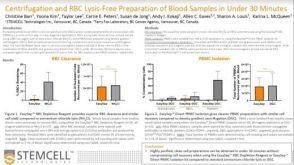 科学海报Centrifugation and RBC Lysis-Free Preparation of Blood Samples in Under 30 Minutes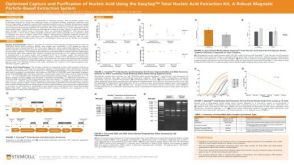

 沪公网安备31010102008431号