Schitine C et al. (JUN 2012)
The European journal of neuroscience 35 11 1672--83
Ampakine CX546 increases proliferation and neuronal differentiation in subventricular zone stem/progenitor cell cultures.
Ampakines are chemical compounds known to modulate the properties of ionotropic α-amino-3-hydroxyl-5-methyl-4-isoxazole-propionate (AMPA)-subtype glutamate receptors. The functional effects attributed to ampakines involve plasticity and the increase in synaptic efficiency of neuronal circuits,a process that may be intimately associated with differentiation of newborn neurons. The subventricular zone (SVZ) is the main neurogenic niche of the brain,containing neural stem cells with brain repair potential. Accordingly,the identification of new pharmaceutical compounds with neurogenesis-enhancing properties is important as a tool to promote neuronal replacement based on the use of SVZ cells. The purpose of the present paper is to examine the possible proneurogenic effects of ampakine CX546 in cell cultures derived from the SVZ of early postnatal mice. We observed that CX546 (50 μm) treatment triggered an increase in proliferation,evaluated by BrdU incorporation assay,in the neuroblast lineage. Moreover,by using a cell viability assay (TUNEL) we found that,in contrast to AMPA,CX546 did not cause cell death. Also,both AMPA and CX546 stimulated neuronal differentiation as evaluated morphologically through neuronal nuclear protein (NeuN) immunocytochemistry and functionally by single-cell calcium imaging. Accordingly,short exposure to CX546 increased axonogenesis,as determined by the number and length of tau-positive axons co-labelled for the phosphorylated form of SAPK/JNK (P-JNK),and dendritogenesis (MAP2-positive neurites). Altogether,this study shows that ampakine CX546 promotes neurogenesis in SVZ cell cultures and thereby may have potential for future stem cell-based therapies.
View Publication
产品号#:
05707
产品名:
NeuroCult™化学解离试剂盒(小鼠)
Blackmore DG et al. (JAN 2012)
PloS one 7 11 e49912
GH mediates exercise-dependent activation of SVZ neural precursor cells in aged mice.
Here we demonstrate,both in vivo and in vitro,that growth hormone (GH) mediates precursor cell activation in the subventricular zone (SVZ) of the aged (12-month-old) brain following exercise,and that GH signaling stimulates precursor activation to a similar extent to exercise. Our results reveal that both addition of GH in culture and direct intracerebroventricular infusion of GH stimulate neural precursor cells in the aged brain. In contrast,no increase in neurosphere numbers was observed in GH receptor null animals following exercise. Continuous infusion of a GH antagonist into the lateral ventricle of wild-type animals completely abolished the exercise-induced increase in neural precursor cell number. Given that the aged brain does not recover well after injury,we investigated the direct effect of exercise and GH on neural precursor cell activation following irradiation. This revealed that physical exercise as well as infusion of GH promoted repopulation of neural precursor cells in irradiated aged animals. Conversely,infusion of a GH antagonist during exercise prevented recovery of precursor cells in the SVZ following irradiation.
View Publication
产品号#:
05700
05701
05702
产品名:
NeuroCult™ 基础培养基(小鼠和大鼠)
NeuroCult™ 扩增添加物(小鼠和大鼠)
NeuroCult™扩增试剂盒(小鼠和大鼠)
Kong E et al. (MAR 2013)
Journal of Biological Chemistry 288 13 9112--9125
Dynamic Palmitoylation Links Cytosol-Membrane Shuttling of Acyl-protein Thioesterase-1 and Acyl-protein Thioesterase-2 with That of Proto-oncogene H-Ras Product and Growth-associated Protein-43
Acyl-protein thioesterase-1 (APT1) and APT2 are cytosolic enzymes that catalyze depalmitoylation of membrane-anchored,palmitoylated H-Ras and growth-associated protein-43 (GAP-43),respectively. However,the mechanism(s) of cytosol-membrane shuttling of APT1 and APT2,required for depalmitoylating their substrates H-Ras and GAP-43,respectively,remained largely unknown. Here,we report that both APT1 and APT2 undergo palmitoylation on Cys-2. Moreover,blocking palmitoylation adversely affects membrane localization of both APT1 and APT2 and that of their substrates. We also demonstrate that APT1 not only catalyzes its own depalmitoylation but also that of APT2 promoting dynamic palmitoylation (palmitoylation-depalmitoylation) of both thioesterases. Furthermore,shRNA suppression of APT1 expression or inhibition of its thioesterase activity by palmostatin B markedly increased membrane localization of APT2,and shRNA suppression of APT2 had virtually no effect on membrane localization of APT1. In addition,mutagenesis of the active site Ser residue to Ala (S119A),which renders catalytic inactivation of APT1,also increased its membrane localization. Taken together,our findings provide insight into a novel mechanism by which dynamic palmitoylation links cytosol-membrane trafficking of APT1 and APT2 with that of their substrates,facilitating steady-state membrane localization and function of both.
View Publication


 EasySep™小鼠TIL(CD45)正选试剂盒




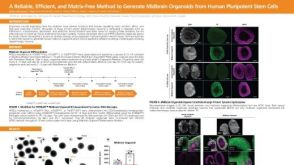 科学海报A Reliable, Efficient, and Matrix-Free Method to Generate Midbrain Organoids from Human Pluripotent Stem Cells
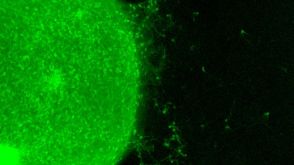 实验方案How to Generate AssemBloids™ from hPSC-Derived Dorsal and Ventral Forebrain Organoid Co-Cultures


 沪公网安备31010102008431号