Rong S et al. (JUN 2017)
Journal of lipid research jlr.M077610
Cholesterol auxotrophy and intolerance to ezetimibe in mice with SREBP-2 deficiency in the intestine.
Sterol regulatory element-binding protein-2 (SREBP-2) activates transcription of all genes needed for cholesterol biosynthesis. To study SREBP-2 function in intestine,we generated a mouse model (Vil-BP2(-/-) ) in which Cre recombinase ablates SREBP-2 in intestinal epithelia. Intestines of Vil-BP2(-/-) mice had reduced expression of genes required for sterol synthesis,in vivo sterol synthesis rates,and epithelial cholesterol contents. On a cholesterol-free diet,they displayed chronic enteropathy with histological abnormalities of both villi and crypts,growth restriction,and reduced survival that was prevented by supplementation of cholesterol in the diet. Likewise,SREBP-2-deficient enteroids required exogenous cholesterol for growth. Blockade of luminal cholesterol uptake into enterocytes with ezetimibe precipitated acutely lethal intestinal damage in Vil-BP2(-/-) mice,highlighting the critical interplay in the small intestine of sterol absorption via NPC1L1 and sterol synthesis via SREBP-2 in sustaining the intestinal mucosa. These data show that small intestine requires SREBP-2 to drive cholesterol synthesis that sustains the intestinal epithelia when uptake of cholesterol from the gut lumen is not available,and provide a unique example of cholesterol auxotrophy expressed in an intact,adult mammal.
View Publication
产品号#:
06005
产品名:
IntestiCult™ 类器官生长培养基 (小鼠)
Aladegbami B et al. (JUL 2017)
Scientific reports 7 1 5580
Epithelial cell specific Raptor is required for initiation of type 2 mucosal immunity in small intestine.
Intestinal tuft cells are one of 4 secretory cell linages in the small intestine and the source of IL-25,a critical initiator of the type 2 immune response to parasite infection. When Raptor,a critical scaffold protein for mammalian target of rapamycin complex 1 (mTORC1),was acutely deleted in intestinal epithelium via Tamoxifen injection in Tritrichomonas muris (Tm) infected mice,tuft cells,IL-25 in epithelium and IL-13 in the mesenchyme were significantly reduced,but Tm burden was not affected. When Tm infected mice were treated with rapamycin,DCLK1 and IL-25 expression in enterocytes and IL-13 expression in mesenchyme were diminished. After massive small bowel resection,tuft cells and Tm were diminished due to the diet used postoperatively. The elimination of Tm and subsequent re-infection of mice with Tm led to type 2 immune response only in WT,but Tm colonization in both WT and Raptor deficient mice. When intestinal organoids were stimulated with IL-4,tuft cells and IL-25 were induced in both WT and Raptor deficient organoids. In summary,our study reveals that enterocyte specific Raptor is required for initiating a type 2 immune response which appears to function through the regulation of mTORC1 activity.
View Publication
F. Cadamuro et al. (Feb 2023)
Carbohydrate polymers 302 120395
3D bioprinted colorectal cancer models based on hyaluronic acid and signalling glycans.
In cancer microenvironment,aberrant glycosylation events of ECM proteins and cell surface receptors occur. We developed a protocol to generate 3D bioprinted models of colorectal cancer (CRC) crosslinking hyaluronic acid and gelatin functionalized with three signalling glycans characterized in CRC,3'-Sialylgalactose,6'-Sialylgalactose and 2'-Fucosylgalactose. The crosslinking,performed exploiting azide functionalized gelatin and hyaluronic acid and 4arm-PEG-dibenzocyclooctyne,resulted in biocompatible hydrogels that were 3D bioprinted with commercial CRC cells HT-29 and patient derived CRC tumoroids. The glycosylated hydrogels showed good 3D printability,biocompatibility and stability over the time. SEM and synchrotron radiation SAXS/WAXS analysis revealed the influence of glycosylation in the construct morphology,whereas MALDI-MS imaging showed that protein profiles of tumoroid cells vary with glycosylation,indicating that sialylation and fucosylation of ECM proteins induce diverse alterations to the proteome of the tumoroid and surrounding cells.
View Publication
产品号#:
06010
产品名:
IntestiCult™ 类器官生长培养基 (人)
D. K. H. Chan et al. (Mar 2023)
STAR protocols 4 101978
Generation and immunofluorescent validation of gene knockouts in adult human colonic organoids using multi-guide RNA CRISPR-Cas9.
While readily achieved in cell lines,the application of CRISPR-Cas9 gene editing in human-derived organoids suffers from limited efficacy and complex protocols. Here,we describe a multi-guide RNA CRISPR-Cas9 gene-editing protocol which efficiently achieves complete gene knockout in adult human colonic organoids. This protocol also describes crucial steps including how to harvest patient tissue to maximize gene-editing efficacy and a technique to validate gene knockout following editing with immunofluorescent staining of the organoids against the target protein.
View Publication
产品号#:
06010
产品名:
IntestiCult™ 类器官生长培养基 (人)
U. V. Chembazhi et al. (Mar 2023)
Nucleic acids research 51 2397-2414
PTBP1 controls intestinal epithelial regeneration through post-transcriptional regulation of gene expression.
The intestinal epithelial regeneration is driven by intestinal stem cells under homeostatic conditions. Differentiated intestinal epithelial cells,such as Paneth cells,are capable of acquiring multipotency and contributing to regeneration upon the loss of intestinal stem cells. Paneth cells also support intestinal stem cell survival and regeneration. We report here that depletion of an RNA-binding protein named polypyrimidine tract binding protein 1 (PTBP1) in mouse intestinal epithelial cells causes intestinal stem cell death and epithelial regeneration failure. Mechanistically,we show that PTBP1 inhibits neuronal-like splicing programs in intestinal crypt cells,which is critical for maintaining intestinal stem cell stemness. This function is achieved at least in part through promoting the non-productive splicing of its paralog PTBP2. Moreover,PTBP1 inhibits the expression of an AKT inhibitor PHLDA3 in Paneth cells and permits AKT activation,which presumably maintains Paneth cell plasticity and function in supporting intestinal stem cell niche. We show that PTBP1 directly binds to a CU-rich region in the 3' UTR of Phlda3,which we demonstrate to be critical for downregulating the mRNA and protein levels of Phlda3. Our results thus reveal the multifaceted in vivo regulation of intestinal epithelial regeneration by PTBP1 at the post-transcriptional level.
View Publication
产品号#:
06005
产品名:
IntestiCult™ 类器官生长培养基 (小鼠)
Q. Hou et al. (Feb 2023)
Pharmacological research 188 106676
Dietary genistein increases microbiota-derived short chain fatty acid levels, modulates homeostasis of the aging gut, and extends healthspan and lifespan.
Age-related gastrointestinal decline contributes to whole-organism frailty and mortality. Genistein is known to have beneficial effects on age-related diseases,but its precise role in homeostasis of the aging gut remains to be elucidated. Here,wild-type aging mice and Zmpste24-/- progeroid mice were used to investigate the role of genistein in lifespan and homeostasis of the aging gut in mammals. A series of longitudinal,clinically relevant measurements were performed to evaluate the effect of genistein on healthspan. It was found that dietary genistein promoted a healthier and longer life and was associated with a decrease in the levels of systemic inflammatory cytokines in aging mice. Furthermore,dietary genistein ameliorated gut dysfunctions,such as intestinal inflammation,leaky gut,and impaired epithelial regeneration. A distinct genistein-mediated alteration in gut microbiota was observed by increasing Lachnospira abundance and short-chain fatty acid (SCFA) production. Further fecal microbiota transplantation and dirty cage sharing experiments indicated that the gut microbiota from genistein-fed mice rejuvenated the aging gut and extended the lifespan of progeroid mice. It was demonstrated that genistein-associated SCFAs alleviated tumor necrosis factor alpha-induced intestinal organoid damage. Moreover,genistein-associated propionate promoted regulatory T cell-derived interleukin 10 production,which alleviated macrophage-derived inflammation. This study provided the first data,to the authors' knowledge,indicating that dietary genistein modulates homeostasis in the aging gut and extends the healthspan and lifespan of aging mammals. Moreover,the existence of a link between genistein and the gut microbiota provides a rationale for dietary interventions against age-associated frailty.
View Publication
产品号#:
06005
产品名:
IntestiCult™ 类器官生长培养基 (小鼠)
A. Huber et al. (Jan 2023)
STAR protocols 4 102076
Generation of gene-of-interest knockouts in murine organoids using CRISPR-Cas9.
Gene-of-interest knockout organoids present a powerful and versatile research tool to study a gene's effects on many biological and pathological processes. Here,we present a straightforward and broadly applicable protocol to generate gene knockouts in mouse organoids using CRISPR-Cas9 technology. We describe the processes of transient transfecting organoids with pre-assembled CRISPR-Cas9 ribonucleoprotein complexes,organoid cell sorting,and establishing clonal organoid culture pairs. We then detail how to confirm the knockout via Western blot analysis.
View Publication
产品号#:
06005
产品名:
IntestiCult™ 类器官生长培养基 (小鼠)
A. Stern et al. (Apr 2022)
SLAS Discovery 27 201-208
The CellRaft AIR? system: A novel system enabling organoid imaging, identification, and isolation
Three-dimensional (3D) culture systems have been developed that can re-capitulate organ level responses,simulate compound diffusion through complex structures,and assess cellular heterogeneity of tissues,making them attractive models for advanced in vitro research and discovery. Organoids are a unique subtype of 3D cell culture that are grown from stem cells,are self-organizing,and closely replicate in vivo pathophysiology. Organoids have been used to understand tissue development,model diseases,test drug sensitivity and toxicity,and advance regenerative medicine. However,traditional organoid culture methods are inadequate because they are low throughput and ill-suited for single organoid imaging,phenotypic assessment,and isolation from heterogenous organoid populations. To address these bottlenecks,we have adapted our tissue culture consumable and instrumentation to enable automated imaging,identification,and isolation of individual organoids. Organoids grown on the 3D CytoSort? Array can be reliably tracked,imaged,and phenotypically analyzed using brightfield and fluorescent microscopy as they grow over time,then released and transferred fully intact for use in downstream applications. Using mouse hepatic and pancreatic organoids,we have demonstrated the use of this technology for single-organoid imaging,clonal organoid generation,parent organoid subcloning,and single-organoid RNA extraction for downstream gene expression or transcriptomic analysis. The results validate the ability of the CellRaft AIR? System to facilitate efficient,user-friendly,and automated workflows broadly applicable to organoid research by overcoming several pain points: 1) single organoid time-course imaging and phenotypic assessment,2) establishment of single cell-derived organoids,and 3) isolation and retrieval of single organoids for downstream applications.
View Publication


 EasySep™小鼠TIL(CD45)正选试剂盒




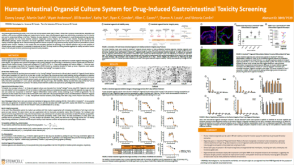 科学海报Human Intestinal Organoid Culture System for Drug-Induced Gastrointestinal Toxicity Screening


 沪公网安备31010102008431号