B. Wang et al. (FEB 2018)
Cell stem cell 22 2 206--220.e4
Phospholipid Remodeling and Cholesterol Availability Regulate Intestinal Stemness and Tumorigenesis.
Adequate availability of cellular building blocks,including lipids,is a prerequisite for cellular proliferation,but excess dietary lipids are linked to increased cancer risk. Despite these connections,specific regulatory relationships between membrane composition,intestinal stem cell (ISC) proliferation,and tumorigenesis are unclear. We reveal an unexpected link between membrane phospholipid remodeling and cholesterol biosynthesis and demonstrate that cholesterol itself acts as a mitogen for ISCs. Inhibition of the phospholipid-remodeling enzyme Lpcat3 increases membrane saturation and stimulates cholesterol biosynthesis,thereby driving ISC proliferation. Pharmacologic inhibition of cholesterol synthesis normalizes crypt hyperproliferation in Lpcat3-deficient organoids and mice. Conversely,increasing cellular cholesterol content stimulates crypt organoid growth,and providing excess dietary cholesterol or driving endogenous cholesterol synthesis through SREBP-2 expression promotes ISC proliferation in vivo. Finally,disruption of Lpcat3-dependent phospholipid and cholesterol homeostasis dramatically enhances tumor formation in Apcminmice. These findings identify a critical dietary-responsive phospholipid-cholesterol axis regulating ISC proliferation and tumorigenesis.
View Publication
A. Stern et al. (Apr 2022)
SLAS Discovery 27 201-208
The CellRaft AIR? system: A novel system enabling organoid imaging, identification, and isolation
Three-dimensional (3D) culture systems have been developed that can re-capitulate organ level responses,simulate compound diffusion through complex structures,and assess cellular heterogeneity of tissues,making them attractive models for advanced in vitro research and discovery. Organoids are a unique subtype of 3D cell culture that are grown from stem cells,are self-organizing,and closely replicate in vivo pathophysiology. Organoids have been used to understand tissue development,model diseases,test drug sensitivity and toxicity,and advance regenerative medicine. However,traditional organoid culture methods are inadequate because they are low throughput and ill-suited for single organoid imaging,phenotypic assessment,and isolation from heterogenous organoid populations. To address these bottlenecks,we have adapted our tissue culture consumable and instrumentation to enable automated imaging,identification,and isolation of individual organoids. Organoids grown on the 3D CytoSort? Array can be reliably tracked,imaged,and phenotypically analyzed using brightfield and fluorescent microscopy as they grow over time,then released and transferred fully intact for use in downstream applications. Using mouse hepatic and pancreatic organoids,we have demonstrated the use of this technology for single-organoid imaging,clonal organoid generation,parent organoid subcloning,and single-organoid RNA extraction for downstream gene expression or transcriptomic analysis. The results validate the ability of the CellRaft AIR? System to facilitate efficient,user-friendly,and automated workflows broadly applicable to organoid research by overcoming several pain points: 1) single organoid time-course imaging and phenotypic assessment,2) establishment of single cell-derived organoids,and 3) isolation and retrieval of single organoids for downstream applications.
View Publication
Aladegbami B et al. (JUL 2017)
Scientific reports 7 1 5580
Epithelial cell specific Raptor is required for initiation of type 2 mucosal immunity in small intestine.
Intestinal tuft cells are one of 4 secretory cell linages in the small intestine and the source of IL-25,a critical initiator of the type 2 immune response to parasite infection. When Raptor,a critical scaffold protein for mammalian target of rapamycin complex 1 (mTORC1),was acutely deleted in intestinal epithelium via Tamoxifen injection in Tritrichomonas muris (Tm) infected mice,tuft cells,IL-25 in epithelium and IL-13 in the mesenchyme were significantly reduced,but Tm burden was not affected. When Tm infected mice were treated with rapamycin,DCLK1 and IL-25 expression in enterocytes and IL-13 expression in mesenchyme were diminished. After massive small bowel resection,tuft cells and Tm were diminished due to the diet used postoperatively. The elimination of Tm and subsequent re-infection of mice with Tm led to type 2 immune response only in WT,but Tm colonization in both WT and Raptor deficient mice. When intestinal organoids were stimulated with IL-4,tuft cells and IL-25 were induced in both WT and Raptor deficient organoids. In summary,our study reveals that enterocyte specific Raptor is required for initiating a type 2 immune response which appears to function through the regulation of mTORC1 activity.
View Publication
Y. Bhattarai et al. (JUN 2018)
Cell host & microbe 23 6 775--785.e5
Gut Microbiota-Produced Tryptamine Activates an Epithelial G-Protein-Coupled Receptor to Increase Colonic Secretion.
Tryptamine,a tryptophan-derived monoamine similar to 5-hydroxytryptamine (5-HT),is produced by gut bacteria and is abundant in human and rodent feces. However,the physiologic effect of tryptamine in the gastrointestinal (GI) tract remains unknown. Here,we show that the biological effects of tryptamine are mediated through the 5-HT4 receptor (5-HT4R),a G-protein-coupled receptor (GPCR) uniquely expressed in the colonic epithelium. Tryptamine increases both ionic flux across the colonic epithelium and fluid secretion in colonoids from germ-free (GF) and humanized (ex-GF colonized with human stool) mice,consistent with increased intestinal secretion. The secretory effect of tryptamine is dependent on 5-HT4R activation and is blocked by 5-HT4R antagonist and absent in 5-HT4R-/- mice. GF mice colonized by Bacteroides thetaiotaomicron engineered to produce tryptamine exhibit accelerated GI transit. Our study demonstrates an aspect of host physiology under control of a bacterial metabolite that can be exploited as a therapeutic modality. VIDEO ABSTRACT.
View Publication


 EasySep™小鼠TIL(CD45)正选试剂盒




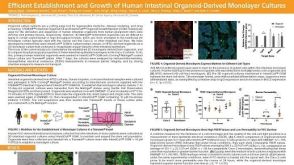 科学海报Efficient Establishment and Growth of Human Intestinal Organoid-Derived Monolayers


 沪公网安备31010102008431号