Potentiating the antitumour response of CD8(+) T cells by modulating cholesterol metabolism.
CD8(+) T cells have a central role in antitumour immunity,but their activity is suppressed in the tumour microenvironment. Reactivating the cytotoxicity of CD8(+) T cells is of great clinical interest in cancer immunotherapy. Here we report a new mechanism by which the antitumour response of mouse CD8(+) T cells can be potentiated by modulating cholesterol metabolism. Inhibiting cholesterol esterification in T cells by genetic ablation or pharmacological inhibition of ACAT1,a key cholesterol esterification enzyme,led to potentiated effector function and enhanced proliferation of CD8(+) but not CD4(+) T cells. This is due to the increase in the plasma membrane cholesterol level of CD8(+) T cells,which causes enhanced T-cell receptor clustering and signalling as well as more efficient formation of the immunological synapse. ACAT1-deficient CD8(+) T cells were better than wild-type CD8(+) T cells at controlling melanoma growth and metastasis in mice. We used the ACAT inhibitor avasimibe,which was previously tested in clinical trials for treating atherosclerosis and showed a good human safety profile,to treat melanoma in mice and observed a good antitumour effect. A combined therapy of avasimibe plus an anti-PD-1 antibody showed better efficacy than monotherapies in controlling tumour progression. ACAT1,an established target for atherosclerosis,is therefore also a potential target for cancer immunotherapy.
View Publication
产品号#:
19852
19852RF
19853
19853RF
产品名:
EasySep™小鼠CD4+ T细胞分选试剂盒
RoboSep™ 小鼠CD4+ T细胞分选试剂盒
EasySep™小鼠CD8+ T细胞分选试剂盒
RoboSep™ 小鼠CD8+ T细胞分选试剂盒
Sá et al. (JUL 2011)
Blood 118 4 955--64
Restriction of HIV-1 replication in macrophages and CD4+ T cells from HIV controllers.
How HIV controllers (HICs) maintain undetectable viremia without therapy is unknown. The strong CD8(+) T-cell HIV suppressive capacity found in many,but not all,HICs may contribute to long-lasting viral control. However,other earlier defense mechanisms may be involved. Here,we examined intrinsic HIC cell resistance to HIV-1 infection. After in vitro challenge,monocyte-derived macrophages and anti-CD3-activated CD4(+) T cells from HICs showed low HIV-1 susceptibility. CD4 T-cell resistance was independent of HIV-1 coreceptors and affected also SIVmac infection. CD4(+) T cells from HICs expressed ex vivo higher levels of p21(Waf1/Cip1),which has been involved in the control of HIV-1 replication,than cells from control subjects. However,HIV restriction in anti-CD3-activated CD4(+) T cells and macrophages was not associated with p21 expression. Restriction inhibited accumulation of reverse transcripts,leading to reduction of HIV-1 integrated proviruses. The block could be overcome by high viral inocula,suggesting the action of a saturable mechanism. Importantly,cell-associated HIV-1 DNA load was extremely low in HICs and correlated with CD4(+) T-cell permissiveness to infection. These results point to a contribution of intrinsic cell resistance to the control of infection and the containment of viral reservoir in HICs.
View Publication
E. Giuliani et al. (mar 2019)
Scientific reports 9 1 4373
Hexamethylene bisacetamide impairs NK cell-mediated clearance of acute T lymphoblastic leukemia cells and HIV-1-infected T cells that exit viral latency.
The hexamethylene bisacetamide (HMBA) anticancer drug was dismissed due to limited efficacy in leukemic patients but it may re-enter into the clinics in HIV-1 eradication strategies because of its recently disclosed capacity to reactivate latent virus. Here,we investigated the impact of HMBA on the cytotoxicity of natural killer (NK) cells against acute T lymphoblastic leukemia (T-ALL) cells or HIV-1-infected T cells that exit from latency. We show that in T-ALL cells HMBA upmodulated MICB and ULBP2 ligands for the NKG2D activating receptor. In a primary CD4+ T cell-based latency model,HMBA did not reactivate HIV-1,yet enhanced ULBP2 expression on cells harboring virus reactivated by prostratin (PRO). However,HMBA reduced the expression of NKG2D and its DAP10 adaptor in NK cells,hence impairing NKG2D-mediated cytotoxicity and DAP10-dependent response to IL-15 stimulation. Alongside,HMBA dampened killing of T-ALL targets by IL-15-activated NK cells and impaired NK cell-mediated clearance of PRO-reactivated HIV-1+ cells. Overall,our results demonstrate a dominant detrimental effect of HMBA on the NKG2D pathway that crucially controls NK cell-mediated killing of tumors and virus-infected cells,providing one possible explanation for poor clinical outcome in HMBA-treated cancer patients and raising concerns for future therapeutic application of this drug.
View Publication
产品号#:
19052
19052RF
产品名:
EasySep™人CD4+ T细胞富集试剂盒
RoboSep™ 人CD4+ T细胞富集试剂盒含滤芯吸头
D. M. Previte et al. (apr 2019)
Cell reports 27 1 129--141.e4
Lymphocyte Activation Gene-3 Maintains Mitochondrial and Metabolic Quiescence in Naive CD4+ T Cells.
Lymphocyte activation gene-3 (LAG-3) is an inhibitory receptor expressed by CD4+ T cells and tempers their homeostatic expansion. Because CD4+ T cell proliferation is tightly coupled to bioenergetics,we investigate the role of LAG-3 in modulating naive CD4+ T cell metabolism. LAG-3 deficiency enhances the metabolic profile of naive CD4+ T cells by elevating levels of mitochondrial biogenesis. In vivo,LAG-3 blockade partially restores expansion and the metabolic phenotype of wild-type CD4+ T cells to levels of Lag3-/- CD4+ T cells,solidifying that LAG-3 controls these processes. Lag3-/- CD4+ T cells also demonstrate greater signal transducer and activator of transcription 5 (STAT5) activation,enabling resistance to interleukin-7 (IL-7) deprivation. These results implicate this pathway as a target of LAG-3-mediated inhibition. Additionally,enhancement of STAT5 activation,as a result of LAG-3 deficiency,contributes to greater activation potential in these cells. These results identify an additional mode of regulation elicited by LAG-3 in controlling CD4+ T cell responses.
View Publication


 EasySep™小鼠TIL(CD45)正选试剂盒




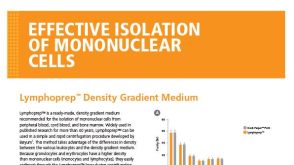

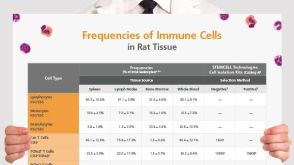 挂图Frequencies of Immune Cells in Rat Tissue Lists the estimated frequencies of more than 15 immune cell types in Sprague Dawley rats

 沪公网安备31010102008431号