Daniels TR et al. ( 2011)
Journal of immunotherapy (Hagerstown,Md. : 1997) 34 6 500--8
An antibody-based multifaceted approach targeting the human transferrin receptor for the treatment of B-cell malignancies.
We previously developed an antibody-avidin fusion protein (ch128.1Av) targeting the human transferrin receptor 1 (TfR1,also known as CD71),which demonstrates direct in vitro cytotoxicity against malignant hematopoietic cells. This cytotoxicity is attributed to its ability to decrease the level of TfR1 leading to lethal iron deprivation. We now report that ch128.1Av shows the ability to bind the Fcγ receptors and the complement component C1q,suggesting that it is capable of eliciting Fc-mediated effector functions such as antibody-dependent cell-mediated cytotoxicity and complement-mediated cytotoxicity. In addition,in 2 disseminated multiple myeloma xenograft mouse models,we show that a single dose of ch128.1Av results in significant antitumor activity,including long-term survival. It is interesting to note that the parental antibody without avidin (ch128.1) also shows remarkable in vivo anticancer activity despite its limited in vitro cytotoxicity. Finally,we demonstrate that ch128.1Av is not toxic to pluripotent hematopoietic progenitor cells using the long-term cell-initiating culture assay suggesting that these important progenitors would be preserved in different therapeutic approaches,including the in vitro purging of cancer cells for autologous transplantation and in vivo passive immunotherapy. Our results suggest that ch128.1Av and ch128.1 may be effective in the therapy of human multiple myeloma and potentially other hematopoietic malignancies.
View Publication
Role for the conserved N-terminal cysteines in the anti-chemokine activities by the chemokine-like protein MC148R1 encoded by Molluscum contagiosum virus.
Molluscum contagiosum poxvirus (MCV) type 1 and type 2 encode two chemokine-like proteins MC148R1 and MC148R2. It is believed that MC148R proteins function by blocking the inflammatory response. However,the mechanism of the proposed biological activities of MC148R proteins and the role of the additional C-terminal cysteines that do not exist in other chemokines are not understood. Here,we demonstrated in two different assay systems that His-tagged MC148R1 displaces the interaction between CXCL12α and CXCR4. The N-terminal cysteines but not the additional C-terminal cysteines modulate this displacement. His-tagged MC148R1 blocked both CXCL12α-mediated and MIP-1α-mediated chemotaxis. In contrast,MC148R2 blocked MIP-1α-mediated but not CXCL12α-mediated chemotaxis. Immunoprecipitation by antibodies to MC148R1 or CXCL12α followed by immunoblotting and detection by antibodies to the other protein demonstrated physical interaction of His-tagged CXCL12α and His-tagged MC148R1. Interaction with chemokines might mask the receptor interaction site resulting in decreased binding and impairment of the biological activities.
View Publication


 EasySep™小鼠TIL(CD45)正选试剂盒




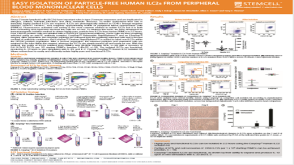 科学海报Easy Isolation of Particle-Free Human ILC2s from Peripheral Blood Mononuclear Cells
 实验方案How to Collect Plasma from Whole Blood Before Cell Isolation
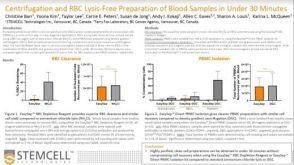 科学海报Centrifugation and RBC Lysis-Free Preparation of Blood Samples in Under 30 Minutes
 技术公告Simplify Your PBMC Isolations with the EasySep™ Direct Human PBMC Isolation Kit
 技术公告Achieve Scalable, High-Quality Nucleic Acid Extractions with the EasySep™ Total Nucleic Acid Extraction Kit



 沪公网安备31010102008431号