若您需要咨询产品或有任何技术问题,请通过官方电话 400 885 9050 或邮箱 info.cn@stemcell.com 与我们联系。

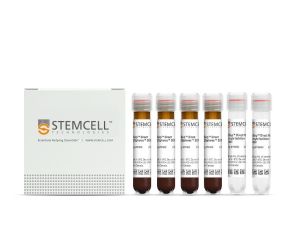
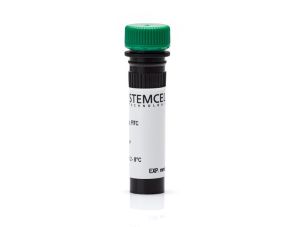
RosetteSep™人单核细胞富集抗体混合物

免疫密度负选试剂混合物
只有 %1
¥2,374.00

产品号 #(选择产品)

产品号 #15028_C

免疫密度负选试剂混合物

产品优势

  • 快捷、操作简单
  • 不需要特殊设备或额外培训
  • 分选得到的细胞不带标记
  • 可与SepMate™联合使用,实现一致的     高通量     样本处理

产品组分包括

  • RosetteSep™人NK细胞富集抗体混合物(产品号 #15025)
    • RosetteSep™人单核细胞富集抗体混合物,2mL
  • RosetteSep™人NK细胞富集抗体混合物(产品号 #15025)
    • RosetteSep™人单核细胞富集抗体混合物,5x2mL
New look, same high quality and support! You may notice that your instrument or reagent packaging looks slightly different from images displayed on the website, or from previous orders. We are updating our look but rest assured, the products themselves and how you should use them have not changed. Learn more
专为您的实验方案打造的产品
要查看实验方案所需的所有配套产品,请参阅《实验方案与技术文档》

总览

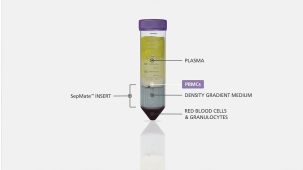
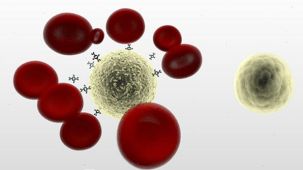
RosetteSep™人单核细胞富集抗体混合物 通过负选从全血分离单核细胞。四聚体抗体复合物可识别非单核细胞和红细胞(RBC),从而靶向去除非目的细胞。使用密度梯度离心液如Lymphoprep™(产品号 #18060)离心后 ,非目的细胞会与红细胞一起沉淀。纯化的单核细胞为血浆和密度梯度离心液的交界界面中高度富集的细胞。

分类
细胞分选试剂盒
 
细胞类型
单核细胞
 
种属

 
样本来源
白膜层、全血
 
分选方法
负选
 
应用
细胞分选
 
品牌
RosetteSep
 
研究领域
免疫
 

实验数据

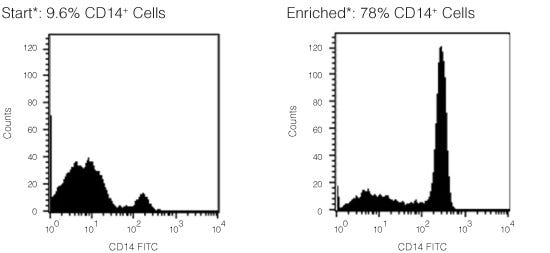
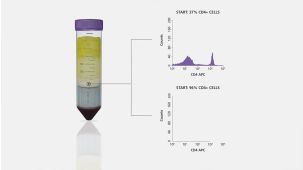
FACS Histogram Results Using RosetteSep™ Human Monocyte Enrichment Cocktail

Figure 1. FACS Histogram Results Using RosetteSep™ Human Monocyte Enrichment Cocktail

Starting with fresh peripheral blood, the CD14+ cell content of the enriched fraction is typically 72% - 85%. *Note: Red blood cells were removed by lysis prior to flow cytometry.

产品说明书及文档

请在《产品说明书》中查找相关支持信息和使用说明,或浏览下方更多实验方案。

Document Type
Product Name
Catalog #
Lot #
Language
Catalog #
15068, 15028
Lot #
All
Language
English
Document Type
Safety Data Sheet
Catalog #
15068, 15028
Lot #
All
Language
English

应用领域

本产品专为以下研究领域设计,适用于工作流程中的高亮阶段。探索这些工作流程,了解更多我们为各研究领域提供的其他配套产品。

相关材料与文献

技术资料 (8)

常见问题 (9)

What is RosetteSep™?

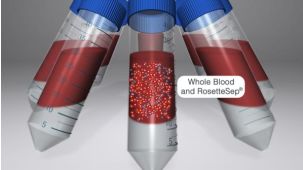
RosetteSep™ is a rapid cell separation procedure for the isolation of purified cells directly from whole blood, without columns or magnets.

How does RosetteSep™ work?

The antibody cocktail crosslinks unwanted cells to red blood cells (RBCs), forming rosettes. The unwanted cells then pellet with the free RBCs when centrifuged over a density centrifugation medium (e.g. Ficoll-Paque™ PLUS, Lymphoprep™).

What factors affect cell recovery?

The temperature of the reagents can affect cell recovery. All reagents should be at room temperature (sample, density centrifugation medium, PBS, centrifuge) before performing the isolations. Layering can also affect recovery so be sure to carefully layer the sample to avoid mixing with the density centrifugation medium as much as possible. Be sure to collect the entire enriched culture without disturbing the RBC pellet. A small amount of density centrifugation medium can be collected without worry.

Which cell samples can RosetteSep™ be used with?

RosetteSep™ can be used with leukapheresis samples, bone marrow or buffy coat, as long as: the concentration of cells does not exceed 5 x 10⁷ per mL (can dilute if necessary); and there are at least 100 RBCs for every nucleated cell (RBCs can be added if necessary).

Can RosetteSep™ be used with previously frozen or cultured cells?

Yes. Cells should be re-suspended at 2 - 5 x 10⁷ cells / mL in PBS + 2% FBS. Fresh whole blood should be added at 250 µL per mL of sample, as a source of red cells.

Can RosetteSep™ be used to enrich progenitors from cord blood?

Yes. Sometimes cord blood contains immature nucleated red cells that have a lower density than mature RBCs. These immature red cells do not pellet over Ficoll™, which can lead to a higher RBC contamination than peripheral blood separations.

Does RosetteSep™ work with mouse cells?

No, but we have developed EasySep™, a magnetic-based cell isolation system which works with mouse and other non-human species.

Which anticoagulant should be used with RosetteSep™?

Peripheral blood should be collected in heparinized Vacutainers. Cord blood should be collected in ACD.

Should the anticoagulant be washed off before using RosetteSep™?

No, the antibody cocktail can be added directly to the sample.

文献 (52)

Early responses of primary human and bovine monocytes, monocytic THP-1 cells and THP-1 cell-derived macrophages to vital Toxoplasma gondii tachyzoites D. Hanke et al. Frontiers in Immunology 2025 Oct

Abstract

Different innate immune cell types are known to release extracellular traps (ETs) in response to invasive pathogens, including parasites. These ETs function to trap, immobilize, and eventually kill pathogens. In line with this, monocytes and macrophages have been shown to release ETs, known as monocyte/macrophage extracellular traps (METs). Toxoplasma gondii (T. gondii) is an apicomplexan zoonotic parasite that infects humans and homeothermic animals. While most studies have focused on prolonged exposure of immune cells to T. gondii, this study characterized the early innate immune reaction of mononuclear phagocytes to vital T. gondii tachyzoites. Methods: Primary human and bovine monocytes, monocytic THP-1 cells, and THP-1 cell-derived macrophages (M0-, M1-, and M2-like) were exposed to T. gondii tachyzoites for 4 h. Scanning electron microscopy (SEM), transmission electron microscopy (TEM), immunofluorescencemicroscopy, and confocal microscopy were used to visualize cell activation and the presence of METs. Additionally, the release of pro-inflammatory cytokines interleukin (IL)-1β and IL-6, and expression of Toll-like receptor (TLR) 2 and TLR4 were analyzed. Results and discussion: Microscopic analysis illustrated the activation of all cell types tested within 4 h of exposure to T. gondii tachyzoites. Numerous tachyzoites were found intracellularly in THP-1 cell-derived M1-like macrophages. Furthermore, the co-localization of extracellular DNA (extDNA) and histones in extracellular web-like fibers proved classical characteristics of extruded T. gondii-induced METs, although this was a rare event. In primary human monocytes, an increased release of IL-1β and IL-6 was observed following exposure to T. gondii tachyzoites. When co-stimulated with lipopolysaccharide (LPS), primary human monocytes showed an enhanced release of IL-1β and IL-6 in response to T. gondii. In contrast to monocytic THP-1 cells, THP-1 cell-derived M1-like macrophages released IL-1β in response to T. gondii tachyzoite exposure. When additionally stimulated by LPS, all THP-1 cell-derived macrophages showed an enhanced release of IL-1β, and monocytic THP-1 cells an increased release of IL-6 in response to T. gondii tachyzoites. This study provides insights into the early innate immune response of human and bovine mononuclear phagocytes to T. gondii. While cytokine secretion was prominent, MET formation was rare in the early response (i.e. < 4 h of exposure) to T. gondii tachyzoites.
Long‐term immune changes after COVID‐19 and the effect of BCG vaccination and latent infections on disease severity K. Bendíčková et al. Clinical & Translational Immunology 2025 Jun

Abstract

Several years after the COVID‐19 pandemic, the impact of SARS‐CoV‐2 on immunity and the potential protective role of Bacillus Calmette–Guérin (BCG) vaccination through trained immunity remain a subject of investigation. This study aimed to determine the long‐term impact of SARS‐CoV‐2 on immune cells and the association between BCG vaccination, latent infections and COVID‐19 severity and sepsis progression. We conducted a prospective analysis of patients who recovered from mild/severe/critical COVID‐19 ( n = 97, 3–17 months after COVID‐19) and sepsis patients ( n = 64). First, we assessed the impact of COVID‐19 and its severity on immune cell frequencies and expression of functional markers. Further, we analysed plasma titres of anti‐ Toxoplasma gondii /cytomegalovirus/BCG antibodies and their association with COVID‐19 severity and sepsis outcome. To examine monocyte responses to secondary challenge, monocytes isolated from COVID‐19 convalescent patients, BCG vaccinated and unvaccinated volunteers were stimulated with SARS‐CoV‐2 and LPS. Post‐COVID‐19 patients showed immune dysregulation regardless of disease severity characterised by altered expression of activation and functional markers in myeloid (CD39, CD64, CD85d, CD11b) and lymphoid cells (CD39, CD57, TIGIT). Strikingly, post‐critical COVID‐19 patients showed elevated expression of CD57 in CD8 + T cells compared to other severity groups. A trend toward improved outcomes in BCG‐seropositive COVID‐19/sepsis patients was observed, although this may be confounded by age differences between groups. In contrast, the monocyte response to stimulation appeared unaffected by COVID‐19 severity. These findings highlight the long‐term alterations of immune cells in post‐COVID‐19 patients, emphasising the substantial impact of COVID‐19 on immune function.
Aging modulates the immunosuppressive, polarizing and metabolic functions of blood-derived myeloid-derived suppressor cells (MDSCs) E. Keltsch et al. Immunity & Ageing : I & A 2025 Jul

Abstract

Immunosenescence describes the gradual remodeling of immune responses, leading to disturbed immune homeostasis and increased susceptibility of older adults for infections, neoplasia and autoimmunity. Decline in cellular immunity is associated with intrinsic changes in the T cell compartment, but can be further pushed by age-related changes in cells regulating T cell immunity. Myeloid-derived suppressor cells (MDSCs) are potent inhibitors of T cell activation and function, whose induction requires chronic inflammation. Since aging is associated with low grade inflammation (inflammaging) and increased myelopoiesis, age-induced changes in MDSC induction and function in relation to T cell immunity were analyzed. MDSC numbers and functions were compared between “healthy” young and old adults, who were negatively diagnosed for severe acute and chronic diseases known to induce MDSC accumulation. MDSCs were either isolated from peripheral blood or generated in vitro from blood-derived CD14 cells. Aging was associated with significantly increased MDSC numbers in the monocytic- (M-) and polymorphonuclear (PMN-) MDSC subpopulations. MDSCs could be induced more efficiently from CD14 cells of old donors and these MDSCs inhibited CD3/28-induced T cell proliferation significantly better than MDSCs induced from young donors. Serum factors of old donors supported MDSC induction comparable to serum factors from young donors, but increased immunosuppressive activity of MDSCs was only achieved by serum from old donors. Elevated immunosuppressive activity of MDSCs from old donors was associated with major metabolic changes and increased intracellular levels of neutral and oxidized lipids known to promote immunosuppressive functions. Independent of age, MDSC-mediated suppression of T cell proliferation required direct MDSC– T cell contact. Besides their increased ability to inhibit activation-induced T cell proliferation, MDSCs from old donors strongly shift the immune response towards Th2 immunity and might thereby further contribute to impaired cell-mediated immunity during aging. These results indicate that immunosenescence of innate immunity comprises accumulation and functional changes in the MDSC compartment, which directly impacts T cell functions and contribute to age-associated impaired T cell immunity. Targeting MDSCs during aging might help to maintain functional T cell responses and increase the chance of healthy aging. The online version contains supplementary material available at 10.1186/s12979-025-00524-w.

更多信息

更多信息
物种 人类
样本来源 全血, 白膜层
Selection Method Negative
标记抗体
质量保证:

产品仅供研究使用,不用于针对人或动物的诊断或治疗。 欲获悉更多关于STEMCELL的质控信息,请访问 STEMCELL.CN/COMPLIANCE.
Copyright © 2025 by STEMCELL Technologies. All rights reserved.

在线联系