若您需要咨询产品或有任何技术问题,请通过官方电话 400 885 9050 或邮箱 info.cn@stemcell.com 与我们联系。

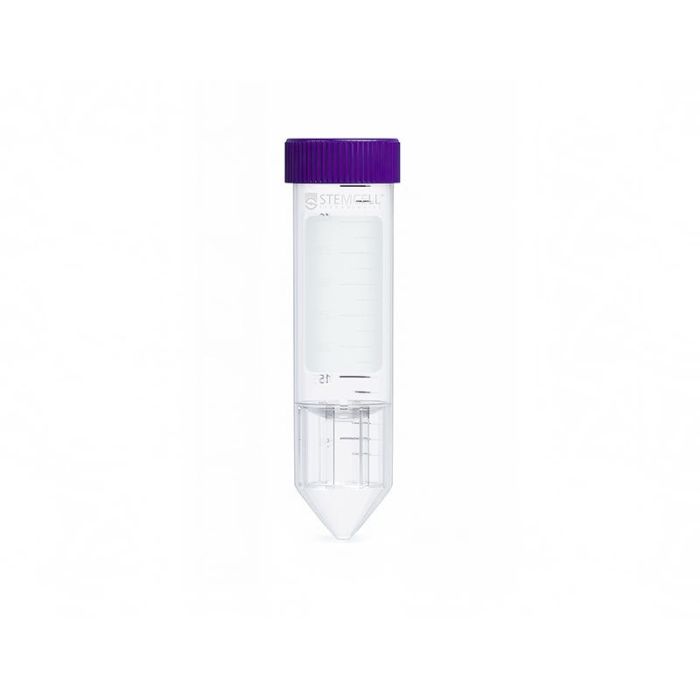
SepMate™-50 (IVD)

用于体外诊断(IVD)应用的密度梯度离心管
只有 %1
¥4,978.00

产品号 #(选择产品)

产品号 #85450_C

用于体外诊断(IVD)应用的密度梯度离心管

产品优势

  • 无需小心地将血液铺在密度梯度离心液(如Lymphoprep™等)上
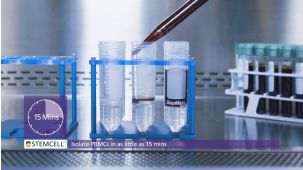
  • 使用新鲜样本时,总离心时间可缩短至10分钟(打开刹车)
  • 只需简单倾倒上清液即可快速轻松地收集分离的单个核细胞
  • 可与RosetteSep™富集试剂联合使用,在30分钟内分离特定的细胞类型

产品组分包括

  • SepMate™-50 (IVD),100支装(产品号 #85450)
    • 每盒含4袋,每袋25支管
  • SepMate™-50 (IVD),500支装(产品号 #85460)
    • 每盒含4袋,每袋25支管(产品号 #85450)× 5盒
Try SepMate™-50 (IVD) tubes for density gradient centrifugation in your IVD applications. Request a Sample
专为您的实验方案打造的产品
要查看实验方案所需的所有配套产品,请参阅《实验方案与技术文档》

What Our Scientist Says

Traditional isolation of PBMCs requires careful layering of blood onto density gradient media prior to centrifugation. We developed SepMate™ to simplify this process, so anyone can isolate PBMCs with a simple pour while maintaining consistency across samples.

Peter MorinTechnical Scientist
Peter Morin, Technical Scientist

总览

通过在密度梯度离心步骤中使用SepMate™,可简化外周血单个核细胞(PBMCs)的分离过程。

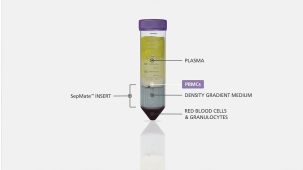
SepMate™离心管内含有一个隔离插件,用于在密度梯度离心液与血液之间形成屏障,从而无需小心地分层加入血液样本,用户可通过简单的倾倒即可轻松收集单个核细胞。该产品可与RosetteSep™联合使用,以分离特定的免疫细胞亚群。

SepMate™-15设计用于处理4至17 mL的样本。

SepMate™按照cGMP标准生产,并在澳大利亚、加拿大、欧盟、瑞士、土耳其、英国和美国以体外诊断(IVD)设备提供。在中国,SepMate™被国家药品监督管理局(NMPA)认定为通用实验室设备。最终用户有责任确定该产品是否适用于其特定应用。

浏览 SepMate™ 常见问题(FAQs)


包含
含有插入物的聚丙烯管
 
分类
离心管
 
细胞类型
B 细胞,树突状细胞(DCs),单核细胞,单个核细胞,NK 细胞,T 细胞,T 细胞,CD4+,T 细胞,CD8+,T 细胞,其他亚群,T 细胞,调节性细胞
 
种属

 
样本来源
骨髓、全血
 
分选方法
负选
 
应用
细胞分选,体外诊断
 
品牌
SepMate
 
研究领域
嵌合体,HLA,免疫
 

实验数据

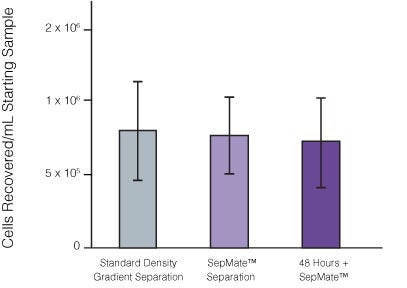
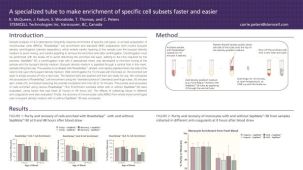
PBMC recovery from fresh whole blood using SepMate™-50 versus standard density gradient centrifugation. Graph also shows PBMC recovery from a 48 hour-old sample using SepMate™. n in each group = 7

Figure 1. Recovery of mononuclear cells (MNCs) from peripheral blood using SepMate™-50 versus standard density gradient centrifiguation. Recovery of MNCs from fresh and 48-hour post blood draw enriched by density gradient centrifugation with SepMate™ (purple) or without (grey). There was no significant difference in the recovery of MNCS with and without SepMate™.

PBMC recovery from fresh whole blood using SepMate™-50 versus standard density gradient centrifugation. Graph also shows PBMC recovery from a 48 hour-old sample using SepMate™. n in each group = 7

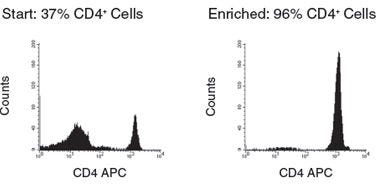
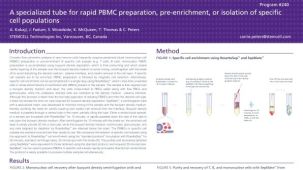
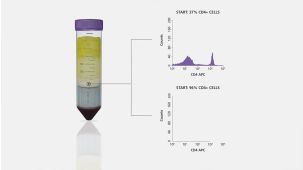
Figure 2. Human CD4+ T Cell Isolation using SepMate™-50 and RosetteSep™ Human CD4+ T Cell Enrichment Cocktail

产品说明书及文档

请在《产品说明书》中查找相关支持信息和使用说明,或浏览下方更多实验方案。

Document Type
Product Name
Catalog #
Lot #
Language
Catalog #
85450, 85460
Lot #
All
Language
MULTI

相关材料与文献

技术资料 (13)

文献 (46)

Selection of Stable Reference Genes for Gene Expression Studies in Activated and Non-Activated PBMCs Under Normoxic and Hypoxic Conditions A. Wardaszka et al. International Journal of Molecular Sciences 2025 Jul

Abstract

Immunotherapy has emerged as a key modality in cancer treatment, yet its effectiveness varies significantly among patients, often due to the metabolic stress imposed by the tumor microenvironment. Hypoxia, a major factor in the tumor microenvironment, results from the high metabolic rate of tumor cells and inadequate vascularization, impairing immune cells’ function and potentially influencing gene expression profiles. Despite the widespread use of quantitative real-time PCR in immunological studies, to the best of our knowledge, data on reference gene stability in human peripheral blood mononuclear cells under hypoxic conditions is limited. In our study, we assessed the expression stability of commonly used reference genes ( S18 , HPRT , IPO8 , RPL13A , SDHA , PPIA , and UBE2D2 ) in both non-stimulated and CD3/CD28-activated peripheral blood mononuclear cells cultured under normoxic, hypoxic (1% O 2 ), and chemically induced hypoxic conditions for 24 h. Analysis using four different algorithms—delta Ct, geNorm, NormFinder, and BestKeeper—identified RPL13A , S18 , and SDHA as the most suitable reference genes for human peripheral blood mononuclear cells under hypoxic conditions. In contrast, IPO8 and PPIA were found to be the least suitable housekeeping genes. The study provides essential insights into the stability of reference genes in peripheral blood mononuclear cells under hypoxic conditions, a critical but understudied aspect of immunological research. Given the significant impact of hypoxia on T cell metabolism and function in the tumor microenvironment, selecting reliable reference genes is crucial for accurate gene expression analysis. Our findings will be valuable for future studies investigating hypoxia-driven metabolic reprogramming in immune cells, ultimately contributing to a better understanding of T cell responses in cancer immunotherapy.
MUC2 expression modulates immune infiltration in colorectal cancer C. M. Raynaud et al. Frontiers in Immunology 2025 Jan

Abstract

Colorectal cancer (CRC) is a prevalent malignancy with significant morbidity and mortality worldwide. A deeper understanding of the interaction of cancer cells with other cells in the tumor microenvironment is crucial to devise effective therapeutic strategies. MUC2, a major component of the protective mucus layer in the gastrointestinal tract, has been implicated in CRC progression and immune response regulation. In this study, we sought to elucidate the relationship between MUC2 expression and immune infiltration within CRC using in vitro models involving two well-established cell lines, HT-29 and LS-174T. By employing CRISPR-mediated MUC2 knockout, we investigated the influence of MUC2 on tumor immune infiltration and its interplay with T cells and NK cells enriched peripheral blood mononuclear cells (PBMCs) in 3D spheroid cultures. While MUC2 was more abundant in LS-174T cell line compared to HT-29, its knockout resulted in increased immune infiltration solely in the HT-29 cell line, but not in the LS-174T cell line. We revealed that the removal of MUC2 protein was compensated in LS-174T by the expression of other gel-forming mucin proteins (MUC6, MUC5B) commonly expressed in the gastrointestinal epithelium, while this was not observed in HT-29 cell line. Our study is the first to demonstrate that MUC2 functions as a physical barrier to immune infiltration in colorectal cancer (CRC) in vitro . In HT-29 cells, MUC2 knockout increased immune infiltration, while in LS-174T cells, compensatory expression of other mucins (MUC6, MUC5B) maintained the barrier. These findings reveal the complexity of mucin biology in CRC and suggest that targeting mucin pathways could be a novel therapeutic approach.
Profiling HPV-16-specific T cell responses reveals broad antigen reactivities in oropharyngeal cancer patients. K. H. Bhatt et al. The Journal of experimental medicine 2020 oct

Abstract

Cellular immunotherapeutics targeting the human papillomavirus (HPV)-16 E6 and E7 proteins have achieved limited success in HPV-positive oropharyngeal cancer (OPC). Here we have conducted proteome-wide profiling of HPV-16-specific T cell responses in a cohort of 66 patients with HPV-associated OPC and 22 healthy individuals. Unexpectedly, HPV-specific T cell responses from OPC patients were not constrained to the E6 and E7 antigens; they also recognized E1, E2, E4, E5, and L1 proteins as dominant targets for virus-specific CD8+ and CD4+ T cells. Multivariate analysis incorporating tumor staging, treatment status, and smoking history revealed that treatment status had the most significant impact on HPV-specific CD8+ and CD4+ T cell immunity. Specifically, the breadth and overall strength of HPV-specific T cell responses were significantly higher before the commencement of curative therapy than after therapy. These data provide the first glimpse of the overall human T cell response to HPV in a clinical setting and offer groundbreaking insight into future development of cellular immunotherapies for HPV-associated OPC patients.

更多信息

更多信息
物种 人类
Contains Polypropylene tube containing an insert
样本来源 全血, 骨髓
Selection Method Negative
法律声明:

SepMate™ (IVD) is only available in regions where it is registered as an In Vitro Diagnostic (IVD) device for the isolation of MNCs from whole blood or bone marrow by density gradient centrifugation. SepMate™ is manufactured under a cGMP quality managment system compliant to 21 CFR 820. 质量保证:

产品仅供研究使用,不用于针对人或动物的诊断或治疗。 欲获悉更多关于STEMCELL的质控信息,请访问 STEMCELL.CN/COMPLIANCE.
Copyright © 2025 by STEMCELL Technologies. All rights reserved.

在线联系