若您需要咨询产品或有任何技术问题,请通过官方电话 400 885 9050 或邮箱 info.cn@stemcell.com 与我们联系。

EasySep™小鼠CD11c正选试剂盒II

通过免疫磁珠正选分离小鼠CD11c+细胞

只有 %1
¥9,286.00

产品号 #(选择产品)

产品号 #18780_C

通过免疫磁珠正选分离小鼠CD11c+细胞

产品优势

  • 操作简单、快捷,且无需分离柱
  • 纯度高达95%
  • 分选得到的细胞无荧光标记

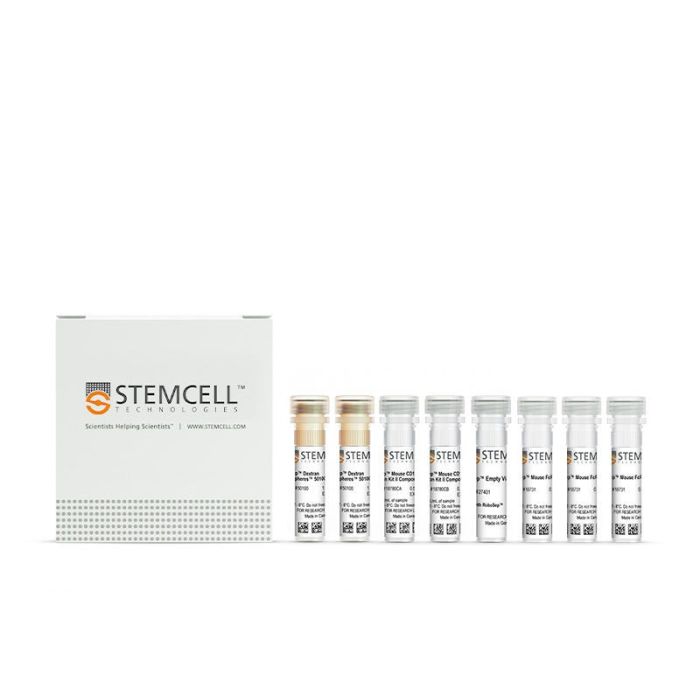
产品组分包括

  • EasySep™小鼠CD11c正选试剂盒II(产品号 #18780)
    • EasySep™小鼠CD11c正选试剂盒II组分A, 0.5 mL
    • EasySep™小鼠CD11c正选试剂盒II组分B, 0.5 mL
    • EasySep™ Dextran RapidSpheres™ 50100 磁珠, 2 x 1 mL
    • EasySep™小鼠FcR阻断剂(产品号 #18731),0.5 mL
  • RoboSep™小鼠CD11c正选试剂盒II(产品号 #18780RF)
    • EasySep™小鼠CD11c正选试剂盒II组分A, 0.5 mL
    • EasySep™小鼠CD11c正选试剂盒II组分B, 0.5 mL
    • EasySep™ Dextran RapidSpheres™ 50100 磁珠, 2 x 1 mL
    • EasySep™小鼠FcR阻断剂(产品号 #18731),0.5 mL
    • RoboSep™空管
    • RoboSep™缓冲器(产品号 #20104)
    • RoboSep™过滤吸头(产品号 #20125)
  • EasySep™小鼠CD11c正选试剂盒II及脾脏解离液(产品号 #18781)
    • EasySep™小鼠CD11c正选试剂盒II组分A, 0.5 mL
    • EasySep™小鼠CD11c正选试剂盒II组分B, 0.5 mL
    • EasySep™ Dextran RapidSpheres™ 50100 磁珠, 2 x 1 mL
    • EasySep™小鼠FcR阻断剂(产品号 #18731),0.5 mL
    • 脾脏解离液(产品号 #07915)
  • RoboSep™ 小鼠CD11c正选试剂盒II及脾脏解离液 (产品号 #18781RF)
    • EasySep™小鼠CD11c正选试剂盒II组分A, 0.5 mL
    • EasySep™小鼠CD11c正选试剂盒II组分B, 0.5 mL
    • EasySep™ Dextran RapidSpheres™ 50100 磁珠, 2 x 1 mL
    • EasySep™小鼠FcR阻断剂(产品号 #18731),0.5 mL
    • RoboSep™空管
    • 脾脏解离液(产品号 #07915)
    • RoboSep™ 缓冲液(产品号 #20104)
    • RoboSep™过滤吸头(产品号 #20125)

总览

使用EasySep™小鼠CD11c正选试剂盒II,可轻松从小鼠脾细胞或培养的骨髓细胞样本中通过免疫磁珠正选获得高纯度的小鼠CD11c+细胞。EasySep™技术结合单克隆抗体的特异性和无柱免疫磁珠分选系统的简便性,已在发表的研究中广泛应用超过20年。

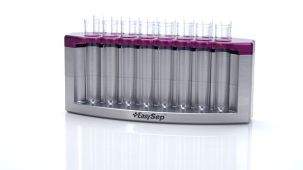
在该EasySep™正选流程中,通过识别CD11c的抗体复合物及磁珠标记的目的细胞。使用EasySep™磁极分离标记细胞,只需倾倒或移除非目的细胞即可。目的细胞将保留在流式管中。免疫磁珠分选获得的 CD11c+细胞可用于下游应用,例如流式细胞术、细胞培养和其它基于细胞的实验。

了解更多EasySep™免疫磁珠技术的工作原理,或者如何通过RoboSep™实现全自动化免疫磁珠细胞分选。探索其他针对您的工作流程优化的产品,包括培养基、添加物、抗体等。


磁极兼容性
• EasySep™磁极(产品号 #18000)
• “The Big Easy” EasySep™磁极(产品号 #18001)
• EasyEights™ EasySep™磁极(产品号 #18103)
• RoboSep™-S(产品号 #21000)
 
分类
细胞分选试剂盒
 
细胞类型
树突状细胞(DCs),粒细胞及其亚群,单核细胞,NK 细胞
 
种属
小鼠
 
样本来源
骨髓,其他组织,脾脏
 
分选方法
正选
 
应用
细胞分选
 
品牌
EasySep,RoboSep
 
研究领域
免疫
 

实验数据

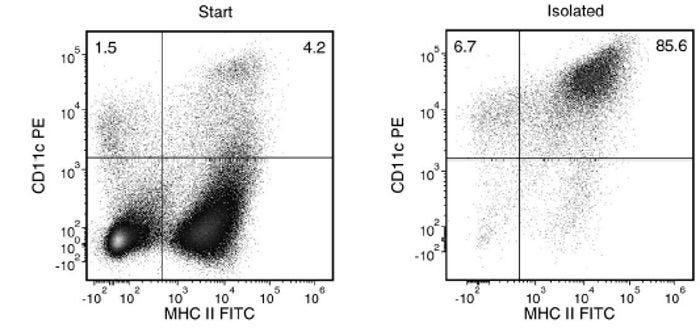
Typical EasySep™ CD11c Positive Cell Isolation Profile

Figure 1. Typical EasySep™ CD11c Positive Cell Isolation Profile

Starting with mouse splenocytes, the CD11c+ cell content of the enriched fraction is typically 86.8 ± 9.7% (gated on viable singlet cells, mean ± SD) using the purple EasySep™ Magnet. In the example above, the final purities of the start and isolated fraction are 5.7% and 92.3%, respectively.

FACS Data for Anti-Mouse CD11c Antibody, Clone N418, Alexa Fluor® 488-Conjugated

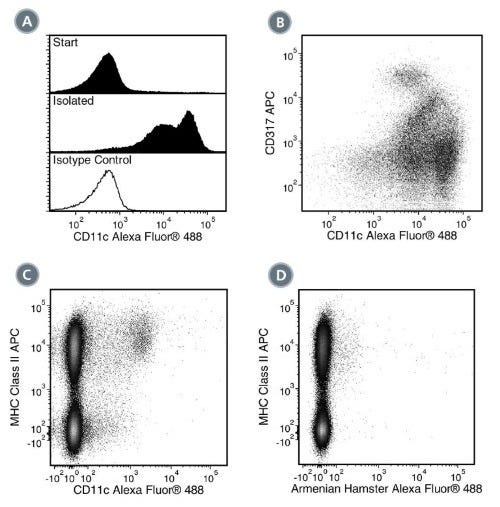
Figure 2. FACS Data for Anti-Mouse CD11c Antibody, Clone N418, Alexa Fluor® 488-Conjugated

(A) Flow cytometry analysis of C57BL/6 mouse splenocytes processed with EasySep™ Mouse CD11c Positive Selection Kit II (Catalog #18780) and labeled with Anti-Mouse CD11c Antibody, Clone N418, Alexa Fluor® 488 (Catalog # 60002AD). Histograms show labeling of splenocytes (Start) and isolated cells (Isolated). Labeling of the start cells with an Armenian hamster IgG Alexa Fluor® 488 isotype control antibody is shown in the bottom panel (solid line histogram).

(B) Flow cytometry analysis of C57BL/6 mouse splenocytes processed with EasySep™ Mouse CD11c Positive Selection Kit II and labeled with Anti-Mouse CD11c Antibody, Clone N418, Alexa Fluor® 488 and an anti-mouse CD317 antibody, APC.

(C) Flow cytometry analysis of C57BL/6 mouse splenocytes labeled with Anti-Mouse CD11c Antibody, Clone N418, Alexa Fluor® 488 and an anti-mouse MHC class II antibody, APC.

(D) Flow cytometry analysis of C57BL/6 mouse splenocytes labeled with an Armenian hamster IgG Alexa Fluor® 488 isotype control antibody and an anti-mouse MHC class II antibody, APC.

产品说明书及文档

请在《产品说明书》中查找相关支持信息和使用说明,或浏览下方更多实验方案。

Document Type
Product Name
Catalog #
Lot #
Language
Document Type
产品说明书
Catalog #
18780RF
Lot #
1000141221 or higher
Language
中文
Document Type
产品说明书
Catalog #
18780
Lot #
1000141221 or higher
Language
中文
Document Type
产品说明书
Catalog #
18781RF
Lot #
1000141221 or higher
Language
中文
Document Type
产品说明书
Catalog #
18781
Lot #
1000141221 or higher
Language
中文
Catalog #
18780
Lot #
All
Language
English
Catalog #
18780RF
Lot #
All
Language
English
Document Type
Safety Data Sheet 1
Catalog #
18781RF
Lot #
All
Language
English
Document Type
Safety Data Sheet 2
Catalog #
18781RF
Lot #
All
Language
English
Document Type
Safety Data Sheet 3
Catalog #
18781RF
Lot #
All
Language
English
Document Type
Safety Data Sheet 4
Catalog #
18781RF
Lot #
All
Language
English
Document Type
Safety Data Sheet 5
Catalog #
18781RF
Lot #
All
Language
English
Document Type
Safety Data Sheet 6
Catalog #
18781RF
Lot #
All
Language
English
Document Type
Safety Data Sheet 1
Catalog #
18781
Lot #
All
Language
English
Document Type
Safety Data Sheet 2
Catalog #
18781
Lot #
All
Language
English
Document Type
Safety Data Sheet 3
Catalog #
18781
Lot #
All
Language
English
Document Type
Safety Data Sheet 4
Catalog #
18781
Lot #
All
Language
English
Document Type
Safety Data Sheet 5
Catalog #
18781
Lot #
All
Language
English
Document Type
Safety Data Sheet 1
Catalog #
18780
Lot #
All
Language
English
Document Type
Safety Data Sheet 2
Catalog #
18780
Lot #
All
Language
English
Document Type
Safety Data Sheet 3
Catalog #
18780
Lot #
All
Language
English
Document Type
Safety Data Sheet 4
Catalog #
18780
Lot #
All
Language
English
Document Type
Safety Data Sheet 1
Catalog #
18780RF
Lot #
All
Language
English
Document Type
Safety Data Sheet 2
Catalog #
18780RF
Lot #
All
Language
English
Document Type
Safety Data Sheet 3
Catalog #
18780RF
Lot #
All
Language
English
Document Type
Safety Data Sheet 4
Catalog #
18780RF
Lot #
All
Language
English

应用领域

本产品专为以下研究领域设计,适用于工作流程中的高亮阶段。探索这些工作流程,了解更多我们为各研究领域提供的其他配套产品。

相关材料与文献

技术资料 (9)

常见问题

Can EasySep™ be used for either positive or negative selection?

Yes. The EasySep™ kits use either a negative selection approach by targeting and removing unwanted cells or a positive selection approach targeting desired cells. Depletion kits are also available for the removal of cells with a specific undesired marker (e.g. GlyA).

How does the separation work?

Magnetic particles are crosslinked to cells using Tetrameric Antibody Complexes (TAC). When placed in the EasySep™ Magnet, labeled cells migrate to the wall of the tube. The unlabeled cells are then poured off into a separate fraction.

Which columns do I use?

The EasySep™ procedure is column-free. That's right - no columns!

How can I analyze the purity of my enriched sample?

The Product Information Sheet provided with each EasySep™ kit contains detailed staining information.

Can EasySep™ separations be automated?

Yes. RoboSep™, the fully automated cell separator, automates all EasySep™ labeling and cell separation steps.

Can EasySep™ be used to isolate rare cells?

Yes. We recommend a cell concentration of 2x10⁸ cells/mL and a minimum working volume of 100 µL. Samples containing 2x10⁷ cells or fewer should be suspended in 100 µL of buffer.

Are the EasySep™ magnetic particles FACS-compatible?

Yes, the EasySep™ particles are flow cytometry-compatible, as they are very uniform in size and about 5000X smaller than other commercially available magnetic beads used with column-free systems.

Can the EasySep™ magnetic particles be removed after enrichment?

No, but due to the small size of these particles, they will not interfere with downstream applications.

Can I alter the separation time in the magnet?

Yes; however, this may impact the kit's performance. The provided EasySep™ protocols have already been optimized to balance purity, recovery and time spent on the isolation.

For positive selection, can I perform more than 3 separations to increase purity?

Yes, the purity of targeted cells will increase with additional rounds of separations; however, cell recovery will decrease.

How does the binding of the EasySep™ magnetic particle affect the cells? is the function of positively selected cells altered by the bound particles?

Hundreds of publications have used cells selected with EasySep™ positive selection kits for functional studies. Our in-house experiments also confirm that selected cells are not functionally altered by the EasySep™ magnetic particles.

If particle binding is a key concern, we offer two options for negative selection. The EasySep™ negative selection kits can isolate untouched cells with comparable purities, while RosetteSep™ can isolate untouched cells directly from whole blood without using particles or magnets.

文献 (8)

LSm14A Plays a Critical Role in Antiviral Immune Responses by Regulating MITA Level in a Cell-Specific Manner. Liu T-T et al. Journal of Immunology 2016 MAY

Abstract

Viral infection triggers induction of antiviral cytokines and effectors,which are critical mediators of innate antiviral immune response. It has been shown that the processing body-associated protein LSm14A is involved in the induction of antiviral cytokines in cell lines but in vivo evidence is lacking. By generating LSm14A-deficient mice,in this study,we show that LSm14A plays a critical and specific role in the induction of antiviral cytokines in dendritic cells (DCs) but not in macrophages and fibroblasts. Induction of antiviral cytokines triggered by the DNA viruses HSV-1 and murid herpesvirus 68 and the RNA virus vesicular stomatitis virus but not Sendai virus was impaired in Lsm14a(-/-) DCs,which is correlated to the functions of the adaptor protein MITA/STING in the antiviral signaling pathways. LSm14A deficiency specifically downregulated MITA/STING level in DCs by impairing its nuclear mRNA precursor processing and subsequently impaired antiviral innate and adaptive immune responses. Our findings reveal a nuclear mRNA precursor processing and cell-specific regulatory mechanism of antiviral immune responses.
Dendritic Cells but Not Macrophages Sense Tumor Mitochondrial DNA for Cross-priming through Signal Regulatory Protein α Signaling. Xu MM et al. Immunity 2017 AUG

Abstract

Inhibition of cytosolic DNA sensing represents a strategy that tumor cells use for immune evasion,but the underlying mechanisms are unclear. Here we have shown that CD47-signal regulatory protein α (SIRPα) axis dictates the fate of ingested DNA in DCs for immune evasion. Although macrophages were more potent in uptaking tumor DNA,increase of DNA sensing by blocking the interaction of SIRPα with CD47 preferentially occurred in dendritic cells (DCs) but not in macrophages. Mechanistically,CD47 blockade enabled the activation of NADPH oxidase NOX2 in DCs,which in turn inhibited phagosomal acidification and reduced the degradation of tumor mitochondrial DNA (mtDNA) in DCs. mtDNA was recognized by cyclic-GMP-AMP synthase (cGAS) in the DC cytosol,contributing to type I interferon (IFN) production and antitumor adaptive immunity. Thus,our findings have demonstrated how tumor cells inhibit innate sensing in DCs and suggested that the CD47-SIRPα axis is critical for DC-driven antitumor immunity.
Senolytics prevent mt-DNA-induced inflammation and promote the survival of aged organs following transplantation. J. Iske et al. Nature communications 2020

Abstract

Older organs represent an untapped potential to close the gap between demand and supply in organ transplantation but are associated with age-specific responses to injury and increased immunogenicity,thereby aggravating transplant outcomes. Here we show that cell-free mitochondrial DNA (cf-mt-DNA) released by senescent cells accumulates with aging and augments immunogenicity. Ischemia reperfusion injury induces a systemic increase of cf-mt-DNA that promotes dendritic cell-mediated,age-specific inflammatory responses. Comparable events are observed clinically,with the levels of cf-mt-DNA elevated in older deceased organ donors,and with the isolated cf-mt-DNA capable of activating human dendritic cells. In experimental models,treatment of old donor animals with senolytics clear senescent cells and diminish cf-mt-DNA release,thereby dampening age-specific immune responses and prolonging the survival of old cardiac allografts comparable to young donor organs. Collectively,we identify accumulating cf-mt-DNA as a key factor in inflamm-aging and present senolytics as a potential approach to improve transplant outcomes and availability.

更多信息

更多信息
物种 小鼠
Magnet Compatibility • EasySep™ Magnet (Catalog #18000) • “The Big Easy” EasySep™ Magnet (Catalog #18001) • EasyEights™ EasySep™ Magnet (Catalog #18103) • RoboSep™-S (Catalog #21000)
样本来源 其它细胞系, 脾脏, 骨髓
Selection Method Positive
标记抗体

质量声明:

产品仅供研究使用,不用于针对人或动物的诊断或治疗。 欲获悉更多关于STEMCELL的质控信息,请访问 STEMCELL.CN/COMPLIANCE.

Copyright © 2026 by STEMCELL Technologies. All rights reserved.

在线联系