若您需要咨询产品或有任何技术问题,请通过官方电话 400 885 9050 或邮箱 info.cn@stemcell.com 与我们联系。

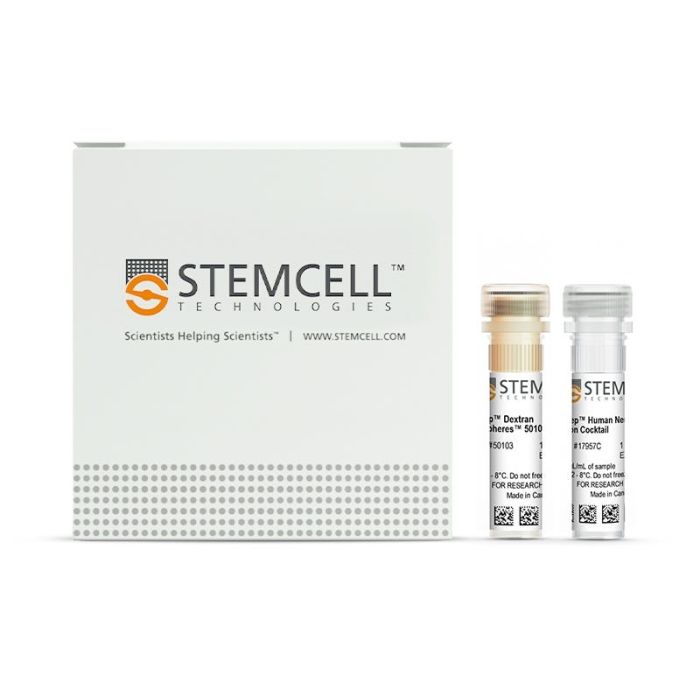
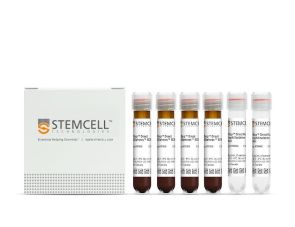
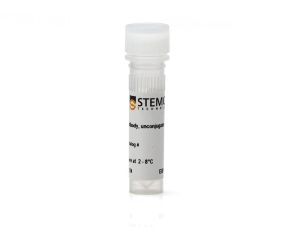
EasySep™人中性粒细胞分选试剂盒

免疫磁珠负选未标记的人中性粒细胞
只有 %1
¥15,564.00

产品号 #(选择产品)

产品号 #17957_C

免疫磁珠负选未标记的人中性粒细胞

产品优势

  • 操作简单、快捷,且无需分离柱
  • 纯度高达99%
  • 获得的活细胞无标记

产品组分包括

  • EasySep™人中性粒细胞分选试剂盒(产品号 #17957)
    • EasySep™人中性粒细胞分选抗体混合物,1 mL
    • EasySep™ Dextran RapidSpheres™磁珠,1 mL
  • RoboSep™ 人中性粒细胞分离试剂盒(含过滤吸头)(产品号 #17957RF)
    • EasySep™人中性粒细胞分选抗体混合物,1 mL
    • EasySep™ Dextran RapidSpheres™磁珠,1 mL
    • RoboSep™ 缓冲液(产品号 #20104)
    • RoboSep™ 过滤吸头(产品号 #20125)
专为您的实验方案打造的产品
要查看实验方案所需的所有配套产品,请参阅《实验方案与技术文档》

总览

使用EasySep™人中性粒细胞分离试剂盒,可轻松高效地从新鲜人外周血白细胞样本中通过免疫磁珠负选获得高纯度人中性粒细胞。EasySep™技术结合单克隆抗体的特异性和无柱磁分选系统的简便性,已在发表的研究中广泛应用超过20年。

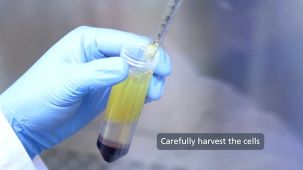
在该EasySep™负选流程中,非目标细胞被抗体复合物与磁珠标记。通过EasySep™磁极将被磁珠标记的细胞与未被标记的目的中性粒细胞分离,接着简单地将目的细胞倾倒或吸取至一个新的试管中。磁珠分选最快仅需14分钟,目标中性粒细胞即可用于流式细胞术、细胞培养或DNA/RNA提取等下游应用。本分离试剂盒兼容经HetaSep™(产品号 #07906)沉降法或红细胞裂解法处理的细胞样本。

该产品可替代EasySep™人中性粒细胞富集试剂盒 (产品号 #19257) 以进行更快地细胞分选。

了解更多关于免疫磁珠EasySep™技术的工作原理,或如何通过RoboSep™实现免疫磁珠细胞分选全自动化。亦可选择即用型、符合伦理来源的人外周血中性粒细胞冻存产品。探索更多为您实验流程优化的其它产品,包括培养基、补充剂、抗体等。

磁极兼容性
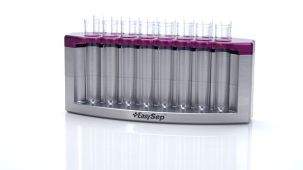
• EasySep™磁极(产品号 #18000)
• “The Big Easy” EasySep™磁极(产品号 #18001)
• EasyPlate™ EasySep™磁极(产品号 #18102)
• EasyEights™ EasySep™磁极(产品号 #18103)
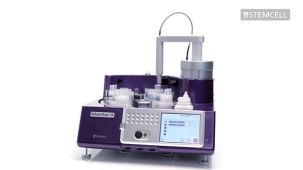
• RoboSep™-S(产品号 #21000)
 
分类
细胞分选试剂盒
 
细胞类型
粒细胞及其亚群
 
种属

 
样本来源
PMNC、全血
 
分选方法
负选
 
应用
细胞分选
 
品牌
EasySep,RoboSep
 
研究领域
免疫
 

实验数据

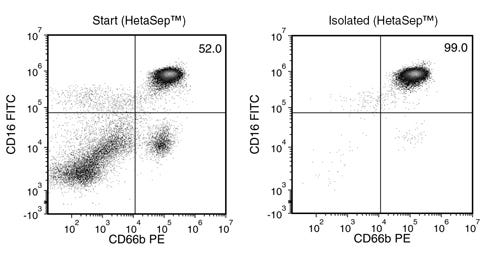
Figure 1. Typical EasySep™ Human Neutrophil Isolation Profile

Starting with whole blood prepared using HetaSep™ or Lymphoprep™ with RBC lysis, the neutrophil content (CD45+CD16+CD66b+) of the isolated fraction typically ranges from 98.7 ± 0.9% (mean ± SD). In the above example, the purities of the start and final isolated fractions are 52.0% and 99.0%, respectively.

产品说明书及文档

请在《产品说明书》中查找相关支持信息和使用说明,或浏览下方更多实验方案。

Document Type
Product Name
Catalog #
Lot #
Language
Document Type
产品说明书
Catalog #
17957RF
Lot #
All
Language
中文
Document Type
产品说明书
Catalog #
17957
Lot #
All
Language
中文
Catalog #
17957RF
Lot #
All
Language
English
Catalog #
17957
Lot #
All
Language
English
Document Type
Safety Data Sheet 1
Catalog #
17957RF
Lot #
All
Language
English
Document Type
Safety Data Sheet 2
Catalog #
17957RF
Lot #
All
Language
English
Document Type
Safety Data Sheet 3
Catalog #
17957RF
Lot #
All
Language
English
Document Type
Safety Data Sheet 1
Catalog #
17957
Lot #
All
Language
English
Document Type
Safety Data Sheet 2
Catalog #
17957
Lot #
All
Language
English

应用领域

本产品专为以下研究领域设计,适用于工作流程中的高亮阶段。探索这些工作流程,了解更多我们为各研究领域提供的其他配套产品。

相关材料与文献

技术资料 (10)

文献 (12)

Novel NCF2 Mutation Causing Chronic Granulomatous Disease. I. L. Roth et al. Journal of clinical immunology 2020 oct

Abstract

Chronic granulomatous disease (CGD) is a rare primary immunodeficiency disorder caused by defects in the NADPH oxidase complex. Mutations in NCF2 encoding the cytosolic factor p67phox result in autosomal recessive CGD. We describe three patients with a novel c.855G{\textgreater}C NCF2 mutation presenting with diverse clinical phenotype. Two siblings were heterozygous for the novel mutation and for a previously described exon 8-9 duplication,while a third unrelated patient was homozygous for the novel mutation. Mutation pathogenicity was confirmed by abnormal DHR123 assay and absent p67phox production and by sequencing of cDNA which showed abnormal RNA splicing. Clinically,the homozygous patient presented with suspected early onset interstitial lung disease and NCF2 mutation was found on genetic testing performed in search for surfactant-related defects. The two siblings also had variable presentation with one having history of severe pneumonia,lymphadenitis,and recurrent skin abscesses and the other presenting in his 30s with discoid lupus erythematosus and without significant infectious history. We therefore identified a novel pathogenic NCF2 mutation causing diverse and unusual clinical phenotype.
Exosomal transfer of activated neutrophil-derived lncRNA CRNDE promotes proliferation and migration of airway smooth muscle cells in asthma. X.-Y. Zhang et al. Human molecular genetics 2022 feb

Abstract

Activated neutrophil-derived exosomes reportedly contribute to the proliferation of airway smooth muscle cells (ASMCs),thereby aggravating the airway wall remodeling during asthma; however,the specific mechanism remains unclear. Lipopolysaccharide (LPS)-EXO and si-CRNDE-EXO were extracted from the media of human neutrophils treated with LPS and LPS??+??si-CRNDE (a siRNA targets long non-coding RNA CRNDE),respectively. Human ASMCs were co-cultured with LPS-EXO or si-CRNDE-EXO,and cell viability,proliferation and migration were measured. The interplay of colorectal neoplasia differentially expressed (CRNDE),inhibitor of nuclear factor kappa B kinase subunit beta (IKK$\beta$) and nuclear receptor subfamily 2 group C member 2 (TAK1) was explored using RNA immunoprecipitation (RIP) and Co-IP assays. A mouse model of asthma was induced using ovalbumin. CRNDE was upregulated in LPS-EXO and successfully transferred from LPS-treated neutrophils to ASMCs through exosome. Mechanically,CRNDE loaded in LPS-EXO reinforced TAK1-mediated IKK$\beta$ phosphorylation,thereby activating the nuclear factor kappa B (NF-$\kappa$B) pathway. Functionally,silencing CRNDE in LPS-EXO,an IKK$\beta$ inhibitor,and an NF-$\kappa$B inhibitor all removed the upregulation of cell viability,proliferation and migration induced by LPS-EXO in ASMCs. In the end,the in vivo experiment demonstrated that CRNDE knockdown in neutrophils effectively reduced the thickness of bronchial smooth muscle in a mouse model for asthma. Activated neutrophils-derived CRNDE was transferred to ASMCs through exosomes and activated the NF-$\kappa$B pathway by enhancing IKK$\beta$ phosphorylation. The latter promoted the proliferation and migration of ASMCs and then contributed to airway remodeling in asthma.
Dysfunction of low-density neutrophils in peripheral circulation in patients with sepsis. R. Sun et al. Scientific reports 2022 jan

Abstract

Low-density neutrophils (LDNs) have been described in tumors and various autoimmune diseases,where they exhibit immune dysfunction and alter disease progression. Nevertheless,LDNs have been rarely reported in sepsis. We studied sepsis patients admitted to the intensive care unit. Wright-Giemsa stain assay and Transmission electron microscopy were performed to detect the morphology of neutrophils. Flow cytometry was used to analyze the number and function of LDNs. Concentration of cytokines was measured using ELISA. Neutrophil chemotaxis was examined using an under-agarose chemotaxis model. We found that LDNs were significantly elevated in patients with sepsis. Phenotypes and morphological characteristics suggest that LDNs may be formed by mixtures of neutrophils at various maturation stages. In vitro experiments showed that LDN formation was closely associated with neutrophil degranulation. We preliminarily discussed changes in immune function in LDNs. Compared with high-density neutrophils,expression levels of CXC chemokine receptor 4 on LDN surfaces were increased,phagocytotic capacity was decreased,and life span was prolonged. The chemotactic ability of LDNs was significantly reduced,possibly related to the increased expression of P2X1. These data suggest that LDNs are essential components of neutrophils in sepsis. To clarify the source and dysfunction mechanism of LDN in sepsis may be helpful for the diagnosis and treatment of sepsis in the future.

更多信息

更多信息
物种
Magnet Compatibility • EasySep™ Magnet (Catalog #18000) • “The Big Easy” EasySep™ Magnet (Catalog #18001) • EasyEights™ EasySep™ Magnet (Catalog #18103) • EasyPlate™ EasySep™ Magnet (Catalog #18102) • RoboSep™-S (Catalog #21000)
样本来源 PMNC, 全血
Selection Method Negative
标记抗体
质量保证:

产品仅供研究使用,不用于针对人或动物的诊断或治疗。 欲获悉更多关于STEMCELL的质控信息,请访问 STEMCELL.CN/COMPLIANCE.
Copyright © 2026 by STEMCELL Technologies. All rights reserved.

在线联系