若您需要咨询产品或有任何技术问题,请通过官方电话 400 885 9050 或邮箱 info.cn@stemcell.com 与我们联系。

MegaCult™-C含细胞因子全套试剂盒

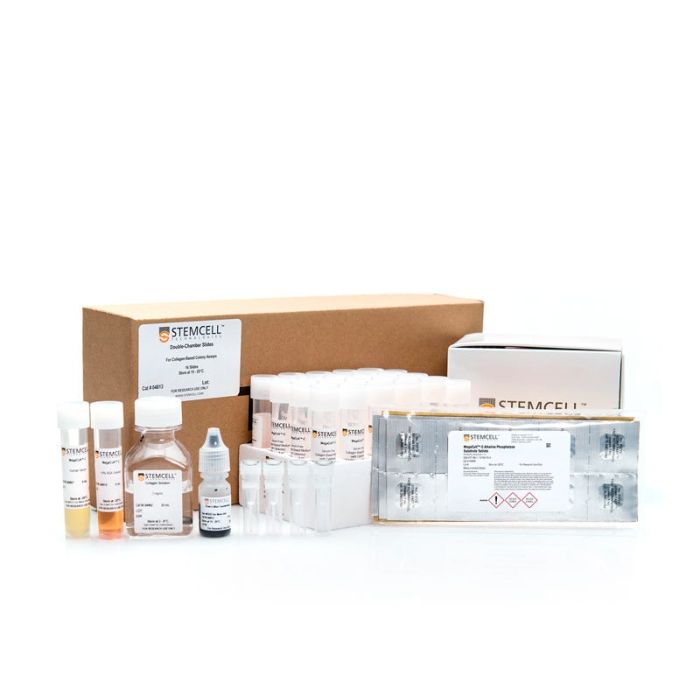
人CFU-Mk检测全套试剂盒
只有 %1
¥61,460.00

产品号 #(选择产品)

产品号 #04971_C

人CFU-Mk检测全套试剂盒

产品组分包括

  • MegaCult™-C含细胞因子全套试剂盒(产品号 #04971):
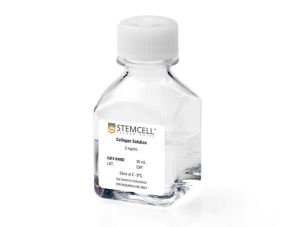
    • 胶原蛋白溶液,35 mL(产品号 #04902)
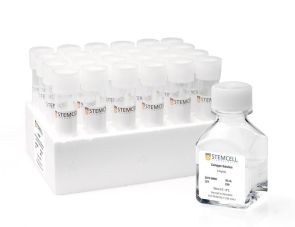
    • MegaCult™-C含细胞因子培养基,24 × 2 mL(产品号 #04901)
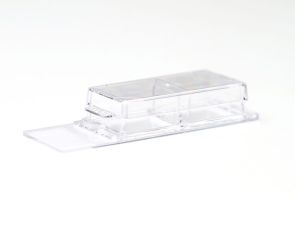
    • 双室载玻片套装(产品号 #04963);
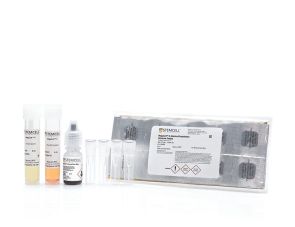
    • MegaCult™-C CFU-Mk染色试剂盒(产品号 #04962)

总览

MegaCult™-C含细胞因子全套试剂盒包括巨核细胞祖细胞(CFU-Mk)在双腔载玻片中实现最佳生长,以及通过免疫细胞化学染色检测CFU-Mk集落所需的所有试剂。MegaCult™-C培养基针对人骨髓、动员外周血和脐带血样本中的CFU-Mk生长进行优化。适用于CD34+富集的细胞、单个核细胞及采用其他纯化方法分离的细胞。

包含
• 胶原蛋白溶液,35 mL(产品号 #04902)
• 含细胞因子的MegaCult™-C培养基,24 x 2 mL(产品号 #04901)
• 双室玻片套件,1 套(产品号 #04963)
• 用于CFU-Mk的MegaCult™-C染色试剂盒,1套(产品号 #04962)
 
分类
半固体培养基,专用培养基
 
细胞类型
造血干/祖细胞
 
种属

 
应用
细胞培养,克隆筛选,功能学筛选
 
品牌
MegaCult
 
研究领域
药物发现和毒性检测,干细胞生物学
 
制剂类别
无血清
 

产品说明书及文档

请在《产品说明书》中查找相关支持信息和使用说明,或浏览下方更多实验方案。

Document Type
Product Name
Catalog #
Lot #
Language
Catalog #
04971
Lot #
All
Language
English
Document Type
Technical Manual
Catalog #
04971
Lot #
All
Language
English
Document Type
Safety Data Sheet 1
Catalog #
04971
Lot #
All
Language
English
Document Type
Safety Data Sheet 2
Catalog #
04971
Lot #
All
Language
English
Document Type
Safety Data Sheet 3
Catalog #
04971
Lot #
All
Language
English
Document Type
Safety Data Sheet 4
Catalog #
04971
Lot #
All
Language
English
Document Type
Safety Data Sheet 5
Catalog #
04971
Lot #
All
Language
English
Document Type
Safety Data Sheet 6
Catalog #
04971
Lot #
All
Language
English
Document Type
Safety Data Sheet 7
Catalog #
04971
Lot #
All
Language
English
Document Type
Safety Data Sheet 8
Catalog #
04971
Lot #
All
Language
English
Document Type
Safety Data Sheet 9
Catalog #
04971
Lot #
All
Language
English
Catalog #
04971
Lot #
All
Language
English

应用领域

本产品专为以下研究领域设计,适用于工作流程中的高亮阶段。探索这些工作流程,了解更多我们为各研究领域提供的其他配套产品。

相关材料与文献

技术资料 (1)

文献 (31)

Endogenous erythroid and megakaryocytic colony formation in serum-free, cytokine-free collagen gels. Dobo I et al. Journal of hematotherapy & stem cell research 1999 DEC

Abstract

We studied the suitability of collagen-based semisolid medium for assay of endogenous erythroid colony formation performed in myeloproliferative disorders. Bone marrow (BM) mononuclear cells (MNC) from 103 patients suspected of having polycythemia vera (PV,76 patients) or essential thrombocythemia (ET,27 patients) were grown in collagen-based,serum-free,cytokine-free semisolid medium. Colony analysis at day 8 or 10 showed that this collagen assay is specific,as endogenous growth of erythroid colonies was never observed in cultures of 16 healthy donors and 6 chronic myelogenous leukemia (CML) patients. Endogenous erythroid colony formation was observed in 53.3% of patients suspected of PV,with only 15.4% of positive cultures for patients with 1 minor PV criterion and 72% (p = 0.009) of positive cultures for patients with textgreater or =2 minor or 1 major PV criterion. Similarly,endogenous growth of erythroid colonies was found in 44.4% of patients suspected of ET,with 31.6% of positive cultures for patients with 1 ET criterion versus 75% for patients with textgreater or =2 ET criteria. In addition,we found that in collagen gels,tests of erythropoietin (EPO) hypersensitivity in the presence of 0.01 or 0.05 U/ml of EPO and tests of endogenous colony-forming units-megakaryocyte (CFU-MK) formation cannot be used to detect PV or ET,as these tests were positive for,respectively,21.4% and 50% of healthy donors and 83% and 50% of CML patients. A retrospective analysis suggests that collagen assays are more sensitive than methylcellulose assays to assess endogenous growth of erythroid colonies. In summary,serum-free collagen-based colony assays are simple and reliable assays of endogenous growth of erythroid colonies in myeloproliferative diseases. They also appear to be more sensitive than methylcellulose-based assays.
mDYRK3 kinase is expressed selectively in late erythroid progenitor cells and attenuates colony-forming unit-erythroid development. Geiger JN et al. Blood 2001 FEB

Abstract

DYRKs are a new subfamily of dual-specificity kinases that was originally discovered on the basis of homology to Yak1,an inhibitor of cell cycle progression in yeast. At present,mDYRK-3 and mDYRK-2 have been cloned,and mDYRK-3 has been characterized with respect to kinase activity,expression among tissues and hematopoietic cells,and possible function during erythropoiesis. In sequence,mDYRK-3 diverges markedly in noncatalytic domains from mDYRK-2 and mDYRK-1a,but is 91.3% identical overall to hDYRK-3. Catalytically,mDYRK-3 readily phosphorylated myelin basic protein (but not histone 2B) and also appeared to autophosphorylate in vitro. Expression of mDYRK-1a,mDYRK-2,and mDYRK-3 was high in testes,but unlike mDYRK1a and mDYRK 2,mDYRK-3 was not expressed at appreciable levels in other tissues examined. Among hematopoietic cells,however,mDYRK-3 expression was selectively elevated in erythroid cell lines and primary pro-erythroid cells. In developmentally synchronized erythroid progenitor cells,expression peaked sharply following exposure to erythropoietin plus stem cell factor (SCF) (but not SCF alone),and in situ hybridizations of sectioned embryos revealed selective expression of mDYRK-3 in fetal liver. Interestingly,antisense oligonucleotides to mDYRK-3 were shown to significantly and specifically enhance colony-forming unit-erythroid colony formation. Thus,it is proposed that mDYRK-3 kinase functions as a lineage-restricted,stage-specific suppressor of red cell development. (Blood. 2001;97:901-910)
Comparison of four serum-free, cytokine-free media for analysis of endogenous erythroid colony growth in polycythemia vera and essential thrombocythemia. Dobo I et al. The hematology journal : the official journal of the European Haematology Association / EHA 2001 JAN

Abstract

INTRODUCTION: The assay of endogenous erythroid colony formation (EEC),a characteristic of polycythemia vera and essential thrombocythemia,is not standardized. In this multicentric study,we tested four semisolid,serum-free,cytokine-free media based on either methylcellulose (M1,M2) or collagen (C1,C2) commercialized for the EEC assay. MATERIALS AND METHODS: Bone marrow mononuclear cells (BMMC) from 73 individuals (62 patients with either polycythemia vera (26),essential thrombocythemia (19),secondary polyglobuly (17) or chronic myeloid leukemia (2) and 11 healthy donors) were grown in parallel in the four media without,or with 0.01 U/ml erythropoietin (EPo). RESULTS: In all four media EEC formation was specific,as it was not observed in cultures of patients with secondary polyglobuly or chronic myeloid leukemia,nor of healthy donors. Analysis of fresh or MGG-stained collagen gel cultures allowed detection of EEC formation significantly more frequently than methylcellulose-based media; addition of 0.01 U/ml of EPo had little or no effect on EEC formation. Collagen-based medium C1 gave better results than the other media tested: the 'C1' EEC assay was positive for 68.2% of polycythemia vera cultures with significantly higher median EEC numbers (6.5/10(5) BMMC for patients with one major criteria of polycythemia vera and 19 and 21/10(5) BMMC for patients with two or three major criteria,respectively). Medium C1 was also better for essential thrombocythemia cultures with 47.4% of positive results but with a low median EEC number (6.7/10(5) BMMC). When associated with the ELISA dosage of serum EPo,the 'C1' EEC assay allowed confirmation or elimination of the diagnosis of polycythemia vera for 91% (20/22) of polyglobulic patients. CONCLUSION: We propose that serum-free collagen-based culture systems be considered to standardize the EEC assay,now part of the new criteria of polycythemia vera.

更多信息

更多信息
物种
Contains • Collagen Solution, 35 mL (Catalog #04902) • MegaCult™-C Medium with Cytokines, 24 x 2 mL (Catalog #04901) • Double Chamber Slide Kit, 1 Kit (Catalog #04963) • MegaCult™-C Staining Kit for CFU-Mk, 1 Kit (Catalog #04962)
配方 无血清
质量保证:

产品仅供研究使用,不用于针对人或动物的诊断或治疗。 欲获悉更多关于STEMCELL的质控信息,请访问 STEMCELL.CN/COMPLIANCE.
Copyright © 2026 by STEMCELL Technologies. All rights reserved.

在线联系