若您需要咨询产品或有任何技术问题,请通过官方电话 400 885 9050 或邮箱 info.cn@stemcell.com 与我们联系。

Kenpaullone

WNT通路激活剂;抑制GSK3ß
只有 %1
¥2,322.00

产品号 #(选择产品)

产品号 #72782_C

WNT通路激活剂;抑制GSK3ß

总览

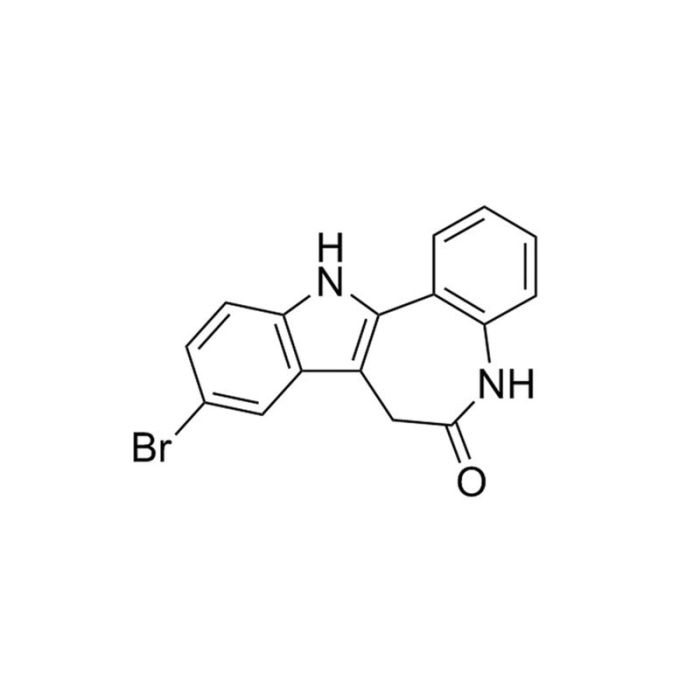
Kenpaullone是一种糖原合酶激酶3β (GSK-3β)的ATP 竞争性抑制剂(Bain et al.; Leclerc et al.; Zaharevitz et al.)。它对GSK-3β、Cdk1/cyclin B、Cdk2/cyclin A、Cdk5/p25和淋巴细胞激酶的IC50值分别为0.23、0.4、0.68、0.85和0.47µM (Bain et al.; Zaharevitz et al.)。

重编程
·在小鼠胚胎成纤维细胞(MEFs)中,与Oct4、Sox2和c-Myc共转到,可替代Klf4生成诱导多能干细胞(iPS)(Lyssiotis et al.)。

分化
·促进大鼠和人神经前体细胞的神经元分化(Castelo-Branco et al.; Lange et al.)。
·促进来自小鼠胚胎干细胞(ES)和肌萎缩侧索硬化症(ALS)患者iPS细胞的运动神经元的存活(Yang et al.)。

癌症研究
·体外抑制乳腺癌干细胞KLF4表达和自我更新(Yu et al.)。

细胞类型
癌细胞及细胞系,乳腺细胞,神经细胞,PSC衍生,神经干/祖细胞,神经元,多能干细胞
 
种属
人,小鼠,非人灵长类,其他物种,大鼠
 
应用
分化,重编程
 
研究领域
癌症,神经科学,干细胞生物学
 
CAS 编号
142273-20-9
 
化学式
C₁₆H₁₁BrN₂O
 
纯度
≥98%
 
通路
WNT
 
靶点
GSK3
 

产品说明书及文档

请在《产品说明书》中查找相关支持信息和使用说明,或浏览下方更多实验方案。

Document Type
Product Name
Catalog #
Lot #
Language
Product Name
Kenpaullone
Catalog #
72782
Lot #
All
Language
English
Document Type
Safety Data Sheet
Product Name
Kenpaullone
Catalog #
72782
Lot #
All
Language
English

应用领域

本产品专为以下研究领域设计,适用于工作流程中的高亮阶段。探索这些工作流程,了解更多我们为各研究领域提供的其他配套产品。

相关材料与文献

技术资料 (3)

文献 (8)

Discovery and initial characterization of the paullones, a novel class of small-molecule inhibitors of cyclin-dependent kinases. Zaharevitz DW et al. Cancer research 1999 JUN

Abstract

Analysis of the National Cancer Institute Human Tumor Cell Line Anti-Cancer Drug Screen data using the COMPARE algorithm to detect similarities in the pattern of compound action to flavopiridol,a known inhibitor of cyclin-dependent kinases (CDKs),has suggested several possible novel CDK inhibitors. 9-Bromo-7,12-dihydro-indolo[3,2-d][1]benzazepin-6(5H)-one,NSC-664704 (kenpaullone),is reported here to be a potent inhibitor of CDK1/cyclin B (IC50,0.4 microM). This compound also inhibited CDK2/cyclin A (IC50,0.68 microM),CDK2/cyclin E (IC50,7.5 microM),and CDK5/p25 (IC50,0.85 microM) but had much less effect on other kinases; only c-src (IC50,15 microM),casein kinase 2 (IC50,20 microM),erk 1 (IC50,20 microM),and erk 2 (IC50,9 microM) were inhibited with IC50s less than 35 microM. Kenpaullone acts by competitive inhibition of ATP binding. Molecular modeling indicates that kenpaullone can bind in the ATP binding site of CDK2 with residue contacts similar to those observed in the crystal structures of other CDK2-bound inhibitors. Analogues of kenpaullone,in particular 10-bromopaullone (NSC-672234),also inhibited various protein kinases including CDKs. Cells exposed to kenpaullone and 10-bromopaullone display delayed cell cycle progression. Kenpaullone represents a novel chemotype for compounds that preferentially inhibit CDKs.
Indirubins inhibit glycogen synthase kinase-3 beta and CDK5/p25, two protein kinases involved in abnormal tau phosphorylation in Alzheimer's disease. A property common to most cyclin-dependent kinase inhibitors? Leclerc S et al. The Journal of biological chemistry 2001 JAN

Abstract

The bis-indole indirubin is an active ingredient of Danggui Longhui Wan,a traditional Chinese medicine recipe used in the treatment of chronic diseases such as leukemias. The antitumoral properties of indirubin appear to correlate with their antimitotic effects. Indirubins were recently described as potent (IC(50): 50-100 nm) inhibitors of cyclin-dependent kinases (CDKs). We report here that indirubins are also powerful inhibitors (IC(50): 5-50 nm) of an evolutionarily related kinase,glycogen synthase kinase-3beta (GSK-3 beta). Testing of a series of indoles and bis-indoles against GSK-3 beta,CDK1/cyclin B,and CDK5/p25 shows that only indirubins inhibit these kinases. The structure-activity relationship study also suggests that indirubins bind to GSK-3 beta's ATP binding pocket in a way similar to their binding to CDKs,the details of which were recently revealed by crystallographic analysis. GSK-3 beta,along with CDK5,is responsible for most of the abnormal hyperphosphorylation of the microtubule-binding protein tau observed in Alzheimer's disease. Indirubin-3'-monoxime inhibits tau phosphorylation in vitro and in vivo at Alzheimer's disease-specific sites. Indirubins may thus have important implications in the study and treatment of neurodegenerative disorders. Indirubin-3'-monoxime also inhibits the in vivo phosphorylation of DARPP-32 by CDK5 on Thr-75,thereby mimicking one of the effects of dopamine in the striatum. Finally,we show that many,but not all,reported CDK inhibitors are powerful inhibitors of GSK-3 beta. To which extent these GSK-3 beta effects of CDK inhibitors actually contribute to their antimitotic and antitumoral properties remains to be determined. Indirubins constitute the first family of low nanomolar inhibitors of GSK-3 beta to be described.
The specificities of protein kinase inhibitors: an update. Bain J et al. The Biochemical journal 2003 APR

Abstract

We have previously examined the specificities of 28 commercially available compounds,reported to be relatively selective inhibitors of particular serine/threonine-specific protein kinases [Davies,Reddy,Caivano and Cohen (2000) Biochem. J. 351,95-105]. In the present study,we have extended this analysis to a further 14 compounds. Of these,indirubin-3'-monoxime,SP 600125,KT 5823 and ML-9 were found to inhibit a number of protein kinases and conclusions drawn from their use in cell-based assays are likely to be erroneous. Kenpaullone,Alsterpaullone,Purvalanol,Roscovitine,pyrazolopyrimidine 1 (PP1),PP2 and ML-7 were more specific,but still inhibited two or more protein kinases with similar potency. Our results suggest that the combined use of Roscovitine and Kenpaullone may be useful for identifying substrates and physiological roles of cyclin-dependent protein kinases,whereas the combined use of Kenpaullone and LiCl may be useful for identifying substrates and physiological roles of glycogen synthase kinase 3. The combined use of SU 6656 and either PP1 or PP2 may be useful for identifying substrates of Src family members. Epigallocatechin 3-gallate,one of the main polyphenolic constituents of tea,inhibited two of the 28 protein kinases in the panel,dual-specificity,tyrosine-phosphorylated and regulated kinase 1A (DYRK1A; IC(50)=0.33 microM) and p38-regulated/activated kinase (PRAK; IC(50)=1.0 microM).

更多信息

更多信息
物种 人, 其它物种, 大鼠, 小鼠, 非人灵长类
Cas Number 142273-20-9
Chemical Formula C₁₆H₁₁BrN₂O
纯度 ≥ 98%
Target GSK3
Pathway WNT
质量保证:

产品仅供研究使用,不用于针对人或动物的诊断或治疗。 欲获悉更多关于STEMCELL的质控信息,请访问 STEMCELL.CN/COMPLIANCE.
Copyright © 2026 by STEMCELL Technologies. All rights reserved.

在线联系