若您需要咨询产品或有任何技术问题,请通过官方电话 400 885 9050 或邮箱 info.cn@stemcell.com 与我们联系。

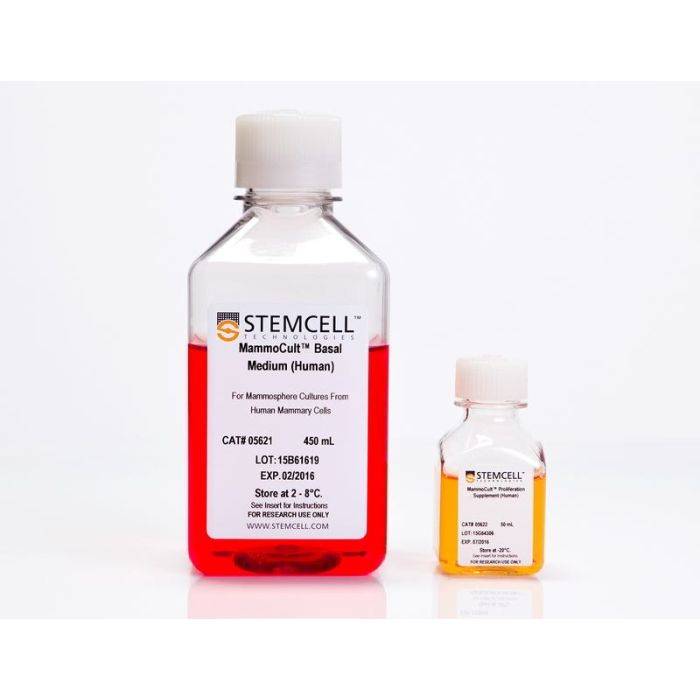
MammoCult™ 人源培养基套装

用于人乳腺球和肿瘤球的培养
只有 %1
¥4,934.00

产品号 #(选择产品)

产品号 #05620

 用于人乳腺球和肿瘤球的培养

产品组分包括

  • MammoCult™基础培养基(人源),450 mL
  • MammoCult™扩增补充剂(人源),50 mL
专为您的实验方案打造的产品
要查看实验方案所需的所有配套产品,请参阅《实验方案与技术文档》

总览

MammoCult™培养基(人源)是一种无血清、不含雌激素和孕酮的培养基,专为培养正常人原代乳腺组织来源的乳腺球和人乳腺癌细胞系来源的肿瘤球而优化。配制完整的MammoCult™培养基还需使用氢化可的松储备液(产品号#07925)和肝素溶液(产品号#07980)。

分类
专用培养基
 
细胞类型
癌细胞及细胞系,乳腺细胞
 
种属

 
应用
细胞培养,培养,球状体培养
 
品牌
MammoCult
 
研究领域
癌症,上皮细胞研究
 
制剂类别
无血清
 

实验数据

Protocol for isolation and identification of human and mouse mammary epithelial progenitor cells

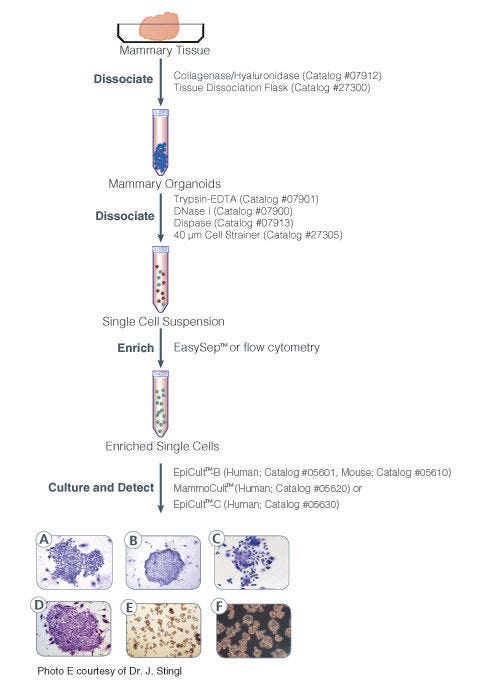
Figure 1. Protocol for Isolation and Identification of Human and Mouse Mammary Epithelial Progenitor Cells

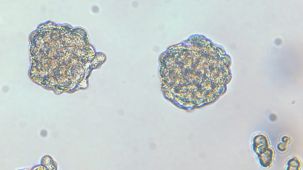
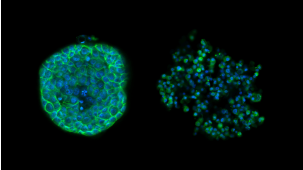
Phase contrast photographs of (A) a pure human myoepithelial cell colony, (B) a pure human luminal cell colony, and (C) a mixed human colony. (D) is a mouse colony. Unlike human mammary CFC colonies, subtypes of mouse mammary epithelial cell colonies are not easily identifiable. All colonies were cultured in either EpiCult™-B (Human: Catalog #05601) or EpiCult™-B (Mouse:Catalog #5610) in the presence of an irradiated NIH 3T3 feeder layer. Colonies were visualized by staining with Wright"s Giemsa. (E) is a picture of mammospheres obtained from primary human mammary epithelial cells and (F) is an image of tumorspheres obtained from MCF7 human breast cancer cell line.

产品说明书及文档

请在《产品说明书》中查找相关支持信息和使用说明,或浏览下方更多实验方案。

Document Type
Product Name
Catalog #
Lot #
Language
Catalog #
05620
Lot #
All
Language
English
Document Type
Safety Data Sheet 1
Catalog #
05620
Lot #
All
Language
English
Document Type
Safety Data Sheet 2
Catalog #
05620
Lot #
All
Language
English

应用领域

本产品专为以下研究领域设计,适用于工作流程中的高亮阶段。探索这些工作流程,了解更多我们为各研究领域提供的其他配套产品。

相关材料与文献

技术资料 (12)

文献 (89)

AXL promotes inflammatory breast cancer progression by regulating immunosuppressive macrophage polarization L. T. H. Phi et al. Breast Cancer Research : BCR 2025 May

Abstract

Tumor-associated macrophages (TAMs) are key promoters of inflammatory breast cancer (IBC), the most aggressive form of breast cancer. The receptor tyrosine kinase AXL is highly expressed in various cancer types, including IBC, but its role in TAMs remains unexplored. We examined the effects of AXL inhibitor TP-0903 on tumor growth and tumor microenvironment (TME) component M2 macrophages (CD206 + ) in IBC and triple-negative breast cancer mouse models using flow cytometry and immunohistochemical staining. Additionally, we knocked out AXL expression in human THP-1 monocytes and evaluated the effect of AXL signaling on immunosuppressive M2 macrophage polarization and IBC cell growth and migration. We then investigated the underlying mechanisms through RNA sequencing analysis. Last, we performed CIBERSORT deconvolution to analyze the association between AXL expression and tumor-infiltrating immune cell types in tumor samples from the Inflammatory Breast Cancer International Consortium. We found that inhibiting the AXL pathway significantly reduced IBC tumor growth and decreased CD206 + macrophage populations within tumors. Mechanistically, our in vitro data showed that AXL promoted M2 macrophage polarization and enhanced the secretion of immunosuppressive chemokines, including CCL20, CCL26, and epiregulin, via the transcription factor STAT6 and thereby accelerated IBC cell growth and migration. RNA sequencing analysis further indicated that AXL signaling in immunosuppressive M2 macrophages regulated the expression of molecules and cytokines, contributing to an immunosuppressive TME in IBC. Moreover, high AXL expression was correlated with larger populations of immunosuppressive immune cells but smaller populations of immunoactive immune cells in tissues from patients with IBC. AXL signaling promotes IBC growth by inducing M2 macrophage polarization and driving the secretion of immunosuppressive molecules and cytokines via STAT6 signaling, thereby contributing to an immunosuppressive TME. Collectively, these findings highlight the potential of targeting AXL signaling as a novel therapeutic approach for IBC that warrants further investigation in clinical trials. The online version contains supplementary material available at 10.1186/s13058-025-02015-8.
PD-L1 and IFN-γ modulate Non-Small Cell Lung Cancer (NSCLC) cell plasticity associated to immune checkpoint inhibitor (ICI)-mediated hyperprogressive disease (HPD) S. Angelicola et al. Journal of Translational Medicine 2025 Jan

Abstract

Non-Small Cell Lung Cancer (NSCLC) is the leading cause of cancer death worldwide. Although immune checkpoint inhibitors (ICIs) have shown remarkable clinical efficacy, they can also induce a paradoxical cancer acceleration, known as hyperprogressive disease (HPD), whose causative mechanisms are still unclear. This study investigated the mechanisms of ICI resistance in an HPD-NSCLC model. Two primary cell cultures were established from samples of a NSCLC patient, before ICI initiation (“baseline”, NSCLC-B) and during HPD (“hyperprogression”, NSCLC-H). The cell lines were phenotypically and molecularly characterized through immunofluorescence, Western Blotting and RNA-Seq analysis. To assess cell plasticity and aggressiveness, cellular growth patterns were evaluated both in vitro and in vivo through 2D and 3D cell growth assays and patient-derived xenografts establishment. In vitro investigations, including the evaluation of cell sensitivity to interferon-gamma (IFN-γ) and cell response to PD-L1 modulation, were conducted to explore the influence of these factors on cell plasticity regulation. NSCLC-H exhibited increased expression of specific CD44 isoforms and a more aggressive phenotype, including organoid formation ability, compared to NSCLC-B. Plastic changes in NSCLC-H were well described by a deep transcriptome shift, that also affected IFN-γ–related genes, including PD-L1. IFN-γ–mediated cell growth inhibition was compromised in both 2D-cultured NSCLC-B and NSCLC-H cells. Further, the cytokine induced a partial activation of both type I and type II IFN-pathway mediators, together with a striking increase in NSCLC-B growth in 3D cell culture systems. Finally, low IFN-γ doses and PD-L1 modulation both promoted plastic changes in NSCLC-B, increasing CD44 expression and its ability to produce spheres. Our findings identified plasticity as a relevant hallmark of ICI-mediated HPD by demonstrating that ICIs can modulate the IFN-γ and PD-L1 pathways, driving tumor cell plasticity and fueling HPD development. The online version contains supplementary material available at 10.1186/s12967-024-06023-8.
Microbiota enterotoxigenic Bacteroides fragilis -secreted BFT-1 promotes breast cancer cell stemness and chemoresistance through its functional receptor NOD1 W. Ma et al. Protein & Cell 2024 Mar

Abstract

Tumor-resident microbiota in breast cancer promotes cancer initiation and malignant progression. However, targeting microbiota to improve the effects of breast cancer therapy has not been investigated in detail. Here, we evaluated the microbiota composition of breast tumors and found that enterotoxigenic Bacteroides fragilis (ETBF) was highly enriched in the tumors of patients who did not respond to taxane-based neoadjuvant chemotherapy. ETBF, albeit at low biomass, secreted the toxic protein BFT-1 to promote breast cancer cell stemness and chemoresistance. Mechanistic studies showed that BFT-1 directly bound to NOD1 and stabilized NOD1 protein. NOD1 was highly expressed on ALDH + breast cancer stem cells (BCSCs) and cooperated with GAK to phosphorylate NUMB and promote its lysosomal degradation, thereby activating the NOTCH1-HEY1 signaling pathway to increase BCSCs. NOD1 inhibition and ETBF clearance increase the chemosensitivity of breast cancer by impairing BCSCs.

更多信息

更多信息
物种 人类
配方 无血清
质量保证:

产品仅供研究使用,不用于针对人或动物的诊断或治疗。 欲获悉更多关于STEMCELL的质控信息,请访问 STEMCELL.CN/COMPLIANCE.
Copyright © 2025 by STEMCELL Technologies. All rights reserved.

在线联系