产品号 #(选择产品)
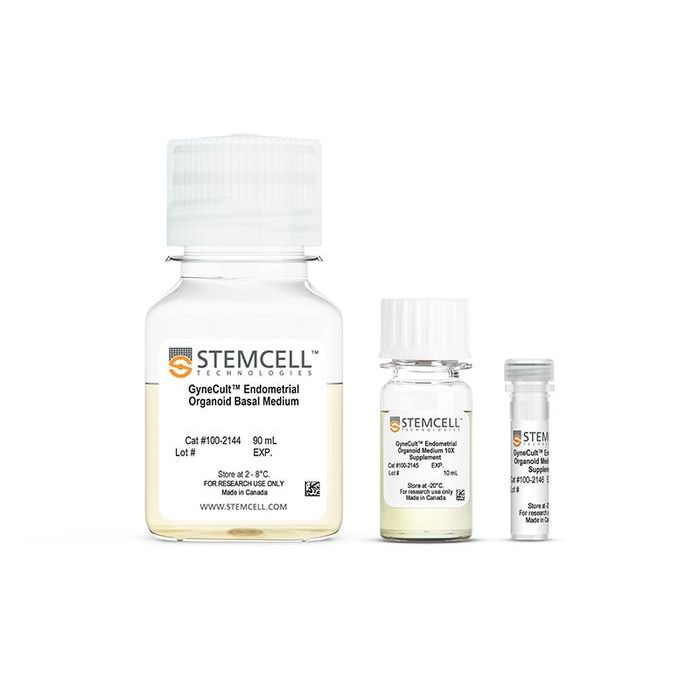
用于扩增和分化人子宫内膜类器官的无血清、无酚红、无性类固醇激素培养基。
若您需要咨询产品或有任何技术问题,请通过官方电话 400 885 9050 或邮箱 info.cn@stemcell.com 与我们联系。
用于扩增和分化人子宫内膜类器官的无血清、无酚红、无性类固醇激素培养基。
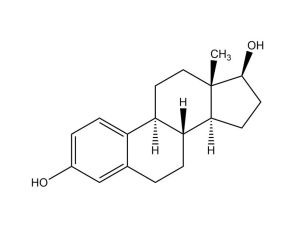
使用GyneCult™子宫内膜类器官培养基(EOM)生成对激素具有响应性的子宫内膜类器官。该培养基不含血清、酚红和性类固醇激素,专为支持女性生殖生物学研究而设计。在培养过程中,可向GyneCult™ EOM中添加不同浓度的雌激素和/或孕激素,以灵活模拟月经周期的不同阶段。生成的类器官对激素有反应,并包含体内主要上皮细胞类型和标志物,例如孕激素相关子宫内膜蛋白(PAEP)、乙酰化微管蛋白、PAX8和SOX9。
该优化的培养基支持从多种样本来源(包括上皮细胞含量较低的样本)稳定地建立类器官,并且与来自增殖期和分泌期子宫内膜、子宫内膜异位症病灶和经期样本的原代细胞兼容。该培养基成分明确、可生成生理相关的细胞类型、样本来源广泛,可在受控的激素调节下灵活地模拟健康和病变的子宫内膜状态,有助于填补目前子宫内膜和女性生殖健康研究方面的不足。
细胞类型
上皮细胞
应用
细胞培养、分化、类器官培养
品牌
GyneCult
研究领域
癌症、疾病建模、药物发现与毒性检测、上皮细胞生物学、类器官
配方
无血清
Figure 1. GyneCult™ Endometrial Organoid Medium Allows You to Model Endometrial Biology and the Role of Estrogen and Progesterone
(A) The human endometrium (pink) is a hormone-regulated tissue that responds to the rising and ebbing levels of two critical sex steroid hormones, estrogen (E2) and progesterone (P4). At the beginning of the menstrual cycle, around Day 5, E2 levels steadily rise, causing a deepening of endometrial glands and leading to the thickening of the endometrium in the proliferative phase. Ovulation occurs after the peak of E2 levels, around Day 14 of the menstrual cycle. Following ovulation, the corpus luteum, a temporary collection of cells that forms on the ovary, produces increasing amounts of P4 and moderate levels of E2, initiating the secretory phase and maintaining the endometrial lining. As the corpus luteum degenerates near Day 28, E2 and P4 levels decline, triggering endometrial cell apoptosis and menstruation, during which the functional layer of the endometrium is shed. (B) In vivo, endometrial glands arise from the myometrium and are composed of both a glandular and luminal epithelium that contain secretory and ciliated cell types—both of which can be captured by organoids generated by GyneCult™ Endometrial Organoid Medium (EOM). Depending on the phase of the menstrual cycle, ciliated cells range from 1 - 20% of endometrial cells, peaking on Days 12 - 14, at ovulation. Figures adapted from publications by Critchley et al., 2020 and Chumduri and Turco, 2021 licensed under Creative Commons Attribution CC-BY 4.0.
Figure 2. Overview of the GyneCult™ Endometrial Organoid Medium Workflow for the Robust Generation of EOs
(A) Workflow showing the generation of endometrial organoids (EOs). Cells are seeded in Matrigel® domes at Day 0 at 4000 cells per 20 μL Matrigel®, with up to 3 domes per well in a 24-well non-tissue culture-treated plate. The domes are overlaid in a submerged culture with 500 μL of complete GyneCult™ Endometrial Organoid Medium (EOM) supplemented with 0.2 nM estrogen to facilitate passaging. Full-medium changes in each well were performed every 3 - 4 days, until Day 10 when cultures are ready for passage. (B) Representative images of EO morphologies throughout the GyneCult™ EOM workflow. Organoids with visible lumens are observable under the microscope by Day 7. By Days 10 - 12, cilia beating may be observed under high magnification brightfield microscopy. Further characterization of the organoids to identify secretory or ciliated cells via immunocytochemical (ICC) staining can be performed after Day 10. Scale bar = 500 μm.
Figure 3. GyneCult™ Endometrial Organoid Medium Enables Robust Expansion of EOs Across Donor Samples, Including Epithelial-Sparse Starting Material
(A) Brightfield images of endometrial organoid (EO) cultures from 3 individual donors grown in GyneCult™ Endometrial Organoid Medium supplemented with 0.2 nM estrogen. Cultures were imaged at Seeding (Passage 0, Day 0) and at Passages 1 through 5 (P1 - P5), corresponding to 8 - 10 days post-seeding for each passage. Donors 1 and 3 provided epithelial-rich samples that generated robust organoid cultures in P1. Donor 2, however, provided epithelial-sparse material, as indicated by the presence of elongated cells (stromal) and a lack of epithelial organoids seen in P1 prior to subculture. Scale bar = 500 μm. (B) Cumulative doublings were recorded at each passage as a measure of proliferative capacity. Cultures derived from Donor 2 expanded at comparable rates to epithelial-rich samples, and all cultures achieved at least 10 cumulative doublings over five passages. These results demonstrate that GyneCult™ Endometrial Organoid Medium supports robust expansion of EOs, even from low-epithelial-content starting material.
Figure 4. GyneCult™ Endometrial Organoid Medium Enables Robust EO Formation from Diverse Primary Cell Sources
(A, B, D, E) Representative brightfield images of 2-week endometrial organoids (EOs) cultured in GyneCult™ Endometrial Organoid Medium supplemented with estrogen. Organoids were generated from a range of primary endometrial sources, including tissue sampled from (A) proliferative and (B) secretory endometrium, (D) endometriosis lesions, and from (E) menstrual effluent. (C) E-Cadherin (red) immunostaining confirms the epithelial identity of the organoids. These results demonstrate the versatility of GyneCult™ Endometrial Organoid Medium as a platform for modeling endometrial biology and diseases such as endometriosis. Images courtesy of Dr. Thomas Andrieu from the University of Bern. Scale bar = 100 μm.
Figure 5. EOs Cultured in GyneCult™ Endometrial Organoid Medium Maintain Major Cell Types and Hormone Responsiveness
Immunocytochemistry staining and brightfield images of endometrial organoids (EOs) cultured under distinct hormonal conditions corresponding to the four phases of the menstrual cycle over a 14-day period. A subset of organoids was fixed for imaging at each stage, while remaining cultures progressed to the next phase. (A, E, I) Cultures were maintained in early proliferative conditions (0.2 nM estrogen) for the first 4 days after sample seeding, and transitioned to (B, F, J) late proliferative conditions (1 nM estrogen) in the subsequent 3 days. On Day 7, proliferative phase cultures were harvested and fixed. The rest of the EOs were then cultured under (C, G, K) early secretory conditions (0.2 nM estrogen, 4 nM progesterone) for the next 3 days, and then transitioned to (D, H, L) late secretory (0.5 nM estrogen, 40 nM progesterone) conditions for the remaining 4 days of culture. EOs were stained for (A - D) progestagen-associated endometrial protein (PAEP; green) and acetylated tubulin (red), where apical acetylated-tubulin staining facing the lumen indicates ciliated cells. PAEP, a secreted protein, shows accumulation in the proliferative phases, followed by apical localization and a decrease in cytoplasmic levels in the late secretory phase, suggesting active secretion in organoid cultures. (E - H) Transcription factors PAX8 (green) and SOX9 (red) staining shows that GyneCult™ Endometrial Organoid Medium gives rise to organoid cultures that maintain their stem cell niches (PAX8+SOX9+ cells) and respond to hormones to differentiate into secretory cells (PAX8+SOX9-), while maintaining ciliated cells throughout culture.
请在《产品说明书》中查找相关支持信息和使用说明,或浏览下方更多实验方案。
本产品专为以下研究领域设计,适用于工作流程中的高亮阶段。探索这些工作流程,了解更多我们为各研究领域提供的其他配套产品。
Thank you for your interest in IntestiCult™ Organoid Growth Medium (Human). Please provide us with your contact information and your local representative will contact you with a customized quote. Where appropriate, they can also assist you with a(n):
Estimated delivery time for your area
Product sample or exclusive offer
In-lab demonstration
| 配方 | 无血清 |
|---|
用于在气液界面培养的人呼吸道上皮细胞的无血清和无BPE培养基
用于 CFU 检测人乳腺上皮细胞的培养
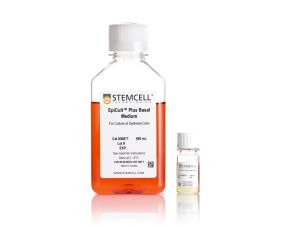
用于培养人、小鼠和大鼠上皮干细胞
<p>用于扩增和分化人输卵管类器官的无血清、支持性激素调节的试剂盒</p>
法律声明:
本产品仅供研究使用,除非另有说明,不得用于人类或动物的诊断或治疗用途。如需了解STEMCELL质量的更多信息,请参阅 WWW.STEMCELL.COM/COMPLIANCE。
安全声明:
CA WARNING: This product can expose you to Ethyl Alcohol which is known to the State of California to cause cancer and birth defects or other reproductive harm. For more information go to www.P65Warnings.ca.gov
扫描二维码或搜索微信号STEMCELLTech,即可关注我们的微信平台,第一时间接收丰富的技术资源和最新的活动信息。
如您有任何问题,欢迎发消息给STEMCELLTech微信公众平台,或与我们通过电话/邮件联系:400 885 9050 INFO.CN@STEMCELL.COM。
在线联系