若您需要咨询产品或有任何技术问题,请通过官方电话 400 885 9050 或邮箱 info.cn@stemcell.com 与我们联系。

EasySep™小鼠Streptavidin RapidSpheres™分选试剂盒

免疫磁珠去除生物素化抗体标记的单一或多种小鼠非目的细胞类型
只有 %1
¥5,664.00

产品号 #(选择产品)

产品号 #19860_C

免疫磁珠去除生物素化抗体标记的单一或多种小鼠非目的细胞类型

产品优势

  • 快速、简单
  • 无需分离柱
  • 获得的活细胞无标记

产品组分包括

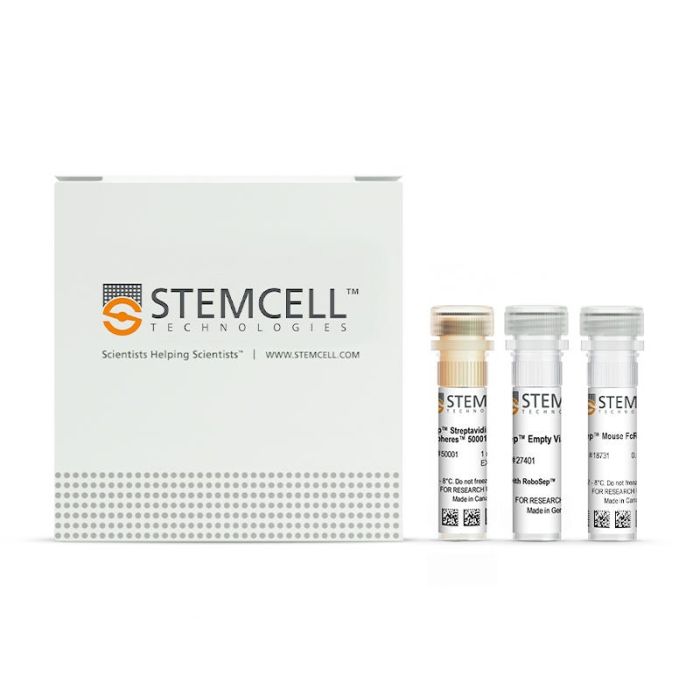
  • EasySep™小鼠Streptavidin RapidSpheres™分选试剂盒(产品号 #19860)
    • EasySep™ Streptavidin RapidSpheres™ 50001磁珠,1 mL
    • EasySep™小鼠FcR阻断剂(产品号 #18731),0.5 mL
  • RoboSep™小鼠Streptavidin RapidSpheres™分选试剂盒(产品号 #19860RF)
    • EasySep™ Streptavidin RapidSpheres™ 50001磁珠,1 mL
    • EasySep™小鼠FcR阻断剂(产品号 #18731),0.5 mL
    • RoboSep™空管
    • RoboSep™ 缓冲液(产品号 #20104)
    • RoboSep™ 过滤吸头(产品号 #20125)
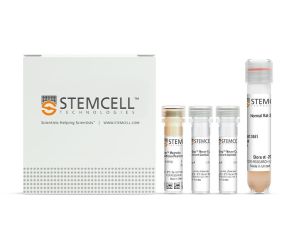
New format, same high quality! You may notice that your kit contents and packaging look slightly different from previous orders. We are currently updating the format of select EasySep™ Mouse kits to include a Mouse FcR blocker instead of Normal Rat Serum. With this change, all components will now be shipped in a single package, while providing the same cell isolation performance as before.
专为您的实验方案打造的产品
要查看实验方案所需的所有配套产品,请参阅《实验方案与技术文档》

总览

EasySep™小鼠Streptavidin RapidSpheres™分选试剂盒,通过免疫磁珠负选,可高效去除小鼠脾细胞或其他组织样本中被生物素化抗体标记的单一或多种非目的细胞类型。EasySep™技术结合单克隆抗体的特异性和无柱磁分选系统的简便性,已在发表的研究中广泛应用超过20年。

该优化的简易EasySep™流程,通过用生物素化抗体和链霉亲和素包被的磁珠(Streptavidin RapidSpheres™磁珠)标记非目的细胞。通过EasySep™磁极分离被标记的细胞,未标记的目的细胞被简单地倾倒出。分选后的细胞可立即用于下游应用,例如流式细胞术、培养或 DNA/RNA 提取。

不建议使用该试剂盒对小鼠细胞进行正选。如需正选,请使用EasySep™小鼠生物素正选试剂盒II(产品号 #17665)。

了解更多关于免疫磁珠EasySep™技术的工作原理,或如何通过RoboSep™实现免疫磁珠细胞分选全自动化。探索为您的实验流程优化的更多产品,包括培养基、补充剂、抗体等。

磁极兼容性
• EasySep™磁极(产品号 #18000)
• “The Big Easy” EasySep™磁极(产品号 #18001)
• RoboSep™-S(产品号 #21000)
 
分类
细胞分选试剂盒
 
细胞类型
B 细胞,树突状细胞(DCs),粒细胞及其亚群,造血干/祖细胞,巨噬细胞,骨髓基质细胞,间充质干/祖细胞,单核细胞,单个核细胞,髓系细胞,NK 细胞,其他物种,血浆,T 细胞
 
种属
小鼠
 
样本来源
其他物种,脾脏
 
分选方法
去除,负选
 
应用
细胞分选
 
品牌
EasySep,RoboSep
 
研究领域
免疫
 

实验数据

Typical Mouse Streptavidin Rapidspheres™ CD4 (CD3+CD8-) Depletion Profile

Figure 1. Typical Mouse Streptavidin Rapidspheres™ CD4 (CD3+CD8-) Depletion Profile

Typical Mouse Streptavidin Rapidspheres™ CD8 (CD3+CD4-) Depletion Profile

Figure 2. Typical Mouse Streptavidin Rapidspheres™ CD8 (CD3+CD4-) Depletion Profile

Typical Mouse Streptavidin Rapidspheres™ CD19 (CD19+CD45+) Depletion Profile

Figure 3. Typical Mouse Streptavidin Rapidspheres™ CD19 (CD19+CD45+) Depletion Profile

产品说明书及文档

请在《产品说明书》中查找相关支持信息和使用说明,或浏览下方更多实验方案。

Document Type
Product Name
Catalog #
Lot #
Language
Catalog #
19860RF
Lot #
All
Language
English
Catalog #
19860
Lot #
All
Language
English
Document Type
Safety Data Sheet 1
Catalog #
19860RF
Lot #
All
Language
English
Document Type
Safety Data Sheet 2
Catalog #
19860RF
Lot #
All
Language
English
Document Type
Safety Data Sheet 3
Catalog #
19860RF
Lot #
All
Language
English
Document Type
Safety Data Sheet 4
Catalog #
19860RF
Lot #
All
Language
English
Document Type
Safety Data Sheet 1
Catalog #
19860
Lot #
All
Language
English
Document Type
Safety Data Sheet 2
Catalog #
19860
Lot #
All
Language
English
Document Type
Safety Data Sheet 3
Catalog #
19860
Lot #
All
Language
English

相关材料与文献

技术资料 (8)

文献 (12)

GPR43 in eosinophils suppresses the emergence of pathogenic Siglec-Fhi neutrophils in allergic airway inflammation in mice J. Yu et al. Nature Communications 2025 Nov

Abstract

Eosinophils are major effector cells in type 2 immune responses, contributing to host defense and allergic diseases. They also contribute to maintaining tissue homeostasis by regulating various immune cell types, including neutrophils. Here we show that eosinophils directly associate with neutrophils in the lungs of asthma-induced mice. Eosinophil-specific deficiency of the short-chain fatty acid receptor, GPR43, results in hyperactivation of eosinophils and increases the expression of neutrophil chemoattractants and PECAM-1, thereby enhancing the interaction between eosinophils and neutrophils. This interaction exposes neutrophils to eosinophil-derived IL-4 and GM-CSF, which induce the conversion of conventional neutrophils into more pathogenic, Siglec-Fhi neutrophils capable of enhancing Th17 cell differentiation and aggravating asthma symptoms in mouse models. Our results thus implicate GPR43 as a critical regulator of eosinophils, and describe eosinophil-mediated modulation of neutrophil differentiation and function. Eosinophils contribute to type 2 immunity, but their interaction with neutrophils in this context is incompletely understood. Here the authors use mouse asthma models and in vitro culture to show that eosinophil-specific deficiency of GPR43 promotes Siglec-Fhi neutrophil differentiation and downstream induction of Th17 to aggravate lung inflammation and asthma.
Metabolic deficiencies underlie reduced plasmacytoid dendritic cell IFN-I production following viral infection Nature Communications 2025 Feb

Abstract

Type I Interferons (IFN-I) are central to host protection against viral infections, with plasmacytoid dendritic cells (pDC) being the most significant source, yet pDCs lose their IFN-I production capacity following an initial burst of IFN-I, resulting in susceptibility to secondary infections. The underlying mechanisms of these dynamics are not well understood. Here we find that viral infection reduces the capacity of pDCs to engage both oxidative and glycolytic metabolism. Mechanistically, we identify lactate dehydrogenase B (LDHB) as a positive regulator of pDC IFN-I production in mice and humans; meanwhile, LDHB deficiency is associated with suppressed IFN-I production, pDC metabolic capacity, and viral control following infection. In addition, preservation of LDHB expression is sufficient to partially retain the function of otherwise exhausted pDCs, both in vitro and in vivo. Furthermore, restoring LDHB in vivo in pDCs from infected mice increases IFNAR-dependent, infection-associated pathology. Our work thus identifies a mechanism for balancing immunity and pathology during viral infections, while also providing insight into the highly preserved infection-driven pDC inhibition. Plasmacytoid dendritic cells (pDC) are the major IFN-I-producing cells, but this production returns to baseline soon after viral infection. Here the authors show that this decrease in IFN-I production and related pDC functions may be attributed to suppressed oxidative and glycolytic metabolism of pDCs, with lactate dehydrogenase B identified as a regulator.
Thymocyte Maturation and Emigration in Adult Mice. K. Joannou et al. Journal of immunology (Baltimore, Md. : 1950) 2022 may

Abstract

Several unique waves of ?? T cells are generated solely in the fetal/neonatal thymus, whereas additional ?? T cell subsets are generated in adults. One intriguing feature of ?? T cell development is the coordination of differentiation and acquisition of effector function within the fetal thymus; however, it is less clear whether this paradigm holds true in adult animals. In this study, we investigated the relationship between maturation and thymic export of adult-derived ?? thymocytes in mice. In the Rag2pGFP model, immature (CD24+) ?? thymocytes expressed high levels of GFP whereas only a minority of mature (CD24-) ?? thymocytes were GFP+ Similarly, most peripheral GFP+ ?? T cells were immature. Analysis of ?? recent thymic emigrants (RTEs) indicated that most ?? T cell RTEs were CD24+ and GFP+, and adoptive transfer experiments demonstrated that immature ?? thymocytes can mature outside the thymus. Mature ?? T cells largely did not recirculate to the thymus from the periphery; rather, a population of mature ?? thymocytes that produced IFN-? or IL-17 remained resident in the thymus for at least 60 d. These data support the existence of two populations of ?? T cell RTEs in adult mice: a majority subset that is immature and matures in the periphery after thymic emigration, and a minority subset that completes maturation within the thymus prior to emigration. Additionally, we identified a heterogeneous population of resident ?? thymocytes of unknown functional importance. Collectively, these data shed light on the generation of the ?? T cell compartment in adult mice.

更多信息

更多信息
物种 小鼠
Magnet Compatibility • EasySep™ Magnet (Catalog #18000) • “The Big Easy” EasySep™ Magnet (Catalog #18001) • RoboSep™-S (Catalog #21000)
样本来源 其它细胞系, 脾脏
Selection Method Depletion, Negative
质量保证:

产品仅供研究使用,不用于针对人或动物的诊断或治疗。 欲获悉更多关于STEMCELL的质控信息,请访问 STEMCELL.CN/COMPLIANCE.
Copyright © 2025 by STEMCELL Technologies. All rights reserved.

在线联系