若您需要咨询产品或有任何技术问题,请通过官方电话 400 885 9050 或邮箱 info.cn@stemcell.com 与我们联系。

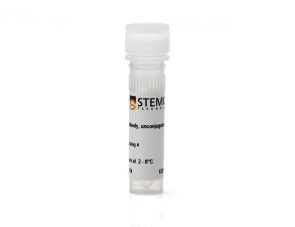
EasySep™小鼠CD4+CD25+调节性T细胞分选试剂盒II

免疫磁珠负选小鼠CD4+CD25+调节性T细胞分选试剂盒
只有 %1
¥11,402.00

产品号 #(选择产品)

产品号 #18783_C

免疫磁珠负选小鼠CD4+CD25+调节性T细胞分选试剂盒

产品优势

  • 快速、易于操作
  • 纯度高达93%
  • 无需分离柱

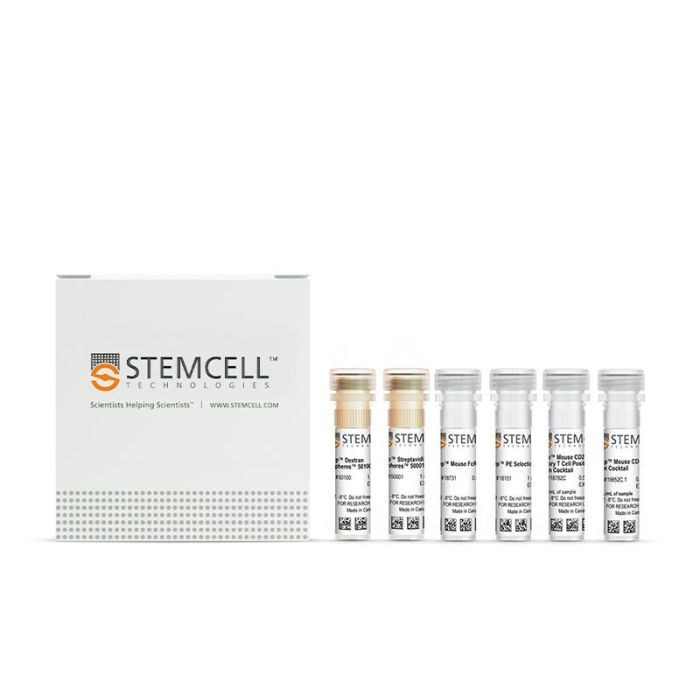
产品组分包括

  • EasySep™小鼠CD4+CD25+调节性T细胞分离试剂盒II(产品号 #18783)      
    • EasySep™小鼠CD4+ T细胞分选抗体混合物,0.5mL
    • EasySep™ Streptavidin RapidSpheres™ 50001磁珠,1mL          
    • EasySep™小鼠CD25调节性T细胞正选抗体混合物,0.5mL
    • EasySep™PE分选抗体混合物,1mL
    • EasySep™ Dextran RapidSpheres™ 50100 磁珠,1mL
    • EasySep™小鼠FcR阻断剂(产品号 #18731),0.5mL          
  • RoboSep™小鼠CD4+ CD25+调节性T细胞分选试剂盒II(产品号 #18783RF)          
    • EasySep™小鼠CD4+ T细胞分选抗体混合物,0.5mL
    • EasySep™ Streptavidin RapidSpheres™ 50001磁珠,1mL    
    • EasySep™小鼠CD25调节性T细胞正选抗体混合物,0.5mL
    • EasySep™PE分选抗体混合物,1mL
    • EasySep™ Dextran RapidSpheres™ 50100 磁珠,1mL
    • EasySep™小鼠FcR阻断剂(产品号 #18731),0.5mL  
    • RoboSep™ 缓冲液(产品号 #20104)
    • RoboSep™过滤吸头(产品号 #20125)
New format, same high quality! You may notice that your kit contents and packaging look slightly different from previous orders. We are currently updating the format of select EasySep™ Mouse kits to include a Mouse FcR blocker instead of Normal Rat Serum. With this change, all components will now be shipped in a single package, while providing the same cell isolation performance as before.
专为您的实验方案打造的产品
要查看实验方案所需的所有配套产品,请参阅《实验方案与技术文档》

总览

EasySep™小鼠CD4+CD25+调节性T细胞分选试剂盒II,通过简单的两步法——先进行免疫磁珠负选,再进行正选,即可轻松从小鼠脾细胞或其他单细胞悬液样本中分离出高纯度的小鼠CD4+CD25+调节性T细胞(Tregs)。EasySep™技术结合单克隆抗体的特异性和简便的无柱式磁性分选系统,已在发表的研究中广泛应用超过20年。

在此EasySep™细胞分选流程中,首先通过EasySep™小鼠CD4+T细胞分选抗体混合物进行负选 ,富集CD4+T细胞。随后使用EasySep™小鼠CD25调节性T细胞正选抗体 混合物,从预富集的细胞中正选出CD25+细胞。分选后的目的细胞 CD4+CD25+调节性T细胞即可用于流式细胞术、细胞培养、DNA/RNA提取等下游应用。

了解更多关于免疫磁珠EasySep™技术的工作原理,或如何通过RoboSep™实现免疫磁珠细胞分选全自动化。探索为您的实验流程优化的更多产品,包括培养基、添加剂、抗体等。


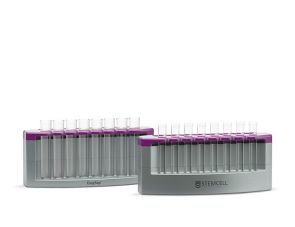
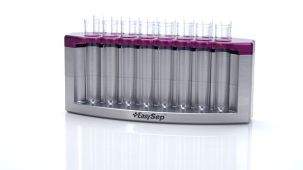
磁极兼容性
• EasySep™磁极(产品号 #18000)
• “The Big Easy” EasySep™磁极(产品号 #18001)
• EasyEights™ EasySep™磁极(产品号 #18103)
• RoboSep™-S(产品号 #21000)
 
分类
细胞分选试剂盒
 
细胞类型
T 细胞,T 细胞,调节性细胞
 
种属
小鼠
 
样本来源
脾脏
 
品牌
EasySep,RoboSep
 
研究领域
免疫
 

实验数据

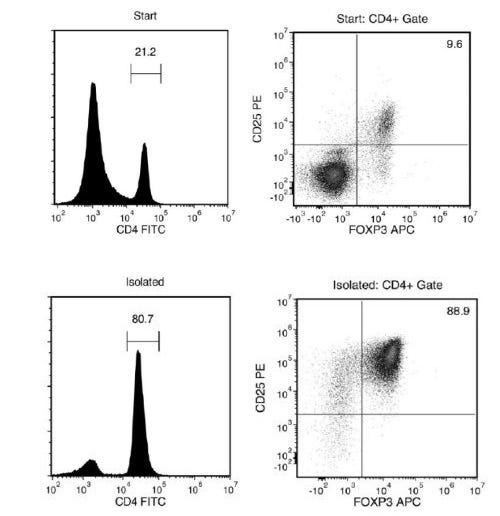
FACS Histogram Results with EasySep™ Mouse CD4+CD25+ Regulatory T Cell Isolation Kit II

Figure 1. Typical EasySep™ Mouse CD4+CD25+ Regulatory T Cell Isolation Profile

Starting with mouse splenocytes, the regulatory T cell content (CD4+CD25+FOXP3+) of the isolated fraction typically ranges from 70 - 93%. In the above example, the purities of the start and final isolated fractions are 2% and 72%, respectively.

产品说明书及文档

请在《产品说明书》中查找相关支持信息和使用说明,或浏览下方更多实验方案。

Document Type
Product Name
Catalog #
Lot #
Language
Catalog #
18783RF
Lot #
All
Language
English
Catalog #
18783
Lot #
All
Language
English
Document Type
Safety Data Sheet 1
Catalog #
18783RF
Lot #
All
Language
English
Document Type
Safety Data Sheet 2
Catalog #
18783RF
Lot #
All
Language
English
Document Type
Safety Data Sheet 3
Catalog #
18783RF
Lot #
All
Language
English
Document Type
Safety Data Sheet 4
Catalog #
18783RF
Lot #
All
Language
English
Document Type
Safety Data Sheet 5
Catalog #
18783RF
Lot #
All
Language
English
Document Type
Safety Data Sheet 6
Catalog #
18783RF
Lot #
All
Language
English
Document Type
Safety Data Sheet 7
Catalog #
18783RF
Lot #
All
Language
English
Document Type
Safety Data Sheet 8
Catalog #
18783RF
Lot #
All
Language
English
Document Type
Safety Data Sheet 1
Catalog #
18783
Lot #
All
Language
English
Document Type
Safety Data Sheet 2
Catalog #
18783
Lot #
All
Language
English
Document Type
Safety Data Sheet 3
Catalog #
18783
Lot #
All
Language
English
Document Type
Safety Data Sheet 4
Catalog #
18783
Lot #
All
Language
English
Document Type
Safety Data Sheet 5
Catalog #
18783
Lot #
All
Language
English
Document Type
Safety Data Sheet 6
Catalog #
18783
Lot #
All
Language
English
Document Type
Safety Data Sheet 7
Catalog #
18783
Lot #
All
Language
English

应用领域

本产品专为以下研究领域设计,适用于工作流程中的高亮阶段。探索这些工作流程,了解更多我们为各研究领域提供的其他配套产品。

相关材料与文献

技术资料 (11)

常见问题 (7)

Can EasySep™ Streptavidin RapidSpheres™ be used for either positive or negative selection?

Currently, EasySep™ Streptavidin RapidSphere™ kits are only available for negative selection and work by targeting and removing unwanted cells.

How does the separation work?

Streptavidin RapidSphere™ magnetic particles are crosslinked to unwanted cells using biotinylated antibodies. When placed in the EasySep™ Magnet, labeled cells migrate to the wall of the tube. The unlabeled cells are then poured off into a new tube.

Which columns do I use?

The EasySep™ procedure is column-free. That's right - no columns!

How can I analyze the purity of my enriched sample?

The Product Information Sheet provided with each EasySep™ kit contains detailed staining information.

Can EasySep™ Streptavidin RapidSphere™ separations be automated?

Yes. RoboSep™, the fully automated cell separator, automates all EasySep™ labeling and cell separation steps.

Are cells isolated using EasySep™ RapidSphere™ products FACS-compatible?

Yes. Desired cells are unlabeled and ready to use in downstream applications, such as FACS analysis.

Can I alter the separation time in the magnet?

Yes; however, this may impact the kit's performance. The provided EasySep™ protocols have already been optimized to balance purity, recovery and time spent on the isolation.

文献 (11)

PARP11 inhibition inactivates tumor-infiltrating regulatory T cells and improves the efficacy of immunotherapies Cell Reports Medicine 2024 Jul

Abstract

SummaryTumor-infiltrating regulatory T cells (TI-Tregs) elicit immunosuppressive effects in the tumor microenvironment (TME) leading to accelerated tumor growth and resistance to immunotherapies against solid tumors. Here, we demonstrate that poly-(ADP-ribose)-polymerase-11 (PARP11) is an essential regulator of immunosuppressive activities of TI-Tregs. Expression of PARP11 correlates with TI-Treg cell numbers and poor responses to immune checkpoint blockade (ICB) in human patients with cancer. Tumor-derived factors including adenosine and prostaglandin E2 induce PARP11 in TI-Tregs. Knockout of PARP11 in the cells of the TME or treatment of tumor-bearing mice with selective PARP11 inhibitor ITK7 inactivates TI-Tregs and reinvigorates anti-tumor immune responses. Accordingly, ITK7 decelerates tumor growth and significantly increases the efficacy of anti-tumor immunotherapies including ICB and adoptive transfer of chimeric antigen receptor (CAR) T cells. These results characterize PARP11 as a key driver of TI-Treg activities and a major regulator of immunosuppressive TME and argue for targeting PARP11 to augment anti-cancer immunotherapies. Graphical abstract Highlights•Tumor-derived factors upregulate PARP11 in the tumor-infiltrating Treg cells•PARP11 supports the immunosuppressive properties of Treg cells•Pharmacologic inhibition of PARP11 inactivates intratumoral Treg cells•PARP11 inhibitor augments the efficacy of immunotherapies Basavaraja et al. demonstrate that induction of PARP11 in the intratumoral regulatory T (Treg) cells is required for their regulatory functions and contributes to the immunosuppressive tumor microenvironment. The selective inhibitor of PARP11 ITK7 inactivates tumor Treg cells and improves the efficacy of immunotherapies against tumors.
Low-dose IL-2 prevents murine chronic cardiac allograft rejection: Role for IL-2-induced T regulatory cells and exosomes with PD-L1 and CD73. R. Ravichandran et al. American journal of transplantation : official journal of the American Society of Transplantation and the American Society of Transplant Surgeons 2022 sep

Abstract

To determine the effects and immunological mechanisms of low-dose interleukin-2 (IL-2) in a murine model of chronic cardiac allograft rejection (BALB/c to C57BL/6) after costimulatory blockade consisting of MR1 (250??$\mu$g/ip day 0) and CTLA4-Ig (200??$\mu$g/ip day 2), we administered low-dose IL-2 (2000??IU/day) starting on posttransplant day 14 for 3??weeks. T regulatory (Treg) cell infiltration of the grafts was determined by immunohistochemistry; circulating exosomes by western blot and aldehyde bead flow cytometry; antibodies to donor MHC by immunofluorescent staining of donor cells; and antibodies to cardiac self-antigens (myosin, vimentin) by ELISA. We demonstrated that costimulation blockade after allogeneic heart transplantation induced circulating exosomes containing cardiac self-antigens and antibodies to both donor MHC and self-antigens, leading to chronic rejection by day 45. Treatment with low-dose IL-2 prolonged allograft survival (>100??days), prevented chronic rejection, and induced splenic and graft-infiltrating CD4+ CD25+ Foxp3 Treg cells by day 45 and circulating exosomes (Foxp3+) with PD-L1 and CD73. MicroRNA 142, associated with the TGF$\beta$ pathway, was significantly downregulated in exosomes from IL-2-treated mice. In conclusion, low-dose IL-2 delays rejection in a murine model of chronic cardiac allograft rejection and also induces graft-infiltrating Tregs and circulating exosomes with immunoregulatory molecules.
Blockades of effector T cell senescence and exhaustion synergistically enhance antitumor immunity and immunotherapy. X. Liu et al. Journal for immunotherapy of cancer 2022 oct

Abstract

BACKGROUND Current immunotherapies still have limited successful rates among cancers. It is now recognized that T cell functional state in the tumor microenvironment (TME) is a key determinant for effective antitumor immunity and immunotherapy. In addition to exhaustion, cellular senescence in tumor-infiltrating T cells (TILs) has recently been identified as an important T cell dysfunctional state induced by various malignant tumors. Therefore, a better understanding of the molecular mechanism responsible for T cell senescence in the TME and development of novel strategies to prevent effector T cell senescence are urgently needed for cancer immunotherapy. METHODS Senescent T cell populations in the TMEs in mouse lung cancer, breast cancer, and melanoma tumor models were evaluated. Furthermore, T cell senescence induced by mouse tumor and regulatory T (Treg) cells in vitro was determined with multiple markers and assays, including real-time PCR, flow cytometry, and histochemistry staining. Loss-of-function strategies with pharmacological inhibitors and the knockout mouse model were used to identify the potential molecules and pathways involved in T cell senescence. In addition, melanoma mouse tumor immunotherapy models were performed to explore the synergistical efficacy of antitumor immunity via prevention of tumor-specific T cell senescence combined with anti-programmed death-ligand 1 (anti-PD-L1) checkpoint blockade therapy. RESULTS We report that both mouse malignant tumor cells and Treg cells can induce responder T cell senescence, similar as shown in human Treg and tumor cells. Accumulated senescent T cells also exist in the TME in tumor models of lung cancer, breast cancer and melanoma. Induction of ataxia-telangiectasia mutated protein (ATM)-associated DNA damage is the cause for T cell senescence induced by both mouse tumor cells and Treg cells, which is also regulated by mitogen-activated protein kinase (MAPK) signaling. Furthermore, blockages of ATM-associated DNA damage and/or MAPK signaling pathways in T cells can prevent T cell senescence mediated by tumor cells and Treg cells in vitro and enhance antitumor immunity and immunotherapy in vivo in adoptive transfer T cell therapy melanoma models. Importantly, prevention of tumor-specific T cell senescence via ATM and/or MAPK signaling inhibition combined with anti-PD-L1 checkpoint blockade can synergistically enhance antitumor immunity and immunotherapy in vivo. CONCLUSIONS These studies prove the novel concept that targeting both effector T cell senescence and exhaustion is an effective strategy and can synergistically enhance cancer immunotherapy.

更多信息

更多信息
物种 小鼠
Magnet Compatibility • EasySep™ Magnet (Catalog #18000) • “The Big Easy” EasySep™ Magnet (Catalog #18001) • EasyEights™ Magnet (Catalog #18103) • RoboSep™-S (Catalog #21000)
样本来源 脾脏
标记抗体
质量保证:

产品仅供研究使用,不用于针对人或动物的诊断或治疗。 欲获悉更多关于STEMCELL的质控信息,请访问 STEMCELL.CN/COMPLIANCE.
Copyright © 2025 by STEMCELL Technologies. All rights reserved.

在线联系