若您需要咨询产品或有任何技术问题,请通过官方电话 400 885 9050 或邮箱 info.cn@stemcell.com 与我们联系。

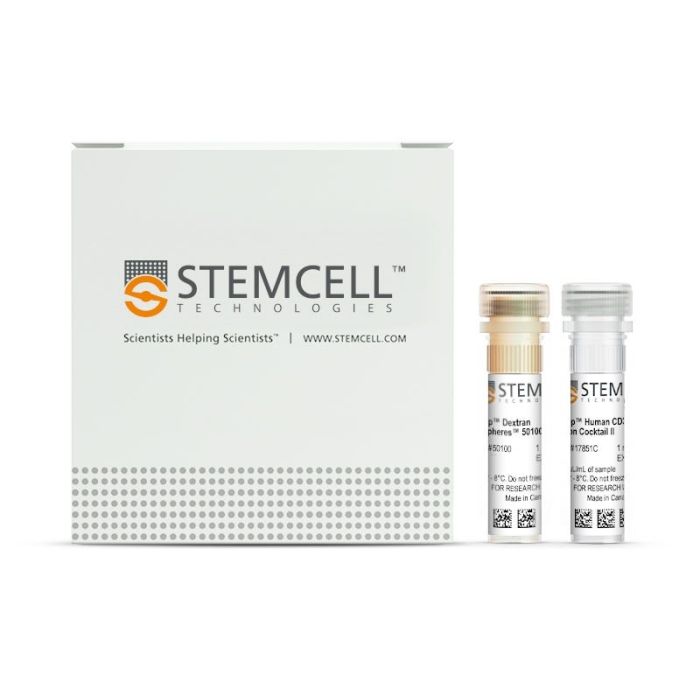
EasySep™人CD3正选试剂盒II

人CD3+细胞的免疫磁珠正选试剂盒
只有 %1
¥8,026.00

产品号 #(选择产品)

产品号 #17851_C

人CD3+细胞的免疫磁珠正选试剂盒

产品优势

  • 快速、易于操作
  • 纯度高达99%
  • 无需分离柱

产品组分包括

  • EasySep™人CD3正选试剂盒II(产品号 #17851)
  • EasySep™人CD3正选抗体混合物II,1mL
  • EasySep™ Dextran RapidSpheres™ 50100 磁珠,1mL
  • EasySep™人CD3正选试剂盒II(产品号 #100-0692)
  • EasySep™人CD3正选抗体混合物II,1 X 10mL
  • EasySep™ Dextran RapidSpheres™ 50100 磁珠,2 X 1mL
  • asySep™人CD3正选试剂盒II(产品号 #17851RF)
  • EasySep™人CD3正选抗体混合物II,1mL
  • EasySep™ Dextran RapidSpheres™ 50100 磁珠,1mL
  • RoboSep™ 缓冲液(产品号 #20104)
  • RoboSep™过滤吸头(产品号#20125)
New look, same high quality and support! You may notice that your instrument or reagent packaging looks slightly different from images displayed on the website, or from previous orders. We are updating our look but rest assured, the products themselves and how you should use them have not changed. Learn more
专为您的实验方案打造的产品
要查看实验方案所需的所有配套产品,请参阅《实验方案与技术文档》

总览

使用 EasySep™ 人 CD3 正选试剂盒 II,通过免疫磁珠正选,在短至 15 分钟内从新鲜或冻存的人外周血单核细胞 (PBMC) 或白细胞单采术样本中分离出高纯度的 CD3+ 细胞。EasySep™技术结合单克隆抗体的特异性和无需分离柱的简便磁分选系统,已在发表的研究中广泛应用超过20年。

在EasySep™正选过程中,目标细胞通过识别CD3的抗体复合物与磁珠进行标记。抗体复合物中还含有人Fc受体抗体,可最大程度地减少非特异性结合。使用EasySep™磁分选系统标记细胞,只需倾倒或吸出非目的细胞即可。目的细胞保留在管中。整个磁分选过程仅需15分钟,分选获得的CD3+细胞即可用于流式细胞术、细胞培养或DNA/RNA提取等下游应用。

该产品可替代EasySep™人CD3正选试剂盒 (产品号 #18051) 以实现更快更简单的细胞分选。

如需从白细胞分离样本中大规模分选人CD3+细胞,请选用大规格(1x10^10细胞)试剂盒(产品号#100-0692)。

了解更多关于免疫磁珠EasySep™技术的工作原理,或如何通过RoboSep™实现免疫磁珠细胞分选全自动化。探索为您的实验流程优化的更多产品,包括培养基、添加剂、抗体等。

磁极兼容性
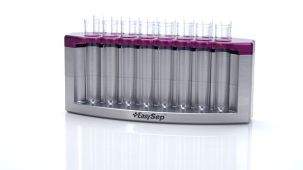
• EasySep™磁极(产品号 #18000)
• “The Big Easy” EasySep™磁极(产品号 #18001)
• EasyPlate™ EasySep™磁极(产品号 #18102)
• Easy 50 EasySep™磁极(产品号 #18002)
• EasyEights™ EasySep™磁极(产品号 #18103)
• RoboSep™-S(产品号 #21000)
• Easy 250 EasySep™磁极(产品号 #100-0821)
 
分类
细胞分选试剂盒
 
细胞类型
T 细胞
 
种属

 
样本来源
PBMC
 
分选方法
正选
 
应用
细胞分选
 
品牌
EasySep,RoboSep
 
研究领域
嵌合体,免疫,细胞治疗开发
 

实验数据

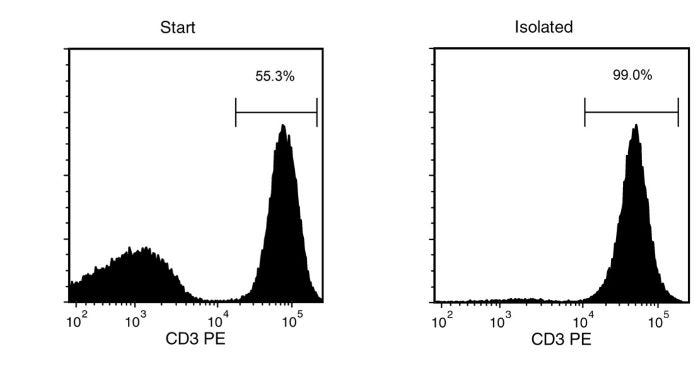
Typical FACS Results with EasySep™ Human CD3 Positive Selection Kit II

Figure 1: Typical FACS Results with EasySep™ Human CD3 Positive Selection Kit II

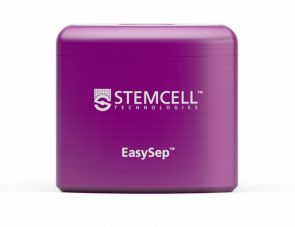
Starting with a single cell suspension of human PBMCs, the CD3+ cell content of the isolated fraction is typically 99.2 ± 0.2% (mean ± SD), using the purple EasySep™ Magnet.

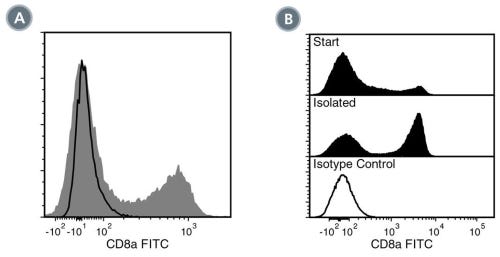
FACS Data for Anti-Human CD8a Antibody, Clone RPA-T8, FITC-Conjugated

Figure 2: FACS Data for Anti-Human CD8a Antibody, Clone RPA-T8, FITC-Conjugated

(A) Flow cytometry analysis of human peripheral blood mononuclear cells (PBMCs) labeled with Anti-Human CD8a Antibody, Clone RPA-T8, FITC (Catalog # 60022FI; filled histogram) or a mouse IgG1, kappa FITC isotype control antibody (solid line histogram). (B) Flow cytometry analysis of human PBMCs processed with the EasySep™ Human CD3 Positive Selection Kit (Catalog #17851) and labeled with Anti-Human CD8a Antibody, Clone RPA-T8, FITC. Histograms show labeling of PBMCs (Start) and isolated cells (Isolated). Labeling of start cells with a mouse IgG1, kappa FITC isotype control antibody is shown (solid line histogram).

FACS Data for Anti-Human CD4 Antibody, Clone OKT4, Alexa Fluor® 488-Conjugated

Figure 3: FACS Data for Anti-Human CD4 Antibody, Clone OKT4, Alexa Fluor® 488-Conjugated

(A) Flow cytometry analysis of human peripheral blood mononuclear cells (PBMCs) labeled with Anti-Human CD4 Antibody, Clone OKT4, Alexa Fluor® 488 (Catalog #60016AD) and Anti-Human CD45 Antibody, Clone HI30, APC (Catalog #60018AZ). (B) Flow cytometry analysis of human PBMCs isolated with the EasySep™ Human CD3 Positive Selection Kit (Catalog #17851) and labeled with Anti-Human CD4 Antibody, Clone OKT4, Alexa Fluor® 488. Histograms show labeling of total PBMCs (Start) and isolated cells (Isolated). Labeling with Mouse IgG2b, kappa Isotype Control Antibody, Clone MPC-11, Alexa Fluor® 488 (Catalog #60072AD) is shown in the bottom panel (solid line histogram). (C) Flow cytometry analysis of human PBMCs isolated with the EasySep™ Human CD4 Positive Selection Kit (Catalog #17852) and labeled with Anti-Human CD4 Antibody, Clone OKT4, Alexa Fluor® 488. Histograms show labeling of total PBMCs (Start) and isolated cells (Isolated). Labeling with Mouse IgG2b, kappa Isotype Control Antibody, Clone MPC-11, Alexa Fluor® 488 is shown in the bottom panel (solid line histogram).

产品说明书及文档

请在《产品说明书》中查找相关支持信息和使用说明,或浏览下方更多实验方案。

Document Type
Product Name
Catalog #
Lot #
Language
Catalog #
17851RF
Lot #
All
Language
English
Catalog #
100-0692
Lot #
All
Language
English
Catalog #
17851
Lot #
All
Language
English
Catalog #
17851
Lot #
All
Language
English
Document Type
Safety Data Sheet 1
Catalog #
17851RF
Lot #
All
Language
English
Document Type
Safety Data Sheet 2
Catalog #
17851RF
Lot #
All
Language
English
Document Type
Safety Data Sheet 3
Catalog #
17851RF
Lot #
All
Language
English
Document Type
Safety Data Sheet 1
Catalog #
100-0692
Lot #
All
Language
English
Document Type
Safety Data Sheet 2
Catalog #
100-0692
Lot #
All
Language
English
Document Type
Safety Data Sheet 1
Catalog #
17851
Lot #
All
Language
English
Document Type
Safety Data Sheet 2
Catalog #
17851
Lot #
All
Language
English

应用领域

本产品专为以下研究领域设计,适用于工作流程中的高亮阶段。探索这些工作流程,了解更多我们为各研究领域提供的其他配套产品。

相关材料与文献

技术资料 (11)

常见问题 (11)

Can EasySep™ be used for either positive or negative selection?

Yes. The EasySep™ kits use either a negative selection approach by targeting and removing unwanted cells or a positive selection approach targeting desired cells. Depletion kits are also available for the removal of cells with a specific undesired marker (e.g. GlyA).

How does the separation work?

Magnetic particles are crosslinked to cells using Tetrameric Antibody Complexes (TAC). When placed in the EasySep™ Magnet, labeled cells migrate to the wall of the tube. The unlabeled cells are then poured off into a separate fraction.

Which columns do I use?

The EasySep™ procedure is column-free. That's right - no columns!

How can I analyze the purity of my enriched sample?

The Product Information Sheet provided with each EasySep™ kit contains detailed staining information.

Can EasySep™ separations be automated?

Yes. RoboSep™, the fully automated cell separator, automates all EasySep™ labeling and cell separation steps.

Can EasySep™ be used to isolate rare cells?

Yes. We recommend a cell concentration of 2x10⁸ cells/mL and a minimum working volume of 100 µL. Samples containing 2x10⁷ cells or fewer should be suspended in 100 µL of buffer.

Are the EasySep™ magnetic particles FACS-compatible?

Yes, the EasySep™ particles are flow cytometry-compatible, as they are very uniform in size and about 5000X smaller than other commercially available magnetic beads used with column-free systems.

Can the EasySep™ magnetic particles be removed after enrichment?

No, but due to the small size of these particles, they will not interfere with downstream applications.

Can I alter the separation time in the magnet?

Yes; however, this may impact the kit's performance. The provided EasySep™ protocols have already been optimized to balance purity, recovery and time spent on the isolation.

For positive selection, can I perform more than 3 separations to increase purity?

Yes, the purity of targeted cells will increase with additional rounds of separations; however, cell recovery will decrease.

How does the binding of the EasySep™ magnetic particle affect the cells? is the function of positively selected cells altered by the bound particles?

Hundreds of publications have used cells selected with EasySep™ positive selection kits for functional studies. Our in-house experiments also confirm that selected cells are not functionally altered by the EasySep™ magnetic particles.

If particle binding is a key concern, we offer two options for negative selection. The EasySep™ negative selection kits can isolate untouched cells with comparable purities, while RosetteSep™ can isolate untouched cells directly from whole blood without using particles or magnets.

文献 (13)

Senescent human fibroblasts have increased FasL expression and impair the tumor immune response M. Cruz-Barrera et al. Frontiers in Immunology 2025 Oct

Abstract

Syngeneic mouse tumor models have shown that senescence influences the tumor immune response in multiple ways, including the induction of an immunosuppressive microenvironment or the promotion of immune cell recruitment. Yet, the impact of senescence on the tumor immune response in a humanized setting remains largely unexplored. MethodsTo address this question, we employed a combination cells co-culture models, tumor spheroids and mice bearing tumors immunogenic to human immune cells derived from the same donor. Results: We found that senescent fibroblasts exert a dual effect by enhancing the recruitment of immune cells into the tumor microenvironment while simultaneously promoting the apoptosis of T and NK cells. Mechanistically, we demonstrate that this apoptosis is primarily due to increased Fas ligand (FasL) expression on the surface of senescent fibroblasts. Increased FasL expression was observed on different human fibroblast cell lines in response to different senescence inducers with a particular robust effect in response to RAS-induced senescence. Deletion of FasL on fibroblasts was sufficient to prevent immune cell death and increase tumor cell killing in mice. Discussion: Our results identified the expression of FasL expression as a novel component of the senescent tumor microenvironment and highlight the importance of evaluating the impact of therapy-induced senescence in humanized models to understand and predict the outcome of cancer treatments.
Constitutive IL-7 signaling promotes CAR-NK cell survival in the solid tumor microenvironment but impairs tumor control Journal for Immunotherapy of Cancer 2025 Jul

Abstract

AbstractBackgroundAdoptive transfer of chimeric antigen receptor (CAR)-expressing natural killer (NK) cells has demonstrated success against hematological malignancies. Efficacy against solid tumors has been limited by poor NK cell survival and function in the suppressive tumor microenvironment (TME). To enhance efficacy against solid tumors, stimulatory cytokines have been incorporated into CAR-NK cell therapeutic approaches. However, current cytokine strategies have limitations, including systemic toxicities, exogenous dependencies, and unwanted TME bystander effects. Here, we aimed to overcome these limitations by modifying CAR-NK cells to express a constitutively active interleukin (IL)-7 receptor, termed C7R, capable of providing intrinsic CAR-NK cell activation that does not rely on or produce exogenous signals nor activate bystander cells.MethodsWe examined persistence, antitumor function, and transcriptional profiles of CAR-NK cells coexpressing C7R in a novel tumor immune microenvironment (TiME) co-culture system and against hematologic and solid tumor xenografts in vivo.ResultsPeripheral blood NK cells expressing a CAR directed against the solid tumor antigen GD2 and modified with C7R demonstrated enhanced tumor killing and persistence in vitro compared with CAR-NK cells without cytokine support and similar functions to CAR-NK cells supplemented with recombinant IL-15. C7R.CAR-NK cells exhibited enhanced survival and proliferation within neuroblastoma TiME xenografts in vivo but produced poor long-term tumor control compared with CAR-NK cells supplemented with IL-15. Similar results were seen using C7R-expressing CD19.CAR-NK cells against CD19+leukemia xenografts. Gene expression analysis revealed that chronic signaling via C7R induced a transcriptional signature consistent with intratumor stressed NK cells with blunted effector function. We identified gene candidates associated with chronic cytokine-stressed NK cells that could be targeted to reduce CAR-NK cell stress within the solid TME.ConclusionC7R promoted CAR-NK cell survival in hostile TMEs independent of exogenous signals but resulted in poor antitumor function in vivo. Our data reveals the detrimental role of continuous IL-7 signaling in CAR-NK cells and provides insights into proper application of cytokine signals when attempting to enhance CAR-NK cell antitumor activity.
TNF inhibitors affect the induction and maintenance of spike-specific B-cell responses after mRNA vaccination RMD Open 2025 Aug

Abstract

AbstractObjectivesTumour necrosis factor inhibitors (TNFi) are widely used and effective as treatment for immune-mediated inflammatory diseases (IMIDs). However, TNFi therapy causes a faster waning of antibody responses following vaccination. The underlying cause by which TNFi affect humoral immunity remains to be elucidated. The formation of long-lasting, high-affinity antibodies after vaccination results from germinal centre (GC)-derived, T cell-dependent B-cell responses. Therefore, this study investigated how TNFi affect the formation and maintenance of antigen-specific B- and CD4+ T-cell responses following SARS-CoV-2 mRNA vaccination.MethodsSARS-CoV-2 spike-specific B-cell responses were characterised using spectral flow cytometry. Spike-specific CD4+ T cells were measured using an activation-induced marker assay. 15 patients with inflammatory bowel disease (IBD) treated with TNFi were compared with 9 IBD patients without systemic immunosuppression and 10 healthy controls.ResultsSpike-specific CD4+T-cell frequency and phenotype, including T follicular helper cells, were not affected by TNFi. Total spike-specific B-cell frequencies were reduced in TNFi-treated patients. Deep phenotyping revealed lower IgG+memory B-cell frequencies in TNFi-treated patients 3–6 months after vaccination. These data were confirmed in TNFi-treated rheumatoid arthritis patients. Interestingly, already at day 7 after the second vaccination, TNFi therapy reduced the induction of class-switched CD11c- CD71+activated B cells, which are believed to be GC-derived. Conversely, CD11c+B cells, associated with extrafollicular B-cell responses, were not affected by TNFi therapy.ConclusionsThese data suggest that TNFi therapy affects the differentiation of GC-derived B cells, which may explain its effect on humoral immune responses.

更多信息

更多信息
物种 人类
Magnet Compatibility • EasySep™ Magnet (Catalog #18000) • “The Big Easy” EasySep™ Magnet (Catalog #18001) • EasyPlate™ EasySep™ Magnet (Catalog #18102) • EasyEights™ EasySep™ Magnet (Catalog #18103) • Easy 50 EasySep™ Magnet (Catalog #18002) • RoboSep™-S (Catalog #21000) • Ea
样本来源 PBMC
Selection Method Positive
标记抗体
PRODUCTS ARE FOR RESEARCH USE ONLY AND NOT INTENDED FOR HUMAN OR ANIMAL DIAGNOSTIC OR THERAPEUTIC USES UNLESS OTHERWISE STATED. FOR ADDITIONAL INFORMATION ON QUALITY AT STEMCELL, REFER TO WWW.STEMCELL.COM/COMPLIANCE.
Copyright © 2025 by STEMCELL Technologies. All rights reserved.

在线联系