若您需要咨询产品或有任何技术问题,请通过官方电话 400 885 9050 或邮箱 info.cn@stemcell.com 与我们联系。

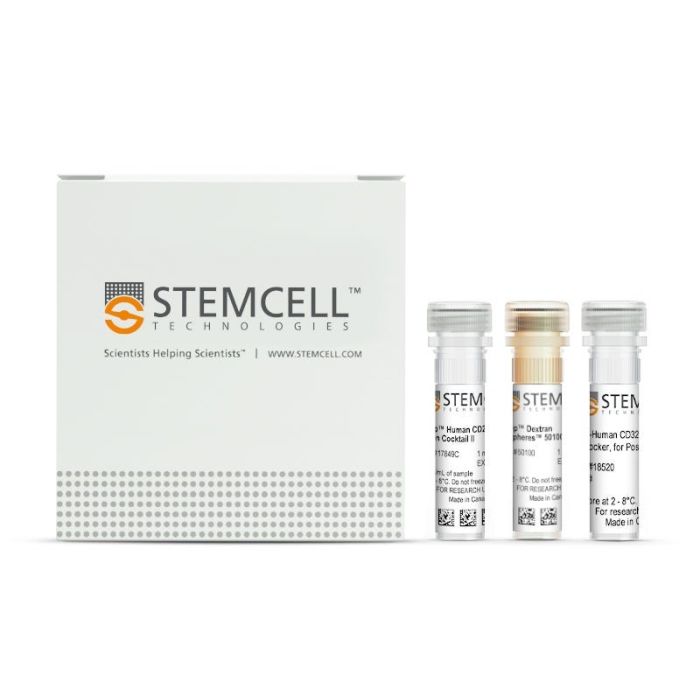
EasySep™人CD271正选试剂盒 II

对人 CD271⁺ 细胞进行免疫磁珠正选分离

只有 %1
¥11,804.00

产品号 #(选择产品)

产品号 #17849_C

免疫磁珠正选细胞分选试剂盒

产品优势

  • 快捷、操作简单
  • 无需分离柱

产品组分包括

  • EasySep™ 人CD271正选试剂盒II(产品号 #17849)
    • EasySep™ 人CD271正选抗体混合物 II,1 mL
    • EasySep™ Dextran RapidSpheres™ 50100 磁珠,1 mL
    • EasySep™ 人FcR阻断剂,1 mL
专为您的实验方案打造的产品
要查看实验方案所需的所有配套产品,请参阅《实验方案与技术文档》

总览

使用EasySep™人CD271正选试剂盒II,通过免疫磁性正选法可从新鲜人骨髓单个核细胞(MNCs)中分离高纯度人CD271+细胞。

该步骤中,目标细胞通过识别CD271的抗体复合物和磁性颗粒标记。本试剂盒含抗人Fc受体抗体以防非特异结合。标记细胞经EasySep™磁体分离后,未标记细胞被去除,CD271+细胞保留在试管中,可直接用于流式细胞术、培养或分子检测。CD271抗原在多种细胞中表达,包括间充质干/祖细胞(MSCs)。

了解更多EasySep™免疫磁性技术


磁极兼容性
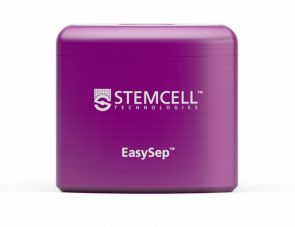
• EasySep™磁极(产品号 #18000)
 
分类
细胞分选试剂盒
 
细胞类型
间充质干/祖细胞
 
种属

 
样本来源
骨髓
 
分选方法
正选
 
应用
细胞分选
 
品牌
EasySep
 
研究领域
干细胞生物学
 

产品说明书及文档

请在《产品说明书》中查找相关支持信息和使用说明,或浏览下方更多实验方案。

Document Type
Product Name
Catalog #
Lot #
Language
Catalog #
17849
Lot #
All
Language
English
Document Type
Safety Data Sheet 1
Catalog #
17849
Lot #
All
Language
English
Document Type
Safety Data Sheet 2
Catalog #
17849
Lot #
All
Language
English
Document Type
Safety Data Sheet 3
Catalog #
17849
Lot #
All
Language
English

应用领域

本产品专为以下研究领域设计,适用于工作流程中的高亮阶段。探索这些工作流程,了解更多我们为各研究领域提供的其他配套产品。

相关材料与文献

技术资料 (6)

文献 (3)

Both APRIL and antibody-fragment-based CAR T cells for myeloma induce BCMA downmodulation by trogocytosis and internalization. N. Camviel et al. Journal for immunotherapy of cancer 2022 nov

Abstract

BACKGROUND Chimeric antigen receptor (CAR) T cell therapy targeting B cell maturation antigen (BCMA) on multiple myeloma (MM) produces fast but not long-lasting responses. Reasons for treatment failure are poorly understood. CARs simultaneously targeting two antigens may represent an alternative. Here,we (1) designed and characterized novel A proliferation inducing ligand (APRIL) based dual-antigen targeting CARs,and (2) investigated mechanisms of resistance to CAR T cells with three different BCMA-binding moieties (APRIL,single-chain-variable-fragment,heavy-chain-only). METHODS Three new APRIL-CARs were designed and characterized. Human APRIL-CAR T cells were evaluated for their cytotoxic function in vitro and in vivo,for their polyfunctionality,immune synapse formation,memory,exhaustion phenotype and tonic signaling activity. To investigate resistance mechanisms,we analyzed BCMA levels and cellular localization and quantified CAR T cell-target cell interactions by live microscopy. Impact on pathway activation and tumor cell proliferation was assessed in vitro and in vivo. RESULTS APRIL-CAR T cells in a trimeric ligand binding conformation conferred fast but not sustained antitumor responses in vivo in mouse xenograft models. In vitro trimer-BB$\zeta$ CAR T cells were more polyfunctional and formed stronger immune synapses than monomer-BB$\zeta$ CAR T cells. After CAR T cell-myeloma cell contact,BCMA was rapidly downmodulated on target cells with all evaluated binding moieties. CAR T cells acquired BCMA by trogocytosis,and BCMA on MM cells was rapidly internalized. Since BCMA can be re-expressed during progression and persisting CAR T cells may not protect patients from relapse,we investigated whether non-functional CAR T cells play a role in tumor progression. While CAR T cell-MM cell interactions activated BCMA pathway,we did not find enhanced tumor growth in vitro or in vivo. CONCLUSION Antitumor responses with APRIL-CAR T cells were fast but not sustained. Rapid BCMA downmodulation occurred independently of whether an APRIL or antibody-based binding moiety was used. BCMA internalization mostly contributed to this effect,but trogocytosis by CAR T cells was also observed. Our study sheds light on the mechanisms underlying CAR T cell failure in MM when targeting BCMA and can inform the development of improved treatment strategies.
FOXO1 is a master regulator of memory programming in CAR T cells Nature 2024 Apr

Abstract

A major limitation of chimeric antigen receptor (CAR) T cell therapies is the poor persistence of these cells in vivo1. The expression of memory-associated genes in CAR T cells is linked to their long-term persistence in patients and clinical efficacy2–6,suggesting that memory programs may underpin durable CAR T cell function. Here we show that the transcription factor FOXO1 is responsible for promoting memory and restraining exhaustion in human CAR T cells. Pharmacological inhibition or gene editing of endogenous FOXO1 diminished the expression of memory-associated genes,promoted an exhaustion-like phenotype and impaired the antitumour activity of CAR T cells. Overexpression of FOXO1 induced a gene-expression program consistent with T cell memory and increased chromatin accessibility at FOXO1-binding motifs. CAR T cells that overexpressed FOXO1 retained their function,memory potential and metabolic fitness in settings of chronic stimulation,and exhibited enhanced persistence and tumour control in vivo. By contrast,overexpression of TCF1 (encoded by TCF7) did not enforce canonical memory programs or enhance the potency of CAR T cells. Notably,FOXO1 activity correlated with positive clinical outcomes of patients treated with CAR T cells or tumour-infiltrating lymphocytes,underscoring the clinical relevance of FOXO1 in cancer immunotherapy. Our results show that overexpressing FOXO1 can increase the antitumour activity of human CAR T cells,and highlight memory reprogramming as a broadly applicable approach for optimizing therapeutic T cell states. The transcription factor FOXO1 has a key role in human T cell memory,and manipulating FOXO1 expression could provide a way to enhance CAR T cell therapies by increasing CAR T cell persistence and antitumour activity.
Epigenetic control of multiple genes with a lentiviral vector encoding transcriptional repressors fused to compact zinc finger arrays Molecular Therapy. Methods & Clinical Development 2024 Apr

Abstract

Gene silencing without gene editing holds great potential for the development of safe therapeutic applications. Here,we describe a novel strategy to concomitantly repress multiple genes using zinc finger proteins fused to Krüppel-Associated Box repression domains (ZF-Rs). This was achieved via the optimization of a lentiviral system tailored for the delivery of ZF-Rs in hematopoietic cells. We showed that an optimal design of the lentiviral backbone is crucial to multiplex up to three ZF-Rs or two ZF-Rs and a chimeric antigen receptor. ZF-R expression had no impact on the integrity and functionality of transduced cells. Furthermore,gene repression in ZF-R-expressing T cells was highly efficient in vitro and in vivo during the entire monitoring period (up to 10 weeks),and it was accompanied by epigenetic remodeling events. Finally,we described an approach to improve ZF-R specificity to illustrate the path toward the generation of ZF-Rs with a safe clinical profile. In conclusion,we successfully developed an epigenetic-based cell engineering approach for concomitant modulation of multiple gene expressions that bypass the risks associated with DNA editing. Graphical abstract David Fenard and colleagues developed a lentiviral backbone for the multiplexing of up to three ZF-R sequences,allowing an efficient,stable,and specific epigenetic control of multiple genes in T cells or Tregs after a single lentiviral transduction event.

更多信息

更多信息
物种
Magnet Compatibility EasySep™ Magnet (Catalog #18000)
样本来源 骨髓
Selection Method Positive
质量保证:

产品仅供研究使用,不用于针对人或动物的诊断或治疗。 欲获悉更多关于STEMCELL的质控信息,请访问 STEMCELL.CN/COMPLIANCE.
Copyright © 2026 by STEMCELL Technologies. All rights reserved.

在线联系