M. C. Czarnog\'orski et al. (nov 2022)
Immunity & ageing : I & A 19 1 51
Ageing-resembling phenotype of long-term allogeneic hematopoietic cells recipients compared to their donors.
BACKGROUND Ageing is a complex phenomenon that leads to decreased proliferative activity,loss of function of the cells,and cellular senescence. Senescence of the immune system exacerbates individual's immune response,both humoral and cellular but increases the frequency of infections. We hypothesized that physiological ageing of adaptive immune system occurs in recipients of allogeneic hematopoietic cells transplant (allo-HCT) at faster rate when compared to their respective donors since the small number of donor cells undergo immense proliferative stress restoring recipients hematopoiesis. We compared molecular characterizations of ageing between recipients and donors of allo-HCT: telomeric length and immunophenotypic changes in main lymphocyte subsets - CD4+,CD8+,CD19+,CD56+. RESULTS Median telomeric length (TL) of CD8+ lymphocytes was significantly longer in donors compared to recipients (on average 2,1 kb and 1,7 kb respectively,p??=??0,02). Similar trends were observed for CD4+ and CD19+ although the results did not reach statistical significance. We have also found trends in the immunophenotype between recipients and donors in the subpopulations of CD4+ (na{\{i}}ve and effector memory) CD8+ Eomes+ and B-lymphocytes (B1 and B2). Lower infection risk recipients had also a significantly greater percentage of NK cells (22 3%) than high-risk patients (9 3%) p??=??0 04. CONCLUSION Our data do not support the initial hypothesis of accelerated aging in the long term all-HCT recipients with the exception of the recipients lymphocytes (mainly CD8+) which present some molecular features characteristic for physiological ageing (telomeric shortening immunophenotype) when compared to their respective donors. However a history of lower infection numbers in HCT recipients seems to be associated with increased percentage of NK cells. The history of GVHD seems not to affect the rate of ageing. Therefore it is safe to conclude that the observed subtle differences between recipients' and donors' cells result mainly from the proliferative stress in the early period after allo-HCT and the difference between hosts' and recipients' microenvironments."
View Publication
产品类型:
产品号#:
19655
19655RF
产品名:
EasySep™ Direct人总淋巴细胞分选试剂盒
RoboSep™ Direct人总淋巴细胞分选试剂盒
P. Peng et al. (dec 2022)
Journal for immunotherapy of cancer 10 12
Activated NK cells reprogram MDSCs via NKG2D-NKG2DL and IFN-$\gamma$ to modulate antitumor T-cell response after cryo-thermal therapy.
BACKGROUND Myeloid-derived suppressor cells (MDSCs) can potently inhibit T-cell activity,promote growth and metastasis of tumor and contribute to resistance to immunotherapy. Targeting MDSCs to alleviate their protumor functions and immunosuppressive activities is intimately associated with cancer immunotherapy. Natural killer (NK) cells can engage in crosstalk with multiple myeloid cells to alter adaptive immune responses,triggering T-cell immunity. However,whether the NK-cell-MDSC interaction can modulate the T-cell immune response requires further study. Cryo-thermal therapy could induce the maturation of MDSCs by creating an acute inflammatory environment to elicit a CD4+ Th1-dominant immune response,but the mechanism regulating this process remains unclear. METHODS NK cells were depleted and NKG2D was blocked with monoclonal antibodies in vivo. MDSCs,NK cells and T cells were assessed by flow cytometry and isolated by magnetic-activated cell sorting (MACS). MDSCs and NK cells were cocultured with T cells to determine their immunological function. The transcriptional profiles of MDSCs were measured by qRT-PCR and RNA-sequencing. Isolated NK cells and MDSCs by MACS were cocultured to study the viability and maturation of MDSCs regulated by NK cells. TIMER was used to comprehensively examine the immunological,clinical,and genomic features of tumors. RESULTS NK-cell activation after cryo-thermal therapy decreased MDSC accumulation and reprogrammed immunosuppressive MDSCs toward a mature phenotype to promote T cell antitumor immunity. Furthermore,we discovered that NK cells could kill MDSCs via the NKG2D-NKG2DL axis and promote MDSC maturation by interferon gamma (IFN-$\gamma$) in response to NKG2D. In addition,CD4+ Th1-dominant antitumor immune response was dependent on NKG2D,which promoted the major histocompatibility complex …¡ pathway of MDSCs. High activated NK-cell infiltration and NKG2D level in tumors were positively correlated with better clinical outcomes. CONCLUSIONS Cryo-thermal therapy induces effective CD4+ Th1-dominant antitumor immunity by activating NK cells to reprogram MDSCs,providing a promising therapeutic strategy for cancer immunotherapy.
View Publication
A. Caye et al. (jun 2020)
Leukemia 34 6 1658--1668
Despite mutation acquisition in hematopoietic stem cells, JMML-propagating cells are not always restricted to this compartment.
Juvenile myelomonocytic leukemia (JMML) is a rare aggressive myelodysplastic/myeloproliferative neoplasm of early childhood,initiated by RAS-activating mutations. Genomic analyses have recently described JMML mutational landscape; however,the nature of JMML-propagating cells (JMML-PCs) and the clonal architecture of the disease remained until now elusive. Combining genomic (exome,RNA-seq),Colony forming assay and xenograft studies,we detect the presence of JMML-PCs that faithfully reproduce JMML features including the complex/nonlinear organization of dominant/minor clones,both at diagnosis and relapse. Further integrated analysis also reveals that although the mutations are acquired in hematopoietic stem cells,JMML-PCs are not always restricted to this compartment,highlighting the heterogeneity of the disease during the initiation steps. We show that the hematopoietic stem/progenitor cell phenotype is globally maintained in JMML despite overexpression of CD90/THY-1 in a subset of patients. This study shed new lights into the ontogeny of JMML,and the identity of JMML-PCs,and provides robust models to monitor the disease and test novel therapeutic approaches.
View Publication
产品类型:
产品号#:
05445
05448
19849
产品名:
MesenCult™ -ACF Plus培养基
MesenCult™-ACF Plus培养试剂盒
EasySep™小鼠/人嵌合体分选试剂盒
F. Mammoli et al. (sep 2019)
Experimental cell research 382 1 111445
Physiological expression of miR-130a during differentiation of CD34+ human hematopoietic stem cells results in the inhibition of monocyte differentiation.
MicroRNAs (miRNA) are small noncoding RNAs that regulate gene expression by targeting mRNAs in a sequence specific manner,thereby determining their degradation or inhibiting translation. They are involved in processes such as proliferation,differentiation and apoptosis by fine-tuning the expression of genes underlying such events. The expression of specific miRNAs is involved in hematopoietic differentiation and their deregulation contributes to the development of hematopoietic malignancies such as acute myeloid leukemia (AML). miR-130a is over-expressed in AML. Here we show that miR-130a is physiologically expressed in myeloblasts and down-regulated during monocyte differentiation. Gain- and loss-of-function experiments performed on CD34+ human hematopoietic stem cells confirmed that expression of miR-130a inhibits monocyte differentiation by interfering with the expression of key transcription factors HOXA10,IRF8,KLF4,MAFB and PU-1. The data obtained in this study highlight that the correct modulation of miR-130a is necessary for normal differentiation to occur and confirming that deregulation of this miRNA might underlie the differentiation block occurring in AML.
View Publication
产品类型:
产品号#:
06005
产品名:
IntestiCult™ 类器官生长培养基 (小鼠)
S. Schmidt et al. (nov 2019)
Pathogens (Basel,Switzerland) 8 4
Distinct Effects of Immunosuppressive Drugs on the Anti-Aspergillus Activity of Human Natural Killer Cells.
As the prognosis of invasive aspergillosis remains unacceptably poor in patients undergoing hematopoietic stem cell transplantation (HSCT),there is a growing interest in the adoptive transfer of antifungal effector cells,such as Natural Killer (NK) cells. Because immunosuppressive agents are required in most HSCT recipients,knowledge of the impact of these compounds on the antifungal activity of NK cells is a prerequisite for clinical trials. We,therefore,assessed the effect of methylprednisolone (mPRED),cyclosporin A (CsA) and mycophenolic acid (MPA) at different concentrations on proliferation,apoptosis/necrosis,and the direct and indirect anti-Aspergillus activity of human NK cells. Methylprednisolone decreased proliferation and increased apoptosis of NK cells in a significant manner. After seven days,a reduction of viable NK cells was seen for all three immunosuppressants,which was significant for MPA only. Cyclosporin A significantly inhibited the direct hyphal damage by NK cells in a dose-dependent manner. None of the immunosuppressive compounds had a major impact on the measured levels of interferon-$\gamma$,granulocyte-macrophage colony-stimulating factor and RANTES (regulated on activation,normal T cell expressed and secreted; CCL5). Our data demonstrate that commonly used immunosuppressive compounds have distinct effects on proliferation,viability and antifungal activity of human NK cells,which should be considered in designing studies on the use of NK cells for adoptive antifungal immunotherapy.
View Publication
产品类型:
产品号#:
19055
19055RF
19059
19059RF
产品名:
EasySep™人NK细胞富集试剂盒
RoboSep™ 人NK细胞富集试剂盒含滤芯吸头
EasySep™人单核细胞富集试剂盒
RoboSep™ 人单核细胞富集试剂盒含滤芯吸头
R. Tal et al. ( 2019)
PLoS biology 17 9 e3000421
Adult bone marrow progenitors become decidual cells and contribute to embryo implantation and pregnancy.
Decidua is a transient uterine tissue shared by mammals with hemochorial placenta and is essential for pregnancy. The decidua is infiltrated by many immune cells promoting pregnancy. Adult bone marrow (BM)-derived cells (BMDCs) differentiate into rare populations of nonhematopoietic endometrial cells in the uterus. However,whether adult BMDCs become nonhematopoietic decidual cells and contribute functionally to pregnancy is unknown. Here,we show that pregnancy mobilizes mesenchymal stem cells (MSCs) to the circulation and that pregnancy induces considerable adult BMDCs recruitment to decidua,where some differentiate into nonhematopoietic prolactin-expressing decidual cells. To explore the functional importance of nonhematopoietic BMDCs to pregnancy,we used Homeobox a11 (Hoxa11)-deficient mice,having endometrial stromal-specific defects precluding decidualization and successful pregnancy. Hoxa11 expression in BM is restricted to nonhematopoietic cells. BM transplant (BMT) from wild-type (WT) to Hoxa11-/- mice results in stromal expansion,gland formation,and marked decidualization otherwise absent in Hoxa11-/- mice. Moreover,in Hoxa11+/- mice,which have increased pregnancy losses,BMT from WT donors leads to normalized uterine expression of numerous decidualization-related genes and rescue of pregnancy loss. Collectively,these findings reveal that adult BMDCs have a previously unrecognized nonhematopoietic physiologic contribution to decidual stroma,thereby playing important roles in decidualization and pregnancy.
View Publication
产品类型:
产品号#:
19856
19856RF
产品名:
EasySep™小鼠造血祖细胞分选试剂盒
RoboSep™ 小鼠造血祖细胞分选试剂盒
L. Zhu et al. ( 2019)
Immunologic research 67 5-Apr 443--449
Characterization of IL-17-producing Treg cells in type 2 diabetes patients.
The association between type 2 diabetes (T2D) pathogenesis and immune-mediated tissue damage and insulin resistance suggests that T2D patients might benefit from the suppression of pathogenic inflammation. Foxp3+ Treg cells are crucial suppressors of inflammation,but the differentiation of Foxp3+ Treg cells is not static and is subject to conversion into IL-17-producing Th17-like cells upon receiving external signals. In this study,we examined the production of IL-17 by Treg cells. Compared to non-T2D controls,T2D patients presented significantly higher levels of IL-17-expressing cells in both Foxp3- CD4 T cells and Foxp3+ Treg cells. The frequencies of IL-17-nonexpressing Foxp3+ Treg cells,on the other hand,were not changed. Interestingly,IL-17-expressing Foxp3+ Treg cells were mutually exclusive from IL-10-expressing and TGF-$\beta$-expressing Foxp3+ Treg cells,suggesting that multiple subpopulations exist within the Foxp3+ Treg cells from T2D patients. In T2D patients,the frequencies of IL-17-expressing Foxp3+ Treg cells were positively correlated with the body mass index (BMI) and the HbA1c levels of T2D patients. The frequencies of IL-10-expressing Treg cells,on the other hand,were inversely associated with the BMI of both non-T2D controls and T2D patients. In addition,the suppressive activity of Treg cells was significantly lower in T2D patients than in non-T2D controls. Together,our study uncovered a dysregulation in Foxp3+ Treg cells from T2D patients,characterized by high IL-17 expression and low suppression activity.
View Publication


 EasySep™小鼠TIL(CD45)正选试剂盒





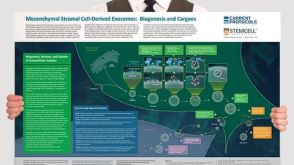 挂图Mesenchymal Stromal Cell-Derived Exosomes: Biogenesis and Cargoes Overview of exosome and microvesicle biogenesis pathways and potential therapeutic implications in the context of mesenchymal stromal cells发布日期: 02/27/2020
 新闻Global Biotechnology Firm STEMCELL Launches COVID-19 Staff Safety App

 沪公网安备31010102008431号