Hossain DMS et al. (AUG 2015)
Clinical cancer research : an official journal of the American Association for Cancer Research 21 16 3771--82
TLR9-Targeted STAT3 Silencing Abrogates Immunosuppressive Activity of Myeloid-Derived Suppressor Cells from Prostate Cancer Patients.
PURPOSE Recent advances in immunotherapy of advanced human cancers underscored the need to address and eliminate tumor immune evasion. The myeloid-derived suppressor cells (MDSC) are important inhibitors of T-cell responses in solid tumors,such as prostate cancers. However,targeting MDSCs proved challenging due to their phenotypic heterogeneity. EXPERIMENTAL DESIGN Myeloid cell populations were evaluated using flow cytometry on blood samples,functional assays,and immunohistochemical/immunofluorescent stainings on specimens from healthy subjects,localized and metastatic castration-resistant prostate cancer patients. RESULTS Here,we identify a population of Lin(-)CD15(HI)CD33(LO) granulocytic MDSCs that accumulate in patients' circulation during prostate cancer progression from localized to metastatic disease. The prostate cancer-associated MDSCs potently inhibit autologous CD8(+) T cells' proliferation and production of IFNγ and granzyme-B. The circulating MDSCs have high levels of activated STAT3,which is a central immune checkpoint regulator. The granulocytic pSTAT3(+) cells are also detectable in patients' prostate tissues. We previously generated an original strategy to silence genes specifically in Toll-like Receptor-9 (TLR9) positive myeloid cells using CpG-siRNA conjugates. We demonstrate that human granulocytic MDSCs express TLR9 and rapidly internalize naked CpG-STAT3siRNA,thereby silencing STAT3 expression. STAT3 blocking abrogates immunosuppressive effects of patients-derived MDSCs on effector CD8(+) T cells. These effects depended on reduced expression and enzymatic activity of Arginase-1,a downstream STAT3 target gene and a potent T-cell inhibitor. CONCLUSIONS Overall,we demonstrate the accumulation of granulocytic MDSCs with prostate cancer progression and the feasibility of using TLR9-targeted STAT3siRNA delivery strategy to alleviate MDSC-mediated immunosuppression.
View Publication
产品类型:
产品号#:
07933
07953
07949
产品名:
CryoStor®CS5
CryoStor®CS5
CryoStor®CS5
Clarke DM et al. (JAN 2009)
Cytotherapy 11 4 472--9
Improved post-thaw recovery of peripheral blood stem/progenitor cells using a novel intracellular-like cryopreservation solution.
BACKGROUND AIMS Peripheral blood stem cells (PBSC) have become the preferred stem cell source for autologous hematopoietic transplantation. A critical aspect of this treatment modality is cryopreservation of the stem cell products,which permits temporal separation of the PBSC mobilization/collection phase from the subsequent high-dose therapy. While controlled rate-freezing and liquid nitrogen storage have become 'routine' practice in many cell-processing facilities,there is clearly room for improvement as current cryopreservation media formulations still result in significant loss and damage to the stem/progenitor cell populations essential for engraftment,and can also expose the patients to relatively undefined serum components and larger volumes of dimethylsulfoxide (DMSO) that can contribute to the morbidity and mortality of the transplant therapy. METHODS This study compared cryopreservation of PBSC in a novel intracellular-like,fully defined,serum- and protein-free preservation solution,CryoStor (BioLife Solutions Inc.),with a standard formulation used by the Fred Hutchinson Cancer Research Center (FHCRC). Briefly,human PBSC apheresis specimens were collected and 5 x 10(7) cells/1 mL sample vial were prepared for cryopreservation in the following solutions: (a) FHCRC standard,Normosol-R,5% human serum albumin (HAS) and 10% DMSO; and (b) CryoStor CS10 (final diluted concentration of 5% DMSO). A standard controlled-rate freezing program was employed,and frozen vials were stored in the vapor phase of a liquid nitrogen freezer for a minimum of 1 week. Vials were then thawed and evaluated for total nucleated cell count (TNC),viability,CD34 and granulocytes by flow cytometry,along with colony-forming activity in methylcellulose. RESULTS The PBSC samples frozen in CryoStor CS10 yielded significantly improved post-thaw recoveries for total viable CD34(+),colony-forming units (CFU) and granulocytes. Specifically,relative to the FHCRC standard formulation,cryopreservation with CS10 resulted in an average 1.8-fold increased recovery of viable CD34(+) cells (P=0.005),a 1.5-fold increase in CFU-granulocyte-macrophage (GM) numbers (P=0.030) and a 2.3-fold increase in granulocyte recovery (P=0.045). CONCLUSIONS This study indicates that use of CryoStor for cryopreservation can yield significantly improved recovery and in vitro functionality of stem/progenitor cells in PBSC products. In addition,it is important to note that these improved recoveries were obtained while not introducing any extra serum or serum-derived proteins,and reducing the final concentration/volume of DMSO by half. Further in vitro and in vivo studies are clearly necessary; however,these findings imply use of CryoStor for cryopreservation could result in improved engraftment for those patients with a lower content of CD34(+) cells in their PBSC collections,along with reducing the requirement for additional apheresis collections and decreasing the risk of adverse infusion reactions associated with higher exposure to DMSO.
View Publication
产品类型:
产品号#:
07933
07953
07949
07930
07931
07940
07955
07956
07959
07954
100-1061
07952
产品名:
CryoStor®CS5
CryoStor®CS5
CryoStor®CS5
CryoStor® CS10
CryoStor® CS10
CryoStor® CS10
CryoStor® CS10
CryoStor® CS10
CryoStor® CS10
CryoStor® CS10
Lagadinou ED et al. (MAR 2013)
Cell stem cell 12 3 329--41
BCL-2 inhibition targets oxidative phosphorylation and selectively eradicates quiescent human leukemia stem cells.
Most forms of chemotherapy employ mechanisms involving induction of oxidative stress,a strategy that can be effective due to the elevated oxidative state commonly observed in cancer cells. However,recent studies have shown that relative redox levels in primary tumors can be heterogeneous,suggesting that regimens dependent on differential oxidative state may not be uniformly effective. To investigate this issue in hematological malignancies,we evaluated mechanisms controlling oxidative state in primary specimens derived from acute myelogenous leukemia (AML) patients. Our studies demonstrate three striking findings. First,the majority of functionally defined leukemia stem cells (LSCs) are characterized by relatively low levels of reactive oxygen species (termed ROS-low"). Second�
View Publication
产品类型:
产品号#:
07930
07931
07940
07955
07956
07959
07954
100-1061
07952
产品名:
CryoStor® CS10
CryoStor® CS10
CryoStor® CS10
CryoStor® CS10
CryoStor® CS10
CryoStor® CS10
CryoStor® CS10
Engelhardt BG et al. (MAR 2011)
Bone marrow transplantation 46 3 436--42
Regulatory T cell expression of CLA or α(4)β(7) and skin or gut acute GVHD outcomes.
Regulatory T cells (Tregs) are a suppressive subset of CD4(+) T lymphocytes implicated in the prevention of acute GVHD (aGVHD) after allo-SCT (ASCT). To determine whether increased frequency of Tregs with a skin-homing (cutaneous lymphocyte Ag,CLA(+)) or a gut-homing (α(4)β(7)(+)) phenotype is associated with reduced risk of skin or gut aGVHD,respectively,we quantified circulating CLA(+) or α(4)β(7)(+) on Tregs at the time of neutrophil engraftment in 43 patients undergoing ASCT. Increased CLA(+) Tregs at engraftment was associated with the prevention of skin aGVHD (2.6 vs 1.7%; P=0.038 (no skin aGVHD vs skin aGVHD)),and increased frequencies of CLA(+) and α(4)β(7)(+) Tregs were negatively correlated with severity of skin aGVHD (odds ratio (OR),0.67; 95% confidence interval (CI),0.46-0.98; P=0.041) or gut aGVHD (OR,0.93; 95% CI,0.88-0.99; P=0.031),respectively. This initial report suggests that Treg tissue-homing subsets help to regulate organ-specific risk and severity of aGVHD after human ASCT. These results need to be validated in a larger,multicenter cohort.
View Publication


 EasySep™小鼠TIL(CD45)正选试剂盒




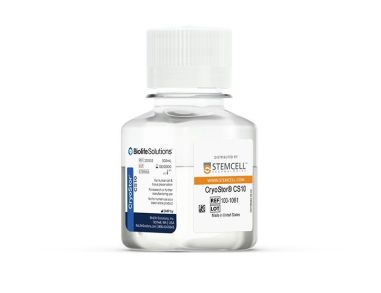 CryoStor® CS10 以cGMP标准生产、不含动物成分、成分明确、含10% DMSO的冻存液
 CryoStor®CS5 无动物成分,含有5% DMSO的冷冻保存培养基
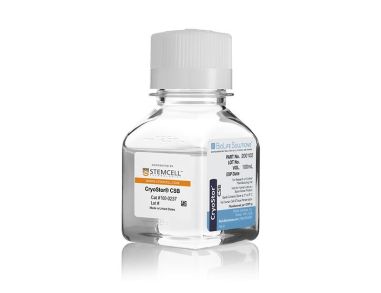 CryoStor®CSB 无动物成分和无蛋白质冷冻保存配方
 CryoStor®CS2 无动物成分,含有2% DMSO的冷冻保存培养基
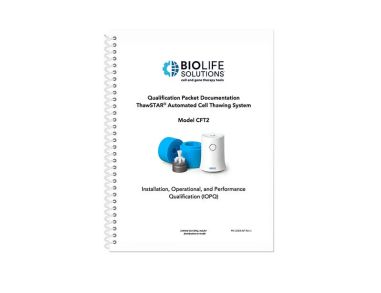 ThawSTAR® CFT2 IOPQ验证工具包 包含安装、操作和性能验证文档及配件,以方便对ThawSTAR® CFT2进行功能测试
 ThawSTAR® CFT2转运盒 用于处理和运输来自液氮或-80°C 冷冻柜的冻存管的便携式解决方案
 ThawSTAR® CFT2全自动细胞解冻系统 全自动细胞解冻系统,确保一致的解冻性能
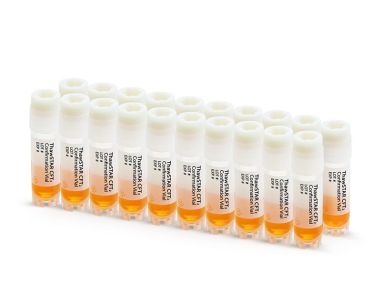 ThawSTAR® CFT2测试样本管 用于每次解冻之前和之后记录仪器性能和审计跟踪
 沪公网安备31010102008431号